Human verified. Last updated by our editorial team on .
South America · The modern republics
Republic of Brazil
1985–present
The Republic of Brazil is the federal republic that has governed Brazil since the military government handed over power in 1985. Brazilians call it the New Republic, Nova República, and the name is precise: this is not the country's first republic, the coffee-and-colonel regime of 1889–1930, nor its second attempt at democracy, the 1946–64 republic that ended in a coup. It is a distinct constitutional order with its own founding document, its own currency, its own party system and its own way of doing politics — one that has now lasted as long as the Old Republic it is so often compared with.
- Existed
- 1985–present
- Shown on the map
- 1987–present
- Peak area
- 8.7M km²
- Region
- South America
Its beginning is dated in three ways, and the differences matter. Civilian government began on 15 March 1985, when José Sarney took the oath in place of the president-elect, Tancredo Neves, who was dying in a São Paulo hospital. The constitutional order dates from 5 October 1988, when the Constituent Assembly promulgated what its speaker called the citizen constitution. The map's border data begins in 1987, the year that assembly was convened, and stops in 2024; the entry therefore opens a little before the charter and closes a little before the 2026 election. Neither boundary is a historical event. They are artefacts of the dataset, and the story runs past both.
The country the New Republic governs is the fifth-largest in the world by area, 8.5 million square kilometres, and the one of the ten largest economies, depending on the exchange rate in any given quarter. The 2022 census counted 203,062,512 inhabitants, and 158.7 million registered voters were eligible in 2026 — more than in any democracy except India, Indonesia and the United States. Brazil is the world's largest exporter of coffee, sugar, beef and soybeans, and one of its largest exporters of iron ore and crude oil. It is also one of the most unequal large economies on earth, a fact that has shaped every political crisis in this period.
The New Republic matters for three reasons beyond its size. It ended hyperinflation without authoritarianism, which almost no other country has managed. It built, from the 1988 constitution, a social contract that survived debt crises, impeachment, recession and a pandemic, and made conditional cash transfers a model copied around the world. And in 2023 it survived an attempt to overturn an election by force, prosecuting the plotters while the military command refused to join them. The failure is the one Brazilians talk about most: a political system that cannot govern without buying congressmen, and a state that trades long-term capacity for short-term survival.
At a glance
| Name | República Federativa do Brasil, the Federative Republic of Brazil; known since 1985 as the New Republic (Nova República) |
| Dates | Civilian government from 15 March 1985; constitution in force from 5 October 1988; continuing. The map draws the territory from 1987 to 2024, which brackets the constituent assembly but misses the handover and the 2026 election |
| Where | South America, 8.5 million km², from the Amazon basin and the Guiana shield to the pampas of Rio Grande do Sul; borders every South American country except Chile and Ecuador |
| Capital | Brasília, inaugurated in 1960; seat of the Three Powers since 1988 under the same plan as the military-era capital |
| Government | Federal presidential republic: 26 states and the Federal District, a bicameral National Congress (513 deputies, 81 senators), an independent Supreme Federal Court, a constitution amended well over a hundred times |
| Population | 203,062,512 (2022 census); 87 per cent urban; the largest black population outside Africa and the largest Japanese-descended community outside Japan |
| Economy and language | Portuguese, the only Portuguese-speaking country in the Americas; GDP of R$11.7 trillion in 2024 (about US$2.2 trillion); agriculture, mining, oil and a broad industrial base in São Paulo |
| Money | The real, introduced on 1 July 1994 at 2,750 cruzeiros reais; inflation targeting since 1999 |
| End | Continuing. The 2026 presidential election went to a second round on 25 October 2026 between Lula da Silva and Flávio Bolsonaro |
How did the generals hand over power?
The dictatorship that ended in 1985 had been withdrawing from politics for a decade. General Ernesto Geisel, president from 1974, began a policy of distensão — decompression — because he wanted to preserve the army's institutional position rather than defend a bankrupt regime, and because the economy could no longer be run without foreign credit and foreign oil on terms the hardliners would accept. His successor, João Figueiredo, continued the opening, abolished the two-party system in 1979, and signed an amnesty that let exiled opponents return and let torturers stay in uniform. The same year, the official party became the PDS and the tolerated opposition became the PMDB, and both began to fragment into the party system Brazilians still live with.
Direct elections for state governors in 1982 broke the regime's grip. The opposition won São Paulo, Rio de Janeiro and Minas Gerais — the three states that between them hold the country's industry, its second city and its political class — and it won them with the votes of the urban poor as well as the middle class. From then on the regime could still choose the president, but it could no longer claim to be the only thing standing between Brazil and chaos.
The campaign for direct presidential elections, Diretas Já, filled the streets in 1984 in a way that no Brazilian movement had since 1964. On 25 April 1984 the Chamber of Deputies voted on the Dante de Oliveira amendment. It won 298 votes to 65, with three abstentions. It needed 320. The government's allies simply did not attend: 112 deputies were absent, and the amendment died without a majority against it. That arithmetic, rather than any popular verdict, decided how the transition would happen. The presidency would be chosen by the Electoral College, a body of 686 congressmen and party delegates.
The opposition won that college anyway. Tancredo Neves, a PMDB veteran from Minas Gerais who had served in the cabinet of the last democratic president, built an alliance with the dissident wing of the government party — the Liberal Front, led by Jorge Bornhausen and Marco Maciel — and promised its members that the transition would not be a reckoning. On 15 January 1985 the college voted 480 to 180 for Tancredo over the regime's candidate, Paulo Maluf, with 26 abstentions. The bargain was explicit: the opposition got the presidency, the defectors got the vice-presidency and the guarantee that no one would be prosecuted for the past twenty-one years.
Tancredo never took office. Admitted to hospital on the eve of the inauguration with a stomach complaint that turned out to be a diverticulitis complicated by infection, he underwent seven operations and died on 21 April 1985. Sarney, the man the PMDB had accepted as a running mate only because he brought the defectors with him, became president. He had been president of the government party four years earlier. For the rest of the New Republic, the left would say that the transition had been stolen twice: once by the Electoral College, and once by a hospital.
Why did the new republic need a new constitution?
The old one had been written by the generals. The 1967 constitution and its 1969 amendment were authoritarian instruments: they gave the president power to close Congress, to declare a state of siege, to suspend habeas corpus for political crimes and to dismiss elected officials. Removing them was not a technical exercise. It meant deciding, article by article, what kind of country Brazil was going to be.
The constitution was written by the Congress elected in November 1986, which doubled as a Constituent Assembly when it convened on 1 February 1987. That election was a landslide for the government's allies: the PMDB and its partners won almost every governorship and a clear majority of seats. Sarney, who had spent two years being treated as an accidental president, suddenly commanded a constituent majority. The assembly was chaired by Ulysses Guimarães, the PMDB's elder statesman, and organised into eight thematic committees with a systemisation committee to reconcile them — a structure that gave every interest group a place to lobby and every deputy a chance to be remembered for an amendment.
The economic background explains the assembly's temper. In February 1986 Sarney's government had launched the Cruzado Plan: a currency change, a price freeze, a wage readjustment and a promise that inflation — then above 200 per cent a year — would stop overnight. It stopped for about eight months. Brazilians bought cars and washing machines; meat disappeared from the shelves; the freeze broke in November and by 1987 inflation was back above 300 per cent. The collapse taught the assembly two lessons that shaped the charter: that indexation had to be attacked at its roots, and that the state could not be trusted to protect wages and savings on its own.
The assembly also had to settle the rules of the game that would govern it. The centre-right bloc that formed in 1987, known as the Centrão, defeated a parliamentary system and defeated an attempt to cut Sarney's term short, in exchange for a five-year presidential term for his successor and a plebiscite in 1993 on the form of government. The constitution was promulgated on 5 October 1988, with 245 articles and 70 transitional provisions, after nineteen months and more than sixty thousand amendments. The plebiscite, held on 21 April 1993, kept the republic with 86.6 per cent of the vote and kept presidentialism with 69.1 per cent. The result is worth remembering when the parliamentary cause is presented as a suppressed Brazilian alternative: when Brazilians were asked, four in five of them chose the system they had.
What did the citizen constitution promise, and what did it cost?
It promised a great deal. Health became a universal right and a state duty, delivered through a unified system, the SUS, with free care at the point of use. Rural workers got a pension for the first time, at a stroke extending social insurance to millions of people who had never contributed. The working day was fixed at eight hours, overtime at 50 per cent, holidays with a third extra, maternity leave at 120 days, paternity leave at five. Illiterates and sixteen-year-olds won the vote — the old republic had excluded the illiterate explicitly, and the military regime had kept them out. Racism became a crime without bail. Indigenous peoples got their original lands recognised, and the environment got a chapter of its own. Municipalities became federal entities with their own revenue and their own constitutions.
The bill came due in the same paragraphs. The charter made spending mandatory and in many cases index-linked, and it distributed revenue to states and municipalities without distributing the corresponding duties. It entrenched a fragmented party system by protecting small parties, and it left the union with responsibilities that grew faster than its receipts. Economists have blamed it for the fiscal crisis of the 1990s ever since; the more careful version of that argument is that the constitution did not create the fiscal problem — the debt, the state enterprises and the indexation of the tax system were older — but it removed the government's freedom to solve it by inflation.
The last years of Sarney's term were a lesson in what the constitution could not do. Inflation ran into four digits; the currency was changed four times between 1986 and 1990; a loans-for-favours scheme in the 1987 Constituent Assembly, uncovered by the press, showed how easily the new Congress could be bought; and a general strike in 1989 paralysed industry. When Sarney left office on 15 March 1990, he handed over a democracy with a generous charter, a bankrupt treasury and an inflation rate that made long-term contracts impossible. The task of the next decade was to make the charter affordable without abandoning what it promised.
How did the first direct election produce Fernando Collor?
The election of 15 November 1989 was the first direct presidential vote since 1960, and the first in Brazilian history in which the illiterate could take part. Twenty-two candidates ran. The rules were new and generous: free television time distributed according to party strength, a two-round system, and no requirement that a candidate belong to a large party. Turnout was 88 per cent, the highest in the country's history, and the campaign became a national conversation in a country that had never had one on television.
Fernando Collor de Mello, the 40-year-old governor of Alagoas, ran as the hunter of marajás — fat cats — a phrase he had used against state employees in his own state. He came from the family that had run Alagoas politics for decades, and his father had been both its governor and its senator — the kind of dynasty his campaign was supposed to be against. None of that mattered against the image. He was young, telegenic, ran against "the old politics", and promised to open the economy, privatise the state and crush inflation with a single shock.
The Workers' Party candidate, Luiz Inácio Lula da Silva, a metalworker from Pernambuco who had led the strikes of 1978–80 in the ABC industrial belt, came second in the first round and nearly won the second. The runoff on 17 December 1989 gave Collor 35,090,206 votes to Lula's 31,075,803 — 53.03 to 46.97 per cent. The result turned on the last ten days, when Collor's campaign convinced enough voters that Lula would confiscate their savings and their homes. The fear was manufactured, but it worked, and it set a pattern: for the next thirty years, the Workers' Party would have to prove, election after election, that it did not intend to expropriate anybody.
Collor took office on 15 March 1990 and, on the same day, announced the Plano Brasil Novo. Bank accounts above a small limit were frozen for eighteen months: roughly 80 per cent of the money in the country, some US$100 billion, became inaccessible overnight. Prices and wages were frozen and the currency was renamed the cruzeiro. It was one of the most drastic peacetime interventions in any economy since the Second World War, announced without warning by a president who had been in office for six hours.
The confiscation did bring inflation down — from more than 80 per cent a month to single figures — and it destroyed Collor's legitimacy in the same stroke. Savings were wiped out, firms went bankrupt waiting for their own money, and the middle class that had voted for him discovered that the state could reach into its bank account. By 1991 inflation was climbing again, the government had no second plan, and the president's only remaining asset was the anti-corruption rhetoric that had elected him.
How did Collor fall?
The end came from inside his own family. In 1992 Collor's younger brother Pedro told Veja that the president's campaign treasurer, Paulo César Farias — PC — was running a scheme of kickbacks from a suite in Brasília, and that the president benefited. PC was a familiar figure: a fixer who raised money for campaigns and expected a return. What was new was the paper trail. A congressional inquiry opened in June 1992 and found that the president's household bills, his mother's and even his garden had been paid in cash by people connected to PC. A Fiat Elba registered in PC's name had been bought with money traced to a ghost account, and a secretary testified that she had withdrawn cash for the president's personal expenses.
The public response was immediate and, for Brazil, unusual. In August 1992 hundreds of thousands of students took to the streets with their faces painted green and yellow, demanding Fora Collor — Collor out. The caras-pintadas had no party and no programme, but they gave Congress the confidence to act. On 29 September 1992 the Chamber of Deputies voted 441 to 38 to open impeachment proceedings. Collor was suspended from office on 2 October. Itamar Franco, the vice-president, took over.
The trial in the Senate began in December. On 29 December, as it opened, Collor resigned, hoping that resignation would stop the process and preserve his political rights. It did not. The Senate carried on and convicted him by 76 votes to 2, barring him from public office for eight years. He was the first directly elected president in Latin America to be removed by impeachment.
The case settled several things. It established that a Brazilian president could be removed by Congress for using office for private gain, and that the Supreme Court would not rescue him. It also taught the political class a lesson it drew in the opposite direction: that a president who loses the support of the centre and the press can be removed in a matter of months, and that the machinery of impeachment is a weapon available to any congressional majority with a plausible legal case. Twenty-four years later, that lesson was applied to Dilma Rousseff by many of the same people.
How did the Real Plan end hyperinflation?
Itamar Franco was expected to be a caretaker. He was a minor PMDB politician from Minas Gerais with a reputation for indecision, and he governed for two and a half years with a cabinet that changed almost monthly. What he did, in May 1993, was appoint Fernando Henrique Cardoso — a sociologist, former senator and the most articulate social democrat in the country — as finance minister. Cardoso brought with him a group of economists from the Catholic University of Rio de Janeiro, among them Edmar Bacha, Pérsio Arida and André Lara Resende, who had been arguing since the 1980s that Brazilian inflation was inertial: prices rose because everyone expected them to rise, and contracts were indexed to the past.
Their plan, launched in stages, was the opposite of every previous attempt. The first stage, in 1993, was a fiscal adjustment — spending cuts, tax rises and the Fundo Social de Emergência, which un-earmarked a fifth of federal revenue. The second, from 1 March 1994, was a new unit of account, the Unidade Real de Valor, whose value in cruzeiros was published daily and which prices, wages and contracts were invited to adopt. For four months Brazilians lived with two currencies: salaries quoted in URV, cash in cruzeiros, and a conversion that happened in the supermarket every week. The third stage, on 1 July 1994, was the real itself, at 2,750 cruzeiros reais to the unit, pegged at roughly one to the dollar and defended with interest rates high enough to keep capital in the country.
It worked because it did not freeze prices and did not confiscate deposits. The URV de-indexed the economy before the money changed, so that when the new notes appeared there was no price to unfreeze and no shock to absorb. Inflation fell from 2,477 per cent in 1993 — the last full year of the cruzeiro — to 916 per cent in 1994, and then to low double digits and single figures. For the poor, who had no financial assets and bought their food weekly, the gain was immediate and enormous: the real was, in the first two years, the largest redistribution of income that any Brazilian policy had achieved since the Empire abolished slavery in 1888.
The costs were real and were paid later. The overvalued currency and the high interest rates made Brazilian industry uncompetitive and bankrupted banks, which the government recapitalised through a programme called Proer. The fiscal adjustment was partly temporary: the emergency fund was renewed year after year, under a new name, until 2023. And the plan's political consequence was immediate. Cardoso, the minister who had made the real work, ran for president in October 1994 and won in the first round with 54.28 per cent of the vote, against 27 per cent for Lula. He had been in the job for eight months.
What did Cardoso's two terms change?
Cardoso governed for eight years, from 1 January 1995 to 1 January 2003, and used them to finish what the Real had started. Monopolies in oil, telecommunications, mining and coastal shipping were broken by constitutional amendment; a concessions law opened infrastructure to private capital; state banks were privatised or closed and state debts renegotiated with the union. The Lei de Responsabilidade Fiscal of 2000 made it a crime for a governor or mayor to spend beyond the legal limits. Privatisation between 1991 and 2002 raised about US$87 billion, most of it in Cardoso's two terms, including the mining giant Vale and the Telebrás telephone monopoly. The state also built the Bolivia–Brazil gas pipeline, which came into service in 1999 and made São Paulo's industry dependent on gas that Bolivia nationalised in 2006.
The result was a state that could count its money, and an economy that was much more open than the one the Real had stabilised. It was also an economy that could not create enough jobs. Unemployment rose through the second term, the currency came under attack after the Asian crisis of 1997 and the Russian default of 1998, and on 13 January 1999 the government widened the real's trading band and then let it float. Within weeks the currency had lost about a third of its value. The feared consequence — a return of inflation — did not happen: the government had spent four years building a fiscal framework the markets believed, and adopted formal inflation targeting in June 1999. Brazil had passed through a devaluation without a panic, which in the previous decade would have been unthinkable.
Cardoso's social record is more contested than his economic one. He created the first federal conditional cash transfer, Bolsa Escola, in 2001, and the programme that later became Bolsa Família took its first shape in his ministry of education. He settled landless families, expanded rural electrification and began the process that made AIDS treatment free and universal, a policy copied around the world. But inequality barely moved, the minimum wage lost value, and the 2001 electricity rationing — the apagão — made him the first president of the New Republic to be blamed for a national infrastructure failure.
He also made the mistake that shaped the next decade. In 1997 his government pushed through a constitutional amendment allowing presidents to run for re-election, and he used it. The amendment was legal, passed with a large majority, and it convinced a generation of Brazilians that the political class would change the rules when it needed to. When Lula's Workers' Party later used the same device, the argument that it was a legitimate constitutional change had already been spent.
By 2002 the model had run out of credit. Argentina's collapse, the energy crisis, a revolt in the state of São Paulo's prisons and the murder of a mayor in a corruption case combined to destroy the government's authority, and the markets decided that Lula would win and that Brazil would default. The IMF lent US$30 billion in September 2002 to keep the country solvent until the election. It was against that background — a crisis, a hated incumbent, a currency in free fall — that the Workers' Party won.
How did Lula govern with the poor and the markets?
Lula won the runoff on 27 October 2002 with 61.27 per cent of the vote, 52,793,364 votes to José Serra's 33,370,739. The victory had been prepared by a document, the Carta ao Povo Brasileiro of June 2002, in which Lula promised to honour contracts, pay the debt and keep inflation under control. It was mocked by the left as a capitulation and by the right as a trick. It turned out to be a description of what he did.
The first year was orthodox and unpopular with his own base. Interest rates were raised, the primary surplus target was increased, and a pension reform cut benefits for public servants and taxed pensions in payment. The unions that had created the Workers' Party marched against him. At the same time, the government launched Fome Zero, a food-security programme, and in October 2003 it created Bolsa Família by provisional measure, unifying four existing transfers — Bolsa Escola, Bolsa Alimentação, Auxílio Gás and the food card — into a single payment to families below an income line, conditional on school attendance and vaccination. The law that gave it permanent form, 10,836, was passed in January 2004. By the end of the decade it reached more than twelve million families and cost about 0.4 per cent of GDP.
Bolsa Família was not Lula's invention, and it worked for reasons that had little to do with him: a single registry, payment to the mother, and a benefit small enough not to discourage work. But his government scaled it, defended it and made it the centre of a political identity. The results were real. The World Bank's poverty line of US$5.50 a day covered 41.7 per cent of Brazilians in 2003 and 17.9 per cent in 2014 — a fall of 24 percentage points in eleven years. Extreme poverty fell faster still. The minimum wage rose in real terms every year after 2004, and formal employment expanded by millions of jobs.
The engine was China. Between 2003 and 2011 the price of iron ore, soybeans, copper and oil multiplied, and Brazil sold them; the terms of trade moved in the country's favour by an amount economists later put at several percentage points of GDP a year. Growth reached 5.7 per cent in 2004 and 7.5 per cent in 2010, and the government used the revenue to raise wages, expand credit through public banks and build. In 2007 it launched an accelerated growth programme, the PAC, and announced the pre-salt oil fields under a thick layer of salt off Rio de Janeiro. In 2009 it settled a grievance with Paraguay by raising what Brazil pays for surplus power from the Itaipu dam, and when the financial crisis hit, Brazil was one of the last countries into recession and one of the first out, with the president's approval at record levels.
The political cost was the mensalão. In 2005 a deputy from the government's coalition alleged that the Workers' Party was paying congressmen a monthly allowance in exchange for votes. The scheme, and the crisis it caused, nearly destroyed Lula's presidency; he survived by distancing himself from his chief of staff and by the strength of the economy. The Supreme Court tried the case in 2012 and convicted twenty-four of the thirty-seven defendants, including the party's former treasurer and its most important strategist. Lula was re-elected in 2006 with 60.83 per cent and left office in 2010 with the highest approval rating of any Brazilian president since redemocratisation. He also left a governing coalition that had learned to buy votes in Congress, an economy that depended on commodity prices, and a chosen successor who had never run for anything.
Why did the boom end under Rousseff?
Dilma Rousseff was elected on 31 October 2010 with 56.05 per cent of the vote and took office on 1 January 2011 as the first woman to govern Brazil. She was not a politician in the ordinary sense. An economics graduate from Minas Gerais, she had joined the armed struggle against the dictatorship as a young woman, been arrested and tortured in 1970, and spent three years in prison. She had run the energy ministry, chaired Petrobras and served as Lula's chief of staff, where she was known for micromanagement and for a temper that terrified ministers. Her mandate was to continue the boom.
What she got instead was the end of the commodity cycle, and a set of policies that made it worse. Her government tried to force growth by cutting the cost of credit and energy and by exempting industries from taxes, while keeping the currency strong and public spending high. Electricity tariffs were cut by administrative decree in 2012; petrol prices were held below the world price, which meant that Petrobras sold imported fuel at a loss and its shares collapsed. The central bank cut interest rates to 7.25 per cent in 2012, the lowest in Brazilian history, and then had to raise them again when inflation refused to fall. The primary surplus, the fiscal anchor of the previous fifteen years, fell to nothing by 2014.
The result was a peculiar stagnation: growth of 1.9 per cent in 2012 and 0.5 per cent in 2014, inflation above the target band, and investment falling every year. Brazil had stopped growing while its government insisted that it was growing, and the gap became the political fact of the period.
In June 2013 that gap opened in the streets. A twenty-cent rise in bus fares in São Paulo — from R$3.00 to R$3.20 — brought the Free Fare Movement out on 6 June, and the military police answered with tear gas and rubber bullets. A week later the same thing happened again, and the images of middle-class demonstrators being beaten by police in the country's richest city went viral. On 17 June more than 270,000 people marched in a single day; on 20 June more than a million in seventy-five cities, the largest protests Brazil had seen since 1992. The demands were diffuse — free transport, better hospitals, an end to corruption, opposition to the World Cup then being staged — and the movement had no leaders, no party and no programme. It changed everything and organised nothing.
For Rousseff the protests were fatal. Her approval rating fell from 57 per cent in March 2013 to about 30 per cent in June, and it never recovered. She proposed a plebiscite on political reform and a constituent assembly, both of which Congress buried. The right learned that the street could be used against the Workers' Party; the left learned that it no longer owned the language of protest. Rousseff was re-elected in October 2014 by 51.64 per cent to 48.36 per cent — 54,501,118 votes to Aécio Neves's 51,041,155, the closest result since 1989 — but she began her second term with a hostile Congress, a shrinking economy and a corruption investigation, Lava Jato, that had begun in March 2014 and was about to reach her party's core.
How was Rousseff removed, and what did it settle?
Her second term lasted eighteen months. The government's first move was austerity: Joaquim Levy, a banker, was appointed finance minister and told to cut. Spending was reduced, taxes raised and subsidies withdrawn, exactly as the market had demanded and exactly as the Workers' Party's voters had not. The economy contracted by 3.8 per cent in 2015 and 3.3 per cent in 2016; between the first quarter of 2015 and the end of 2016 output fell by 6.4 per cent, the deepest recession in the series. Unemployment passed 11 per cent. Rousseff's coalition began to disintegrate as soon as the polls turned.
The legal case against her was technical. The government had delayed payments to public banks — the pedaladas fiscais — to make its budget figures look better than they were, and it had issued supplementary budget decrees without congressional approval. The Federal Accounts Court rejected the 2014 accounts in October 2015. On 2 December 2015 the speaker of the Chamber, Eduardo Cunha, accepted an impeachment petition brought by three lawyers including Hélio Bicudo, a founder of the Workers' Party. Cunha was himself under investigation for taking bribes, and he was later convicted and imprisoned; his decision to open the process was widely read as retaliation for the party's refusal to protect him.
The votes were not close. On 17 April 2016 the Chamber authorised the process by 367 to 137, with seven abstentions. On 12 May the Senate suspended Rousseff by 55 to 22 and installed Michel Temer as acting president. On 31 August the Senate removed her by 61 to 20. A separate vote on whether to bar her from office for eight years failed, 42 to 36, so she kept her political rights — a result that told you what many senators thought of the charge.
Whether it was a coup is the most contested question in modern Brazilian history, and the honest answer is that the two positions are not exclusive. The procedure followed the constitution, the Supreme Court validated it at every stage, and the crime of responsibility was defined in law. But the charge was a budgetary manoeuvre that previous governments had also used, no allegation of personal enrichment was made, and the coalition that removed her was the coalition that had governed with her. It was a constitutional impeachment carried out for political reasons by politicians who wanted her out. Both halves of that sentence are true, and Brazilians argue about which one matters.
What followed was not a restoration of confidence. Temer imposed a constitutional amendment, EC 95 of 2016, freezing federal spending in real terms for twenty years; a labour reform in 2017 that made hiring and firing easier; and a pension reform that he could not pass. In May 2017 a plea bargain by the meat-packing company JBS produced a recording of its chairman discussing bribes with Temer, and the Chamber of Deputies voted twice to protect him from prosecution. His approval rating fell to single figures. In 2018 a truckers' strike paralysed the country for eleven days over diesel prices, and Temer sent the army into Rio de Janeiro to run public security. The political class that had removed Rousseff was, by the end of the decade, less popular than she was.
Lava Jato ran through all of it. What began as an investigation into money laundering at a petrol station in Brasília became the largest corruption case in Brazilian history: construction firms, Petrobras executives, governors, senators and presidents. The Odebrecht group alone agreed in 2016 to pay US$2.6 billion to authorities in Brazil, the United States and Switzerland. In April 2018 Lula, then the front-runner, was imprisoned after the Supreme Court refused him habeas corpus by six votes to five; he spent 580 days in Curitiba and was released in November 2019. In 2021 the court annulled his convictions for want of jurisdiction, and the judges who had built the case were later shown to have colluded with prosecutors.
How did Bolsonaro govern, and how did the pandemic undo him?
Jair Bolsonaro won the runoff on 28 October 2018 with 55.13 per cent, 57,797,847 votes to Fernando Haddad's 47,040,906. A retired army captain who had spent twenty-seven years in the Chamber as a marginal figure of the extreme right, he had been stabbed in the abdomen at a rally in Juiz de Fora on 6 September 2018 and nearly died; the attack became part of his legend. His campaign ran on social media, promised to destroy the Workers' Party and "the old politics", and assembled a coalition of evangelicals, agribusiness, the police, the gun lobby and the anti-corruption electorate that Lava Jato had created. He had campaigned against the government of Venezuela and briefly closed the northern border in 2019, while the army ran the reception of Venezuelans crossing into Roraima.
He governed with a military-heavy cabinet and a liberal economic team led by Paulo Guedes, a Chicago-trained economist who promised to shrink the state. The one large reform that passed was the pension overhaul of 2019, constitutional amendment 103, which set minimum retirement ages of 65 for men and 62 for women and rewrote the rules for public servants. The government claimed savings of about R$800 billion over ten years; the political cost was borne by the same constituencies that had elected him. Beyond that, the liberal programme stalled in a Congress that preferred to bargain.
His environmental record did him the most international damage. Deforestation in the Amazon rose by more than half between 2018 and 2021, enforcement agencies were weakened, and the Amazon Fund, financed by Norway and Germany, was suspended after the government changed its governance. In August 2019 fires in the Amazon became a global story, and the French president's suggestion that Brazil be denied a trade deal produced a diplomatic rupture that never healed.
Then came the pandemic. Brazil confirmed its first cases in late February 2020, and Bolsonaro spent the next two years denying it. He called it a "little flu", promoted hydroxychloroquine, attacked governors who imposed lockdowns, fired two health ministers who disagreed with him, and delayed the purchase of vaccines while the city of Manaus ran out of oxygen in January 2021 and its hospitals turned patients away. A congressional inquiry in 2021 documented the confusion and recommended charges that the prosecutor-general declined to bring. Brazil lost more than 700,000 people to COVID-19 by March 2023, the second-highest death toll in the world after the United States, in a country with a public health system that had been built precisely for this.
The emergency aid he was forced to pay — R$600 a month to some 67 million people in 2020 — kept his popularity alive and pushed poverty down for a year. It also cost the treasury more than any programme in Brazilian history and, when it was cut back in 2021, left the poorest worse off than before. Lula beat him on 30 October 2022 by 50.90 to 49.10 per cent, a margin of two million votes out of 118 million cast. Bolsonaro did not congratulate him, did not attend the handover, and said nothing for two days while truckers blockaded highways across the country.
What did 8 January 2023 change?
The attempt to overturn the election was not improvised. A lieutenant-colonel, Mauro Cid, Bolsonaro's aide-de-camp, later testified under a plea bargain that a draft decree for a state of defence had been circulated in the presidency, that options including a military intervention were discussed, and that there had been a plan to arrest or kill the president-elect, the vice-president-elect and a Supreme Court justice. The army and air force commanders refused to join. What remained was a crowd.
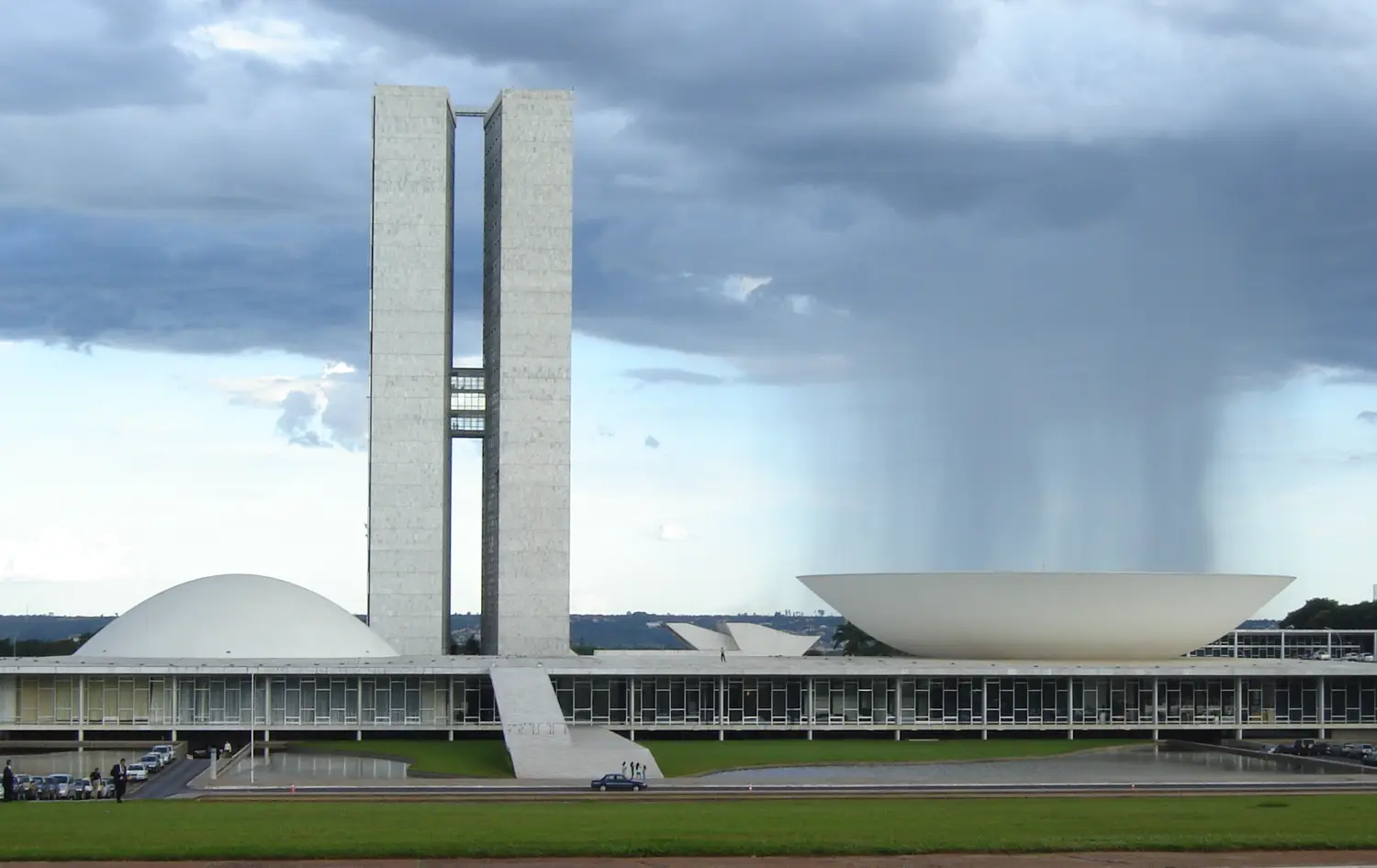
On 8 January 2023, a week after Lula's inauguration, thousands of people who had been camping outside the army headquarters in Brasília since the election walked to the Three Powers Square, overwhelmed the police, and wrecked the Congress, the presidential palace and the Supreme Court. It took five hours to clear them. The Supreme Court tried the cases itself, and by January 2026 it had convicted 1,399 people, of whom 179 were still in prison. In September 2025 the same court convicted Bolsonaro of attempting a coup and sentenced him to 27 years and three months, by four votes to one — the first time in Brazilian history that a former president was sent to prison for attacking the constitutional order.
Lula's third term began with a coalition broad enough to include his opponent in 2006, Geraldo Alckmin, as vice-president, and with a Congress in which his own party was a minority. He governed through the old machinery: a cabinet distributed among allies, a budget negotiated vote by vote, and a foreign policy that put Brazil back at the centre of climate and trade diplomacy. The G20 summit in Rio de Janeiro in November 2024 and the climate conference in Belém in November 2025 — the first COP held in the Amazon — were its set pieces. Belém produced a finance package and a pledge to plan a transition away from fossil fuels, but no commitment to phase them out, and Brazil's own plan to drill at the mouth of the Amazon embarrassed its hosting.
The economic record was better than the political one. The new fiscal framework, a complementary law of 2023, replaced the twenty-year spending cap with a rule tying spending growth to revenue growth, with floors for health and education. The tax reform of the same year, amendment 132, was the first comprehensive overhaul of consumption taxes since the constitution: five taxes merged into two value-added taxes, one federal and one shared between states and municipalities, with a transition from 2026 to 2033. An income-tax reform in 2025 raised the exemption threshold to R$5,000 a month from January 2026, paid for by a minimum tax on high incomes. Growth was 3.4 per cent in 2024, unemployment fell to 5.3 per cent in the three months to July 2026, and inflation closed 2025 at 4.26 per cent.
None of it made Lula popular. Food prices, the cost of credit and a sense that the government had run out of energy kept his approval at about 35 per cent good against 41 per cent bad. The right reorganised around Bolsonaro's family: his son Flávio, a senator for Rio de Janeiro, built a coalition of evangelical churches, agribusiness and the parties of the Centrão, and campaigned on the claim that only he could stop the Workers' Party from a fourth consecutive term. In the first round on 4 October 2026 he took 47.03 per cent — 56,103,033 votes — against 45.16 per cent and 53,870,724 for Lula, a result that surprised the pollsters. His party, the PL, became the largest in both houses.
The tariff war with the United States ran through all of it. In April 2025 Washington imposed a baseline tariff of 10 per cent; in July, after Brazil refused to drop the prosecution of Bolsonaro, it added 40 points and set the rate at 50, with exemptions later carved out for coffee, beef and orange juice. Brazil did not retaliate in kind, took the case to the World Trade Organization and waited. Negotiations continued through 2026 without a settlement.
Forty-one years after the Electoral College vote of 1985, the New Republic has lasted as long as the Old Republic that Brazilians learn to despise in school. It has ended hyperinflation, built a welfare state, removed two presidents, survived a coup attempt and elected a man the courts had jailed. It has not solved the problem its founders identified: a constitution that promises a great deal to citizens, and a political system in which delivering anything requires paying for votes in Congress. The 2026 election is being fought over that bill.
Common myths about the Republic of Brazil
| Myth | What the evidence says |
|---|---|
| The military handed over power because it had decided democracy was better. | The regime split, lost the 1982 governorships and faced a debt crisis it could not manage. The 1985 transition was a bargain between the opposition and defectors from the government party, with an amnesty that protected torturers and a guarantee that no officer would be prosecuted. |
| The 1988 constitution caused hyperinflation. | Inflation was already running at more than 200 per cent a year when the assembly met, and the Cruzado, Bresser and Verão plans had all failed before the charter existed. The constitution made spending mandatory and revenue-sharing rigid, which made the fiscal problem harder to solve; it did not create it. |
| Fernando Collor was impeached for corruption. | He was removed for the crime of responsibility — the misuse of office — on the findings of the congressional inquiry, not for corruption as a criminal offence. The Senate convicted him and barred him from office for eight years, and the criminal charges were tried separately in the ordinary courts. |
| The Real Plan worked because it froze prices. | It deliberately did not freeze prices or confiscate deposits. The URV de-indexed wages and contracts over four months before the currency changed, which is why there was no price to unfreeze on 1 July 1994. |
| Bolsa Família was invented by Lula. | It unified four transfers that already existed, including Bolsa Escola, created at federal level by Cardoso in 2001, and the food card of 2003. Lula's government scaled it, unified the registry and made it politically untouchable. |
| Dilma Rousseff was removed for corruption. | The impeachment charge concerned budget decrees and delayed payments to public banks. No allegation of personal enrichment was part of the case; the corruption allegations against her campaign were pursued separately and did not result in her conviction. |
| The 2016 impeachment was a straightforward coup. | It followed the constitutional procedure, was validated by the Supreme Court and involved no military intervention. It was also a political operation by a coalition that had governed with her, on a charge previous governments had also incurred. Calling it constitutional and calling it a coup are both defensible; calling it only one of the two is not. |
| Bolsonaro came close to succeeding in 2022. | A coup plot existed, with a draft decree, a plan to arrest or kill officials and a presidential aide who later testified to it. It never had the military commanders, who refused to join, and 8 January was a riot that wrecked buildings rather than a seizure of power. |
Timeline of the Republic of Brazil
| Year | Event |
|---|---|
| 1985 | Tancredo Neves elected by the Electoral College, 480 to 180; he dies before taking office, and José Sarney takes his place on 15 March and becomes president on 21 April |
| 1986 | Cruzado Plan freezes prices on 28 February; the PMDB and its allies win the November elections that double as the Constituent Assembly |
| 1988 | The citizen constitution is promulgated on 5 October |
| 1989 | First direct presidential election since 1960; Fernando Collor beats Lula in the runoff, 53.03 to 46.97 per cent |
| 1990 | Collor freezes 80 per cent of bank deposits on his first day in office |
| 1992 | Chamber votes 441 to 38 for impeachment on 29 September; Collor resigns on 29 December and is barred from office for eight years |
| 1993 | Plebiscite keeps the republic (86.6 per cent) and presidentialism (69.1 per cent); inflation reaches 2,477 per cent |
| 1994 | The real is launched on 1 July at 2,750 cruzeiros reais; Cardoso elected in the first round with 54.28 per cent |
| 1999 | The real is floated in January and loses about a third of its value; inflation targeting is adopted |
| 2002 | Lula elected with 61.27 per cent; the IMF lends US$30 billion to steady the transition |
| 2003 | Bolsa Família created by provisional measure in October; pension reform passes |
| 2013 | The June protests begin over a twenty-cent bus fare and become the largest demonstrations since 1992 |
| 2014 | Lava Jato opens; Rousseff re-elected by 51.64 to 48.36 per cent |
| 2016 | Rousseff removed by the Senate, 61 to 20, on 31 August; Temer freezes federal spending for twenty years |
| 2018 | Lula imprisoned in April and barred from standing; Bolsonaro elected with 55.13 per cent |
| 2020 | Pandemic reaches Brazil; emergency aid of R$600 a month goes to some 67 million people |
| 2022 | Lula defeats Bolsonaro, 50.90 to 49.10 per cent, the tightest result since 1989 |
| 2023 | Supporters of Bolsonaro storm the Three Powers on 8 January; new fiscal framework; tax reform promulgated |
| 2025 | Supreme Court convicts Bolsonaro of attempting a coup and sentences him to 27 years and three months |
| 2026 | First round on 4 October: Flávio Bolsonaro 47.03 per cent, Lula 45.16 per cent; runoff set for 25 October |
What the map shows next
At 1988 on the map the country is at its most hopeful and least governable: a new charter, a bankrupt currency, and a president nobody had elected. Follow the border west and you see how little of the Amazon the state actually occupied, which is the reason the constituent assembly wrote a chapter on indigenous lands and another on the environment.
At 2003 on the map the map shows the territory Lula inherited at the bottom of the commodity cycle, and at 2016 on the map the same borders with a president being removed and a Congress that had just capped its own spending for twenty years. At 2023 on the map the lines are unchanged, which is the point: nothing in this period redrew Brazil's borders, and everything that changed happened inside them.
Common questions
- When did Brazil return to democracy?
- Civilian government returned on 15 March 1985, the constitution took effect in October 1988, and the first direct presidential election since 1960 was held in November 1989.
- Why does the map start in 1987?
- The border dataset's coverage of this republic begins in 1987, the year the Constituent Assembly convened, although the military handover happened two years earlier and the constitution was promulgated the year after.
- How did Brazil end hyperinflation?
- The Real Plan of 1993–94 combined a fiscal adjustment, a temporary indexed unit of account called the URV and a new currency launched on 1 July 1994, without a price freeze or a confiscation of savings.
- What was the Cruzado Plan?
- A price freeze and currency change introduced in February 1986 that briefly brought inflation near zero and then collapsed, discrediting shock treatment for the next eight years.
- Why was Fernando Collor impeached?
- A congressional inquiry found that his household and campaign expenses had been paid by a network run by his treasurer, PC Farias, and the Chamber of Deputies voted 441 to 38 to open impeachment proceedings in September 1992.
- Was Dilma Rousseff's impeachment a coup?
- It was carried out under the constitution and upheld by the Supreme Court, and it was also a political operation by a coalition that had governed with her, which is why Brazilian historians still argue about the word.
- What is Bolsa Família?
- A conditional cash transfer created in 2003 that pays poor families a monthly sum on condition that children attend school and are vaccinated, reaching more than twelve million households by 2010.
- What happened on 8 January 2023?
- Supporters of Jair Bolsonaro who had been camping outside army headquarters in Brasília invaded and wrecked the Congress, the presidential palace and the Supreme Court, and the court had convicted 1,399 people by January 2026.
- How many people died of COVID-19 in Brazil?
- More than 700,000 by March 2023, the second-highest national toll in the world after the United States.
- Who is the president of Brazil in 2026?
- Luiz Inácio Lula da Silva, in his third term since 1 January 2023, who was fighting for re-election in a runoff against Flávio Bolsonaro on 25 October 2026.
Sources
Every source below was consulted while writing this entry.
- Agência Brasil, "Flávio Bolsonaro, Lula head for runoff in Brazil's presidential race", 4 October 2026.
- Agência Brasil, "STF condenou 1.399 pessoas por atos golpistas; 179 estão presas", January 2026.
- Tribunal Superior Eleitoral, "Lula é eleito novamente presidente da República do Brasil", 30 October 2022, and the court's published result tables for the presidential elections of 1989, 1994, 2002, 2006, 2010, 2014 and 2018.
- Câmara dos Deputados, "Câmara autoriza instauração de processo de impeachment de Dilma com 367 votos a favor e 137 contra", 17 April 2016.
- Senado Federal, Rádio Senado, "A hiperinflação derrotada: os 25 anos do real", 2019.
- Fundação Fernando Henrique Cardoso, Um Plano Real: chronology for 1993–1994.
- Presidência da República, Medida Provisória nº 132, de 20 de outubro de 2003, which created Bolsa Família.
- Instituto Brasileiro de Geografia e Estatística, Censo Demográfico 2022, first results (203,062,512 inhabitants).
- Instituto Brasileiro de Geografia e Estatística, "GDP closes 2024 at 3.4%", March 2025.
- Instituto Brasileiro de Geografia e Estatística, "IPCA of December is 0.33% and cumulative result is 4.26% in 2025", January 2026.
- Instituto Brasileiro de Geografia e Estatística, Continuous National Household Sample Survey, unemployment rate for the quarter ended July 2026.
- World Bank, Brazil Poverty and Equity Brief, 2019 (poverty at US$5.50 a day, 41.7 per cent in 2003 and 17.9 per cent in 2014).
- The Guardian, "Bolsonaro sentenced to 27 years for plotting military coup in Brazil", 11 September 2025.
- AS/COA, "Reaction: Flávio Bolsonaro and Lula Advance to Brazil's Presidential Runoff", 5 October 2026.
- Folha de S.Paulo, front page, 17 March 1990, on the freezing of 80 per cent of financial assets, consulted in the Almanaque Folha archive.
- G1, "Após acordo com Justiça dos EUA, Odebrecht pagará multa de US$ 2,6 bilhões", 17 April 2017.
Data sources for the map
- Cliopatria v0.12 (Seshat Global History Databank, CC BY 4.0).
- Historical Basemaps (GPL-3.0).
This entry was written from the sources above and last updated .
Text available under CC BY-SA 4.0: reuse it with a credit to The World Through Time and a link to this page.
Border geometry for the map itself comes from Cliopatria v0.12 (Seshat Global History Databank, CC-BY-4.0).
See the Republic of Brazil in its world
Open the atlas at 2006 and every neighbour, rival and successor is on screen with it — then drag the slider and watch what happens next.
Open the map at 2006 →