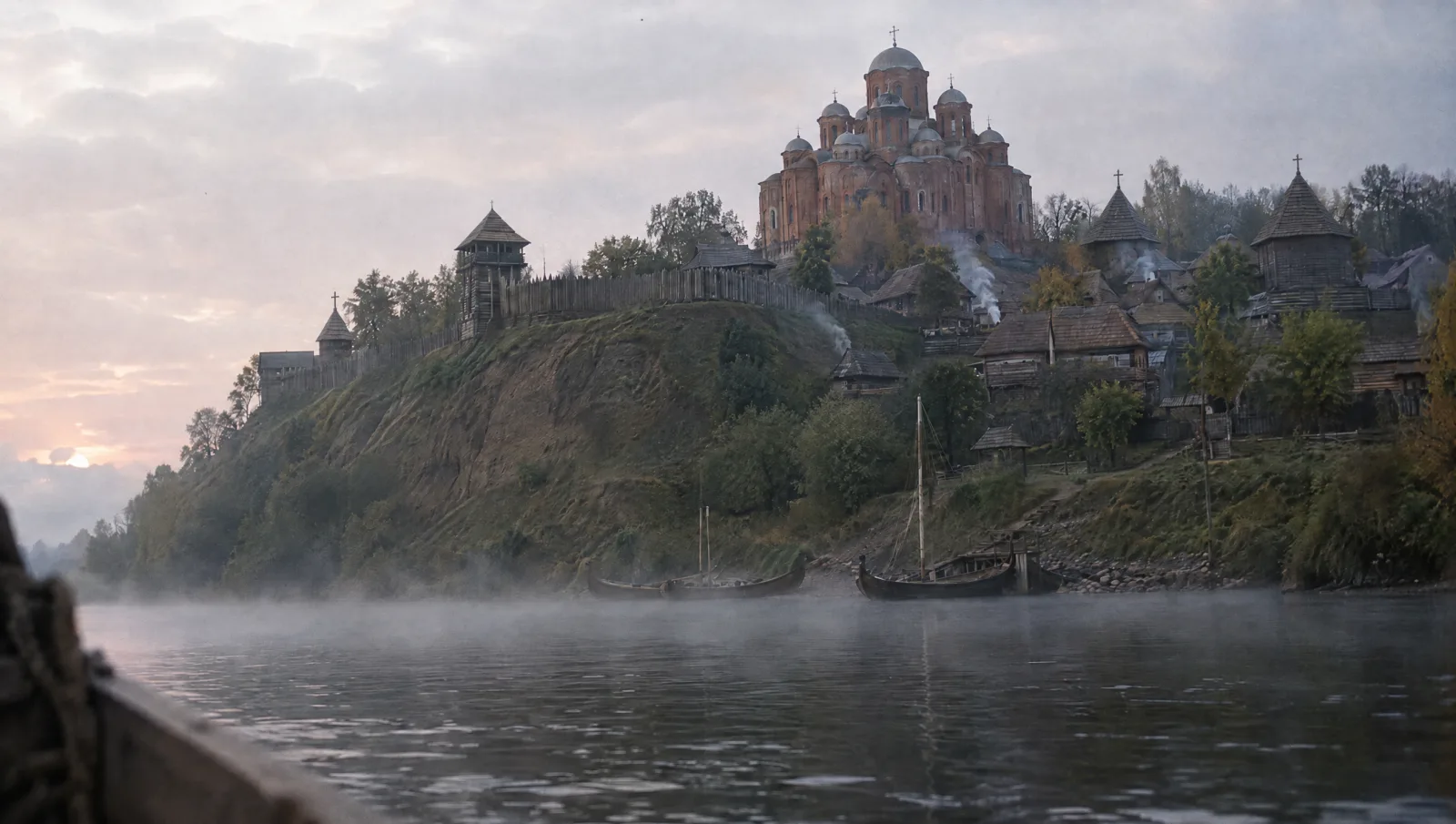
Was Kievan Rus' Ukraine or Russia? In the modern sense it was neither. Rus' was a medieval realm that existed centuries before either nation, and its people called it simply "Rus'". Ukrainians, Belarusians and Russians all draw on it as shared heritage. "Kievan" and "Kyivan" are two English spellings of the same adjective, from the Russian-derived and the Ukrainian-derived names of its capital. English-language institutions moved to "Kyiv" mainly in 2019–2020, before the full-scale Russian invasion of Ukraine in 2022.
The debate over the name is really three debates: what the realm was called at the time, how its capital should be spelled today, and who has the right to call its history their own.
What did the people of Rus' call their country?
Never "Kievan Rus'". The chronicles speak of "Rus'" and "the Rus' land". According to the Internet Encyclopedia of Ukraine, in the twelfth-century Kyiv Chronicle the word first meant the Varangians, then "the land of the Polianians around Kyiv bounded by a triangle formed by the Dnipro River, Irpin River, and Ros River", and only gradually "the entire realm of the grand prince of Kyiv". The same encyclopaedia's entry on the word opens "The former name of Ukraine", which shows how even reference works take sides.
Where the word itself came from is a separate question. Most scholars trace it to the Scandinavians who founded the ruling dynasty (our glossary entry on the Rus' sets out the evidence). Foreigners adapted it: the Byzantines wrote of the Rhōs, and Emperor Constantine VII recorded separate "Rus'" and Slavic names for the Dnieper rapids. Latin writers used Russi and Rutheni. The Internet Encyclopedia of Ukraine lists Rusyny, Rusychi and Rusy as the oldest recorded names of the people, and notes that in the north-east the adjective russkie, "of Rus'", later became the name of the Russians.
Where does the name "Ukraine" first appear?
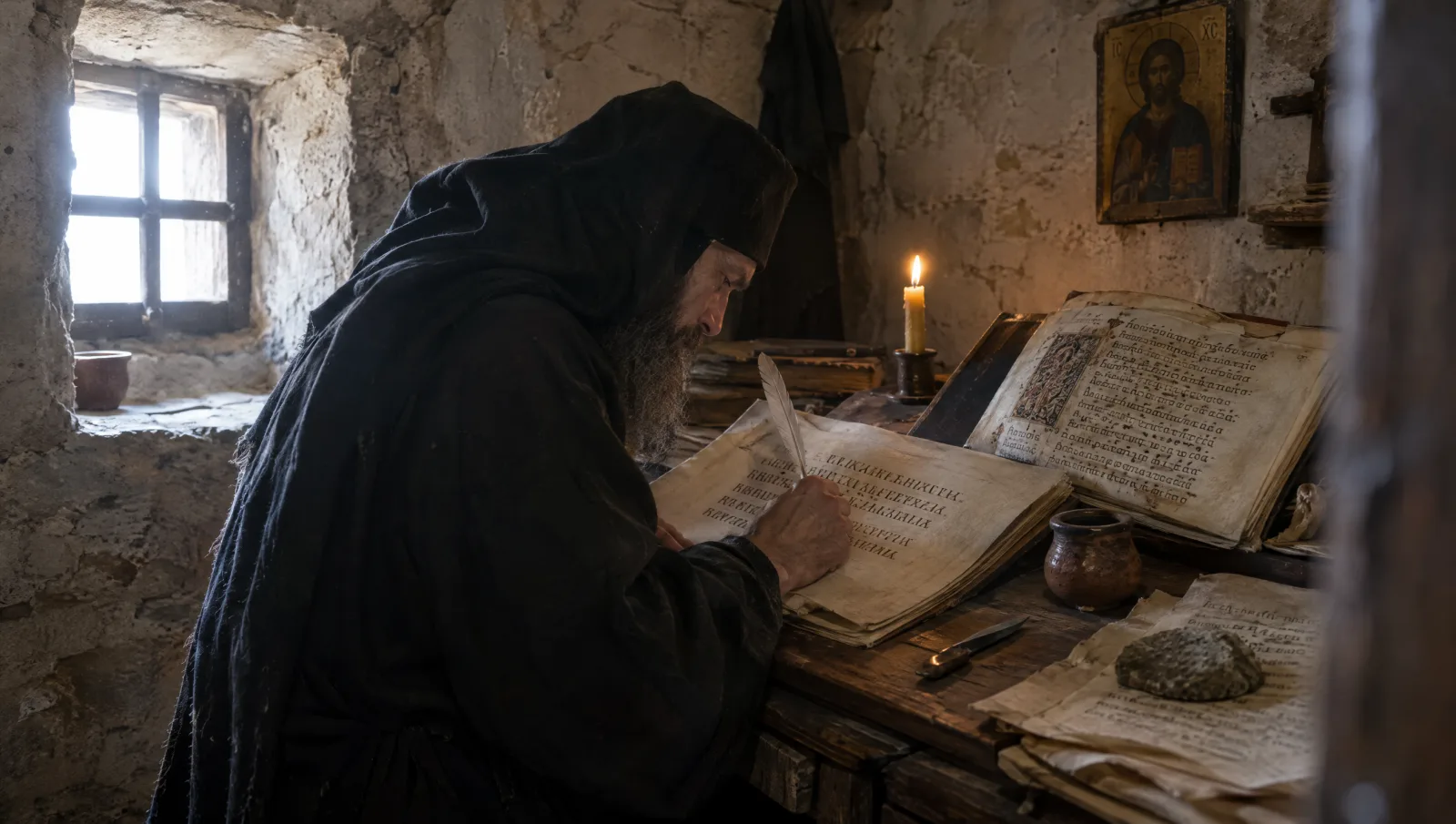
In the Kyiv Chronicle, part of the Hypatian Codex, under the year 1187. Reporting the death of Prince Volodymyr Hlibovych of Pereiaslav, the chronicler wrote that "Ukraina" mourned greatly for him. The Internet Encyclopedia of Ukraine calls this the first use of the word "to refer to the southern territories of Rus'". The word appears again under 1189, and the chronicle uses Ukrainiany for the inhabitants under 1268.
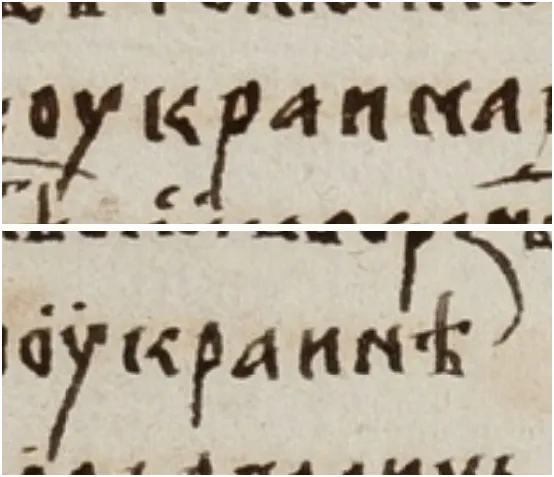
What ukraina meant is itself disputed. Many dictionaries and historians, including Serhii Plokhy, read it as "borderland", here the steppe frontier of Rus'. Some Ukrainian philologists argue for "land" or "country", from krai and kraina, and see the link to okraina ("periphery") as a later Russian reading. Vladimir Putin's essay of 2021 leaned on the "periphery" reading: "The name 'Ukraine' was used more often in the meaning of the Old Russian word 'okraina' (periphery)".
Either way, the etymology settles nothing. Plenty of countries have humble names, and what a word meant in 1187 says nothing about who may form a state eight centuries later.
Who invented the name "Kievan Rus'"?
Historians in the nineteenth century, who needed labels for the periods of a long history. "Kievan Rus'" marked the age when Kyiv was the leading city, before the "Vladimir" and "Muscovite" periods in the north-east. No reliable source we have found names the first person to use the phrase, and the popular claim that Nikolai Karamzin coined it is unsupported.
The label carried an argument. In Russian imperial historiography, as Ekaterina Klimenko summarises it, writers from Vasily Tatishchev and Nikolai Karamzin to Sergei Solovyov, Nikolai Ustryalov and Vasily Kliuchevsky "laid exclusive claim to Kievan Rus heritage", and "Kiev was regarded as the origin of Russian statehood in Russian historical writing throughout the modern era" (Nationalities Papers, 2026). A "Kievan period" followed by a "Vladimir period" made Moscow look like Kyiv's natural successor.
How did Rus' become "Russia"?
The two words share a root but name different things. Rus' is the medieval realm. Rossiya, the modern Russian name for Russia, is a Greek-derived form that came into use in Muscovy in the early modern period. Andrew Wilson of the Royal United Services Institute points out that Ukrainians, Russians and Belarusians "have all used Rus' as part of their compound name at various times; but this only means they are kin, not the 'same people'" (RUSI, 2021).
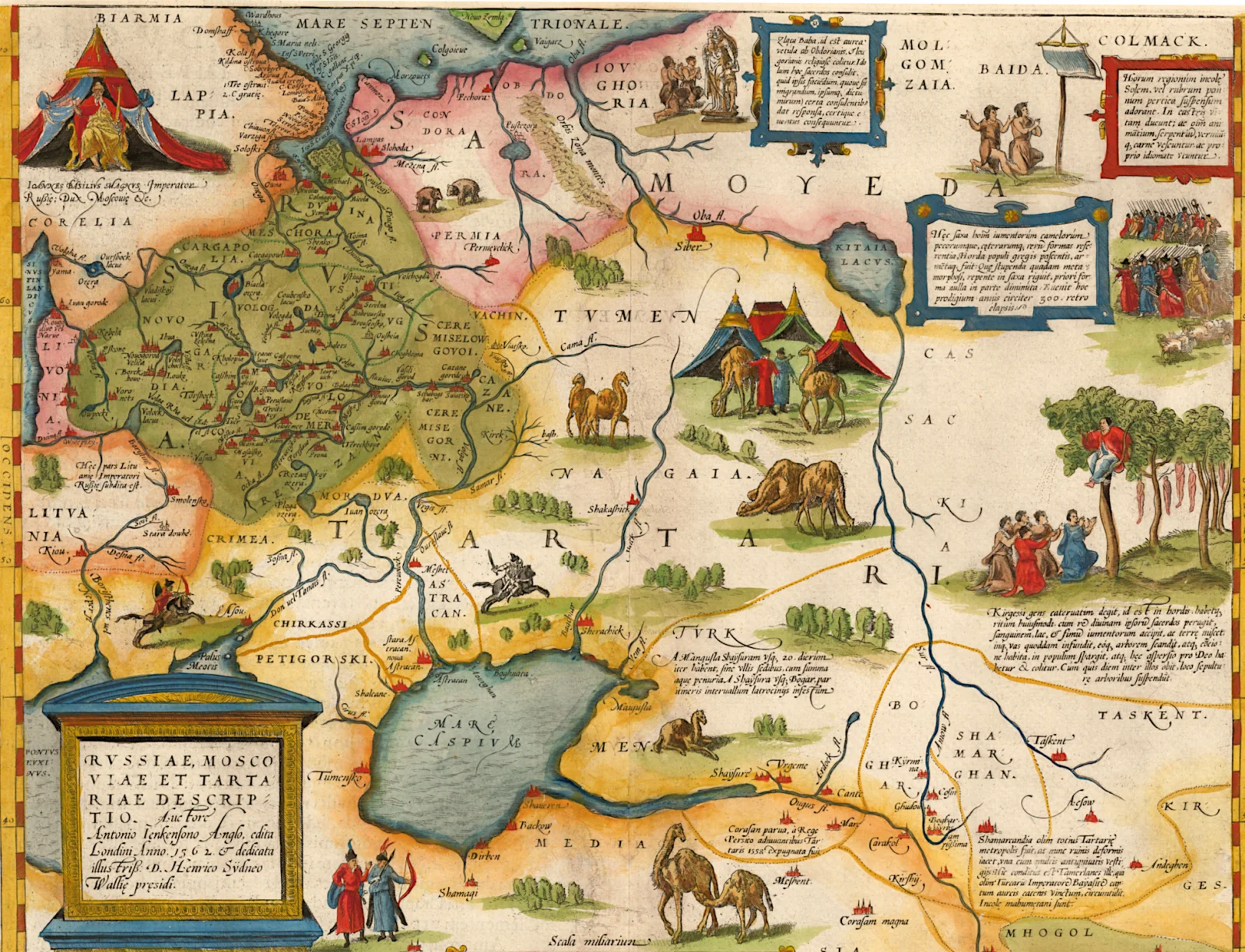
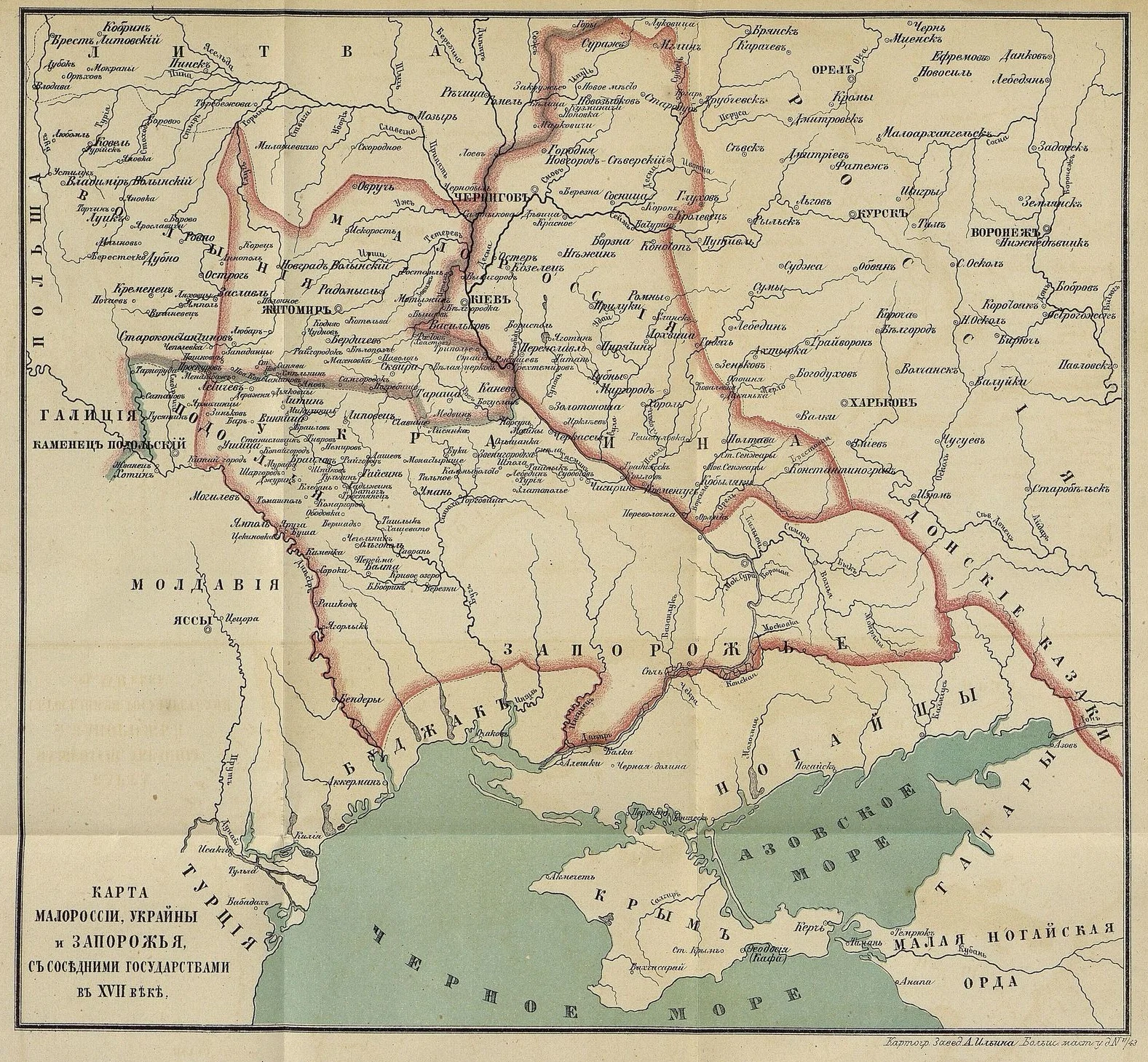
The church gave the names a further twist. According to the Internet Encyclopedia of Ukraine, the Patriarch of Constantinople introduced Mala Rus', "Rus' Minor", in the fourteenth century for the lands of the Halych metropolitanate. In the seventeenth and eighteenth centuries the Cossack Hetmanate's inhabitants accepted Malorosy as their own name. The tsars kept it as "Little Russia", and it was used officially until 1917. By the 1860s it met opposition, and today most Ukrainians regard it as an imperial label.
Kiev or Kyiv: why did the spelling change?
"Kiev" is the English form of the Russian name of the city, Киев. "Kyiv" is the official romanisation of the Ukrainian name, Київ. Ukraine has used it officially since 1996, when a commission on legal terminology approved a "Normative Table" for rendering Ukrainian names in English. Some sources give 1995, but Ukraine's own report to the United Nations says 1996. A Cabinet of Ministers resolution, No. 55 of 27 January 2010, made the system binding for maps, road signs and documents (UN working paper).
English-language institutions followed slowly, then quickly:
| Date | Change |
|---|---|
| 2006 | US Board on Geographic Names approves "Kyiv", but still allows "Kiev" |
| 2 October 2018 | Ukraine's Foreign Ministry launches the #KyivNotKiev campaign |
| 14 February 2019 | The Guardian adopts "Kyiv" ("except 'chicken Kiev'") |
| 11 June 2019 | The US Board on Geographic Names drops "Kiev" altogether |
| 14 August 2019 | The AP Stylebook switches to "Kyiv" |
| 14 October 2019 | The BBC switches to "Kyiv" |
| September 2020 | English Wikipedia moves its article to "Kyiv" |
Announcing the campaign, the Foreign Ministry argued that "the Soviet-era versions of many geographic names stubbornly persist in international practice". The AP explained its change as "in line with the Ukrainian government's preferred transliteration to English and increasing usage", and added: "The food dish remains chicken Kiev." The US board said that "Kyiv" was "now the only name available for standard use within the United States (U.S.) Government".
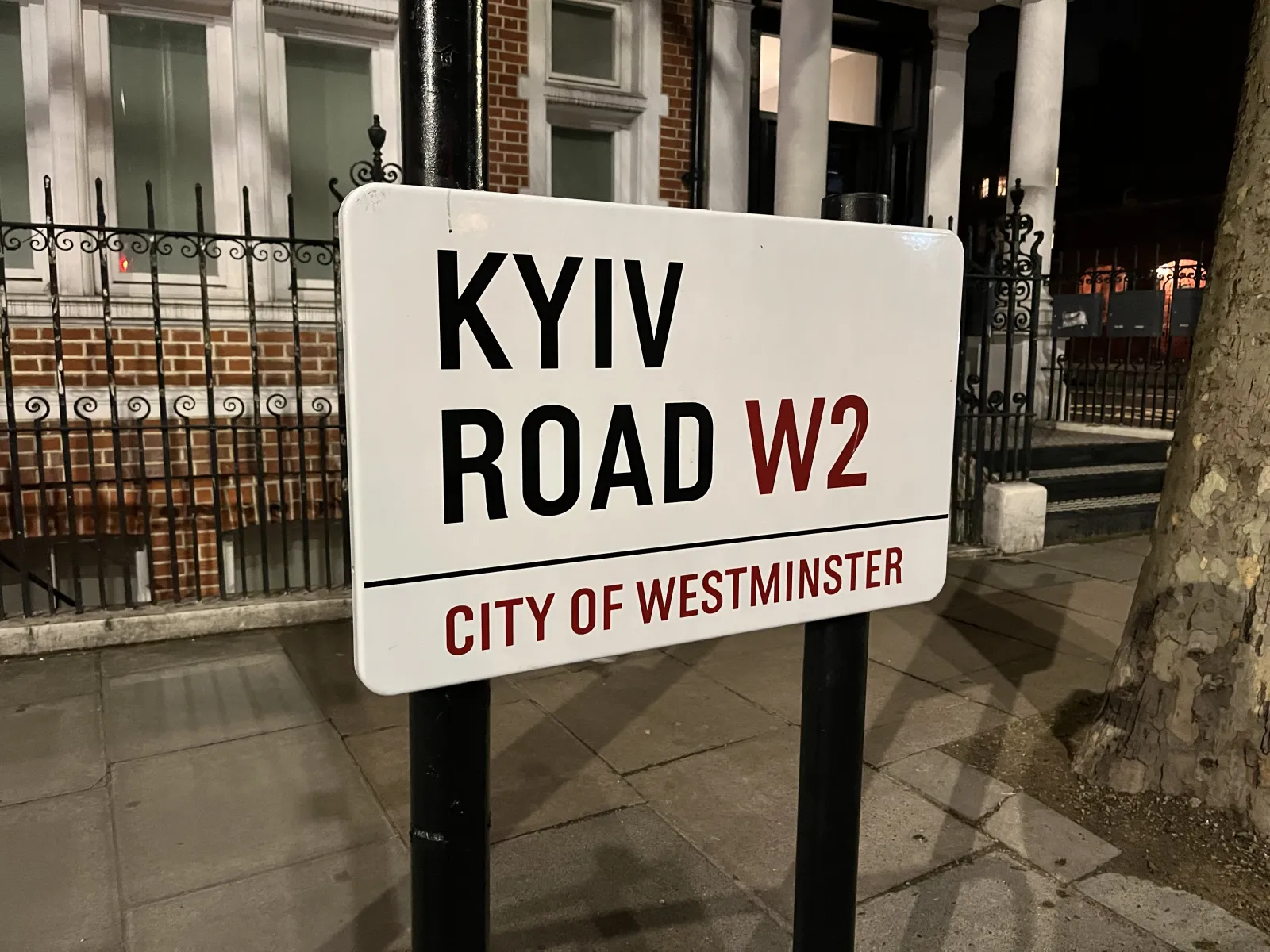
"Kyivan Rus'" follows the same logic. Encyclopaedia Britannica's article is now headed "Kyivan Rus" ("Also spelled: Kievan Rus"), and the Internet Encyclopedia of Ukraine uses "Kyivan Rus'". "Kievan Rus'" survives in a century of book titles and library catalogues, and it is still the more common search term. That is why this site uses "Kievan Rus'" in titles and "Kyiv" for the city. Many historians avoid the problem by writing plain "Rus'", which is what the sources themselves say.
Who inherits Rus'? Four competing answers
The imperial Russian answer. Its most extreme version came from the historian Mikhail Pogodin. In articles of 1856–1857 he argued that the Dnieper basin had been inhabited by Russians before the Mongol invasion, and that the Ukrainians arrived from the Carpathians only in the sixteenth century. The Internet Encyclopedia of Ukraine notes that his views were "proved unfounded and unscholarly" by historians including Mykhailo Maksymovych, Volodymyr Antonovych and Mykhailo Hrushevsky.
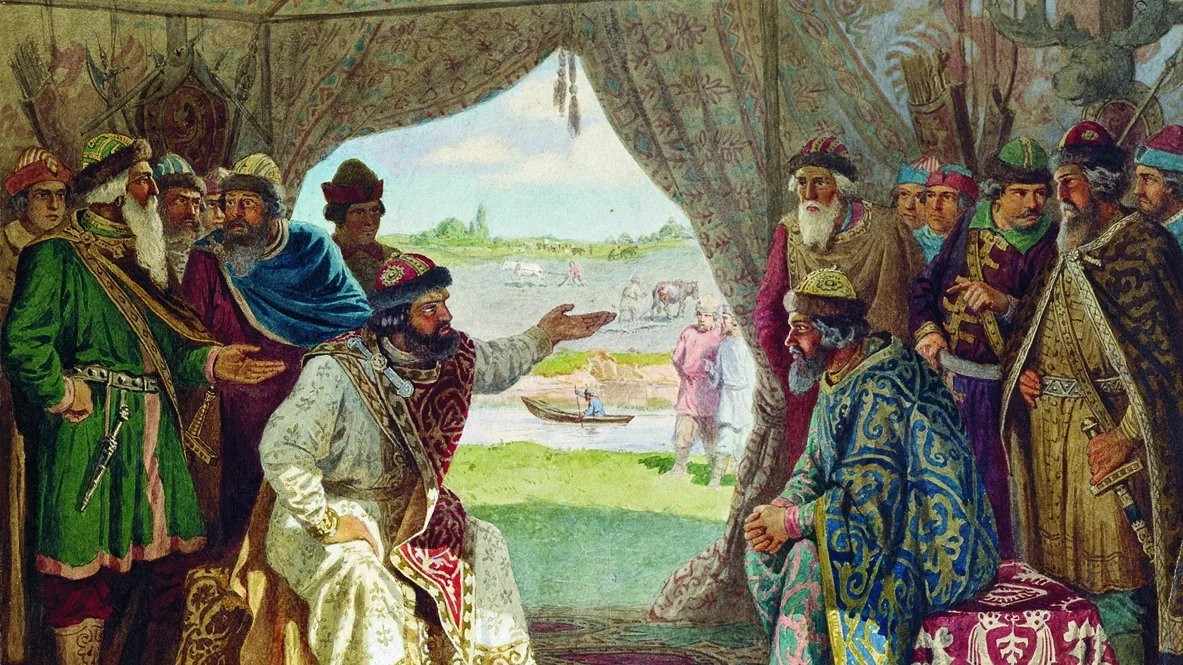
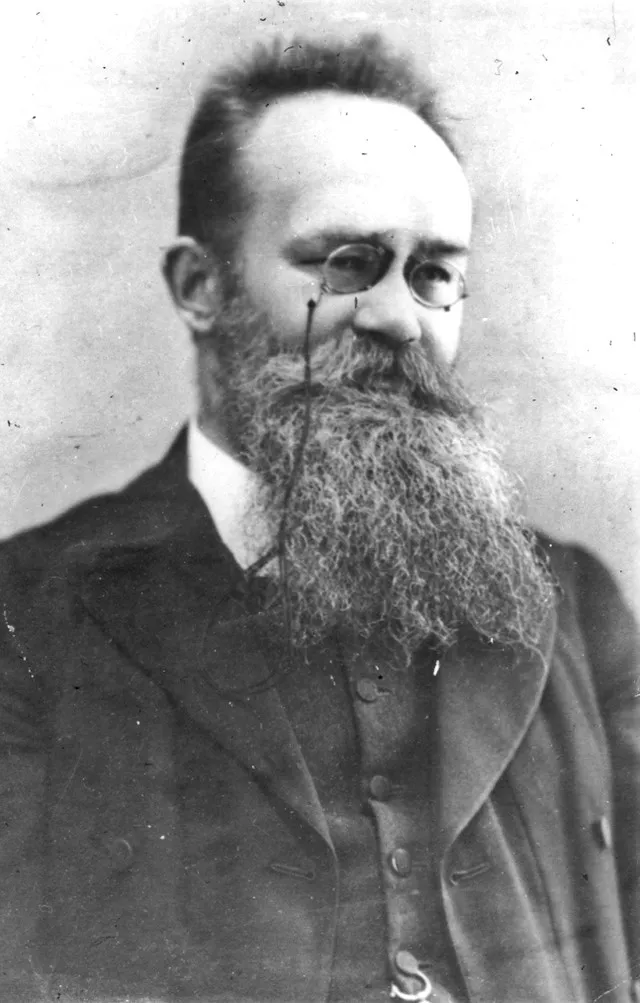
Hrushevsky's answer. In 1904 the Ukrainian historian Mykhailo Hrushevsky published "The Traditional Scheme of 'Russian' History", the essay that became the framework of Ukrainian national historiography. "The Kievan Period did not pass into the Volodimir-Moscow Period," he wrote, "but into the Galician-Volhynian Period of the 13th century and later into the Lithuanian-Polish of the 14th-16th centuries." Moscow's state "was neither the successor nor the inheritor of the Kievan State", and he compared Kyiv's relationship with it to Rome's with the provinces of Gaul. Hrushevsky also noted that "the Byelorussian nationality fares even worse" under the old scheme. But he did not escape national thinking either. Kyiv's state and culture, he wrote, "were the creation of one nationality, the Ukrainian-Ruś". The Internet Encyclopedia of Ukraine records that most Russian historians rejected his argument, while most Ukrainian historians adopted it.
The Soviet answer. A joint decree of the Communist Party and the Soviet government, issued in December 1953 for the 300th anniversary of Ukraine's "reunification" with Russia, said that the Ukrainian people "have sprung from a single root of the ancient Russian people" (Izvestiia, 9 December 1953, English translation from the Seventeen Moments in Soviet History archive). An essay in the anniversary volume published by the Soviet and Ukrainian Academies of Sciences in 1954 called Kievan Rus' "the cradle of three fraternal peoples". The formula gave each nation a share, while presenting union with Russia "in a single Russian state" as the goal of Ukrainian history.
Putin's answer. On 12 July 2021 President Vladimir Putin published "On the Historical Unity of Russians and Ukrainians". "Russians, Ukrainians, and Belarusians are all descendants of Ancient Rus, which was the largest state in Europe," he wrote, and "It so happened that Moscow became the center of reunification, continuing the tradition of ancient Russian statehood" (kremlin.ru). Warsaw's Centre for Eastern Studies called the essay "another example of Putin's revanchism", in which Ukrainians appear as "an ancient, inseparable part of the 'triune Russian nation'". In the LSE Public Policy Review, Björn Alexander Düben called it a "sweeping (but extremely selective)" account of Ukrainian history (Düben, 2023). Wilson judged its claim that "both the nobility and the common people perceived Rus as a common territory, as their homeland" to be "highly dubious".
What do historians say today?
Most historians now say that none of the national schemes fits. Serhii Plokhy's The Origins of the Slavic Nations (Cambridge University Press, 2006) traces how East Slavic identities were built and rebuilt over centuries. Reviewing it in the American Historical Review, Orest Subtelny summed up the conclusion: "attempting to establish the existence of a single Old Rus identity or three proto-national identities is no longer justified", and "applying nation-based concepts to this period does more harm than good". Another reviewer, David Rowley, put Plokhy's answer to the three rival schemes more bluntly: "none of the above". What Rus' did leave behind, Rowley wrote, was "the idea of a single East Slavic community and a name for it".
That legacy is shared, but not identical. The Byzantine faith and the Rurikid dynasty passed to all the Rus' principalities. After the Mongol conquest of 1240, different parts of the old realm went in different directions: Galicia-Volhynia and the Grand Duchy of Lithuania in the west, and Vladimir-Suzdal and later Moscow in the north-east. Each successor kept some pieces of the inheritance and claimed the whole. Plokhy, speaking in 2017, observed that "Russians today have a difficult time imagining Kyiv being not part of Russia or Russia-dominated space". The disagreement over the past has become part of a war over the present.
Kievan Rus' was the shared ancestor of three modern nations, a point our articles on Vladimir the Great and Olga also make. Calling it "Ukrainian" or "Russian" says more about the present than about the eleventh century.
What the map shows next
At 1054 on the map, Kievan Rus' is still one realm under the sons of Yaroslav the Wise. By 1200 on the map it has broken into principalities, from the Principality of Halych in the south-west to the Novgorod Republic in the north. By 1400 on the map the old Rus' lands are divided between the Grand Duchy of Lithuania, the Golden Horde and the rising principality of Moscow. Every later claim to Rus' starts from one of these pieces.
Sources
Primary sources and documents
- Kyiv Chronicle (Hypatian Codex), s.a. 6695 (1187) and 6697 (1189). Text: Ipat'evskaia letopis', PSRL vol. 2 (St Petersburg, 1908). Translations: L. L. Heinrich (1977) and P. R. Magocsi (2010), as quoted in Wikipedia, "Name of Ukraine".
- Mykhailo Hrushevsky, "The Traditional Scheme of 'Russian' History and the Problem of a Rational Organization of the History of the East Slavs" (1904), English translation, ed. Andrew Gregorovich, 2nd edn (Winnipeg: Ukrainian Free Academy of Sciences, 1966; Slavistica no. 55), pp. 7–16. Online text: https://likbez.org.ua/en/hrushevsky_east_slavs.html
- CPSU Central Committee, USSR Council of Ministers and Presidium of the USSR Supreme Soviet, decree on the 300th anniversary of Ukraine's "reunification" with Russia, Izvestiia, 9 December 1953, p. 1. English translation: Seventeen Moments in Soviet History: https://soviethistory.msu.edu/1954/gift-of-crimea/gift-of-crimea-texts/statement-proclaiming-ukraine-anniversary/
- K. G. Guslisty, "Istoricheskie sviazi Ukrainy s Rossiei do osvoboditel'noi voiny 1648–1654 gg.", in Vossoedinenie Ukrainy s Rossiei 1654–1954: Sbornik statei (Moscow: Academy of Sciences of the USSR and of the Ukrainian SSR, 1954), p. 23: https://inslav.ru/sites/default/files/editions/1954_vossoedinenie_ukrainy_s_rossiej.pdf
- Vladimir Putin, "On the Historical Unity of Russians and Ukrainians", 12 July 2021: http://en.kremlin.ru/events/president/news/66181
- Ukraine (State Service of Geodesy, Cartography and Cadastre), "Romanization System in Ukraine", UNGEGN Working Paper No. 21 (2011): https://unstats.un.org/unsd/geoinfo/ungegn/docs/26th-gegn-docs/WP/WP21_Roma_system_Ukraine%20_engl._.pdf
Studies and reference works
- Serhii Plokhy, The Origins of the Slavic Nations: Premodern Identities in Russia, Ukraine, and Belarus (Cambridge University Press, 2006).
- Orest Subtelny, review of Plokhy, The Origins of the Slavic Nations, American Historical Review 113/1 (2008), 283–284: https://academic.oup.com/ahr/article-abstract/113/1/283/44219
- David G. Rowley, review of Plokhy, The Origins of the Slavic Nations, H-Nationalism (May 2007).
- Ekaterina V. Klimenko, "'Kievan Rus Is Ours!': Ontological Security, National Memory, and Russia's Invasion of Ukraine", Nationalities Papers (2026), DOI 10.1017/nps.2026.10132: https://www.cambridge.org/core/journals/nationalities-papers/article/kievan-rus-is-ours-ontological-security-national-memory-and-russias-invasion-of-ukraine/3D29BC29C111BEE26B90ED4E3B8E0745
- Björn Alexander Düben, "Revising History and 'Gathering the Russian Lands': Vladimir Putin and Ukrainian Nationhood", LSE Public Policy Review 3/1 (2023), DOI 10.31389/lseppr.86: https://ppr.lse.ac.uk/articles/10.31389/lseppr.86
- Andrew Wilson, "Russia and Ukraine: 'One People' as Putin Claims?", RUSI commentary, 23 December 2021: https://www.rusi.org/explore-our-research/publications/commentary/russia-and-ukraine-one-people-putin-claims
- Centre for Eastern Studies (OSW), "Putin's article: 'On the historical unity of Russians and Ukrainians'" (13 July 2021): https://www.osw.waw.pl/en/publikacje/analyses/2021-07-13/putins-article-historical-unity-russians-and-ukrainians
- Harvard Ukrainian Research Institute, "Contextualizing Putin's 'On the Historical Unity of Russians and Ukrainians'" (2 August 2021; reposts a 2017 interview with Serhii Plokhy): https://www.huri.harvard.edu/news/putin-historical-unity
- Internet Encyclopedia of Ukraine, five entries: "Rus'": https://www.encyclopediaofukraine.com/display.asp?linkpath=pages%5CR%5CU%5CRushDA.htm; "Kyiv Chronicle": https://www.encyclopediaofukraine.com/display.asp?linkpath=pages%5CK%5CY%5CKyivChronicle.htm; "Ukrainians": https://www.encyclopediaofukraine.com/display.asp?linkpath=pages%5CU%5CK%5CUkrainians.htm; "Pogodin, Mikhail": https://www.encyclopediaofukraine.com/display.asp?linkpath=pages%5CP%5CO%5CPogodinMikhail.htm; "Hrushevsky, Mykhailo": https://www.encyclopediaofukraine.com/display.asp?linkpath=pages%5CH%5CR%5CHrushevskyMykhailo.htm
- Encyclopaedia Britannica, "Kyivan Rus": https://www.britannica.com/topic/Kyivan-Rus
- Wikipedia, "Name of Ukraine".
Spelling change (dated reports)
- Kyiv Post, on the launch of #KyivNotKiev, 2 October 2018: https://www.kyivpost.com/post/8628
- Ukrinform, "The Guardian to write Kyiv instead of Kiev", 14 February 2019: https://www.ukrinform.net/rubric-society/2640370-the-guardian-to-write-kyiv-instead-of-kiev.html
- Grammarphobia, "Kyiv or Kiev?" (2022), quoting the US Board on Geographic Names decisions of 2006 and 11 June 2019: https://grammarphobia.com/blog/2022/02/kyiv-kiev.html
- Kyiv Post, "Kiev no more: AP Stylebook changes spelling of Ukrainian capital to Kyiv", 14 August 2019 (quotes the AP tweet): https://archive.kyivpost.com/ukraine-politics/kiev-no-more-ap-stylebook-changes-spelling-of-ukrainian-capital-to-kyiv.html
- UNIAN, on the BBC's change from 14 October 2019: https://www.unian.info/society/10718775-kyiv-not-kiev-vvs-amending-own-style-guide.html
- Ukrinform, "Wikipedia starts using 'Kyiv' instead of 'Kiev' – Kuleba", 18 September 2020: https://www.ukrinform.net/rubric-polytics/3102055-wikipedia-starts-using-kyiv-instead-of-kiev-kuleba.html
Image credits
- Title image (Kyiv around 1050): AI-generated illustration.
- The words Oukraina (1187) and Oukraině (1189) in the Hypatian Codex. Public domain, via Wikimedia Commons.
- Anthony Jenkinson, map of Russia, Muscovy and Tartary (1562), printed by Abraham Ortelius (1575). Public domain, via Wikimedia Commons.
- “Little Russia and Ukraine in the seventeenth century”, from N. S. Golitsyn, Russian Military History (1877). Public domain, via Wikimedia Commons.
- “Kyiv Road” street sign, Westminster, London (2023). Photo: Thomas Bower, CC BY-SA 4.0, via Wikimedia Commons.
- Mykhailo Hrushevsky, photograph of the 1910s, photographer unknown. Public domain, via Wikimedia Commons.