Human verified. Last updated by our editorial team on .
Northern Eurasia · The medieval principalities
Tver
1247 – 1485 (dynasty founded 1246/47; city surrendered 12 September 1485)
The Principality of Tver, from the late fourteenth century the Grand Principality of Tver, was a Rus' state on the upper Volga, north-west of Moscow, ruled from the city of Tver at the mouth of the Tmaka. It took shape in 1246–1247, when the lands of Grand Prince Yaroslav Vsevolodovich were divided after his death, and was ruled by the descendants of his son Yaroslav Yaroslavich until 1485. Around 1300 its princes were the strongest in north-eastern Rus': Mikhail Yaroslavich held the grand principality of Vladimir and called himself "grand prince of all Rus'". Three Tver princes were executed at the Golden Horde, and the city's rising of 1327 brought a punitive campaign in which Moscow's prince took part. Later princes allied with Lithuania, built churches and kept a court chronicle. In September 1485 Ivan III of Moscow besieged the city; its last grand prince fled and Tver surrendered without a storm.
- Existed
- 1247 – 1485 (dynasty founded 1246/47; city surrendered 12 September 1485)
- Shown on the map
- 1294–1486
- Peak area
- 7k km²
- Region
- Northern Eurasia
At a glance
| Names | Principality of Tver; from the late 14th century "grand principality of Tver" (velikoe kniazhenie Tverskoe, attested from the late 1420s) |
| Founded | 1246/47, in the division after the death of Yaroslav Vsevolodovich; first prince Yaroslav Yaroslavich |
| Capital | Tver, at the confluence of the Tmaka and the Volga |
| Other towns | Kashin, Mikulin, Kholm, Zubtsov, Staritsa, Ksniatin, Klin (at times) |
| Dynasty | Descendants of Yaroslav Yaroslavich, a younger brother of Alexander Nevsky |
| Religion | Orthodox Christianity; a bishopric from 1265 according to the Tver regional library |
| Overlords | Tributary to the Golden Horde; its princes needed the khan's patent (yarlyk) |
| High points | Mikhail Yaroslavich, grand prince of Vladimir 1305–1317; Boris Aleksandrovich (1425–1461) |
| End | Mikhail Borisovich fled on the night of 11 September 1485; the city surrendered on 12 September; Ivan III gave Tver to his son on 15 September |
| Today | Tver is the centre of Tver Oblast in Russia |
Where was Tver?
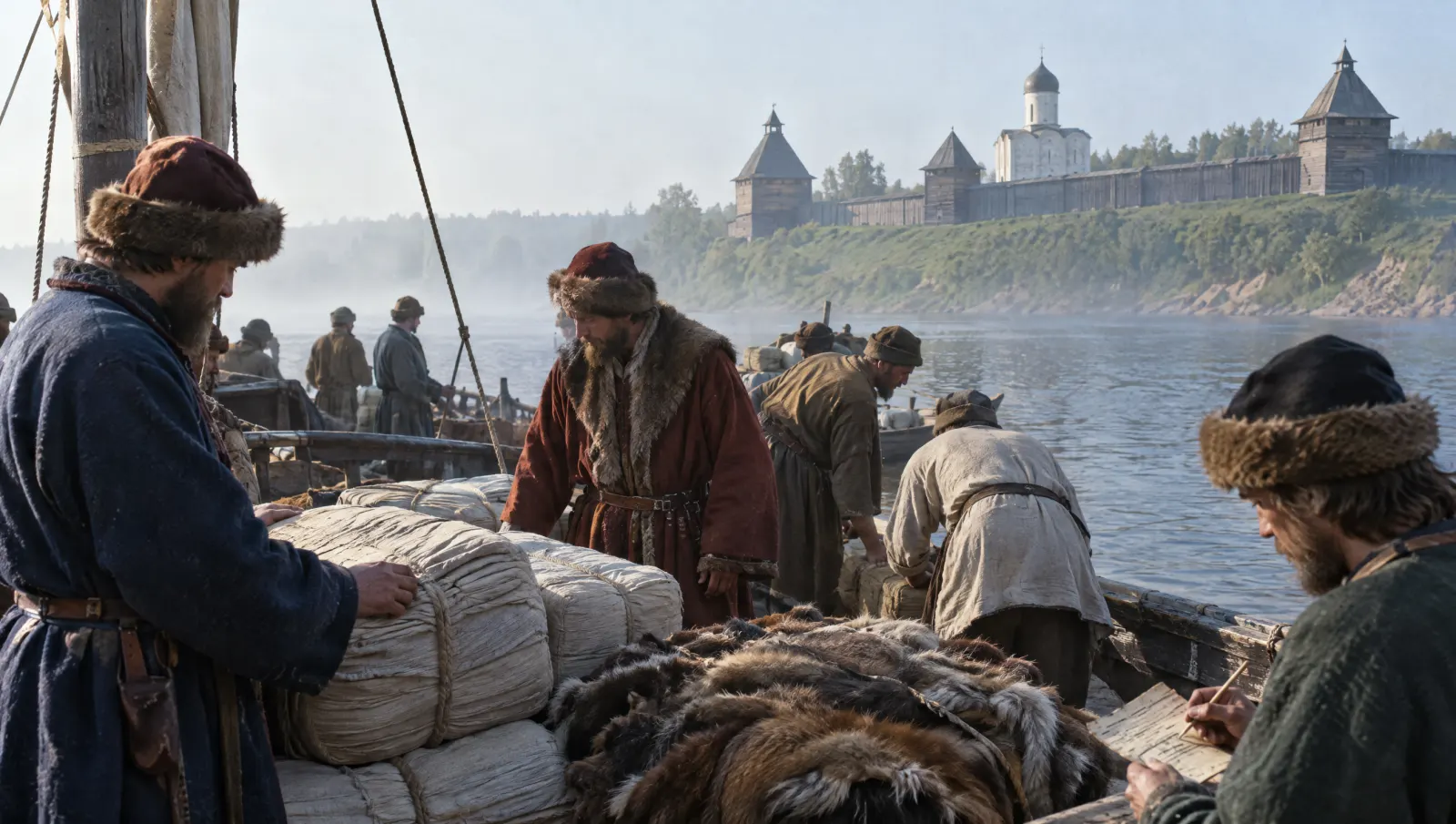
Tver lay on the upper Volga, on the road between Novgorod in the north-west and the old centres of Vladimir and Suzdal in the east. The city itself stood on the high right bank of the Volga, on the cape formed where the small river Tmaka flows in. From there the princes ruled a belt of land along the river: Kashin downstream, Staritsa (also called Novy Gorodok) and Zubtsov upstream, with Kholm, Mikulin and Ksniatin around them. Moscow lay to the south-east, the Novgorod Republic to the north and west, and from the fourteenth century the Grand Duchy of Lithuania to the west and south-west.
The beginnings of the town are uncertain; the Tver regional library says that it was first named in the chronicles under 1209. The archaeologist N. V. Zhilina dated the first settlement on the cape at the Tmaka to the late twelfth century, while V. A. Lapshin saw a slow formation that went on long after Tver had become a princely capital. A theory popular in the nineteenth century, that Tver first stood on the left bank and was moved across the Volga, "found no archaeological confirmation", in the words of a 2011 survey of the debate.
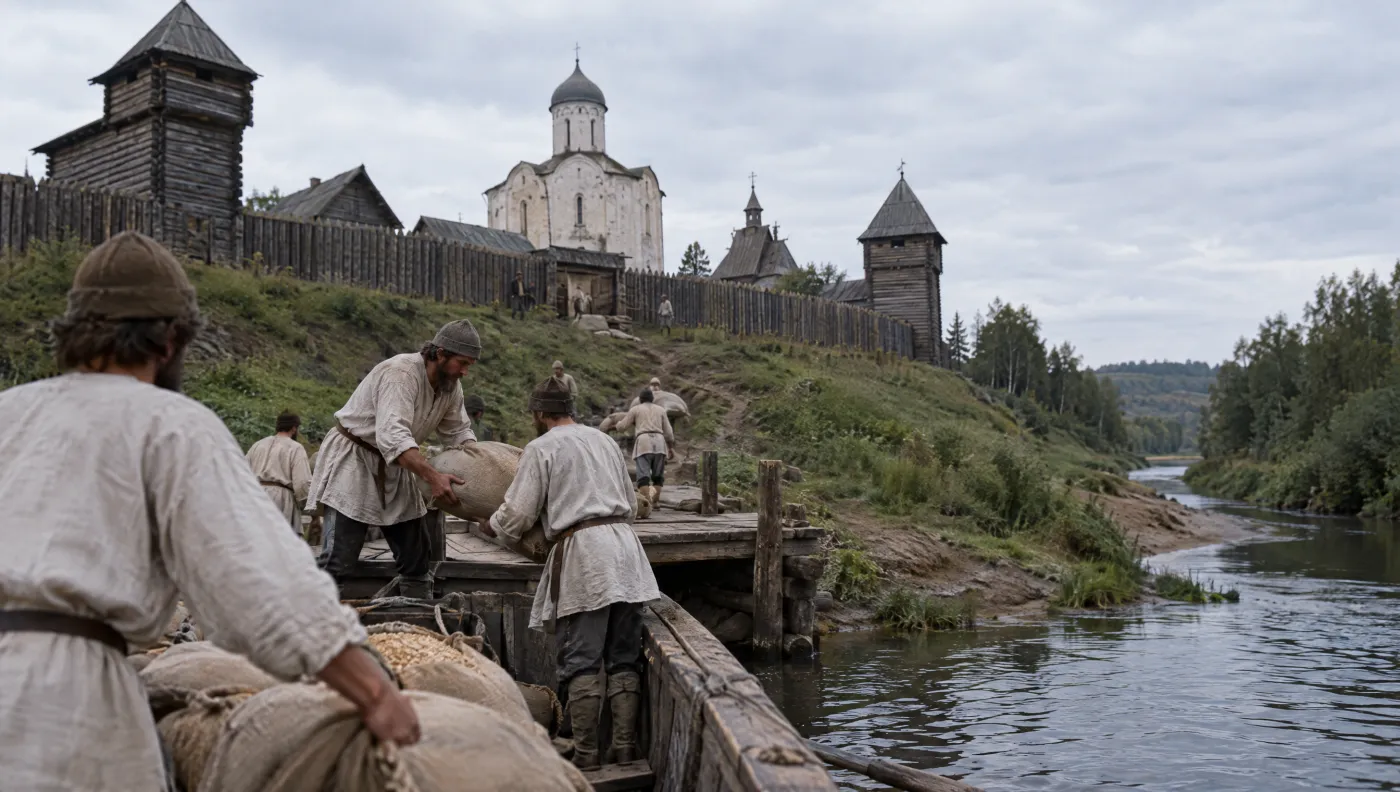
According to a 2020 study of the kremlin's sacred topography, the only stone church there at the end of the thirteenth century was the Cathedral of the Transfiguration of the Saviour, begun in 1285. Tver was a city of timber, with wooden walls and the single stone cathedral by the Volga.
When was the Principality of Tver founded?
In 1246–1247. The historian N. V. Shtykov writes that Tver was sacked in Batu's campaign of 1238, that in the 1240s it was governed by a lieutenant of Grand Prince Yaroslav Vsevolodovich, and that it "became the centre of a principality only in 1247". Yaroslav Vsevolodovich died at the court of the Great Khan in 1246; the Nikon Chronicle tells that he was slandered at the court of the Great Khan and "died a hard death among aliens", and its English editors note that other chronicles give the year as 1247 or 1248. In the division of his lands that followed, Tver went to his son Yaroslav Yaroslavich, whom Shtykov calls the founder of the Tver dynasty.
The details are disputed. The Tver regional library writes that Tver was first given to Alexander, later called Nevsky, who ruled it through lieutenants, before the division of 1247 gave it to Yaroslav. The year 1246 marks the death that set the division in motion; 1247 is the year most often given for the principality itself.
Yaroslav Yaroslavich became grand prince of Vladimir after Alexander's death, in 1264 according to the Nikon Chronicle, and ruled there for eight years. He died on his way back from the Horde, and his body was taken to Tver and buried in the church of Saints Kosma and Damian. His son Sviatoslav followed him in Tver. A younger son, Mikhail, was born after the father's death, in 1271 or 1272 according to the Pravoslavnaia entsiklopediia, the Russian Orthodox Encyclopedia. Mikhail first appears in the chronicles as prince of Tver in 1285, when the stone cathedral was founded.
Tver soon acted as a power of its own. In 1288 Mikhail "would not submit" to Grand Prince Dmitry Aleksandrovich. Dmitry and his allies burned Ksniatin, failed to take Kashin, and made peace when the men of Tver approached.
Who was Mikhail of Tver?
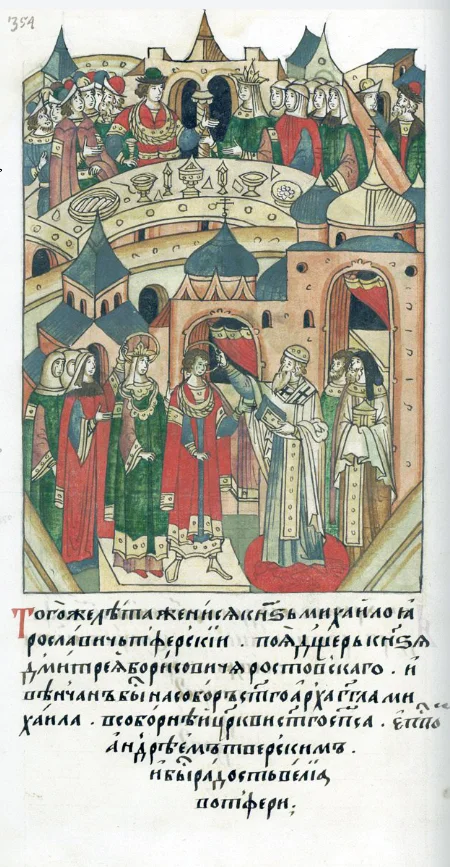
Mikhail Yaroslavich (1271/72–1318) was the most powerful of the Tver princes and the first to claim leadership of all Rus'. On 8 November 1294, the feast of the Archangel Michael, he married Anna, daughter of Prince Dmitry Borisovich of Rostov, in the Saviour cathedral of Tver; Bishop Andrei performed the wedding. The archangel was his patron throughout his life, and the seals attributed to him show the figure of Michael. Anna outlived him by fifty years and died near Kashin in 1368.
When Grand Prince Andrei Aleksandrovich died in 1304, Mikhail and Yuri Danilovich of Moscow both went to the Horde to claim the grand principality of Vladimir, the senior title in north-eastern Rus'. Khan Tokhta gave the patent to Mikhail, who returned at the end of 1305. The Tver regional library calls his reign Tver's "golden age", when chronicle-writing revived and the kremlin was enlarged.
Mikhail's title went further than any before him: chronicles, charters and a letter of Patriarch Niphon of Constantinople call him "grand prince of all Rus'". A monk named Akindin addressed him with the words "You are tsar, lord prince, in your own land", which the historian V. A. Kuchkin has shown to be a rendering of the Latin maxim that a king is emperor in his own kingdom.
What happened at Bortenevo in 1317?
Bortenevo was the battle in which Mikhail defeated Moscow and a Horde army. In 1317 Yuri Danilovich of Moscow returned from two years at the Horde. He had married Khan Özbeg's sister Konchaka and received the patent for Vladimir, and he came with a large force under the emir Kavgady. The Tver Chronicle records that Mikhail met them at Kostroma, negotiated with Kavgady, "ceded the grand principality" to Yuri and went home to Tver, where he "laid the great kremlin".
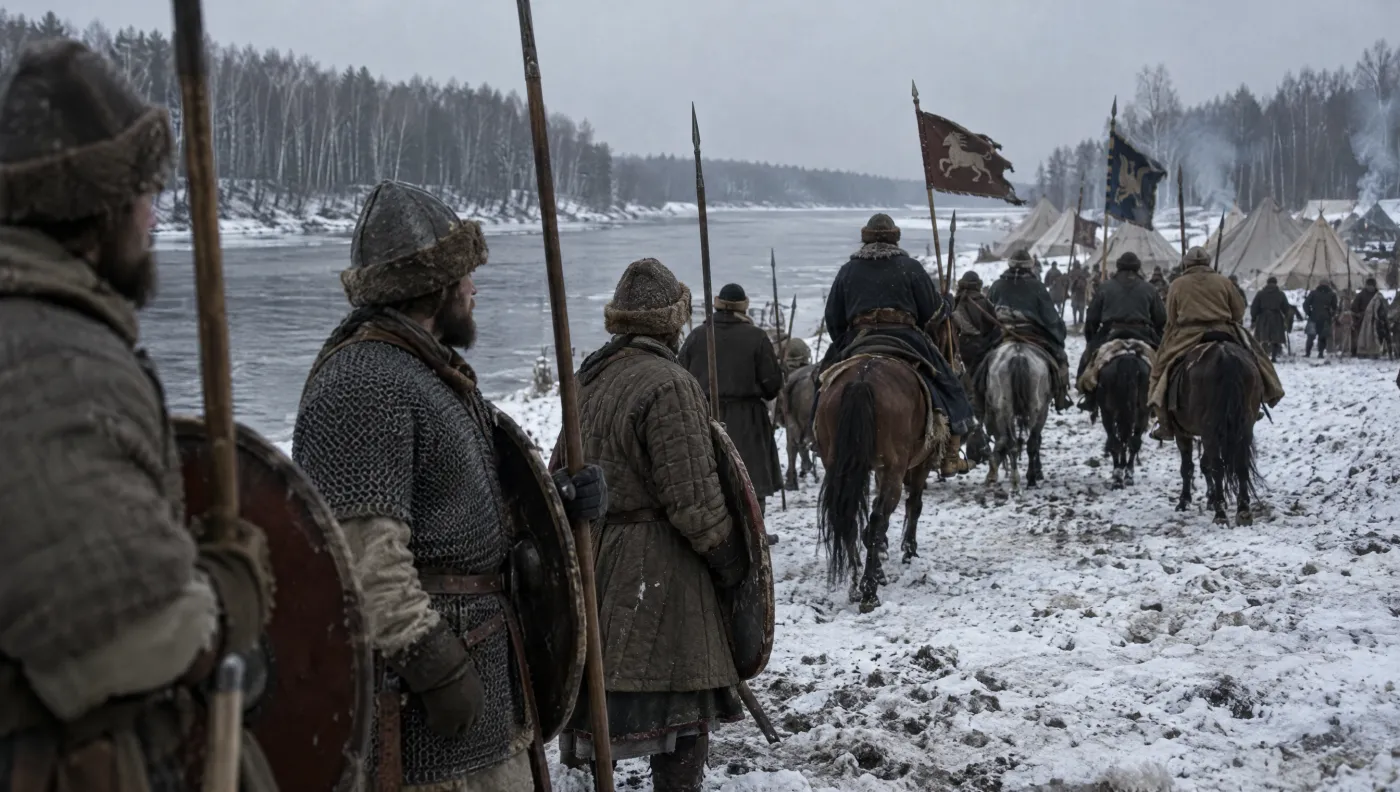
That did not end the war. Yuri and Kavgady marched on Tver and "began to lay waste the districts of Tver, burned the villages and the grain, and led the people into captivity". They stood fifteen versts from the city for five weeks, and spent three months in the Tver land in all, while envoys rode back and forth "all with deceit". Then Mikhail gathered his forces. "The men of Tver and of Kashin" went out against Yuri, there was "a great slaughter", and God helped Mikhail. Many princes were taken prisoner and brought to Tver, together with Yuri's wife Konchaka. Yuri fled to Novgorod with a small retinue. Kavgady "ordered his men to lower their banners" and rode back to his camp. "This evil happened on the 22nd of December," the chronicle ends.
The Pravoslavnaia entsiklopediia places the battle at Bortenevo, forty versts from Tver. It was the high point of Tver's power, and it gave Yuri the charges that would destroy Mikhail.
Why was Mikhail of Tver executed?
Because Yuri and Kavgady accused him before the khan, and the khan believed them. Soon after Bortenevo, Konchaka died in Tver. The Pravoslavnaia entsiklopediia writes that Mikhail had no interest in her death and "was clearly not involved", but the blame fell on him. Mikhail sent his envoy Oleksa Markovich to Moscow to make peace; Yuri killed him. Then Yuri went to the Horde with Kavgady. According to the Tver Chronicle, they told Özbeg: "Prince Mikhail has collected many tributes from the towns and wants to go to the Germans, and he will not come to you."
Mikhail went nonetheless. Mikhail reached the khan's camp by the Sea of Azov, where the Don flows in, on 6 September 1318, the feast of the miracle of the Archangel Michael. After about a month and a half he was tried. His Life, written soon after his death and described by the Pravoslavnaia entsiklopediia, lists the charges: that he had withheld tribute, that he had fought against the khan's envoy, and that he had poisoned Konchaka.
The khan condemned him. He was kept with a heavy wooden collar on his neck. The Rogozhskii Chronicle places his death beyond the Terek, "under the great Yas and Circassian mountains", at a town on the river Sevench. The Tver Chronicle describes the end: the killers broke into his tent, struck him, threw him down and kicked him, "and one of the lawless murderers, named Romanets, drew a great knife and struck the blessed one in the heart". Mikhail died "for the Christians and for his fatherland, on the 22nd of November, at the sixth hour of the day".
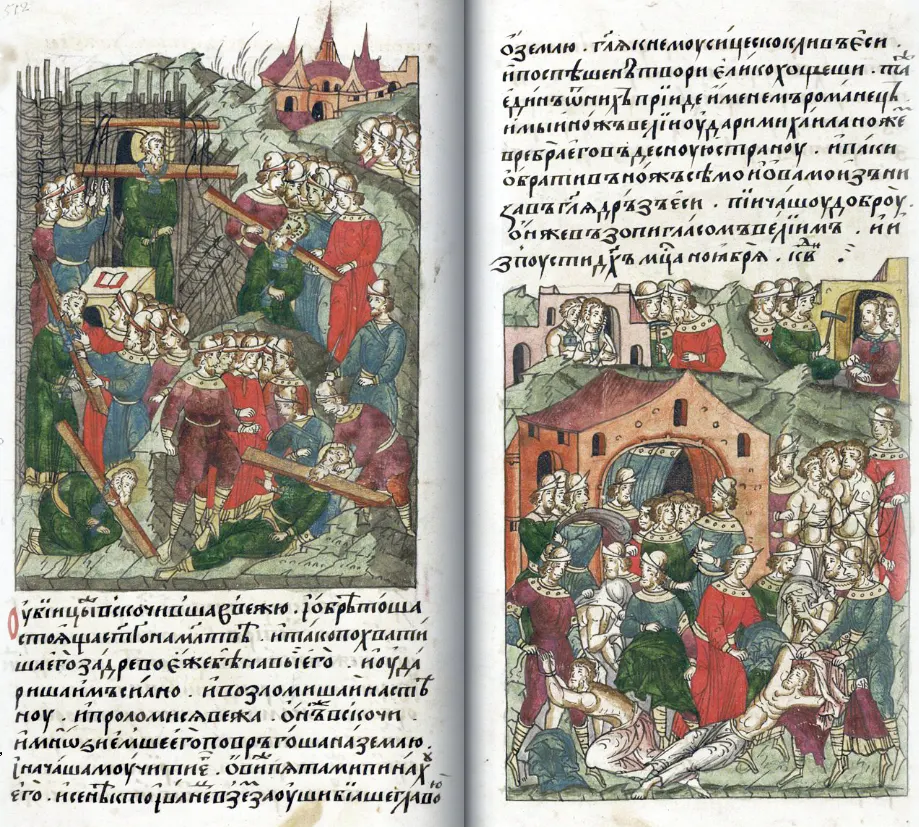
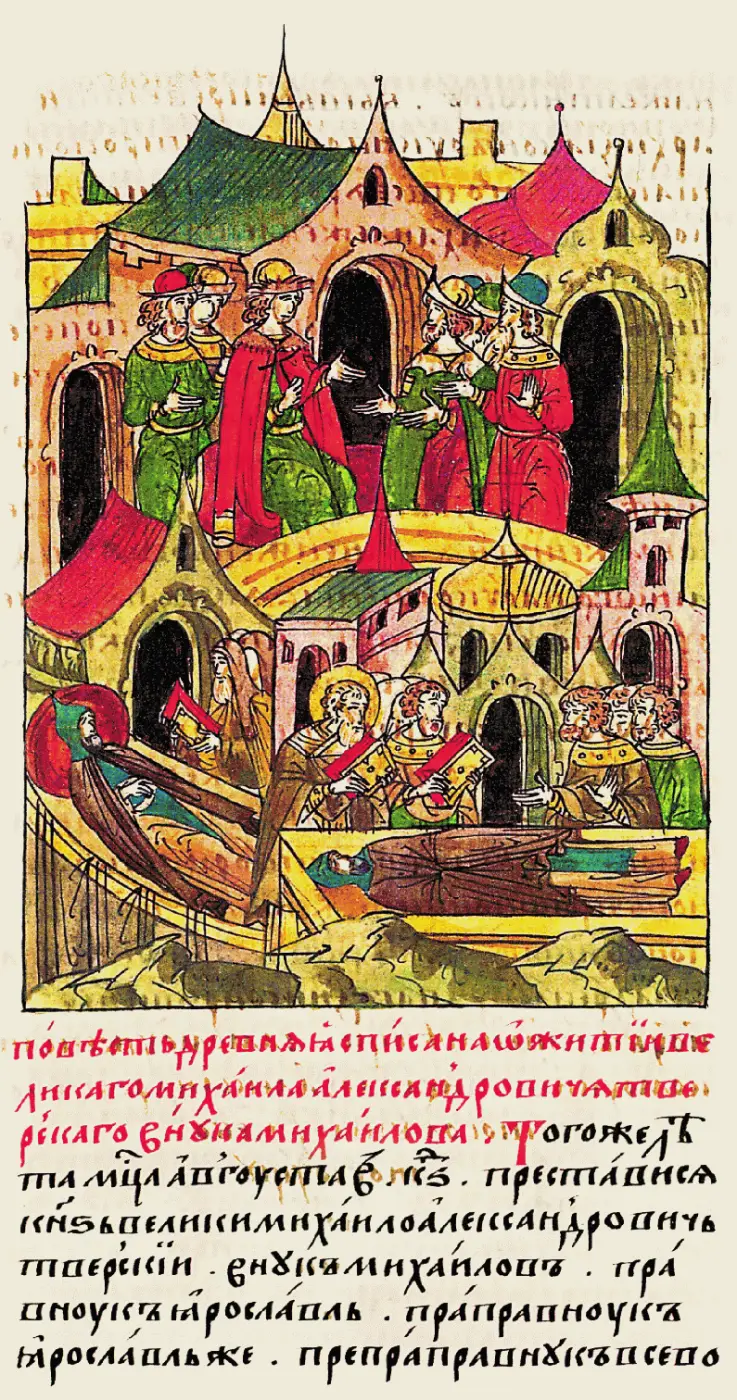
Yuri sent the body to Moscow, where it was laid in the church of the Saviour. It reached Tver only the next year and was buried in the Saviour cathedral on 6 September 1319. His veneration across the Russian Church was established at the Moscow council of 1549. The Tver regional library gives the date of his death as 5 December 1318. That is the same day converted to the modern calendar; the chronicles give 22 November.
What was the Tver uprising of 1327?
A rising of the townspeople of Tver against a Horde envoy and his men, on 15 August 1327, the feast of the Dormition. Mikhail's eldest son Dmitry, nicknamed "Terrible Eyes", had won the patent for Vladimir in 1322, killed Yuri of Moscow at the Horde on 21 November 1325, and been executed on Özbeg's orders on 15 September 1326. The patent then passed to his younger brother, Aleksandr Mikhailovich. In 1327 Özbeg sent an envoy to Tver whom the older chronicles call Shevkal.
The Tver Chronicle tells the story in detail. Shevkal "drove the grand prince from his court", settled there himself and "raised a great persecution" of the Christians. The people complained to Aleksandr, who, unable to defend them, "told them to endure". On the morning of the feast, "as the market was opening", a deacon of Tver named Diud'ko led a young and very fat mare down to the Volga to drink. The Tatars took it from him. The deacon cried out: "O men of Tver, do not give me up!" A fight broke out, the bells were rung, a veche (town assembly) gathered, and "the whole city turned". The people killed the Tatars wherever they found them, "until they killed Shevkal himself and all of them in turn". Only herdsmen grazing horses in the fields escaped, on the best stallions, to Moscow and then to the Horde.
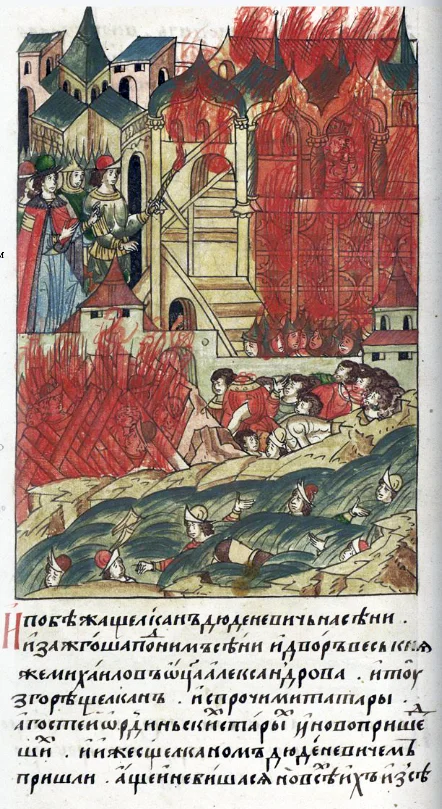
The later Nikon Chronicle tells a different story. In it the envoy is a cousin of Özbeg who planned to rule Tver himself and convert the Christians to the Tatar faith, and Aleksandr leads the townspeople and burns him in the palace; in some passages he is called Shchelkan Diudenevich. The Nikon Chronicle's English editors call the name Shchelkan "a popular folkloristic transformation" of Shevkal, the name used in the epic songs. The form "Chol Khan", common on modern websites, is a modern reconstruction. Historians also disagree about Aleksandr's part. The Pravoslavnaia entsiklopediia sums it up: he "first tried in vain to restrain, then to lead" the rising.
The reprisal came that winter. The Tver Chronicle names the commander, Fedorchuk, with "five temniks", commanders of ten thousand. "Tver and all the towns" were burned and many people killed or led into captivity. The Nikon Chronicle adds that Ivan Danilovich of Moscow, later known as Ivan Kalita, returned from the Horde with this army, together with Prince Ivan Vasilievich of Suzdal. Torzhok was laid waste, and Novgorod bought peace for five thousand roubles. Aleksandr Mikhailovich fled to Pskov.
Why did Tver lose the race to Moscow?
The year 1327 was the turning point. Ivan Kalita became grand prince of Vladimir in 1328, and the Rogozhskii Chronicle says that from then on "there was a great peace for forty years". The patent for Vladimir stayed with Moscow's princes from then on, apart from brief grants to others; Mikhail Aleksandrovich of Tver received it in 1371 and 1375 but could not take it up.
Aleksandr spent ten years in exile. Pskov made him its prince and refused to surrender him until Metropolitan Theognostus excommunicated the city in 1329; he went to Lithuania and returned to Pskov in 1331 as a vassal of Grand Duke Gediminas. Meanwhile his younger brother Konstantin, who followed a policy loyal to Moscow, held Tver from 1328 to 1338.
In 1337 Aleksandr went to Özbeg, who restored him to Tver. The historian A. V. Nazarenko, writing in the Pravoslavnaia entsiklopediia, calls the widespread view that he also received the title "grand prince of Tver" unlikely. In 1339 Aleksandr was summoned to the Horde and executed with his son Fedor, on 28 October according to the Nikon Chronicle. An account of his death preserved in the chronicles says that they were "dismembered at the joints". The same year, the Nikon Chronicle adds, Ivan Kalita "took from Tver to Moscow the bell from the church of the Holy Saviour".
Who were the princes of Tver?
After 1339 the house split into lines based at Kashin, Kholm, Mikulin and other towns, and the throne was fought over for a generation. The Nikon Chronicle records that Vsevolod Aleksandrovich of Kholm returned from the khan in 1347 with a patent "to be prince of Tver", fought his uncle Vasily of Kashin, and in 1349 yielded the throne to him.
| Prince | Ruled Tver | Notes |
|---|---|---|
| Yaroslav Yaroslavich | 1247 – early 1270s | Founder; grand prince of Vladimir from 1264 (Nikon); some accounts give Tver to Alexander Nevsky first |
| Sviatoslav Yaroslavich | early 1270s – before 1285 | Dates uncertain |
| Mikhail Yaroslavich | by 1285 – 1318 | Grand prince of Vladimir 1305–1317; executed 22 November 1318 |
| Dmitry Mikhailovich "Terrible Eyes" | 1318 – 1326 | Grand prince of Vladimir 1322–1325 (autumn 1322 in Tver chronicles); executed 15 September 1326 |
| Aleksandr Mikhailovich | 1326 – 1327; 1337/38 – 1339 | Grand prince of Vladimir 1326–1327; prince of Pskov; executed 28 October 1339 |
| Konstantin Mikhailovich | 1328 – 1338; 1339 – 1346 | Died at the Horde in 1346 (Nikon) |
| Vsevolod Aleksandrovich of Kholm | 1347 – 1349 | Khan's patent 1347; yielded to his uncle in 1349 (Nikon) |
| Vasily Mikhailovich of Kashin | 1349 – 1368 | Contested by his nephews from the 1360s; died 1368 |
| Mikhail Aleksandrovich | 1365/68 – 1399 | Grand prince "at least de facto" from 1365 (Pravoslavnaia entsiklopediia); died 26 August 1399 |
| Ivan Mikhailovich | 1399 – 1425 | Died 22 May 1425 (Tver Chronicle) |
| Aleksandr Ivanovich | 1425 | Ruled five months; died of plague |
| Yuri Aleksandrovich | 1425 | Died the same year |
| Boris Aleksandrovich | 1425 – 1461 | Accession 1425 (Russian Biographical Dictionary) or 1426; died 10 February 1461 |
| Mikhail Borisovich | 1461 – 1485 | Enthroned 15 February 1461 aged about four and a half; fled to Lithuania 11 September 1485 |
| Ivan Ivanovich "the Young" | 1485 – 1490 | Son of Ivan III and grandson of Boris through his mother; installed by Moscow |
The reign boundaries in the middle of the fourteenth century are approximate; the chronicles report patents and quarrels, not formal accessions.
Why did Tver ally with Lithuania?
Because Lithuania was the only power able to help it against Moscow. The ties began with marriages: Dmitry Mikhailovich married Maria, a daughter of Gediminas, in the winter of 1320/21, and around 1350, according to the Nikon Chronicle, Grand Duke Algirdas (Olgerd) married Uliana, daughter of Aleksandr Mikhailovich. Algirdas's brother-in-law was Mikhail Aleksandrovich (1333–1399), who became the leading figure of the Tver house in the 1360s.
Mikhail was born in Pskov in 1333, during his father's exile. The plague of 1365–1366 killed his mother, his elder brother Vsevolod and two younger brothers, and Mikhail became, as the Pravoslavnaia entsiklopediia puts it, "at least de facto" grand prince of Tver from 1365. In 1368 Mikhail was invited to Moscow for talks and arrested with his boyars; he was freed only when an embassy from the Horde arrived.
What followed is known in Russian as the Litovshchina, the "Lithuanian wars":
- 1368. Mikhail fled to Algirdas, "his brother-in-law", and asked for help. That autumn Algirdas marched on Moscow with his brother Kęstutis, Kęstutis's son Vytautas and all the Lithuanian princes, while Mikhail came to the Muscovite border. The Nikon Chronicle adds that Algirdas acted on the pleading of his wife Uliana. On 21 November the Lithuanians destroyed Moscow's advance guard on the river Trostna, and Algirdas stood at Moscow for three days without taking the kremlin.
- 1370. The Tver Chronicle records that Algirdas came to Volok and then to Moscow, "on St Nicholas's day", and made peace. Metropolitan Aleksii excommunicated Mikhail; Patriarch Philotheos of Constantinople ordered the ban lifted in 1371 after Algirdas complained.
- 1371. Mikhail received the patent for Vladimir from Mamai's khan Muhammad-Bulak. Dmitry of Moscow, the future Dmitry Donskoy, answered the khan's envoy, according to the Tver Chronicle: "I will not come to the patent, and I will not let him into the grand principality."
- 1372. Mikhail took Dmitrov and burned Torzhok on 31 May. In June the armies of Algirdas and Mikhail met Dmitry's at Liubutsk; they faced each other across a steep ravine for many days, made a truce and went home.
The last round came in 1375. Mikhail obtained the patent for Vladimir a second time and renounced his oath to Dmitry. Moscow answered with a great coalition. Its armies took Mikulin on 1 August and besieged Tver for about a month, and Lithuanian help did not get through. Mikhail sent Bishop Evfimii to ask for peace, and on 1 September 1375 a treaty was concluded between Moscow, Novgorod and Tver. The Pravoslavnaia entsiklopediia calls its terms vassal relations: Mikhail had to join Moscow's campaigns, coordinate his foreign policy with Moscow, give up all claims to Vladimir and Novgorod, and lose Kashin, which became independent. Many accounts add that the treaty made Mikhail Dmitry's "younger brother"; that wording could not be checked in the treaty text for this entry.
When did Tver become a grand principality?
Gradually, and historians date the change differently. The chronicles begin to style Mikhail Aleksandrovich grand prince of Tver from 1365. The historian A. A. Gorskii argues that after 1383, when the grand principality of Vladimir became a hereditary possession of the Moscow princes, Tver came to be treated as a state of equal standing with it, and that the term "grand principality of Tver" appears from the late 1420s.
Mikhail Aleksandrovich's later reign was a time of recovery. After 1375 he no longer went to war on his own account. In 1382–1383 he spent a year at the court of Khan Tokhtamysh and recovered Kashin. He lowered trade duties, invited craftsmen and merchants to settle and had the Saviour cathedral renewed; Tver had workshops for icons and books.
In 1399 he concluded a treaty with Vasily I of Moscow that freed Tver from many of the burdens of 1375; the Pravoslavnaia entsiklopediia calls the new relations equal, and the grand prince of Tver was now styled Moscow's "brother". He died on 26 August 1399, having become a monk with the name Matfei. According to an account of his death, his will left Tver and seven other towns to his eldest son Ivan and his descendants alone.
What was Tver like under Boris Aleksandrovich?
The reign of Boris Aleksandrovich (1425–1461) was Tver's second high point. His grandfather Ivan Mikhailovich had kept Tver out of trouble: when the emir Edigei besieged Moscow in the winter of 1408/09 and ordered Ivan to bring his guns, Ivan set out, stopped, and went back to Klin, according to the Nikon Chronicle, because he wished neither to betray Vasily I nor to anger Edigei. In 1425 Ivan, his son Aleksandr and his grandson Yuri all died within months during a plague, and Yuri's brother Boris took the throne.
Boris balanced between Lithuania and Moscow. In 1427 he made a treaty with Vytautas by which the two would "be at one", and in 1428 Tver troops joined Vytautas's campaign against Novgorod; the Tver Chronicle records that they stood a week at Porkhov. In 1430 Boris was among the princes at Trakai and Vilnius for Vytautas's failed attempt at a royal coronation.
During the Muscovite civil war between Vasily II and his cousin Dmitry Shemyaka, in 1446/47 the blinded Vasily II came to Tver from Vologda, and Boris received him "with love" and betrothed his daughter Maria to Vasily's son Ivan, the future Ivan III. The marriage followed in 1452. When the town of Uglich refused to open its gates to Vasily, Boris sent him cannon. The monk Foma, Boris's panegyrist, names the gunner, Mikula Krechetnikov, and says that "such a master could not be found even among the Germans". Boris himself besieged Rzhev for three weeks and, in the words of the Tver Chronicle, "battered the town with cannon" until it surrendered.
Foma's Eulogy of Boris, written around 1453 and preserved in a single sixteenth-century copy, calls him a "new Yaroslav" and "autocratic grand prince", and declares him "worthy of the royal crown". It also tells of a Tver envoy named Foma at the Council of Ferrara–Florence, carrying a letter from "the grand prince Boris Aleksandrovich, of the whole realm of the Tver land" to the Byzantine emperor; whether the envoy and the author were the same man remains a puzzle, according to the Slovar' knizhnikov, the standard Russian dictionary of medieval writers. The same dictionary explains why Foma's text survived in only one copy: once the idea of a unified Russian state had passed to Moscow, his Eulogy had no place in official Muscovite literature.
Who was Afanasy Nikitin?
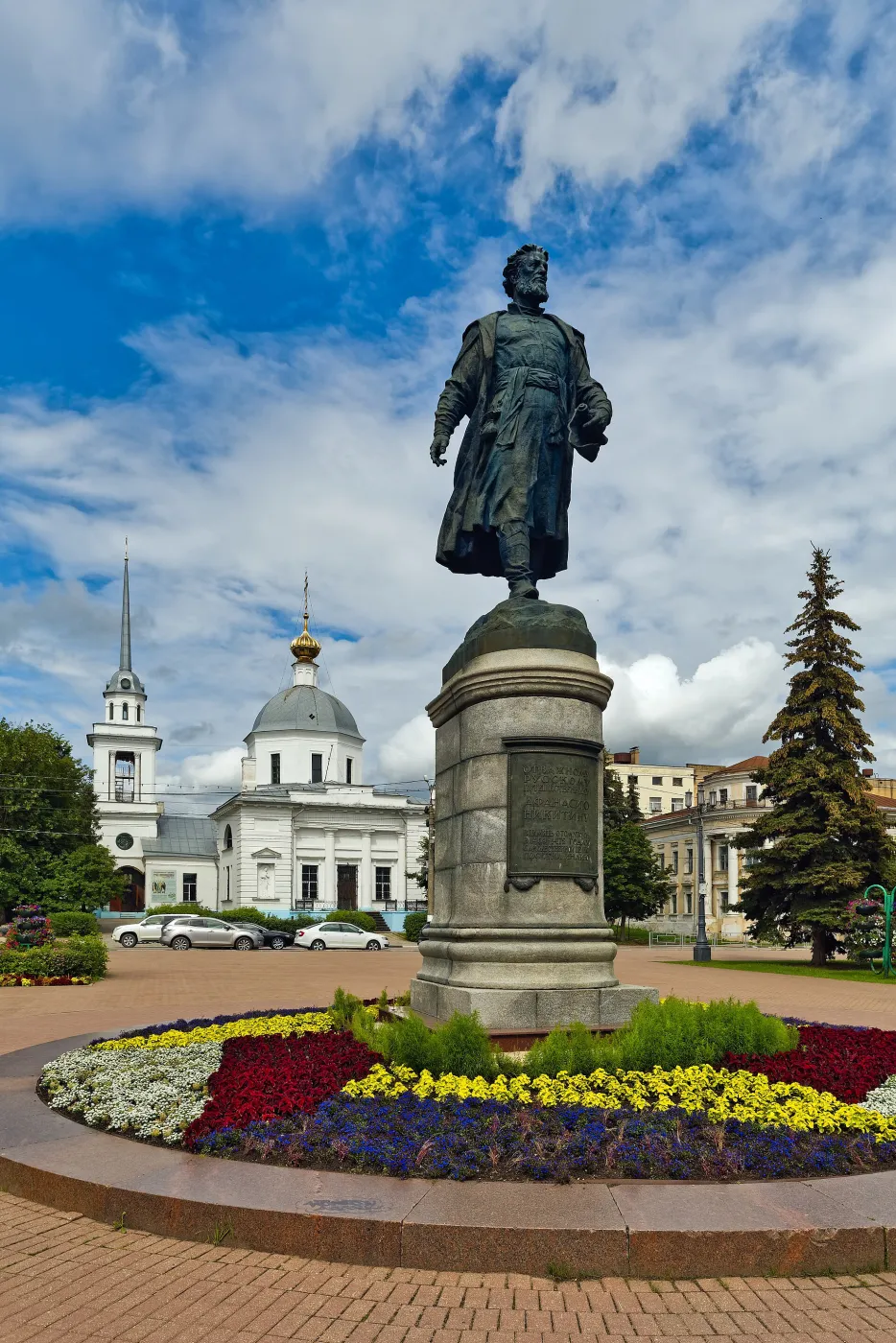
A merchant of Tver who travelled to India and wrote the Journey beyond Three Seas (Khozhenie za tri moria), the first Russian account of the subcontinent. His text begins with his departure: "I started from the church of our holy Saviour of Zlatoverkh, with the kind permission of the Grand-Duke Michael Borissowich and the bishop Gennadius of Twer", in the 1857 English translation published by the Hakluyt Society.
Almost everything known about him comes from the Journey and a chronicle note. Under the year 1475 a chronicler wrote that he had found "the writings of Afanasy, a Tver merchant, who was in India four years", that Afanasy had died on his way home "before reaching Smolensk", and that merchants had brought his notebooks to the state secretary Vasily Mamyrev.
The dates are disputed. Older scholarship dated the journey to 1466–1472. The historian L. S. Semenov, followed by the Slovar' knizhnikov, argued from Nikitin's references to Muslim festivals and from Indo-Persian sources for 1471–1474. Popular books have made Nikitin a "trade scout" for Ivan III; the dictionary says that "the text of the Journey in no way confirms" this, and that Nikitin carried only letters of credence from his own sovereign, Grand Prince Mikhail Borisovich of Tver, and from the bishop of Tver. In India he landed at Chaul and lived mainly at Bidar (Beder), capital of the Bahmani Sultanate, whose court he described as splendid and its people as wretched.
How did Tver fall to Moscow in 1485?
Through a siege that ended without a storm. Under Boris's son Mikhail Borisovich, Tver's troops fought for Ivan III against Novgorod at the Shelon in 1471 and again in 1477–1478, and stood with him on the Ugra against Khan Ahmed in 1480 under the princes Mikhail Kholmskii and Iosif Dorogobuzhskii. In 1476 many Tver boyars, among them two Borozdin brothers, left for Ivan III's service, a first heavy blow to Tver's independence according to a study of the Tver court.
The crisis came in the 1480s. According to Gorskii, relations worsened in the autumn of 1483, and Mikhail made a treaty with Grand Duke Casimir IV of Lithuania. Moscow used this as the reason for war. In December 1484 Mikhail had to accept a treaty that took away Tver's right to its own foreign policy; he acknowledged himself the "younger brother" of Ivan III and of his son Ivan the Young. In 1485 Prince Andrei Mikulinskii and Prince Iosif Dorogobuzhskii went over to Moscow.
The Nikon Chronicle gives the course of events. On 21 August 1485 Ivan III renounced his oath to Mikhail, because Mikhail had sent messages to King Casimir urging him to march against Moscow; Gorskii notes that a Tver envoy to Casimir had been intercepted. Ivan marched with his son, his brothers Andrei and Boris, and the levies of Novgorod.
- 8 September. Ivan's army reached Tver and laid siege to it.
- 10 September. The suburbs were set on fire.
- 11 September. Tver princes and boyars went over to Ivan. "The same day at night Grand Prince Mikhail Borisovich of Tver, seeing his weakness, fled from the city of Tver to Lithuania."
- 12 September, Monday. Bishop Vassian, Prince Mikhail Kholmskii and the people surrendered the city.
- 15 September, Thursday. Ivan III and his son heard the liturgy in the Saviour cathedral, and Ivan gave the land of Tver to his son.
The Tver Chronicle is short and bitter. Ivan "took Tver; and Grand Prince Mikhail Borisovich fled to Lithuania and left his mother, the grand princess Nastasia, in Tver". Ivan took her and many Tver boyars to Moscow, set his son on "the whole patrimony of Tver", installed a governor and left Bishop Vassian in place, "in the month of September, on the 12th day". Gorskii gives 21 September as the date of the capitulation, citing Moscow chronicle compilations. The historian A. A. Bondarenko sums up the sources: the city "was surrendered without a fight", and all its inhabitants swore allegiance to Ivan.
Gorskii notes that Ivan the Young's claim through his mother, Boris's daughter Maria, was "ephemeral" while Boris's son lived; the annexation was achieved by force. Herberstein heard in Moscow that Ivan III "was only once engaged in war, when the principalities of Novogorod and Tver were taken possession of".
What happened to Mikhail Borisovich, the last grand prince?
He spent the rest of his life in Lithuania. Pursuers recovered part of the treasury he had taken, but he crossed the border with a small retinue, found refuge with Casimir and held estates such as Lososin in the Slonim district.
He did not give up hope of return. In December 1501 Khan Sheikh-Ahmed of the Great Horde wrote to Grand Duke Alexander of Lithuania that "Mikhailo of Tver was my kholop", a servant, "and I want to make him prince on his patrimony again".
Nothing came of it, and Mikhail's death date has long been given wrongly. Many reference works say that he died in 1505. Bondarenko showed in 2024 that the document behind that year, a grant of part of his escheated estates, is dated 13 December of the Byzantine year 7013, that is 1504, and had been published in the nineteenth century under the wrong year. Mikhail therefore died between December 1501 and 13 December 1504. In 1504 Lososin was granted to Prince Vasily Glinskii "as Prince Mikhailo Borisovich of Tver held it".
What remained of Tver after 1485?
Ivan the Young died in 1490, and Moscow then ruled Tver through governors; and in 1491–1492, according to the Tver regional library, the lands of Tver were surveyed "in the Moscow manner by sokha", the Muscovite tax unit, which completed their incorporation.
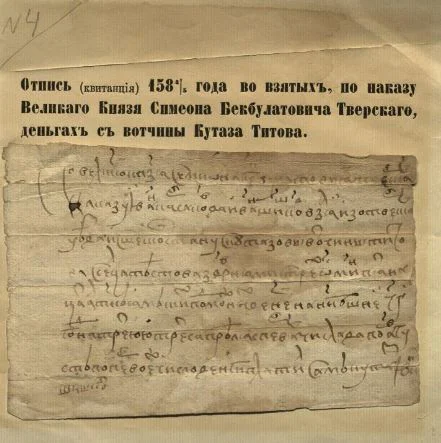
The title had one strange revival. In 1575 Ivan IV made Simeon Bekbulatovich, a descendant of Chinggis Khan and former khan of Kasimov, nominal "grand prince of all Rus'" for a year. The historian Donald Ostrowski dates this from September 1575 to September 1576, after which Simeon became grand prince of Tver. S. S. Kutakov found that most of his appanage had once belonged to Tver princes and was largely waste, making Simeon a great landowner without economic power.
The Tver princes lived on longest in the church. Mikhail Yaroslavich is venerated as a martyr. His widow Anna of Kashin was canonised in 1650, struck from the calendar by church councils in 1677–1679, which judged her cult and Life false, and restored to veneration in 1908–1909. The Saviour cathedral where most of the grand princes were buried, rebuilt in the seventeenth century, was blown up in 1935; the regional library notes that Mikhail's relics disappeared before the demolition and their fate is unknown.
Common myths about the Principality of Tver
| Myth | What the evidence says |
|---|---|
| Mikhail of Tver was killed for refusing to bow to Tatar idols | That story belongs to Mikhail of Chernigov, killed at Batu's court in 1246. The Tver sources give political charges: withheld tribute, fighting the khan's envoy, Konchaka's death |
| Mikhail of Tver died on 5 December 1318 | 5 December is the modern-calendar equivalent; the chronicles give 22 November |
| The 1327 rising was a planned national revolt | The Tver chronicles describe a market brawl over a deacon's mare that turned into a city rising; Aleksandr's role is disputed |
| The envoy of 1327 was called Chol Khan | The older chronicles call him Shevkal; Shchelkan is the form of the Nikon Chronicle and the epic songs; Chol Khan is a modern reconstruction |
| Ivan Kalita crushed Tver on his own | The army of 1327/28 was the khan's, under Fedorchuk and five temniks; Ivan of Moscow and the prince of Suzdal went with it |
| Tver became a grand principality in 1337 | The Pravoslavnaia entsiklopediia calls this view unlikely; chronicle titles date from 1365 |
| Afanasy Nikitin was a Muscovite spy or trade scout | The Slovar' knizhnikov says his text does not support this; he travelled privately with credentials from the prince of Tver |
| Ivan III stormed Tver in 1485 | The prince fled by night and the city surrendered the next day without a fight |
| Mikhail Borisovich died in 1505 | The document behind that date belongs to December 1504; he died between December 1501 and 13 December 1504 |
Timeline of the Principality of Tver
| Year | Event |
|---|---|
| 1238 | Tver sacked in Batu's campaign |
| 1246–1247 | Death of Yaroslav Vsevolodovich; Tver goes to Yaroslav Yaroslavich |
| 1264 | Yaroslav Yaroslavich becomes grand prince of Vladimir |
| 1285–1290 | Stone cathedral of the Saviour built in Tver |
| 1288 | Coalition against Mikhail fails to take Kashin |
| 8 November 1294 | Mikhail marries Anna of Rostov |
| 1305 | Mikhail returns from the Horde as grand prince of Vladimir |
| 22 December 1317 | Battle of Bortenevo |
| 22 November 1318 | Mikhail executed at the Horde |
| 21 November 1325 | Dmitry "Terrible Eyes" kills Yuri of Moscow |
| 15 September 1326 | Dmitry executed |
| 15 August 1327 | Rising in Tver; Shevkal killed |
| Winter 1327/28 | Fedorchuk's punitive campaign; Aleksandr flees to Pskov |
| 28 October 1339 | Aleksandr and his son Fedor executed at the Horde |
| 1347–1349 | Struggle between Vsevolod of Kholm and Vasily of Kashin |
| 1365–1366 | Plague; Mikhail Aleksandrovich becomes leader of the house |
| 1368 | First Lithuanian campaign against Moscow |
| 1370 | Second Lithuanian campaign |
| 1371 | Mikhail receives the patent for Vladimir; Dmitry refuses to yield |
| 1372 | Stand-off at Liubutsk |
| 1 September 1375 | Treaty after the siege of Tver |
| 1399 | Treaty with Vasily I; death of Mikhail Aleksandrovich |
| 1408/09 | Ivan Mikhailovich stays out of Edigei's siege of Moscow |
| 1425 | Plague; Boris Aleksandrovich becomes grand prince |
| 1427 | Treaty with Vytautas |
| 1446/47 | Boris supports Vasily II with cannon at Uglich; takes Rzhev |
| 1452 | Boris's daughter Maria marries the future Ivan III |
| c. 1453 | Foma writes his Eulogy of Boris |
| 1461 | Death of Boris; Mikhail Borisovich enthroned |
| 1466–1474 | Afanasy Nikitin's journey (dates disputed) |
| 1476 | Many Tver boyars leave for Moscow |
| December 1484 | Treaty makes Mikhail Ivan III's "younger brother" |
| 11–12 September 1485 | Mikhail flees; Tver surrenders |
| 1490 | Death of Ivan the Young |
| 1501–1504 | Death of Mikhail Borisovich in Lithuania |
| 1576 | Simeon Bekbulatovich becomes grand prince of Tver |
What the map shows next
The border data draws Tver from 1294 to 1486; the principality itself existed from 1246/47, and the later start is an artefact of the map data. At 1390 on the map it lies on the upper Volga, at the time of Mikhail Aleksandrovich. Around 1300, when Mikhail Yaroslavich was competing for the title of grand prince, the senior state of the region appears at Grand Principality of Vladimir, and the khans whose patents decided the contest at Golden Horde. Tver's ally in the wars of the 1360s and 1370s is drawn at Grand Duchy of Lithuania. After 1485 the land of Tver belongs to Grand Principality of Moscow.
Related entries: Grand Principality of Vladimir, Grand Principality of Moscow, Golden Horde, Grand Duchy of Lithuania, Novgorod Republic and Nizhny Novgorod, the third contender for the throne of Vladimir in the fourteenth century.
Common questions
- Where was the Principality of Tver?
- On the upper Volga, north-west of Moscow, in today's Tver Oblast in Russia. Its capital was Tver; other towns included Kashin, Staritsa, Zubtsov and Kholm.
- When was the Principality of Tver founded?
- In 1246–1247, in the division that followed the death of Grand Prince Yaroslav Vsevolodovich. Tver went to his son Yaroslav Yaroslavich, the founder of the Tver dynasty, though some accounts say Alexander Nevsky held it first.
- Who was Mikhail of Tver?
- Mikhail Yaroslavich (1271/72–1318) was prince of Tver and grand prince of Vladimir from 1305 to 1317. He defeated Moscow at Bortenevo in 1317 but was executed at the Horde on 22 November 1318, and is venerated as a saint.
- What was the Tver uprising of 1327?
- On 15 August 1327 the townspeople of Tver rose against the Horde envoy Shevkal after his men seized a deacon's mare at the market, and killed him and his men. The khan's punitive army, joined by Ivan Kalita of Moscow, devastated the Tver land that winter.
- Why did Moscow and not Tver unite Russia?
- Between 1318 and 1339 three Tver princes were killed at the Horde and Tver was devastated after 1327, while Moscow kept the patent for Vladimir. Alliance with Lithuania did not reverse this, and the siege of 1375 forced Tver to accept Moscow's leadership.
- When did Tver become a grand principality?
- The chronicles call Mikhail Aleksandrovich grand prince of Tver from 1365. The historian A. A. Gorskii dates Tver's equal standing with the grand principality of Vladimir to after 1383, and the formal term to the late 1420s.
- Who was Afanasy Nikitin?
- A merchant of Tver who travelled to India around 1466–1474 and wrote the Journey beyond Three Seas. He set out with the permission of Grand Prince Mikhail Borisovich of Tver and died near Smolensk on the way home.
- When did Tver fall to Moscow?
- In September 1485. Ivan III besieged the city from 8 September; Grand Prince Mikhail Borisovich fled to Lithuania on the night of the 11th, the city surrendered on the 12th, and Ivan gave Tver to his son Ivan the Young on the 15th.
- What happened to the last grand prince of Tver?
- Mikhail Borisovich lived in exile in Lithuania and died there between December 1501 and 13 December 1504, not in 1505 as many books say.
- Is Tver still a city today?
- Yes. Tver is the capital of Tver Oblast in Russia. Its medieval cathedral is gone, but a monument to Afanasy Nikitin stands on its Volga embankment.
Sources
Every source below was consulted while writing this entry.
Every source below was consulted while writing this entry.
Primary sources
- Letopisnyi sbornik, imenuemyi Tverskoiu letopis'iu (the Tver Chronicle), Polnoe sobranie russkikh letopisei (PSRL) XV (St Petersburg, 1863).
- Rogozhskii letopisets, PSRL XV, vyp. 1, 2nd edn (Petrograd, 1922).
- The Nikonian Chronicle, trans. Serge A. and Betty Jean Zenkovsky, vols 3–5.
- Afanasy Nikitin, Khozhenie za tri moria, ed. M. D. Kagan-Tarkovskaia and Ya. S. Lur'e, trans. L. S. Semenov, in Biblioteka literatury Drevnei Rusi, vol. 7 (St Petersburg, Pushkin House).
- R. H. Major (ed.), India in the Fifteenth Century (London: Hakluyt Society, 1857), with Count Wielhorsky's translation of Nikitin.
- Foma, Slovo pokhval'noe o velikom kniaze Borise Aleksandroviche, text, translation and commentary in Pamiatniki literatury Drevnei Rusi: Vtoraia polovina XV veka (Moscow, 1982).
- Sigismund von Herberstein, Notes upon Russia, trans. R. H. Major, vol. I (London: Hakluyt Society, 1851).
Scholarship and reference works
- Pravoslavnaia entsiklopediia, articles "Mikhail Iaroslavich", "Mikhail Aleksandrovich", "Aleksandr Mikhailovich" (A. V. Nazarenko), "Dimitrii Mikhailovich" and "Anna Kashinskaia".
- A. A. Gorskii, Ot zemel' k velikim kniazheniiam: "primysly" russkikh kniazei vtoroi poloviny XIII–XV v. (2010), section "Tver'".
- A. A. Bondarenko, "Tverskie boiare Ziuziny na sluzhbe v Litve i v Moskve", Istoricheskii vestnik 49 (2024).
- N. V. Shtykov, "K istorii otnoshenii Tveri i Kashina v XIII–XV vv." (2009).
- "Tver' i ee gorodskaia okruga v epokhu srednevekov'ia: istoriograficheskii aspekt", Izvestiia Samarskogo nauchnogo tsentra RAN 13/3 (2011).
- "Apparat upravleniia tverskikh kniazei v XV v.", CyberLeninka.
- "Sacral Topography of the Tver Kremlin in the Period of Appanage Principalities", Advances in Social Science, Education and Humanities Research 471 (2020).
- Slovar' knizhnikov i knizhnosti Drevnei Rusi, articles "Afanasii Nikitin" (Ya. S. Lur'e) and "Foma, inok".
- Russkii biograficheskii slovar', vol. 3, "Boris Aleksandrovich, velikii kniaz' Tverskoi".
- Donald Ostrowski, "Simeon Bekbulatovich's Remarkable Career as Tatar Khan, Grand Prince of Rus', and Monastic Elder", Russian History 39/3 (2012).
- S. S. Kutakov, "Udel velikogo kniazia Tverskogo Simeona Bekbulatovicha: lokalizatsiia i proiskhozhdenie", Vestnik Tverskogo gosudarstvennogo universiteta. Seriia: Istoriia 2 (2016).
Other sources
- Tver Regional Library (A. M. Gorky), "K istorii Tverskogo kniazhestva" (2017) and "Mikhail Tverskoi – 700".
Data sources for the map
- Border data: Cliopatria v0.12, Seshat Global History Databank (CC BY 4.0).
- Historical Basemaps (GPL-3.0).
This entry was written from the sources above and last updated .
Text available under CC BY-SA 4.0: reuse it with a credit to The World Through Time and a link to this page.
Border geometry for the map itself comes from Cliopatria v0.12 (Seshat Global History Databank, CC-BY-4.0).
Further reading in Knowledge
- People · Grand Principality of Moscow Ivan III: How Ivan the Great Made Muscovy a State Ivan III ruled Moscow from 1462 to 1505. He took Novgorod and Tver, outfaced the Horde on the Ugra, rebuilt the Kremlin and gave Russia its first law code.
- Religion & Belief · Grand Principality of Moscow Sergius of Radonezh: The Monk Behind Moscow's Rise St Sergius of Radonezh (died 1392), founder of the Trinity monastery near Moscow: what his Life says, his role in politics, and what is later legend.
- Religion & Belief · Grand Principality of Moscow Rublev's Trinity: The Icon Behind the Legend Andrei Rublev's Trinity icon, painted about 1411 or in the 1420s: what it shows, who painted it, and why its handover to the Church in 2023 alarmed experts.
- People · Bahmani Sultanate Afanasy Nikitin: The Tver Merchant Who Travelled to India Beyond Three Seas Afanasy Nikitin, a merchant from Tver, reached India around 1471 and wrote the Journey Beyond Three Seas. What his text says, when he went, and what is myth.
- War & Warriors · Grand Principality of Moscow The Battle of Kulikovo (1380): Dmitry Donskoy, Mamai and the Myth of Liberation The Battle of Kulikovo on 8 September 1380: who fought, how many, what the earliest sources say, and why the victory did not end the Tatar yoke.
- People · Novgorod Republic Alexander Nevsky: Warrior, Mongol Vassal, Saint Who was Alexander Nevsky? The prince who beat Swedes and crusaders, served the Mongol khans, punished his own people and became Russia's warrior saint.
See Tver in its world
Open the atlas at 1390 and every neighbour, rival and successor is on screen with it — then drag the slider and watch what happens next.
Open the map at 1390 →