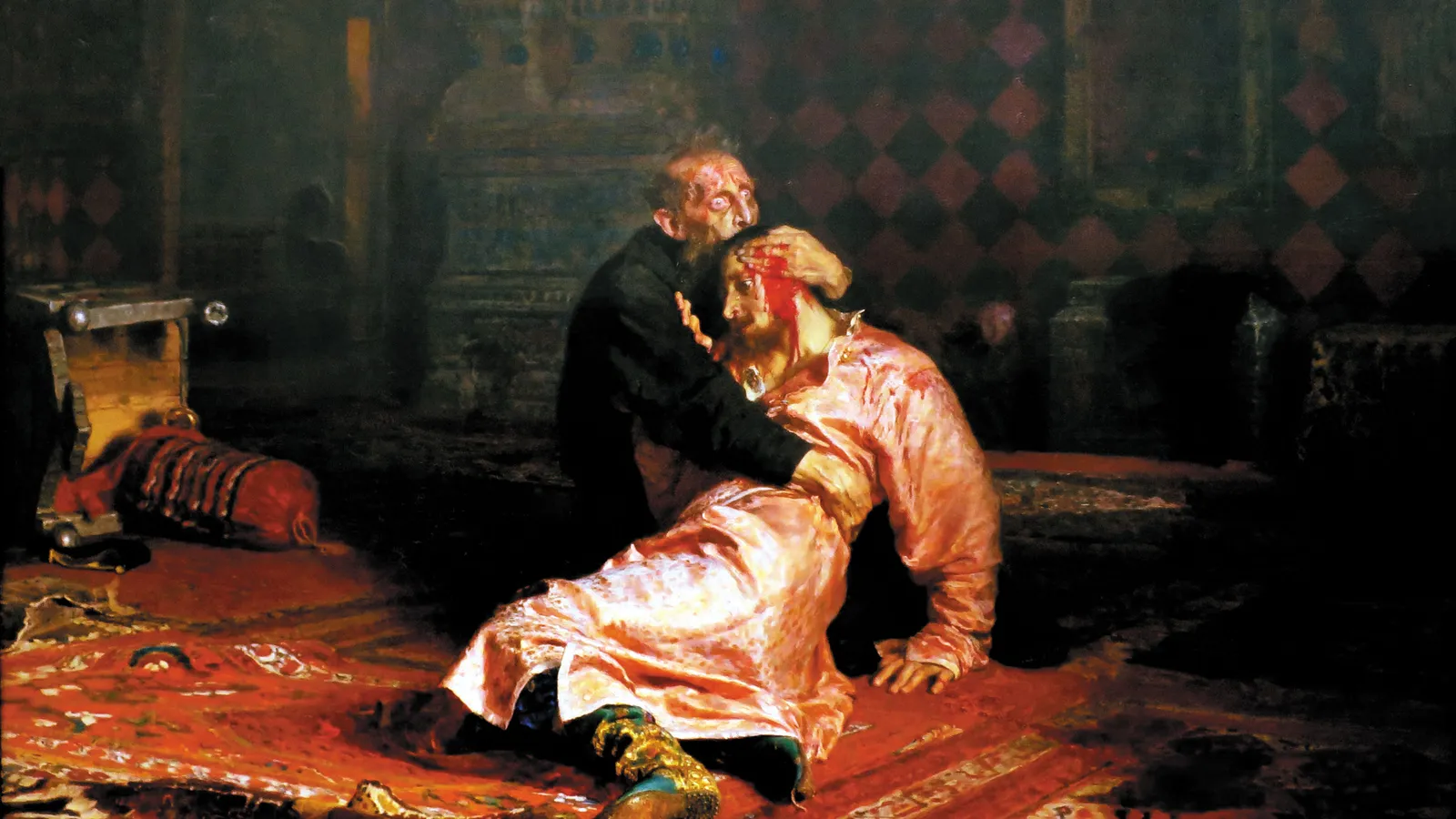
Ivan the Terrible and His Son Ivan on 16 November 1581 is a painting by Ilya Repin, completed in 1885 and owned by the State Tretyakov Gallery in Moscow. It shows Tsar Ivan IV on the floor of his chamber, holding his eldest son, whom he has just struck on the head with his staff. The picture was banned within weeks of its first showing, cut with a knife in 1913, smashed with a metal post in 2018, and returned to the walls of the gallery only in December 2024.
The event it shows is real, though not quite as Repin painted it. In November 1581, at his residence of Aleksandrova Sloboda north-east of Moscow, Ivan IV struck his son and heir, Tsarevich Ivan Ivanovich, in a quarrel. The young man died several days later, on 19 November 1581. This article tells both stories: how the painting came to be and why it still provokes attacks, and what the sources actually say about the death that it shows.
The painting at a glance
| Title | Ivan the Terrible and His Son Ivan on 16 November 1581 (Russian: Ivan Grozny i syn ego Ivan 16 noyabrya 1581 goda) |
| Also known as | "Ivan the Terrible Killing His Son" |
| Artist | Ilya Repin (1844–1930) |
| Painted | 1883–1885, begun in Moscow and finished in St Petersburg |
| Medium and size | oil on canvas, 199.5 × 254 cm |
| First shown | 13th Itinerant (Peredvizhniki) exhibition, 1885 |
| Owner | State Tretyakov Gallery, Moscow; bought by Pavel Tretyakov in 1885 |
| Attacks | 16 January 1913 (knife); 25 May 2018 (metal stanchion) |
| On display | Repin hall, Lavrushinsky Lane, in an anti-vandal capsule since 16 December 2024 |
What does the painting show?
The scene is a palace chamber with a red patterned carpet, a throne-like chair knocked over, a chest and cushions scattered. The old tsar kneels on the floor, his arms round his son, one hand pressed to the wound on the young man's temple while blood runs between his fingers. His eyes stare out, wide and blank. The son, in a pink caftan, sags against him, and seems to forgive his father with his last look. On the carpet lies the tsar's staff.
Repin took care over the setting. According to the art historian S. V. Ivanov, he used a room in the restored "House of a Seventeenth-Century Boyar" in Moscow as the model for the chamber, painted the throne, mirror and caftan from objects in the Kremlin Armoury, and found the chest in the Rumyantsev Museum.
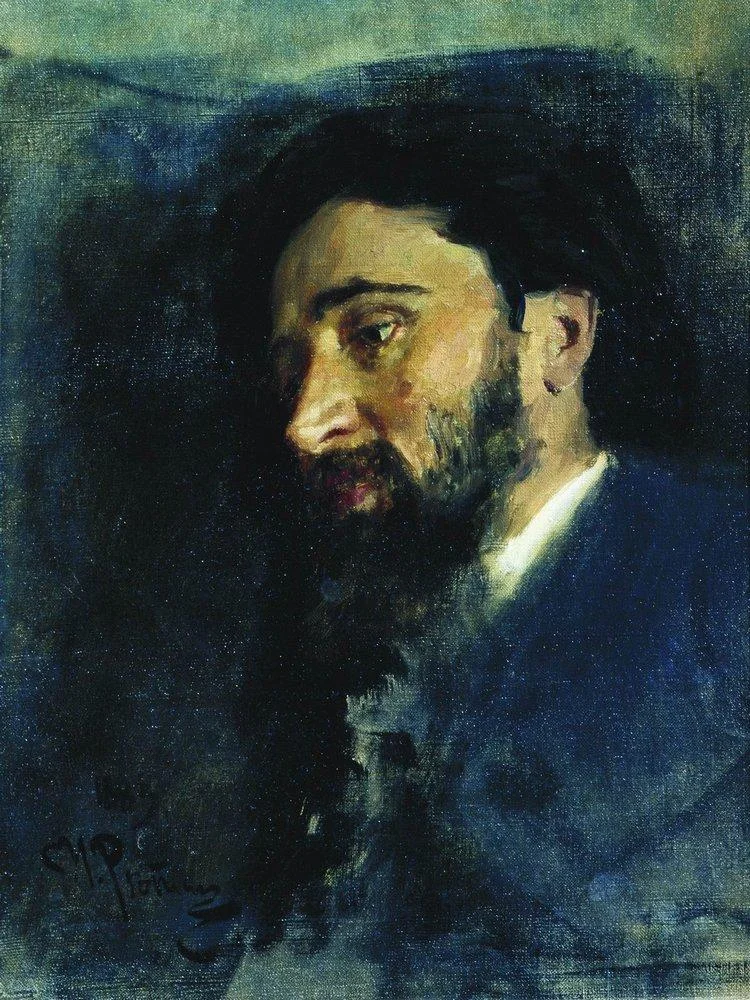
The models were his friends. For Ivan he painted the artist Grigory Myasoyedov, the composer Pavel Blaramberg, an old man found for him by the painter Pavel Chistyakov, and a workman he met in the street. For the tsarevich he used the writer Vsevolod Garshin, who died a few years later. Repin remembered: "In Garshin's face I was struck by doom: he had the face of a man doomed to perish. That was what I needed for my tsarevich."
Why did Repin paint it?
Repin gave two explanations, and they do not fit together neatly.
In a 1913 newspaper interview he linked it to music and politics. One evening in Moscow in 1881 he heard a new work by Rimsky-Korsakov, "Revenge", and wondered whether he could put its mood into a painting: "I remembered Tsar Ivan. This was in 1881. The bloody event of 1 March had shaken everyone. Some sort of bloody streak ran through that year." The "event of 1 March" was the assassination of Tsar Alexander II by revolutionaries in St Petersburg in 1881.
In his memoir Far and Near (Dalyokoe blizkoe), Repin tells a different story. Travelling through Europe in 1883 with the critic Vladimir Stasov, he went to a bullfight in Spain and was overwhelmed by the roaring crowd: "Misfortune, living death, killings and blood hold such an attraction that only highly cultured people can resist it." At that time, he adds, "bloody paintings were shown in large numbers at all the exhibitions of Europe. And I, probably infected by this bloodiness, on my return home at once started on the bloody scene of Ivan the Terrible with his son."
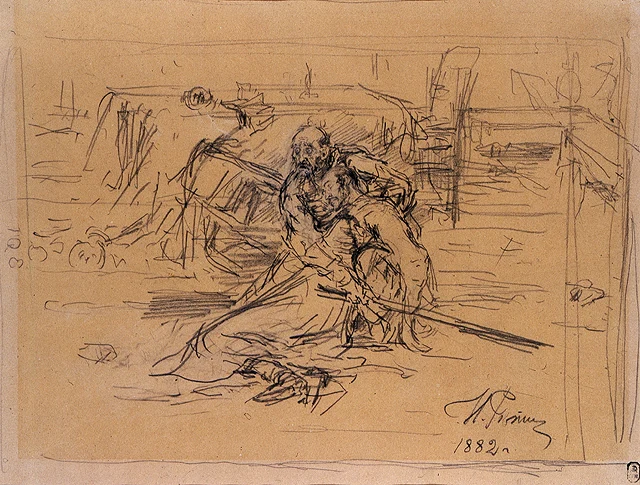
The two accounts can be reconciled. A pencil sketch for the composition signed and dated by Repin in 1882 survives in the State Russian Museum, so the idea came before the Spanish journey of 1883; the bullfight may have pushed him to start the canvas itself. What both accounts share is the theme Repin named himself: blood, and a ruler's violence.
Why was the painting banned in 1885?
The picture was first shown at the 13th exhibition of the Itinerants (Peredvizhniki) in St Petersburg in 1885, where Pavel Tretyakov bought it for his gallery. Even before the exhibition moved to Moscow in March, Repin was hearing rumours that the picture had been banned, "even for all illustrated publications". Leo Tolstoy saw it in Moscow at the end of March and wrote to Repin: "Well done, Repin, really well done. There is something lively, strong, bold and on target here."
Konstantin Pobedonostsev, the chief procurator of the Holy Synod and the most powerful conservative at the court of the Russian Empire, saw it differently. He wrote to Alexander III that he "could not look at it without disgust" and asked: "And why Ivan the Terrible? Apart from a tendency of a known kind, you can find no other motive." Tretyakov then received a secret order from Moscow's chief of police: "His Majesty the Emperor has deigned to command that Repin's painting 'Ivan the Terrible and His Son Ivan' not be admitted to exhibitions and that its distribution among the public by any other means not be permitted." Repin wrote to Stasov that he had been "slammed shut in Moscow, on Monday, 1 April".
The magazine Niva was refused permission to reproduce it. The censor reasoned that the magazine had 170,000 subscribers and that it was not the task of such a journal "to popularise the idea of royal lynch law and brutal lack of restraint".
The ban did not last. According to Ivanov, it was lifted only three months later, after the painter Aleksei Bogolyubov, who had once been one of the tsar's teachers, interceded with Alexander III. The picture went on show in Tretyakov's gallery. Repin himself never liked its short title: he later suggested to Tretyakov that it should be labelled "The tragic death of Tsarevich Ivan, son of Ivan the Terrible, 16 November 1581".
The knife attack of 1913
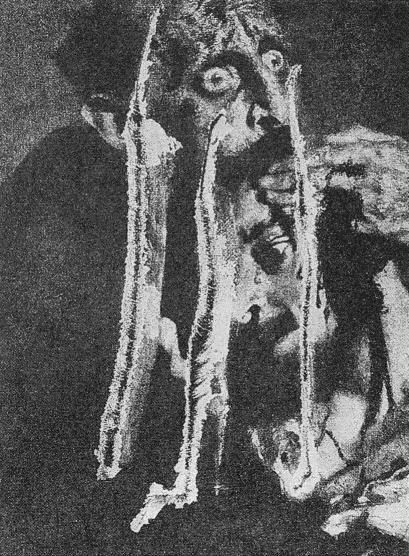
On 16 January 1913 a young icon painter, Abram Balashov, an Old Believer and the 29-year-old son of a furniture manufacturer, cut the canvas three times with a knife. One cut ran across Ivan's face from the temple through the ear to the shoulder; another destroyed the outline of the tsarevich's nose.
Repin was called from his home at Kuokkala on the Gulf of Finland, arrived in Moscow on 17 January, went straight to the gallery and repainted the tsar's head himself. The painter Igor Grabar, then trustee of the gallery, came back that evening to find a new head "freshly painted from top to bottom in some unpleasant lilac scale" that clashed with the rest of the picture. Knowing that Repin painted with kerosene, Grabar wiped off the new paint with cotton wool before it could harden, "until not a trace of the morning's painting remained and the painting of 1884 shone out in full". With the Hermitage restorer D. F. Bogoslovsky he then restored the damage using watercolours and full-size photographs. The Moscow city council, which owned the gallery, granted 2,500 roubles for the work.
Many accounts add that the gallery's curator, Georgy Khruslov, threw himself under a train in despair after the attack. We have found the story only in recent sources and not in a document of 1913, so it should be treated with caution. From 1927 the painting was kept permanently under glass.
The 2013 petition and the attack of 2018
In October 2013 a group of Orthodox activists, among them the businessman Vasily Boyko-Veliky and the historian Igor Froyanov, wrote to the culture minister Vladimir Medinsky and the gallery's director, Irina Lebedeva, asking for the painting to be removed from the permanent display. They called it "vile, slanderous and false both in its subject and in its painted rendering". Medinsky said he regarded the letter as a joke, and not a good one. He added that Ivan "quite probably did not kill his son. There are no witnesses. Historians argue", but that this did not change how one should treat the works of Pushkin or Repin, "because there is art and there is history". Lebedeva said that the painting would stay.
On 25 May 2018, shortly before closing time, a visitor named Igor Podporin broke the protective glass with a metal stanchion from the barrier in front of the painting and struck the canvas several times. It was torn in three places in the centre, on the figure of the tsarevich. The faces and hands were not damaged, but the original frame was badly hurt by the falling glass. Podporin told journalists that the painting offended believers and that Ivan the Terrible was a saint. He is not: the Russian Orthodox Church has never canonised Ivan IV.
On 30 April 2019 a Moscow district court found Podporin guilty of damaging an especially valuable object of cultural heritage and sentenced him to two and a half years in a general-regime penal colony.
The restoration took four years, paid for by Sberbank. On 19 May 2022 the gallery announced that the restoration was complete. The painting then had to wait in storage until a special anti-vandal capsule could be made: the director at the time, Zelfira Tregulova, explained that glass of that size was produced only in Italy and Japan. On 16 December 2024 the painting returned to the Repin hall inside a climate-controlled capsule, and the gallery opened a small exhibition on its history called "The Return".
What happened in November 1581?
Now to the event itself. Tsarevich Ivan Ivanovich, born on 28 March 1554, was the second son of Ivan IV, the first crowned tsar of the Tsardom of Russia, and his first wife Anastasia, and since the death of his elder brother in infancy, the heir to the throne. He had been married three times; his first two wives had been sent to convents.
The Orthodox Encyclopaedia (Pravoslavnaya entsiklopediya) summarises the core facts: on 14 November 1581, or on the 9th according to other sources, the tsarevich was mortally wounded by his father during a quarrel at Aleksandrova Sloboda. "The causes of the quarrel are unknown; the sources give several versions." He died some days later, on 19 November 1581, and was buried in the Archangel Cathedral of the Moscow Kremlin. In January 1583 Ivan asked the Trinity-Sergius monastery to pray for his son every year and sent large gifts for his soul to monasteries in Russia, on Mount Athos, in Jerusalem and at Sinai.
What the sources disagree on is why it happened and how:
| Source | When written | What it says |
|---|---|---|
| Antonio Possevino, papal envoy | In Moscow early 1582; printed 1586 | Ivan found his pregnant daughter-in-law lightly dressed, slapped her and beat her with his staff, so that she miscarried; when the son defended her, Ivan struck him on the head near the temple with the same staff. He died five days later. |
| Pskov chronicle | Russian, later | "Some say" the tsar struck his son with his staff because the son spoke of relieving Pskov, then besieged by the Polish king. |
| Jerome Horsey, English merchant | Memoir, after 1584 | The son had sent a man off on post-horses without the tsar's leave; the tsar "strake him in his furie a box on the ear", and the son "fell into a burninge feavour, and died within three daies after". |
| Giles Fletcher, English envoy | 1591 | The son "died of a blowe given him by his father upon the head in his furie with his walking staffe, or (as some say) of a thrust with a prong of it driven deepe into his head". |
| Ivan Timofeev, Vremennik | Early 17th century | The tsarevich died because he wanted to stop the tsar from some "unseemly" deed. |
Possevino is the closest to the event. He arrived in Moscow about three months later, as the pope's mediator in the peace talks with Poland, and says that his information came from one of his own interpreters, whom he had sent to the tsar and who was with him at the time. The story of the pregnant wife fits what we know independently: the tsarevich's third wife, Elena Sheremeteva, had married him earlier that year. Possevino also has the son reproach his father: "You put my first wife into a convent for no reason, you did the same with the second, and now you are beating the third, so that the son she carries will die."
Historians disagree about how much to trust these accounts:
- Most specialists in the period accept that the father killed his son. In a 2026 review in the journal Klio, A. S. Ishchenko lists S. F. Platonov, S. B. Veselovsky, A. A. Zimin, R. G. Skrynnikov, V. B. Kobrin, S. O. Schmidt and others among them.
- A more cautious line, taken for example by A. I. Filyushkin, holds that the sources show the tsar's deep shock but cannot prove exactly what happened.
- Some writers, including N. F. Nedelko, the historian I. Ya. Froyanov and Medinsky, argue that the tsarevich died of illness or poison. Ishchenko notes that, with one exception, none of them is a specialist in sixteenth-century Russian history.
The independent Russian accounts matter here. The Pskov chronicle, Timofeev and the so-called Mazurin chronicle, which says that "from his father's anger he received illness, and from the illness death", did not depend on Possevino. Whatever the details, rumours that the father was to blame were circulating in Russia as well as abroad in the decades after 1581.
What did the 1963 exhumation find?
In 1963 the tombs of Ivan IV, his sons Ivan and Fyodor, and Prince Mikhail Skopin-Shuisky were opened in the Archangel Cathedral by a commission that included the anthropologist M. M. Gerasimov. Its final conclusion, dated 20 May 1966, is quoted by the historian S. A. Golovin (2018).
The answer for the tsarevich was disappointing. His skull had crumbled to dust, apparently because water had collected in the coffin over the centuries, although his hair and nails were relatively well preserved. No traces of blood were found on the hair. The commission found no mechanical injury on the surviving bones but warned that the destruction of the bones made it impossible to rule out injuries in life, "especially for the skulls of Ivan Ivanovich" and Skopin-Shuisky. Its conclusion was blunt: "In view of the above, the question of the reliability of the subject of the painting by the artist I. E. Repin cannot be decided."
The commission also found raised levels of mercury in the remains of the tsar and the tsarevich. It concluded that this "could be due to the use of mercury-containing medicines for treatment", though poisoning by those medicines could not be completely excluded. Writers who deny the killing have used these readings to argue that the tsarevich died of illness or was poisoned by others. The commission itself drew no such conclusion.
Is the painting accurate?
As a picture of an event, it is a reconstruction made three centuries later, and some details are certainly wrong.
| Myth | What the evidence says |
|---|---|
| Ivan killed his son on the spot | The tsarevich died several days after the blow: five days according to Possevino, three according to Horsey, on 19 November 1581. |
| It happened on 16 November | The Orthodox Encyclopaedia dates the blow to 14 (or 9) November and the death to 19 November. The source of Repin's "16 November" is unclear. |
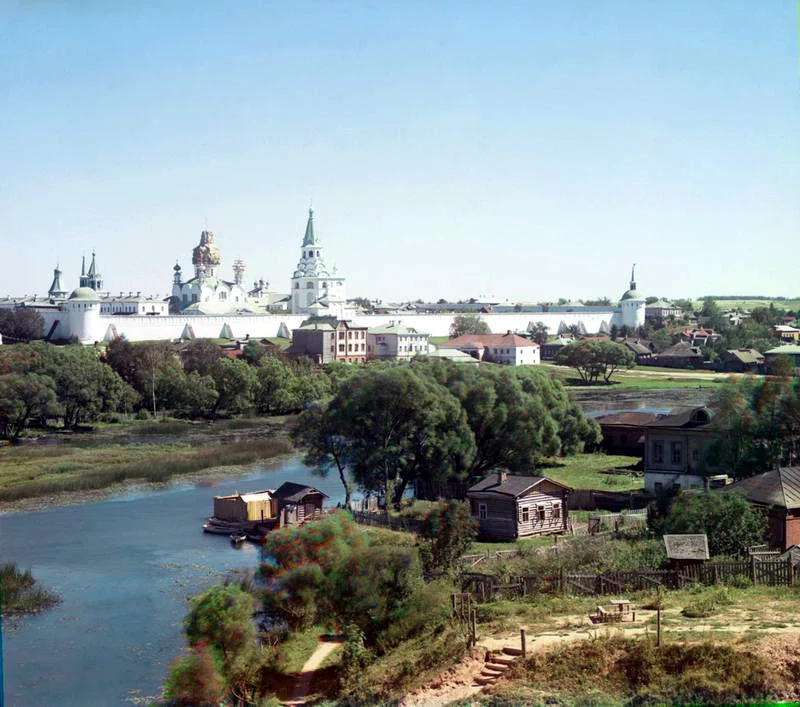
| It happened in the Kremlin | It happened at Aleksandrova Sloboda, about 100 km north-east of Moscow. |
| The 1963 exhumation proved he was not killed | The commission said the question could not be decided, because the skull had turned to dust. |
| The exhumation proved he was poisoned | The commission said the mercury could come from medicines. |
| Alexander III banned the painting for ever | The ban was lifted after about three months. |
| Ivan the Terrible is a saint | The Russian Orthodox Church has never canonised him. |
| The painting is cursed | Stories that link it to Garshin's early death and other misfortunes are folklore. |
What Repin captured, and what the sources agree on, is the core: a father whose rage killed his son and heir. The consequence was larger than a family tragedy. With the tsarevich dead, the throne passed in 1584 to Ivan's second son, Fyodor, who left no heir; when he died in 1598 the dynasty founded by Rurik died with him, and Russia slid into the Time of Troubles.
What the map shows next
At 1581 the Tsardom of Russia is fighting the last campaign of the Livonian War: the army of the Polish-Lithuanian Commonwealth is besieging Pskov, the city the tsarevich may have wanted to relieve, and the Kingdom of Sweden has just stormed Narva. For the whole of Ivan's reign, from his coronation to his death, read our article on Ivan the Terrible. At 1598 on the map Tsar Fyodor, the last of the Moscow Rurikids, dies without an heir.
Sources
Primary sources
- Antonio Possevino, Moscovia (Vilnius, 1586), Latin text: https://archive.org/details/bub_gb_fUoTMj8yEj8C
- Giles Fletcher, Of the Russe Common Wealth (1591), and Jerome Horsey, Travels, in E. A. Bond (ed.), Russia at the Close of the Sixteenth Century (London: Hakluyt Society, 1856): https://archive.org/details/russiaatcloseofs20bond
- Ilya Repin, Dalyokoe blizkoe, chapter "Iz vospominanii o V. V. Stasove": https://ru.wikisource.org/wiki/Далёкоеблизкое(Репин))
- Ilya Repin, letters, 1867–1892 (ru.wikisource)
Studies, museum and press sources
- S. V. Ivanov, Moskva v zhizni i tvorchestve I. E. Repina (Moscow, 1960), chapter "Ivan Groznyi": http://i-repin.ru/books/item/f00/s00/z0000003/st012.shtml
- "Ioann Ioannovich", Pravoslavnaia entsiklopediia, vol. 24 (2015), pp. 289–290: https://www.pravenc.ru/text/471251.html
- A. S. Ishchenko, "Ivan Groznyi i syn ego Ivan 16 noiabria 1581 goda: ubiistvo ili mif?", Klio (2026): https://cyberleninka.ru/article/n/ivan-groznyy-i-syn-ego-ivan-16-noyabrya-1581-goda-ubiystvo-ili-mif
- S. A. Golovin, "Ivan Groznyi byl otravlen?", Genesis: istoricheskie issledovaniia 2018/2, doi:10.25136/2409-868X.2018.2.25249: https://nbpublish.com/library_read_article.php?id=25249
- N. F. Nedel'ko, "A byl li ubit syn tsaria Ivana IV Groznogo?": https://cyberleninka.ru/article/n/a-byl-li-ubit-syn-tsarya-ivana-iv-groznogo
- State Tretyakov Gallery, "Spasenie shedevra" (restoration diary): https://www.tretyakovgallery.ru/about/projects/proekt-spasenie-shedevra/
- State Tretyakov Gallery, exhibition "Ivan Groznyi i syn ego Ivan. Vozvrashchenie": https://www.tretyakovgallery.ru/exhibitions/o/ivan-groznyy-i-syn-ego-ivan-vozvrashchenie/
- Interfax, 30 April 2019 (verdict): https://www.interfax.ru/culture/659834
- Interfax, 23 May 2022 (end of restoration): https://www.interfax.ru/culture/842390
- RIA Novosti, 30 April 2019: https://ria.ru/20190430/1553179149.html
- Meduza, 26 May 2018: https://meduza.io/feature/2018/05/26/v-tretyakovke-posetitel-povredil-kartinu-ivan-groznyy-i-syn-ego-ivan
- BFM.ru, May 2018: https://www.bfm.ru/news/386129
- RBC, 16 December 2024: https://www.rbc.ru/life/news/675fe9fb9a7947b5ee5394b9
- Interfax, 5 October 2013 (Medinsky): https://www.interfax.ru/russia/332864
- Utro.ru, 5 October 2013: https://utro.ru/articles/2013/10/05/1148292.shtml
Image credits
- Title image: Ilya Repin, Ivan the Terrible and His Son Ivan on 16 November 1581, 1883–1885, State Tretyakov Gallery. Public domain, via Wikimedia Commons, cropped to 16:9.
- Study of Vsevolod Garshin, 1883. Public domain, via Wikimedia Commons.
- Pencil sketch, 1882, State Russian Museum. Public domain, via Wikimedia Commons.
- The painting after the 1913 attack. Public domain, via Wikimedia Commons.
- Aleksandrov, by Sergei Prokudin-Gorsky, 1911. Public domain, via Wikimedia Commons.