The Muscovy Company (also called the Russia Company) was the English trading company that opened regular trade between England and Russia. It grew out of a voyage in 1553 that set out to find a north-east passage to China. Of its three ships, two were trapped by the Arctic winter and their crews died; the third, under Richard Chancellor, reached the White Sea, and Chancellor travelled overland to the court of Ivan IV, known as Ivan the Terrible. In February 1555 the company received a royal charter, and for the next century it held a monopoly of English trade with Russia by the northern sea route.
The company's merchants carried English cloth to Russia and brought back wax, furs, flax, hemp and cordage for the navy. Its agents travelled down the Volga to Bukhara and Persia. Its business became tangled with Ivan IV's diplomacy, including his request for asylum in England and his proposal to marry an English noblewoman. Its records, collected by Richard Hakluyt in the 1580s and 1590s, are among the best sources for sixteenth-century Russia. It still exists today, as a small charity.
The Muscovy Company at a glance
| Official name | "Merchants adventurers of England, for the discovery of lands, territories, isles, dominions and seigniories unknown" |
| Common names | Muscovy Company; Russia Company |
| Formed | 1553, to finance the voyage of Willoughby and Chancellor |
| Royal charter | February 1555, under Philip and Mary |
| First governor | Sebastian Cabot, for life |
| Capital in 1553 | £6,000, in shares of £25 |
| Route | London – North Cape – White Sea – Kholmogory – Vologda – Moscow |
| End of the monopoly | Expelled from inland Russia by Tsar Alexei in 1649 |
| Today | The Russia Company, a registered charity in London |
Why did the English sail to the north-east?
In the early 1550s English merchants were looking for new markets for their cloth. The Portuguese controlled the southern sea route to Asia, and a passage around the north of Europe and Asia to "Cathay" (China) would be free of them. The veteran navigator Sebastian Cabot, then living in England, was, in the words of the later charter, "the chiefest setter forth of this journey". According to the account of Clement Adams, a London schoolmaster who wrote up the voyage from Chancellor's report, a company of merchants was formed in which "every man willing to be of the societie, should disburse the portion of twentie and five pounds a piece: so that in short time by this meanes the summe of sixe thousand pounds being gathered, the three shippes were bought".
The three ships were the Bona Esperanza (120 tons), commanded by the expedition's leader, Sir Hugh Willoughby; the Edward Bonaventure (160 tons), with Richard Chancellor as captain and chief pilot; and the Bona Confidentia (90 tons). They carried a letter from King Edward VI to any ruler they might meet.
What happened to Willoughby's expedition in 1553?
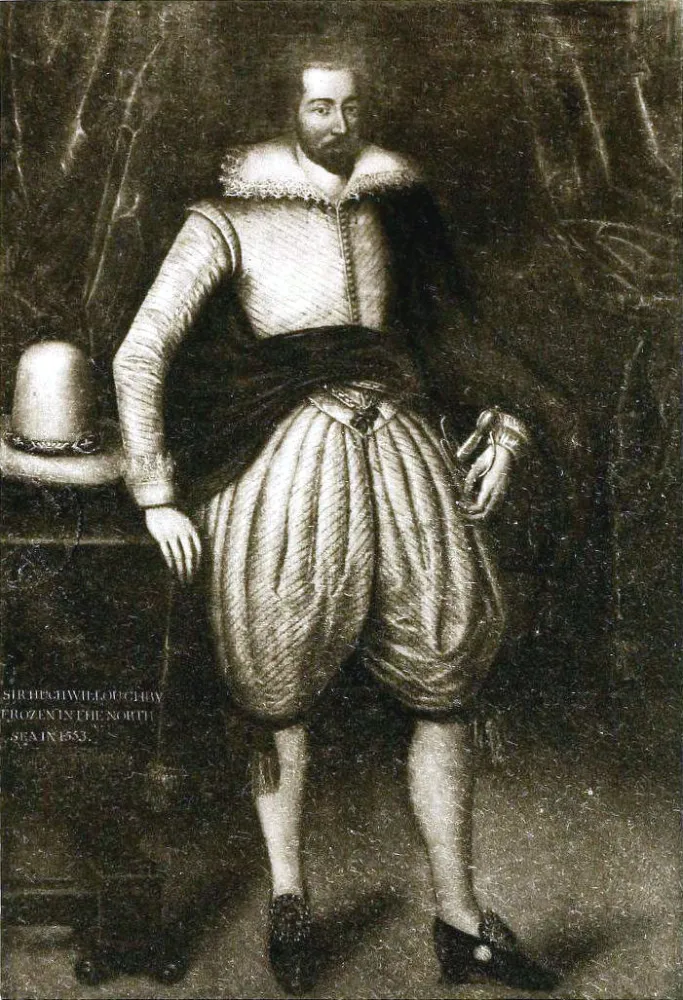
Willoughby's journal survives. On 10 May 1553 the ships left Ratcliffe on the Thames. The next day they passed Greenwich, "saluting the kings Majesty then being there, shooting off our ordinance". Contrary winds held them in English waters until 23 June. They sailed up the Norwegian coast, and on 2–3 August, off northern Norway, a storm separated the fleet. Willoughby's two ships lost sight of the Edward Bonaventure and never saw it again.
Willoughby wandered in the Barents Sea. On 18 September 1553 his two ships entered a haven on the Kola Peninsula, and, as his last journal entry records, "seeing the yeare farre spent, & also very evill wether, as frost, snow, and haile, as though it had beene the deepe of winter, we thought best to winter there". Search parties sent inland found no people.
None of them survived. Hakluyt adds a note: the haven "wherein Sir Hugh Willoughbie with the companie of his two ships perished for cold, is called Arzina in Lapland, neere unto Kegor. But it appeareth by a Will found in the ship that Sir Hugh Willoughbie and most of the company were alive in January 1554." The ships were found the next year by Russian fishermen, with the crews dead on board. The ship lists in Hakluyt name about 63 men on the two vessels.
How they died is uncertain. Hakluyt and most later writers say that they died of cold. Some modern writers have suggested carbon monoxide poisoning from improvised stoves in the sealed cabins; it is a hypothesis, not a finding.
How did Richard Chancellor reach Ivan the Terrible?
Chancellor waited at Vardø in Norway, the agreed meeting point, and then sailed on alone into the White Sea. He landed near the mouth of the Northern Dvina, near the monastery of St Nicholas, where the city of Arkhangelsk would later be founded in 1584. Adams describes the local fishermen's reaction: "being amazed with the strange greatnesse of his shippe, (for in those partes before that time they had never seene the like) [they] beganne presently to avoyde and to flee". Then, he writes, "our men had learned that this Countrey was called Russia, or Moscovie, and that Ivan Vasiliwich … ruled and governed farre and wide in those places."
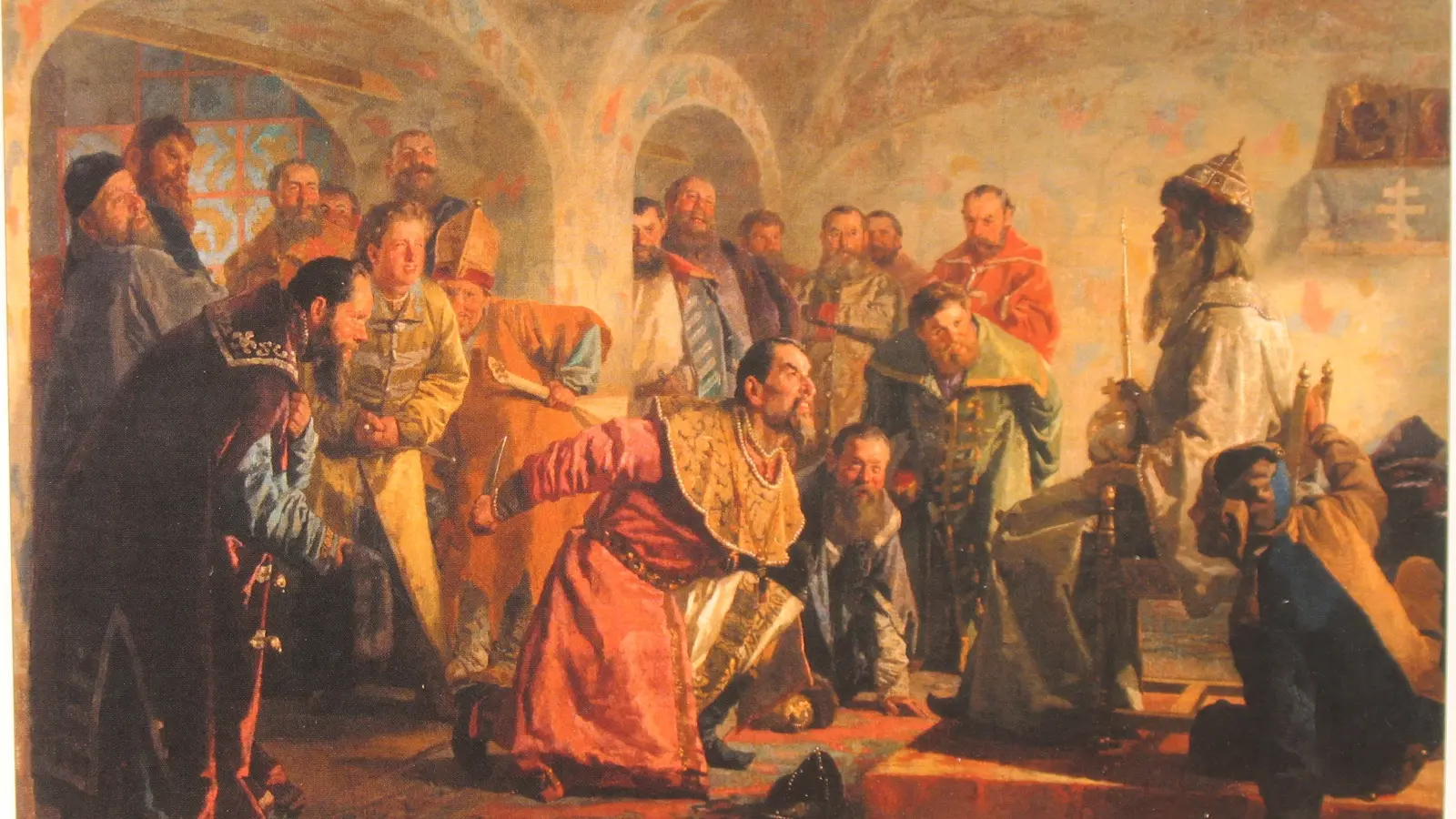
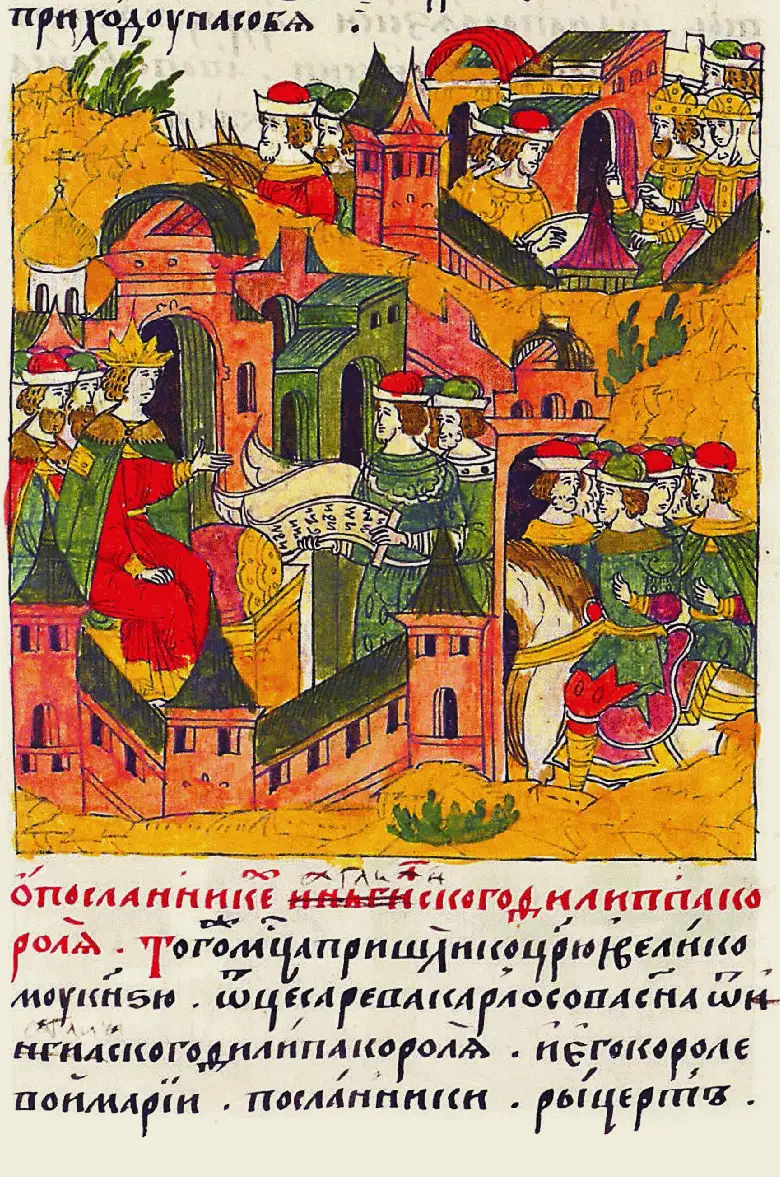
The tsar summoned Chancellor to Moscow, where he was received by Ivan IV that winter. His account describes the scene: Ivan "sate much higher then any of his nobles in a chaire gilt, and in a long garment of beaten golde, with an emperial crowne upon his head, and a staffe of Cristall and golde in his right hand". Chancellor was impressed by the city: "I take the whole towne to bee greater then London with the suburbes: but it is very rude, and standeth without all order. Their houses are all of timber very dangerous for fire."
Ivan gave him a letter for the English king inviting English merchants to trade. Chancellor returned to England in 1554. Edward VI had died in July 1553, and the letter was presented to his successor, Queen Mary I.
When was the Muscovy Company founded?
The company was formed in 1553 to pay for the voyage. It received a royal charter from Philip and Mary in February 1555. The date of the charter is given two ways. The text printed by Hakluyt ends "Apud Westmonasterium, 6 die Feb.", and the historian Nicholas Gerson (1912) gives 6 February 1555. The Guildhall Library in London, which held the company's later records, gives 26 February 1555. The often-repeated founding year "1551" is not supported by the sources.
The charter named the company "marchants adventurers of England, for the discovery of lands, territories, Iles, Dominions, and Seigniories unknowen". It gave it a monopoly of English trade with the tsar's lands and of any new lands its ships might discover. Because Sebastian Cabot "hath bin the chiefest setter forth of this journey or voyage", it made him "the first and present governour" for life. Four consuls and twenty-four assistants were to be elected each year.
Was it the first joint-stock company? It is often called that, including in the Great Russian Encyclopedia. The members did contribute to a common stock in shares, first of £25 and later of £200, and shared the profits, decades before the East India Company (1600). But Gerson noted that earlier historians had classed it as a regulated company, in which members traded on their own account, and its finances changed over time. It is safest to call it one of the earliest English companies to trade on a joint stock.
What did the Muscovy Company trade?
The English came for Russian raw materials and to sell their cloth. A company agent, George Killingworth, was in Moscow by November 1555, and Ivan granted the company privileges that year, including trade free of customs duties; their exact terms are disputed. The company set up houses at Kholmogory, Vologda and Moscow. In Moscow its house stood on Varvarka Street in the Zaryadye district, below the Kremlin. The building survives as the Old English Court, now a museum, which Queen Elizabeth II visited on its opening in 1994.
The company's ships sailed each summer to the White Sea, where the goods were loaded and unloaded. According to the Guildhall Library, the company's main imports from Russia were "furs, tallow, wax, timber, flax, tar and hemp", and its main export to Russia was English cloth. Russian hemp became rope for the English fleet.
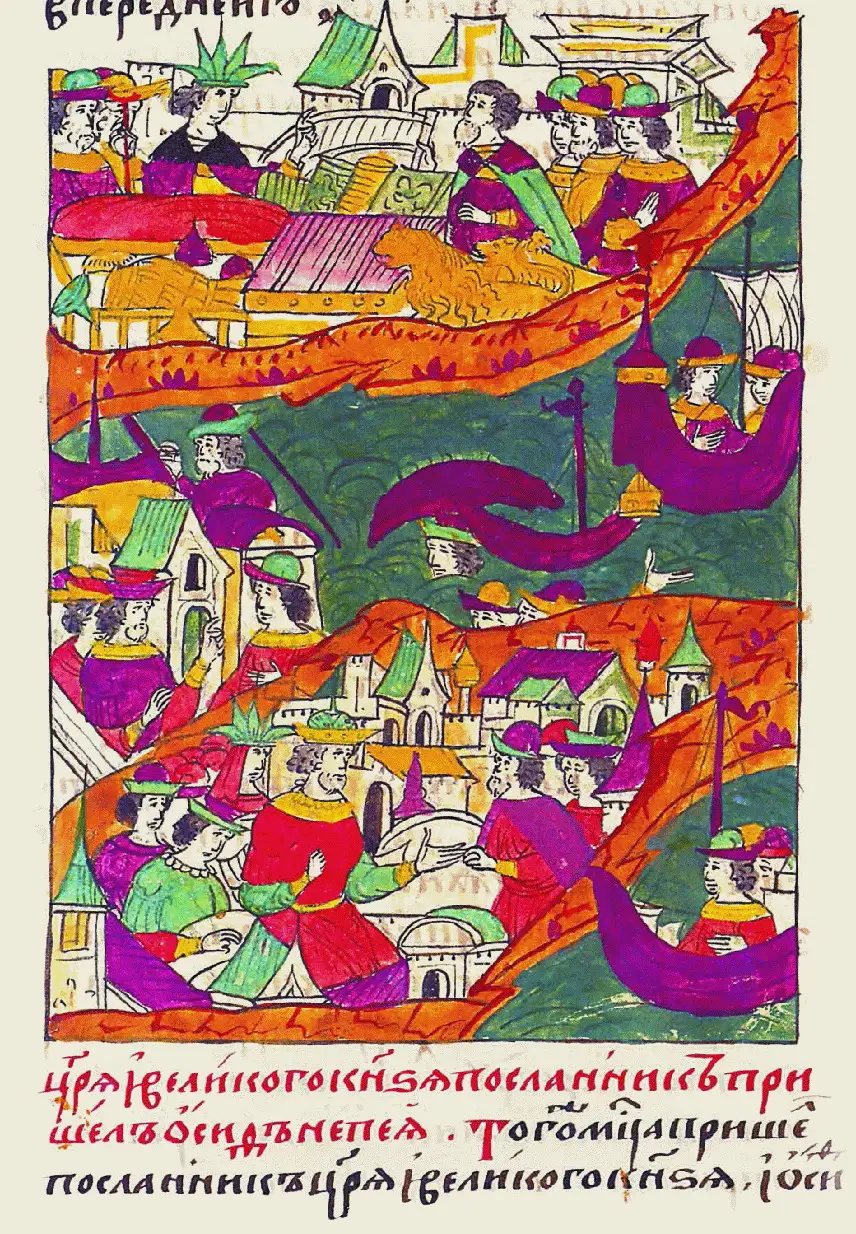
The trade was risky. In 1556 the Edward Bonaventure sailed home with Chancellor and Ivan's first envoy to England, Osip Nepeya, an official from Vologda. On 10 November 1556 the ship was wrecked in a storm in Pitsligo Bay on the coast of Aberdeenshire. Chancellor drowned. Nepeya survived and reached London on 27 February 1557, where he was met by "fourscore merchants with chaines of gold" and later received by Philip and Mary at Westminster.
Who was Anthony Jenkinson?
Anthony Jenkinson was the company's most adventurous agent. In 1558 he sailed down the Volga, through the recently conquered Khanate of Astrakhan, and across the Caspian Sea, hoping to reach the overland trade of Asia. "Upon the 23. day of December wee arriued at the citie of Boghar in the lande of Bactria," he wrote: Bukhara, in the Khanate of Bukhara. The trade there disappointed him. He was back in Moscow on 2 September 1559, where he presented the tsar with "a white Cowes taile of Cathay, and a drumme of Tartaria".
In 1562 he went to Persia to open trade with Shah Tahmasp at Qazvin. The audience went badly. When Jenkinson confessed that he was a Christian, the shah replied: "Oh thou vnbeleeuer … we haue no neede to haue friendship with the vnbeleeuers," and sent him away. The company nevertheless kept trying to trade with Persia through Russia in the following years.
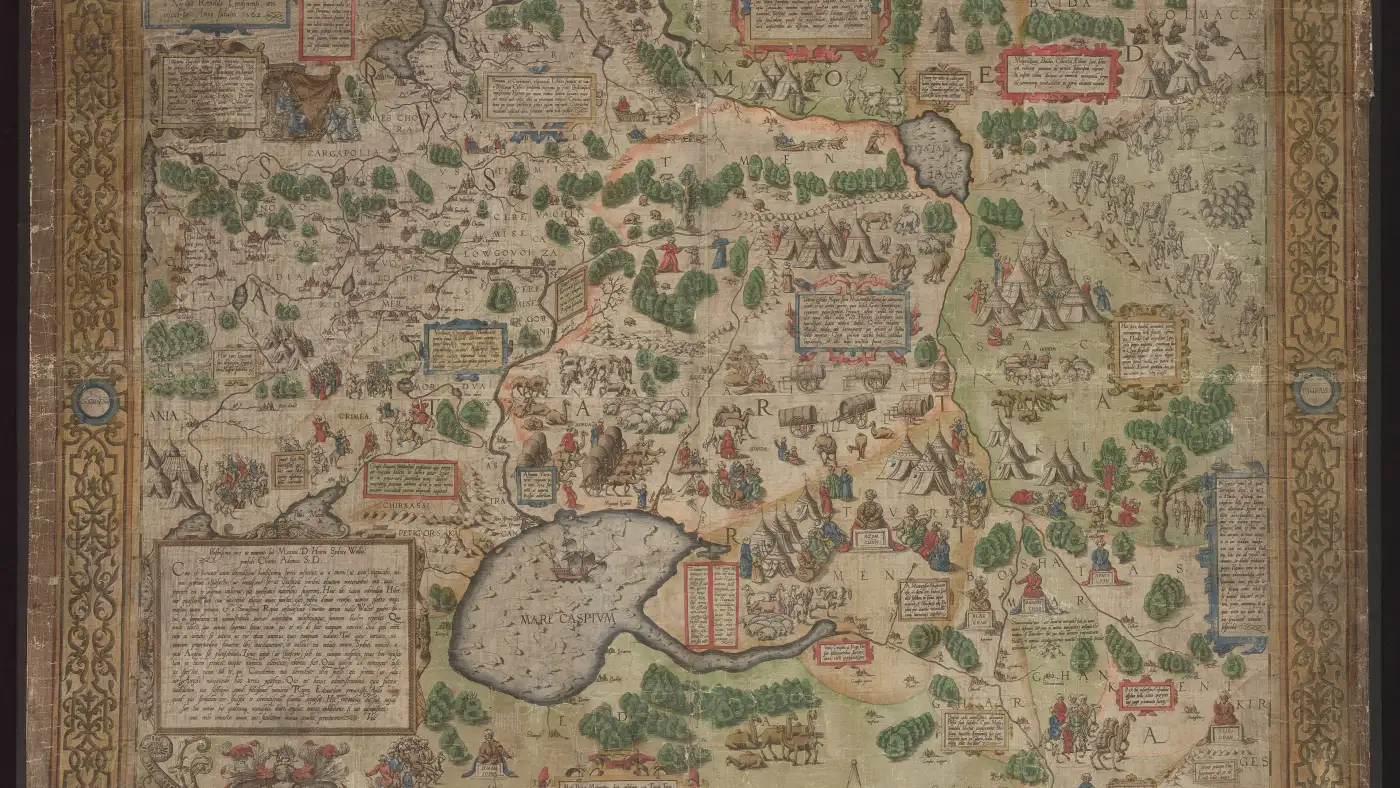
Jenkinson's map of "Russia, Muscovy and Tartary", dated 1562, drew on his own journeys and was copied by Abraham Ortelius in his atlas of 1570. Only one copy of the original print is known; Krystyna Szykuła, who identified it in Wrocław, and the historian Samuel Baron date its printing to between 1567 and 1569.
Why did Ivan the Terrible write angrily to Elizabeth I?
The company's trade became part of high politics. During the terror of the oprichnina, Ivan IV wanted more than trade: a political alliance and a promise of refuge. Through Jenkinson in 1567 he asked secretly for asylum in England if he should be driven from his realm. On 18 May 1570 Queen Elizabeth I sent him two letters, an ordinary one and a secret one, in which she promised that if he were ever forced to leave his country, "by secret conspiracy or by external enmity", he would be received in England with honour. She did not offer the alliance he wanted.
Ivan's reply of 24 October 1570 is one of the most famous letters in Russian diplomacy. He wrote that he had thought she was the sovereign of her state, but "other people rule beside you, and not just people, but trading peasants (muzhiki torgovye), who care nothing for our sovereign heads and honour and lands, but seek their own trading profit". He added that she remained "in your maidenly rank like a true maiden" (poshlaya devitsa). He revoked the company's privileges and declared that "the Muscovite state has so far not been poor without English goods". The Russian historian Yury Tolstoy, who published the correspondence in 1875, explained that poshlaya here meant "true, real", not "vulgar"; the common English rendering "vulgar wench" is a mistranslation. Trade was suspended until 1572, when new, less generous privileges were granted.
In 1582–1583 Ivan sent the envoy Fyodor Pisemsky to London to ask for an English bride, Lady Mary Hastings, a relative of the queen. Elizabeth excused her on grounds of health. The English ambassador Sir Jerome Bowes was in Moscow negotiating when Ivan died in March 1584. For that episode see Ivan the Terrible.
How did the Muscovy Company decline?
After Ivan's death the company lost much of its favoured position. Under Tsar Fyodor its duty-free trade was cut back, and Giles Fletcher's embassy of 1588–1589 failed to restore it. Fletcher's book about Russia, Of the Russe Common Wealth (1591), was "quickly suppressed" after English merchants warned Lord Burghley that passages in it might offend the tsar. From the later sixteenth century Dutch merchants competed hard on the White Sea route. During the Time of Troubles the company suffered heavy losses, although even False Dmitry I confirmed its privileges in December 1605.
The end of its special position came in 1649. On 1 June 1649 Tsar Alexei ordered the English merchants out of Moscow and the interior, allowing them to trade only at Arkhangelsk. The decree accused them of secretly bringing in tobacco and other forbidden goods, and above all of the execution of Charles I: "the English, all the land of them, have done a great evil deed, killing their sovereign, King Charles, to death, and for such an evil deed you may not stay in the Muscovite state". English trade resumed after the Restoration, but the company never regained its old monopoly in Russia.
Does the Muscovy Company still exist?
Yes, in a different form. The company's early records were lost in the Great Fire of London in 1666, but its later minutes survive. In the eighteenth century its members formed the core of the British Factory in St Petersburg. According to the Guildhall Library, "since 1917 the Russia Company has operated principally as a charity", giving grants to English chaplaincies in Russia. Its charitable fund was set up by a declaration of trust dated 6 December 1917, and it is registered with the Charity Commission for England and Wales as charity no. 210842. Its accounts for the year to February 2026 were filed. The Great Russian Encyclopedia's statement that the company "officially ceased to exist in 1917" is therefore not correct.
The Muscovy Company as a historical source
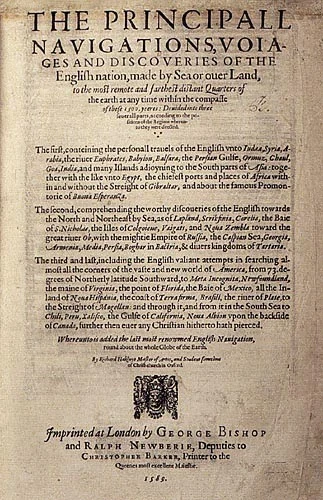
Much of what we know about sixteenth-century Russia comes from the company's people. Richard Hakluyt printed their journals, letters, instructions and charters in The Principal Navigations (1589, enlarged 1598–1600). Chancellor's description of Russia, Jenkinson's travels, the reports of later agents and the books of Giles Fletcher and Jerome Horsey all came out of the company's world. They are foreign merchants' views, interested in profit and often scornful of Russian customs, but they were written by eyewitnesses. Ivan IV's side of the correspondence survives in Russian archives and was published by Yury Tolstoy in 1875.
Common myths about the Muscovy Company
| Myth | What the evidence says |
|---|---|
| The company was founded in 1551 | It was formed in 1553 for the voyage and chartered in February 1555 |
| It was beyond doubt the first joint-stock company | It was one of the earliest English companies to trade on a joint stock, but historians have also classed it as a regulated company |
| Willoughby's men were found frozen in mid-action | The sources say only that the crews died over the winter, most of them still alive in January 1554 |
| Chancellor "discovered" Russia | Russia was known in England; what was new was the sea route to the White Sea and direct trade with Moscow |
| Ivan called Elizabeth a "vulgar wench" | He called her a poshlaya devitsa, which in the Russian of the time meant "a true maiden"; his real insult was that "trading peasants" ruled her country |
| The company was dissolved in 1917 | It became a charity in 1917 and is still registered today |
Timeline of the Muscovy Company
| Date | Event |
|---|---|
| 1553 | Company formed; £6,000 raised in £25 shares |
| 10 May 1553 | Willoughby's three ships leave Ratcliffe |
| 2–3 August 1553 | Storm off northern Norway separates the fleet |
| 18 September 1553 | Willoughby decides to winter on the Kola Peninsula |
| Winter 1553–54 | Chancellor received by Ivan IV in Moscow; Willoughby's crews die |
| February 1555 | Royal charter of Philip and Mary; Cabot governor for life |
| 1555 | Ivan IV grants trade privileges |
| 10 November 1556 | Edward Bonaventure wrecked at Pitsligo; Chancellor drowned |
| 27 February 1557 | Osip Nepeya, first Russian envoy to England, reaches London |
| 23 December 1558 | Jenkinson reaches Bukhara |
| 1562 | Jenkinson in Persia; his map of Russia dated this year |
| 18 May 1570 | Elizabeth I's secret letter offering Ivan asylum |
| 24 October 1570 | Ivan's angry letter; privileges revoked |
| 1572 | Trade resumed on new terms |
| 1582–1583 | Pisemsky's embassy and the Mary Hastings proposal |
| 1584 | Arkhangelsk founded near the company's landing place |
| 1591 | Fletcher's Of the Russe Common Wealth published and suppressed |
| 1 June 1649 | Tsar Alexei expels the English merchants from Moscow |
| 1666 | Early records lost in the Great Fire of London |
| 6 December 1917 | Charitable fund established; the company continues as a charity |
| 1994 | Elizabeth II visits the Old English Court in Moscow |
What the map shows
At 1555 the Tsardom of Russia reaches the White Sea in the north, the only coast through which the Kingdom of England could trade with it while Livonia and the Baltic were contested. To the south-east, the Khanate of Bukhara was the goal of Jenkinson's journey of 1558. The company's later history is part of the story of the Russian Empire.
Sources
Primary sources
- Richard Hakluyt, The Principal Navigations, Voyages, Traffiques and Discoveries of the English Nation, vol. 2 (Glasgow: MacLehose, 1903), with Willoughby's journal, Clement Adams's account, Chancellor's description of Russia, the charter of 1555 and the account of Nepeya's embassy: https://archive.org/details/in.ernet.dli.2015.536272
- E. D. Morgan and C. H. Coote (eds), Early Voyages and Travels to Russia and Persia by Anthony Jenkinson and Other Englishmen, vol. 1 (London: Hakluyt Society, 1886): https://archive.org/details/earlyvoyagestrav01morguoft
- Iu. V. Tolstoi, Pervye sorok let snoshenii mezhdu Rossieiu i Anglieiu, 1553–1593 (St Petersburg, 1875): https://archive.org/details/pervyesorokletsnoshenijmezhdurossiejiang54
- E. A. Bond (ed.), Russia at the Close of the Sixteenth Century (London: Hakluyt Society, 1856), with Giles Fletcher and Jerome Horsey
- Decree of Tsar Alexei Mikhailovich, 1 June 1649, Polnoe sobranie zakonov Rossiiskoi imperii, series 1, vol. 1, no. 9, via ru.wikisource
- Charity Commission for England and Wales, "The Russia Company" charitable fund, charity no. 210842: https://register-of-charities.charitycommission.gov.uk/charity-details/?regId=210842&subId=0
Studies and reference works
- N. Gerson, "The Organization and Early History of the Muscovy Company", in Studies in the History of English Commerce in the Tudor Period (New York, 1912): https://archive.org/details/studiesinhistory00gersuoft
- Guildhall Library, "Russia Company" (research guide, 2005), via the Internet Archive
- "Moskovskaia kompaniia", Bol'shaia rossiiskaia entsiklopediia, vol. 21 (2012)
- J. K. Laughton, "Chancellor, Richard", and "Fletcher, Giles", Dictionary of National Biography, via en.wikisource
- K. Szykuła, "Anthony Jenkinson's Unique Wall Map of Russia (1562) and Its Influence on European Cartography" (InTech, 2012), doi:10.5772/50224
- T. K. Krasil'nikova, "Moskovskaia torgovaia kompaniia …", Journal of Frontier Studies 11:2 (2026), doi:10.46539/jfs.v11i2.880
- T. M. Ruiatkina, on the Willoughby expedition, Cursor Mundi (2023)
- E. V. Shegulova and A. Mariskin, on the Muscovy Company, Ogarev-Online (2024)
- "Ioann IV Vasil'evich" and "Lzhedmitrii I", Pravoslavnaia entsiklopediia
Image credits
- Title image: Anthony Jenkinson, Nova absolutaque Russiae, Moscoviae et Tartariae descriptio, 1562, Wrocław copy. Public domain, via Wikimedia Commons.jpg), cropped to 16:9.
- Sir Hugh Willoughby, 16th-century portrait. Public domain, via Wikimedia Commons.
- Illustrated Chronicle miniatures of the English envoys and of Osip Nepeya, 16th century. Public domain, via Wikimedia Commons.
- Title page of Hakluyt's Principall Navigations, 1589. Public domain, via Wikimedia Commons.