Holmgard, in Old Norse Holmgarðr, is what the Vikings called Novgorod in northern Russia. In the sagas and on Swedish runestones of the eleventh century it always means the town. But the name is older than the town. Novgorod itself has no layers older than the AD 930s, while a fortified settlement two kilometres upstream, now called Rurikovo Gorodishche ("Rurik's hillfort"), was already a busy Slavic and Scandinavian centre by the middle of the ninth century. Most scholars think Holmgard first meant that island stronghold and the settlements around it, where the Volkhov river leaves Lake Ilmen, and that the name passed to the "new town" that grew up beside it.
What does Holmgard mean?
The name joins two Old Norse words: holmr, a small island or a patch of raised ground in water or marsh, and garðr, an enclosure, a yard or a stronghold. The same garðr gave the Norse their name for the whole of Rus', Garðar, "the strongholds", and the later saga term Garðaríki, "the realm of the strongholds". Kyiv was Kœnugarðr, so Holmgard and Kyiv are never the same place in Norse texts.
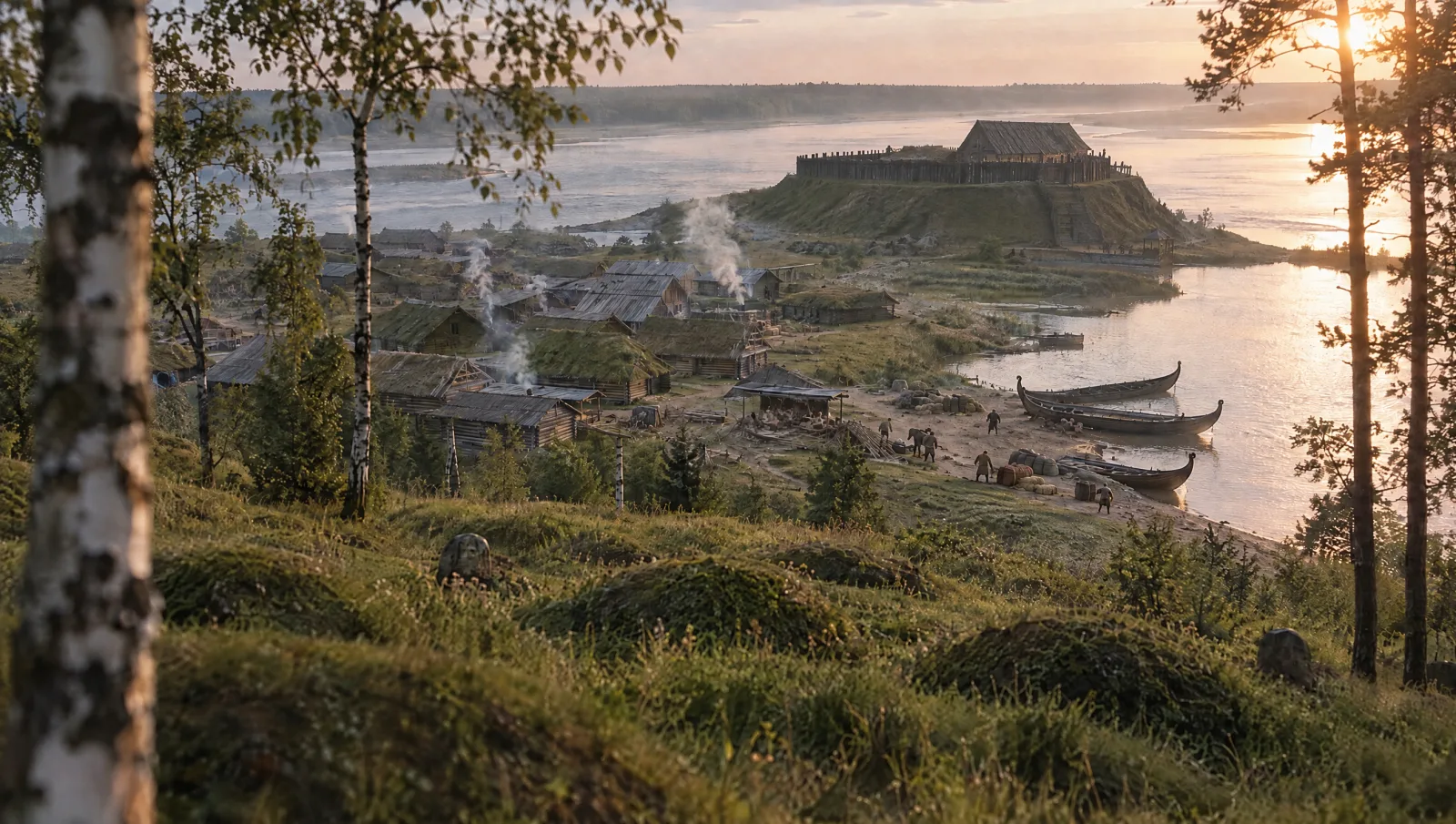
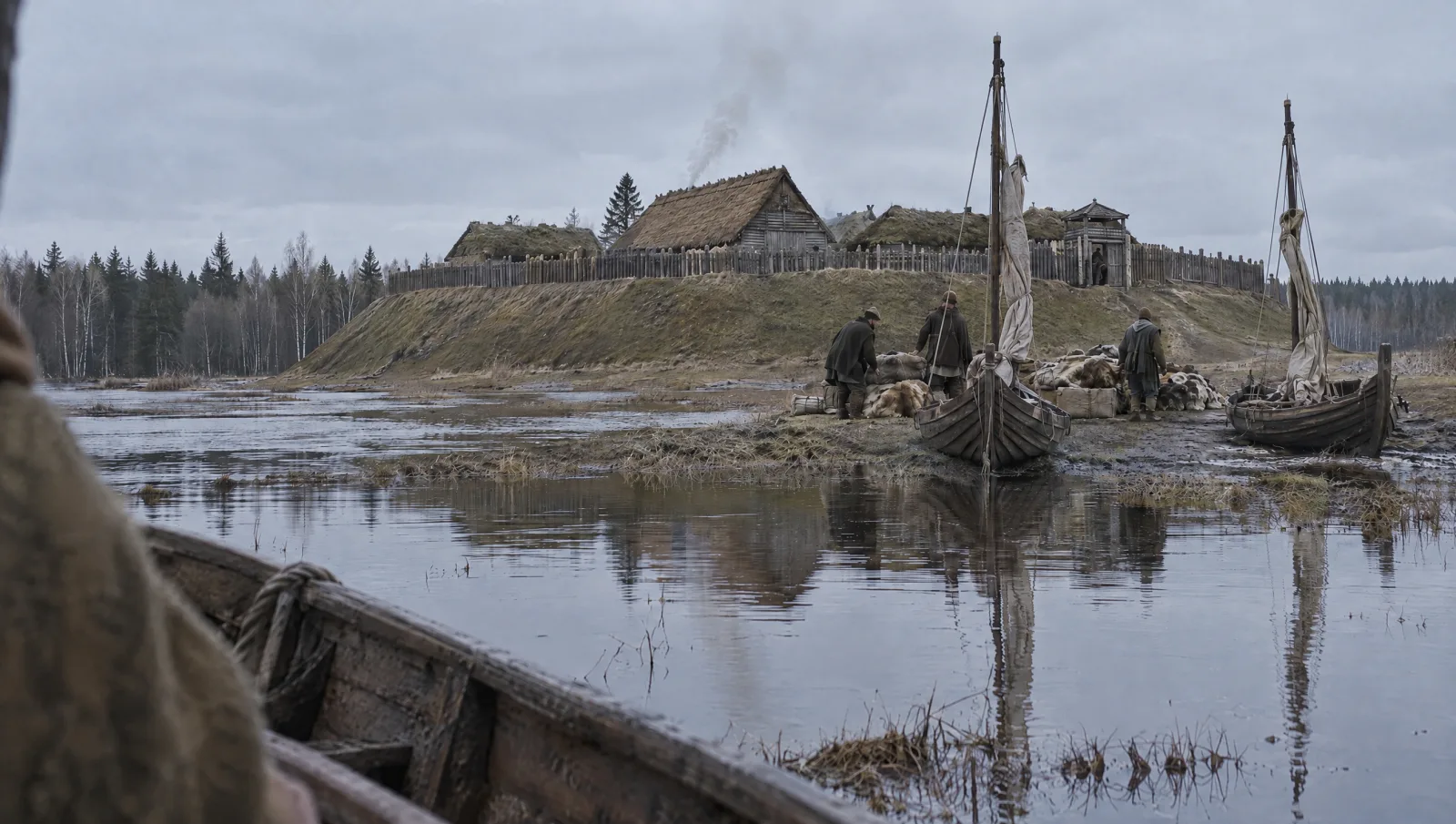
What the "islands" were is debated. The archaeologist Evgeny Nosov, who excavated Rurikovo Gorodishche, followed the Russian Scandinavianist Elena Mel'nikova in reading the name as "settlements among the islands". Scandinavians sailing up the Volkhov in spring, he argued, would have seen "a panorama of a flooded locality with settlements on hill tops" rising like islands from the water. He drew a second conclusion from the name: the Norse did not call the place by the Slavic name Novgorod, and "it means that there was no Novgorod at the time when they first reached Lake Ilmen" (Nosov, Fennoscandia archaeologica 4, 1987, p. 85). Others see a more specific holmr: the hillfort itself, which stands on ground enclosed by two arms of the river and marsh. A third view takes Holmgarðr as a Norse reshaping of a Slavic place name.
Where was Holmgard?
Lake Ilmen drains north through the Volkhov to Lake Ladoga, and from there to the Baltic. Rurikovo Gorodishche lies on a low hill on the right bank of the Volkhov, "2 km to the south of Novgorod", at the point where the river "takes its sources from Lake Ilmen" (Nosov 1987, p. 73). Here, as Nosov put it, "the vast river systems of the Ilmen basin (the Lovat, Pola, Msta, Shelon) meet" (p. 85), so whoever held the outflow controlled the main road from the Baltic to the Volga and the Dnieper (see our article on the Viking trade routes to the East).
The name "Rurik's hillfort" is later tradition, not evidence. Gorodishche simply means the site of an old fortified town. Nosov thought the name arose in the eleventh century, when the place had lost its role (p. 83). The first chronicle mention of the site comes only in 1103, when Prince Mstislav "founded the Church of the Annunciation in the Gorodishche" (Novgorod First Chronicle, trans. Michell and Forbes, p. 7).
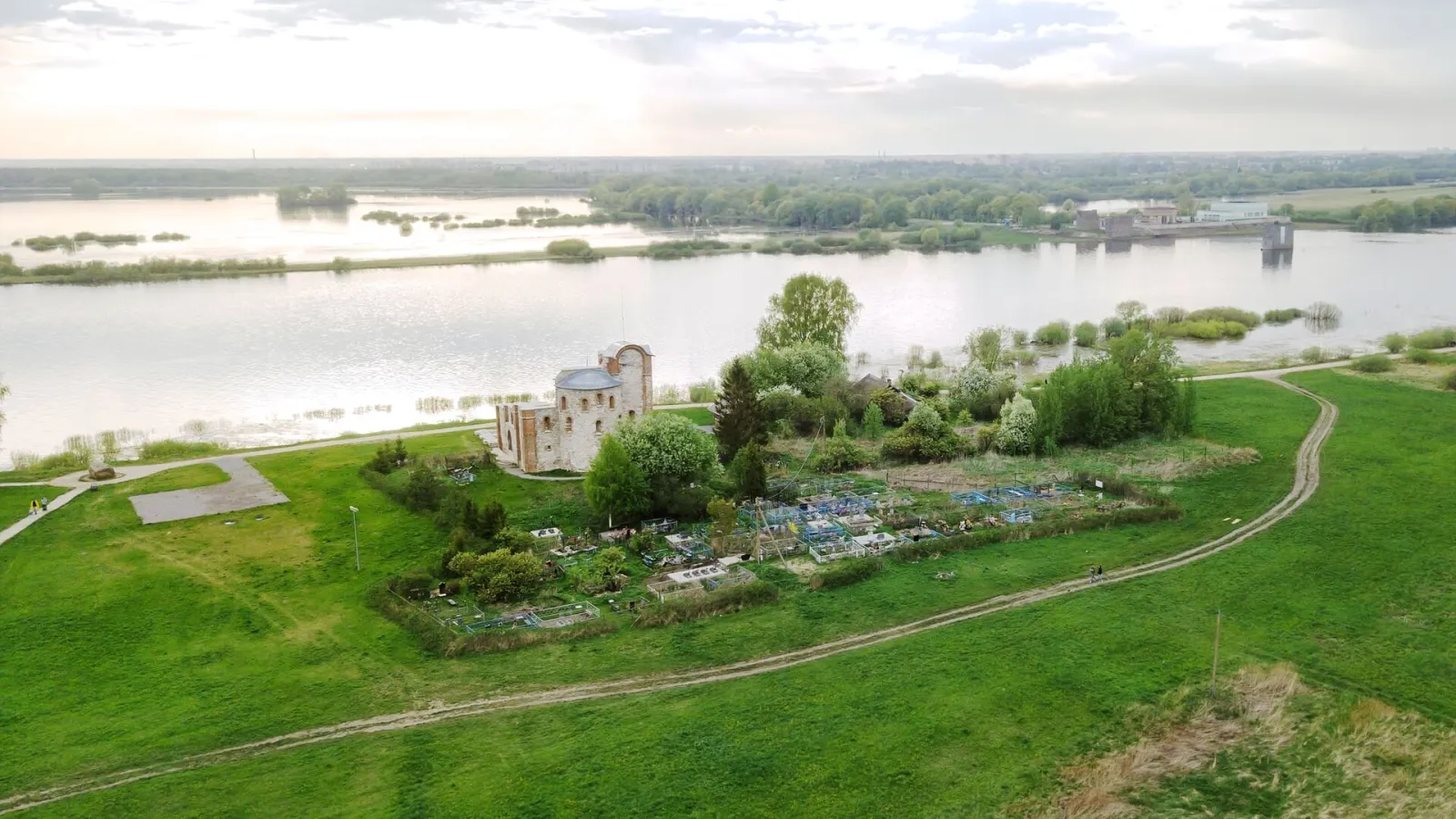
What did archaeologists find at Rurikovo Gorodishche?
Nosov's team dug the centre of the hill from the mid-1970s, and his English summary of 1987 remains the clearest account. Its key conclusions:
- Date. "The Ryurik Gorodishche existed, undoubtedly, in the mid-9th century and was probably founded even earlier" (p. 76). Two small hoards of Arabic silver coins (dirhams) end in the late AD 850s and AD 860s, and a bronze coin of the Byzantine emperor Theophilos (AD 829–842) was found on the site.
- Size. In the second half of the ninth century and in the tenth, the settlement "covered an area of 4 hectares", which in northern Russia at the time "should be ranked among the biggest known" (p. 77).
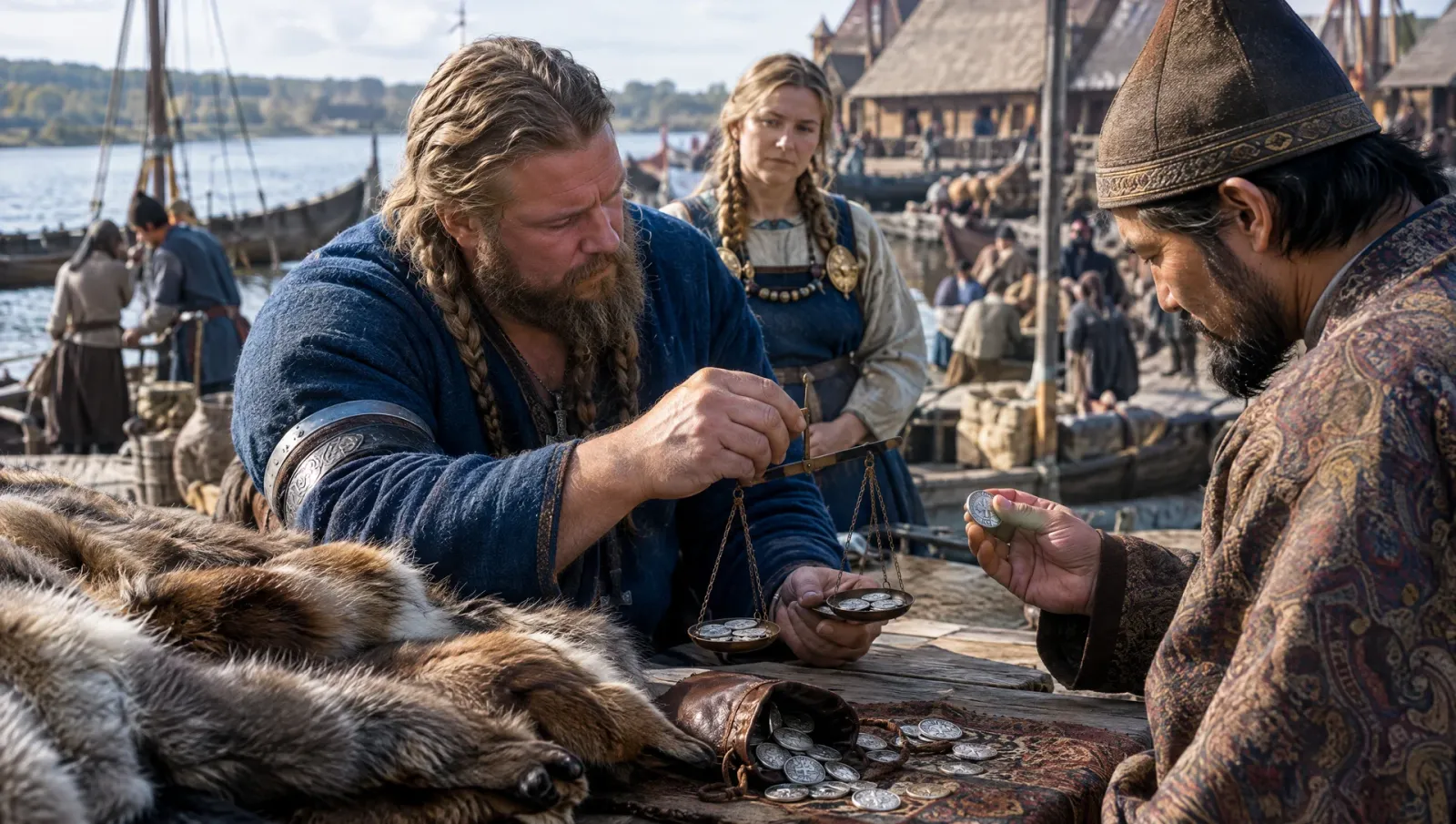
- Trade and craft. Silver from the Abbasid Caliphate and Central Asia, Byzantine coins, glass and carnelian beads, weights and scale parts, crucibles and moulds, and fine gold wire for jewellery.
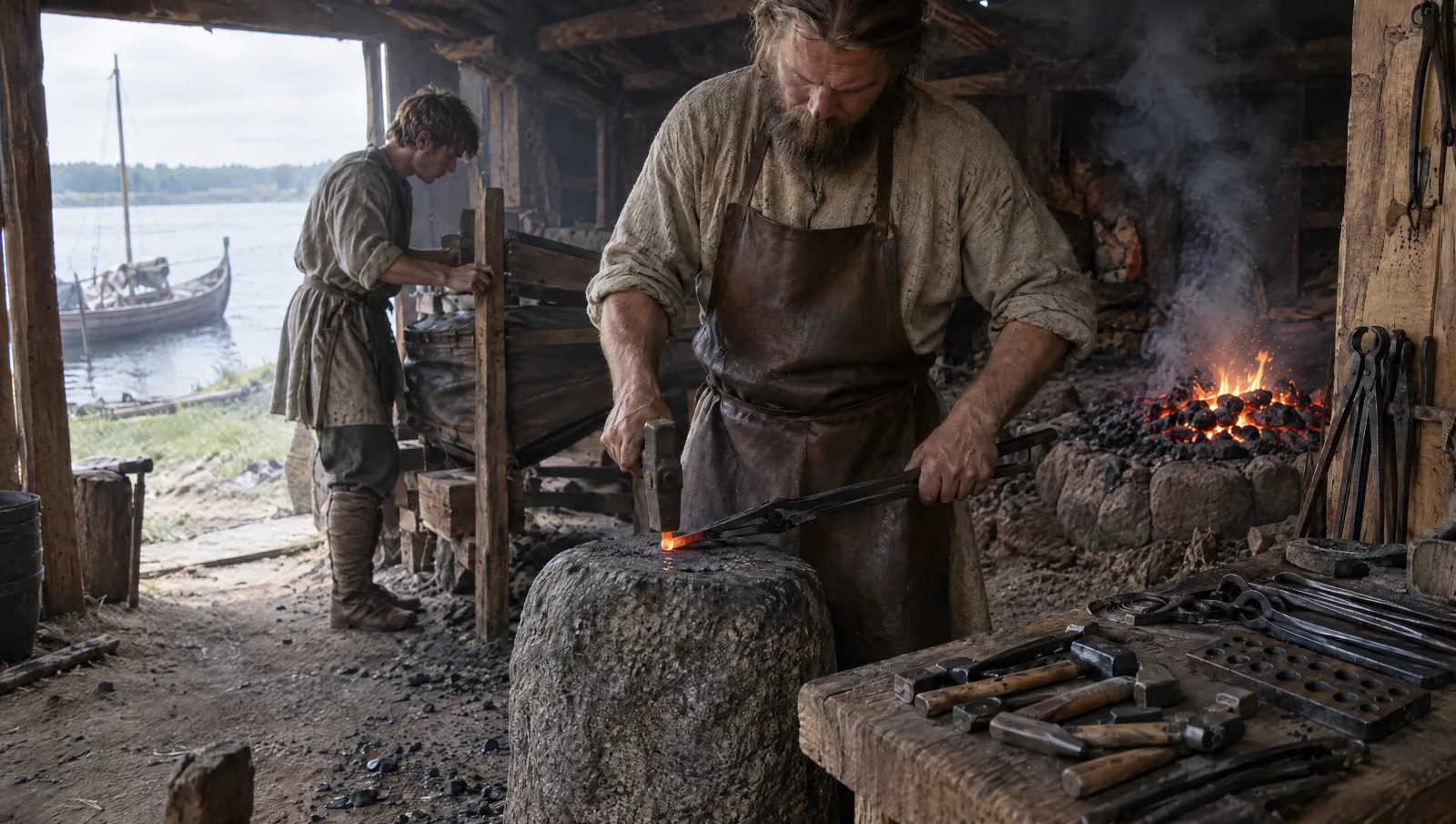
- Scandinavian objects. Iron neck-rings hung with "the so-called Thor's hammers" (p. 81), oval and equal-armed brooches typical of Scandinavian women's dress, and "a silver Valkyrie figurine" (p. 82). In 1983 the excavators found two small bronze amulets "carrying incised Runic inscriptions" (p. 81), dated to the second half of the tenth century.
Nosov argued that such charms "could not, therefore, be objects of trade", because they meant nothing to anyone but their Scandinavian owners. His conclusion: "both Slavs and Scandinavians lived in Gorodishche in the 9th and 10th centuries" (p. 83). The most numerous finds, however, are hand-made pots of the local Slavs, the Ilmen Slovenes (p. 79). The Scandinavians lived among them, not in a colony of their own.
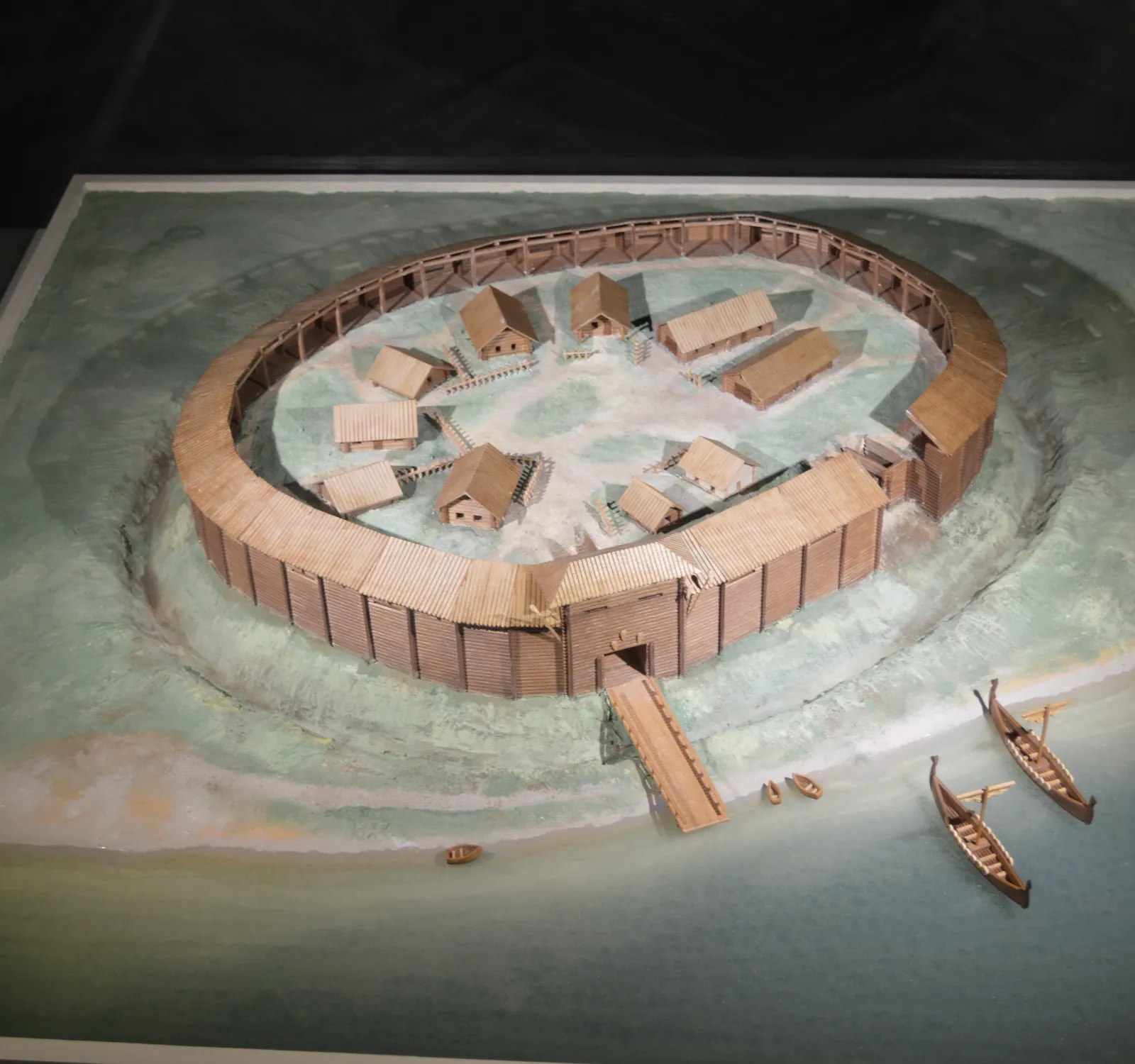
The famous tree-ring dates need care. "The earliest beams are dated to 889, 896 and 897" (p. 77), but they come from the edge of the hill, settled later than its centre. As Nosov puts it, they "relate not to the beginning of settling the hill but, rather, to a later stage" (p. 77). Gorodishche was not "built in AD 889".
Was Holmgard Novgorod?
By the eleventh century, yes. But Novgorod, "the new town", came second. Excavations across the city have produced no layers older than the AD 930s; Nosov's formula is that the town "lacks layers dated earlier than the 930s-950s" (p. 77).
The town did not simply replace the hillfort. "There are no grounds to speak of a substitution of one settlement by another," Nosov wrote (p. 83). The two lived side by side through the tenth century. Gorodishche then shows a gap in the first half and middle of the eleventh century, which Nosov linked to Yaroslav the Wise moving the princely court into the town. In the last third of the century "the princes were forced to move back to Gorodishche" (p. 85), and in the Novgorod Republic it became the residence of princes "squeezed out of the city by the developing republican system" (p. 74).
The Kyivan Primary Chronicle, compiled about 1113, preserves two different memories. In its introduction, "the Slavs also dwelt about Lake Il'men' … They built a city which they called Novgorod" (trans. Cross and Sherbowitz-Wetzor, p. 53). Under AD 862 it tells how the Varangians were invited to rule and "the oldest, Rurik, located himself in Novgorod" (p. 59). Another manuscript, the Hypatian, seats Rurik first at Ladoga. Neither says that Rurik founded Novgorod, and the year AD 862 is the chronicler's reckoning, made two and a half centuries later (see where Rurik ruled). If a ruler called Rurik sat at the head of Lake Ilmen in the AD 860s, he can only have sat at the hillfort, which is presumably why later tradition gave it his name.
The island of the Rus' and the "Rus' Khaganate"
Two written sources of the ninth and tenth centuries may describe Holmgard without naming it.
The Persian geographer Ibn Rusta, writing between about AD 903 and AD 913 from older material, describes the Rus' as living "on an island surrounded by a lake. The circumference of this island on which they live equals three days' journey. It is covered with woods and morasses", so damp "that the ground, on account of the water absorbed in it, shakes whenever stamped upon". Their ruler, he says, is called khāqān (khagan). Cross and Sherbowitz-Wetzor thought this "insular colony is readily identifiable with the Norse Hólmgarðr", following the Danish linguist Vilhelm Thomsen (Russian Primary Chronicle, p. 46). Other scholars have proposed Ladoga, the upper Volga or even a Baltic island. The flooded country round the Volkhov outflow fits the description well, but no text pins it to Gorodishche.
A Rus' ruler with the title chacanus is also mentioned in the Frankish Annals of St-Bertin under AD 839 (see our glossary section on the embassy to Ingelheim). Many historians place the seat of this "khagan of the Rus'" at Gorodishche, the largest ninth-century centre in the north with clear Scandinavian residents (see Gorodishche and the island). It is the best archaeological candidate, but no source names it.
The second source is the Byzantine emperor Constantine VII, writing about AD 950. He says that the Rus' boats coming down to Constantinople came "from Novgorod, where Sviatoslav, son of Igor, prince of Russia, had his seat" (De Administrando Imperio, ch. 9, trans. Jenkins). The Greek actually reads Nemogardas. Most scholars accept that this is Novgorod, garbled, but in the AD 940s the town had barely begun, and some prefer the hillfort.
Who lived and ruled in Holmgard?
The Primary Chronicle makes the north the cradle of the dynasty. After Kievan Rus' moved its centre south, Oleg "commanded that Novgorod should pay the Varangians tribute to the amount of 300 grivny a year for the preservation of peace. This tribute was paid to the Varangians until the death of Yaroslav" (p. 61). Novgorod became the seat for the prince's son and heir. In AD 970 the citizens asked Sviatoslav for a prince, and the young Vladimir "went forth to Novgorod with Dobrynya, his uncle" (p. 87). When his brother Yaropolk killed their brother Oleg in AD 977, Vladimir "was afraid, and fled abroad", and returned in AD 980 "with Varangian allies" (p. 91) to take Kyiv (see our article on Vladimir the Great).
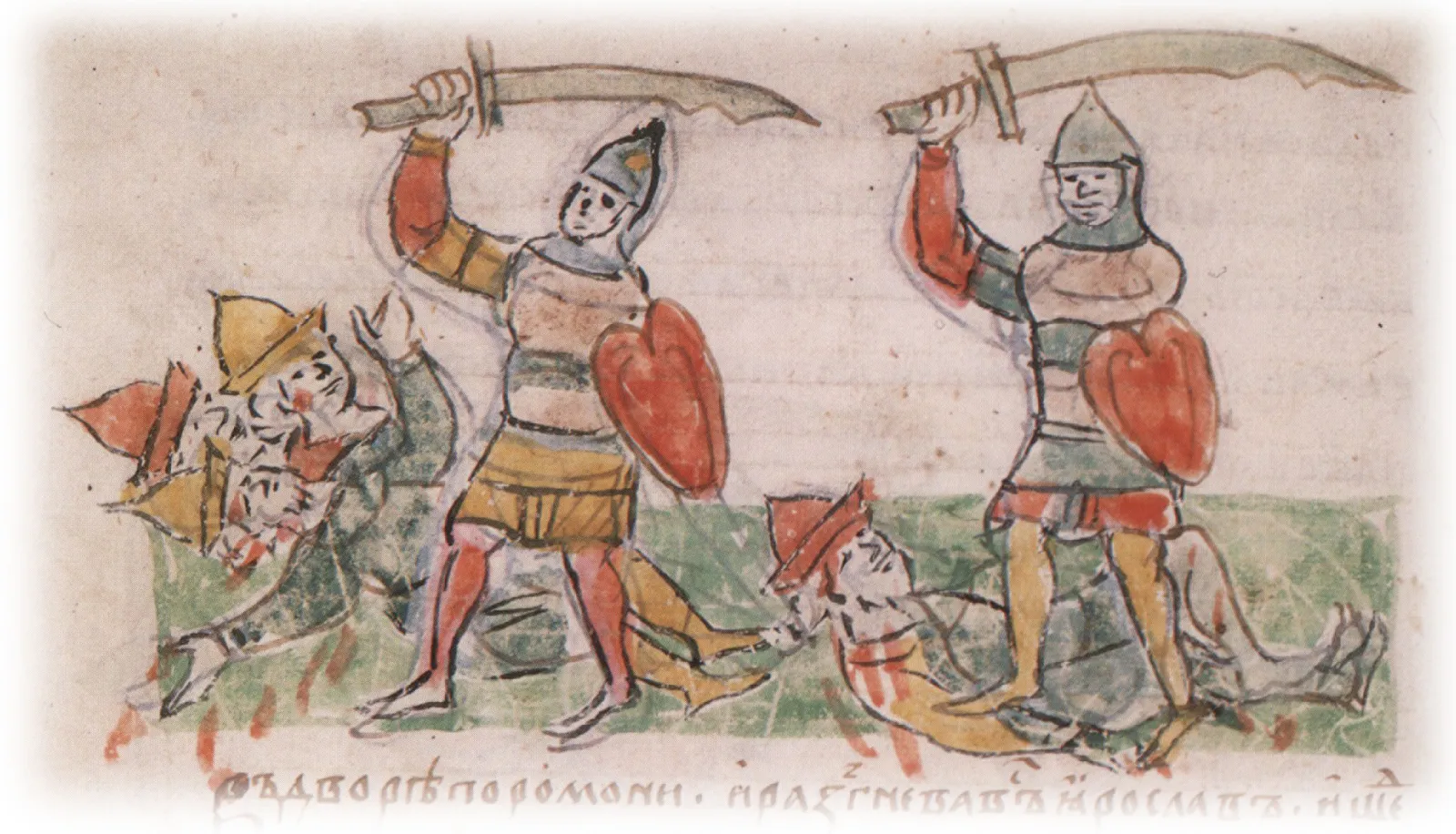
Yaroslav, Vladimir's son, ruled Novgorod in the 1010s with a large force of hired Varangians. In 1015, the chronicle says, "they offered violence to the inhabitants of Novgorod and to their wives. The men of Novgorod then rose and killed the Varangians" (p. 130). The Novgorod First Chronicle adds where: "in Poromon's Court" (trans. Michell and Forbes, p. 1). Cross and Sherbowitz-Wetzor explain the strange name Poromoni as a corruption of Old Norse farmanna garðr, "the court of the overseas merchants" (p. 252, n. 124), a sign that Scandinavian traders had their own compound in the town. Yaroslav still marched south with "a thousand Varangians, and 3,000 of the men of Novgorod" (Michell and Forbes, pp. 1–2) to win the war of succession (see Yaroslav the Wise).
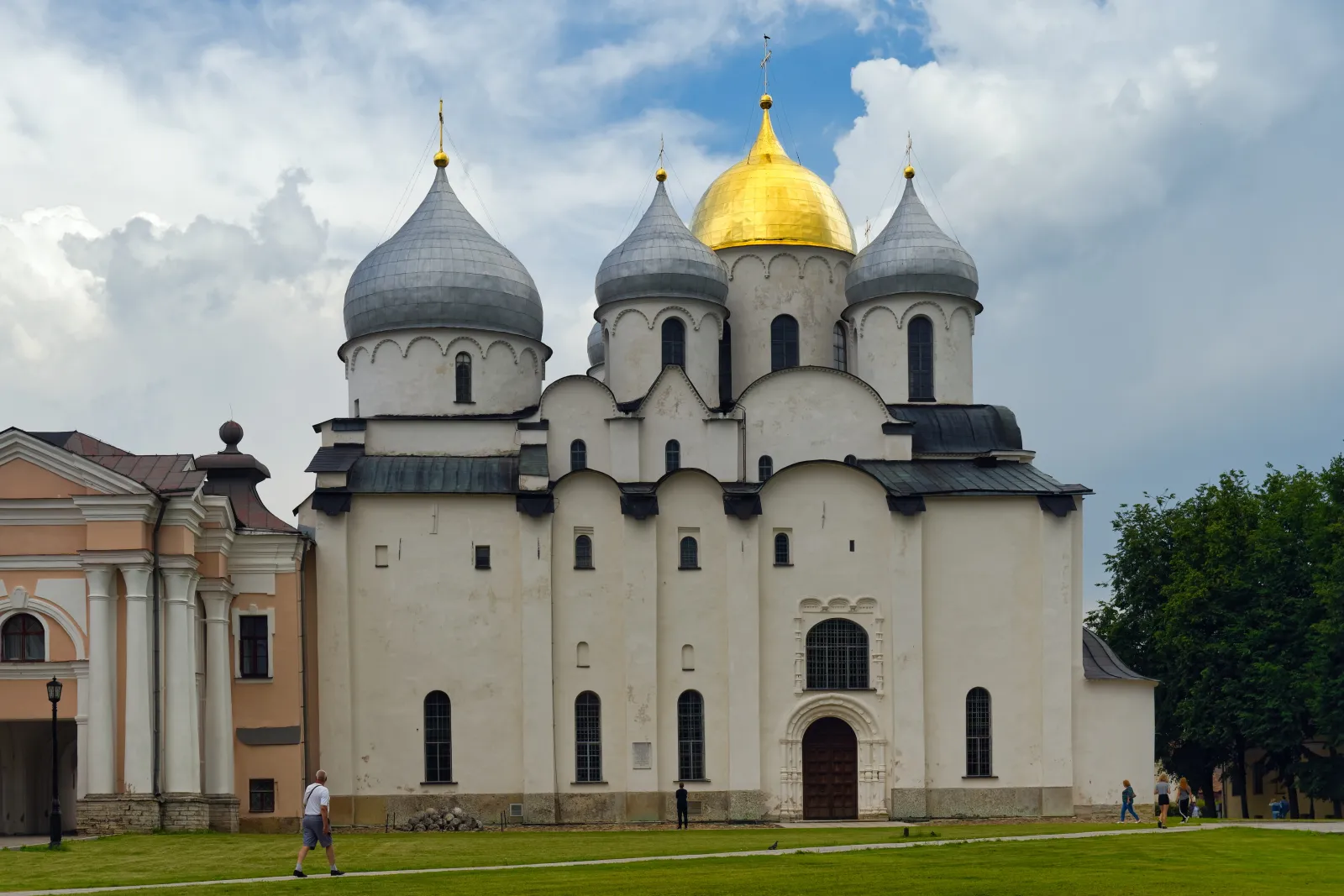
Around 1019 Yaroslav married Ingegerd, daughter of the king of Sweden, and Norse exiles found a refuge at his court. In 1045 his son Vladimir founded the stone cathedral of St Sophia in Novgorod, after the wooden church of that name had burnt down (Michell and Forbes, pp. 3–4).
Holmgard in the runestones and sagas
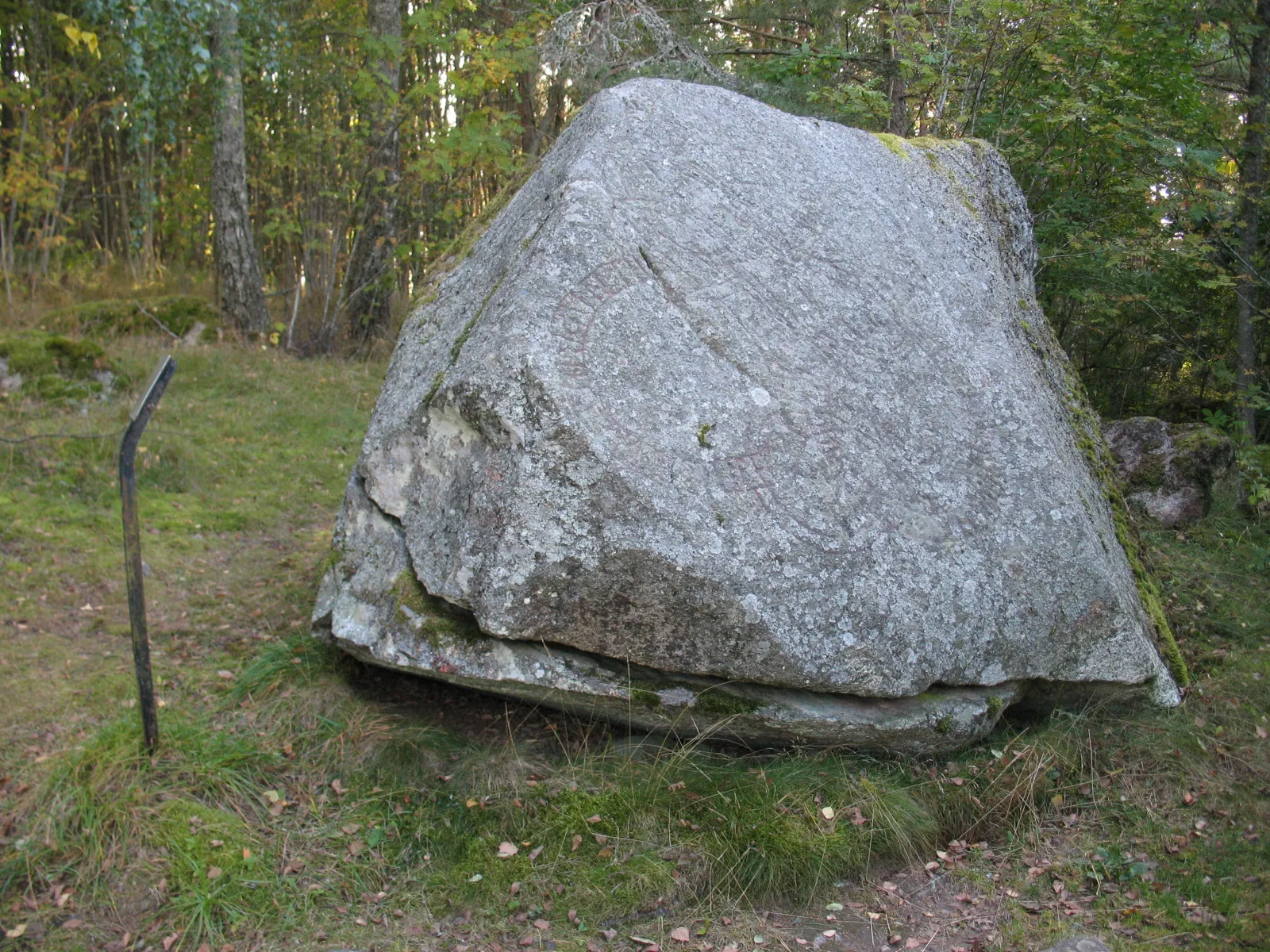
Two Swedish runestones name Holmgarðr. On the Esta stone in Södermanland (Sö 171), from the first half of the eleventh century, Ingifastr remembers his father Sigviðr: "He fell in Holmgarðr, the ship's leader with the seamen." On the Sjusta stone in Uppland (U 687), carved by the rune-master Œpir, who was active in the late eleventh and early twelfth centuries, Rúna and Sigríðr remember Spjallboði, who "died in Holmgarðr in Ólafr's church" (Rundata translations). That church was St Olaf's, the church of the Scandinavian merchants in Novgorod, dedicated to the Norwegian king who had died in 1030. These are monuments of the town in its trading heyday, not of the Viking-Age hillfort.
The Icelandic sagas, written down in the twelfth and thirteenth centuries, turn Holmgard into a royal court of romance. In Snorri Sturluson's Heimskringla, the boy Olaf Tryggvason is freed from slavery in Estonia by his uncle, who "came into Eistland from Novgorod, on King Valdemar's business to collect the king's taxes", and takes him "with him to Holmgard". There Olaf kills his old enslaver with an axe in the market-place and is saved by Queen Allogia. "In Holmgard the sacredness of peace is so respected, that it is law there to slay whoever puts a man to death except by judgment of law" (Saga of Olaf Tryggvason, chs 6–7, trans. Laing). King Valdemar is Vladimir, but Allogia matches no wife of his in Rus' sources. Later sagas send Olaf Haraldsson, his son Magnus and Harald Hardrada to the court of "Jarizleifr", Yaroslav. These stories show how the Norse remembered Holmgard: as a rich court where an exile could find service. They are not reliable as records of events (see also Aldeigjuborg in the sagas).
Myths about Holmgard
- "Rurik founded Novgorod in 862." The chronicle says only that he "located himself" there, and in its own introduction the Slavs build the town. No layers in Novgorod date from before the AD 930s.
- "Novgorod was founded in 859." AD 859 is the date of the chronicle's first northern entry, about tribute paid to the Varangians. It is not a founding date.
- "Gorodishche was built in 889." The timbers of AD 889–897 come from a later phase on the edge of the site.
- "Holmgard was Kyiv" or "Gardariki was Novgorod." Kyiv was Kœnugarðr. Garðaríki was the whole of Rus'.
- "The Vikings ruled a Viking town." Holmgard was a Slavic and Finnic land with a Scandinavian minority, whose princes soon spoke Slavic and took Slavic names.
- "The Rus' khagan certainly lived at Gorodishche." It is the leading theory, not an established fact.
Why does Holmgard matter today?
Because the chronicle placed Rurik there, Novgorod has long presented itself as the birthplace of the Russian state. The Millennium of Russia monument in the Novgorod Kremlin was unveiled in 1862 for the thousandth anniversary of the calling of the Varangians, and in 2012 Veliky Novgorod hosted the official celebrations of "1150 years of Russian statehood". The archaeology tells a less tidy story. Before there was a Novgorod there was a crowded island settlement where Slavic farmers and craftsmen, Finnic neighbours and a minority of Scandinavians lived together. The Norse name they used for it, Holmgard, outlasted the hillfort and passed to the new town.
What the map shows next
At AD 860 on the map, the Rus' still sit on the northern rivers between Ladoga and Lake Ilmen. By AD 950 on the map Kievan Rus' stretches from Novgorod to Kyiv, with the Byzantine Empire across the Black Sea. At 1200 on the map, the Novgorod Republic rules its own vast northern territory, and its princes live at the old hillfort outside the town walls.
Sources
Primary sources (in translation)
- The Russian Primary Chronicle: Laurentian Text, trans. S. H. Cross and O. P. Sherbowitz-Wetzor (Cambridge, MA: Mediaeval Academy of America, 1953). Cited: pp. 46 (introduction, on Ibn Rusta), 53, 59, 61, 87, 91, 130, 252 n. 124.
- The Chronicle of Novgorod 1016–1471, trans. R. Michell and N. Forbes, Camden Third Series 25 (London: Royal Historical Society, 1914), pp. 1–4 and 7. PDF: https://faculty.washington.edu/dwaugh/rus/texts/MF1914.pdf
- Constantine VII Porphyrogenitus, De Administrando Imperio, ed. Gy. Moravcsik, trans. R. J. H. Jenkins (Washington, DC: Dumbarton Oaks, rev. edn 1967), ch. 9. Excerpt: https://faculty.washington.edu/dwaugh/rus/texts/constp.html
- Ibn Rusta, Kitāb al-Aʿlāq al-Nafīsa (c. 903–913), passage on the Rus', as quoted in Cross and Sherbowitz-Wetzor, p. 46 (from D. A. Khvol'son's edition); English translation also in P. Lunde and C. Stone, Ibn Fadlan and the Land of Darkness (Penguin, 2012).
- Snorri Sturluson, Heimskringla, "Saga of Olaf Tryggvason", chs 5–7, trans. S. Laing (London, 1844). Project Gutenberg: https://www.gutenberg.org/ebooks/598
- Runestones Sö 171 (Esta) and U 687 (Sjusta), Samnordisk runtextdatabas (Rundata). Overview with transliteration and translation: https://en.wikipedia.org/wiki/Gardarike_runestones
Studies
- E. N. Nosov, "New data on the Ryurik Gorodishche near Novgorod", Fennoscandia archaeologica 4 (1987), pp. 73–85.
- E. N. Nosov, "Ryurik Gorodishche and the settlements to the north of Lake Ilmen", in M. A. Brisbane (ed.), The Archaeology of Novgorod, Russia, Society for Medieval Archaeology Monograph 13 (Lincoln, 1992), pp. 5–66.
- S. Franklin and J. Shepard, The Emergence of Rus 750–1200 (London: Longman, 1996).
- E. A. Mel'nikova, "Vostochnoslavianskie toponimy s kornem gard-", Skandinavskii sbornik 22 (1977), pp. 199–209 (on the meaning of Holmgarðr; cited after Nosov 1987, p. 85).
Image credits
- Title image (the island hillfort at the head of the Volkhov, around AD 900): AI-generated illustration.
- Rurikovo Gorodishche from the air. Photo: Krasny (Красный), CC BY-SA 4.0, via Wikimedia Commons.
- Model of the hillfort at Rurikovo Gorodishche, ninth to tenth centuries (Novgorod Museum). Photo: Lapot (Лапоть), CC0, via Wikimedia Commons.
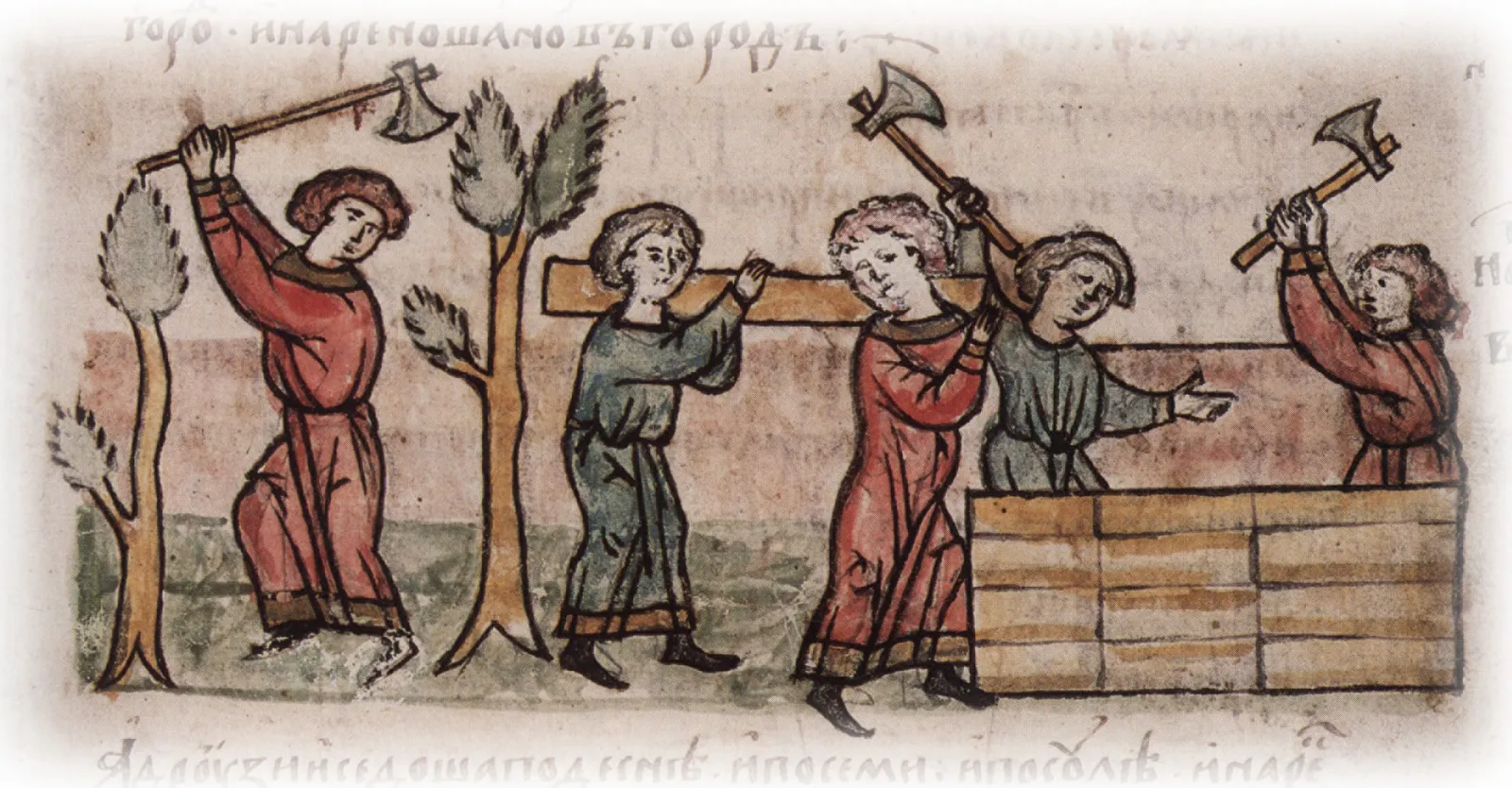
- The Slavs build Novgorod, Radziwiłł Chronicle (late fifteenth century). Radziwiłł Chronicle, public domain, via Wikimedia Commons.
- The men of Novgorod kill Yaroslav's Varangians (1015), Radziwiłł Chronicle (late fifteenth century). Radziwiłł Chronicle, public domain, via Wikimedia Commons.
- St Sophia in the Novgorod Kremlin. Photo: Alexxx Malev (Alexxx1979), CC BY-SA 4.0, via Wikimedia Commons.
- The Sjusta runestone (U 687), Uppland. Photo: Berig, CC BY 3.0, via Wikimedia Commons.