The Mongol invasion of Rus' was the conquest of the Rus' principalities by a Mongol army under Batu, a grandson of Genghis Khan, between 1237 and 1240. In three winters the Mongols destroyed Ryazan, Vladimir, Chernigov, Kyiv and dozens of smaller towns, killed the grand prince of Vladimir in battle and turned the Rus' princes into tributaries of a new Mongol state on the Volga, later called the Golden Horde.
The chronicles of the time describe it town by town, often with the exact day. Archaeologists have since found the mass graves of some of those towns. This article follows the campaign city by city, and separates what the early sources say from the stories that grew around it later.
The Mongol invasion of Rus' at a glance
| When | December 1237 – December 1240 (a first battle on the Kalka in 1223) |
| Who | A Mongol army under the nominal command of Batu, led in practice by the general Sübe'etei; many princes of Genghis Khan's family |
| Against | The Rus' principalities: Ryazan, Vladimir-Suzdal, Chernigov, Pereyaslavl, Kyiv, Galicia-Volhynia; Novgorod escaped |
| Main events | Ryazan falls (21 Dec 1237); Vladimir stormed (Feb 1238); Grand Prince Yuri II killed on the Sit (4 Mar 1238); Kyiv falls (19 Nov or 6 Dec 1240) |
| Result | The Rus' princes submit to Batu and pay tribute to the Horde for more than two centuries |
| Army sizes | Unknown; no medieval source gives a figure |
The first warning: the Kalka, 1223
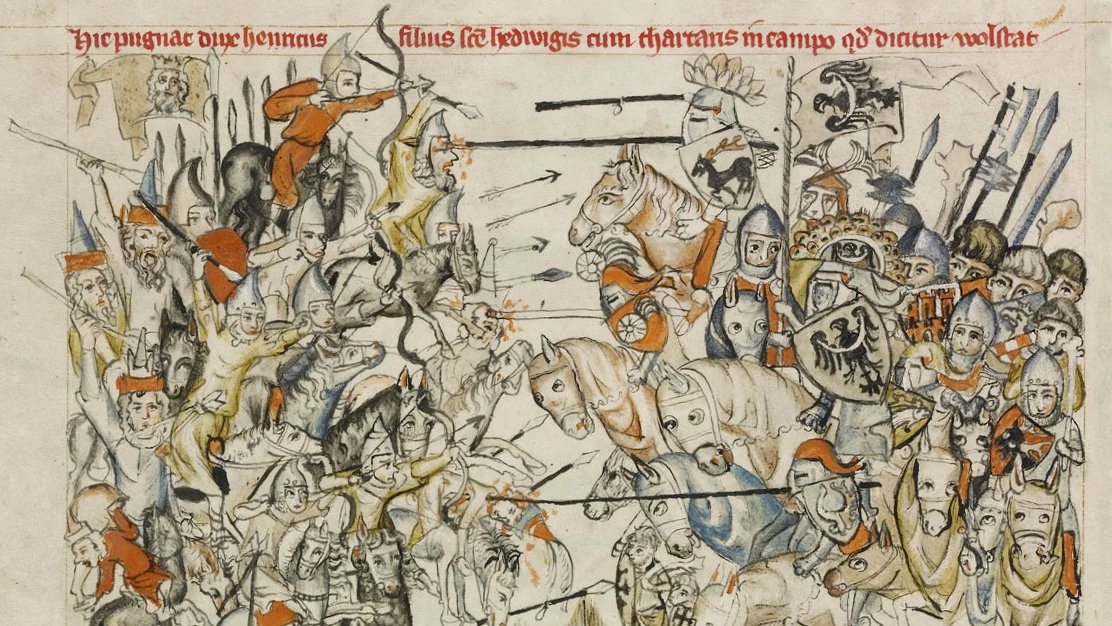
The Rus' had met the Mongols once before. In 1223 two Mongol generals, on a long raid round the Caspian Sea, defeated the Cumans (Polovtsians) of the steppe. The Cumans asked their Rus' neighbours for help, and an army of southern princes marched out to meet the Mongols on the Kalka river, north of the Sea of Azov.
The battle was a disaster. The Novgorod First Chronicle tells how the prince of Kyiv held out for three days in a stockade on a hill, until a leader of the steppe wanderers called Ploskynya talked him into surrendering. The Mongols then broke their word: "having taken the Knyazes they suffocated them having put them under boards, and themselves took seat on the top to have dinner." Of the rest of the army, "every tenth returned to his home". The chronicler dated it "May 31, on Saint Eremei's Day" (trans. Michell and Forbes, 1914). The Laurentian Chronicle has 30 May; some later compilations give 16 June.
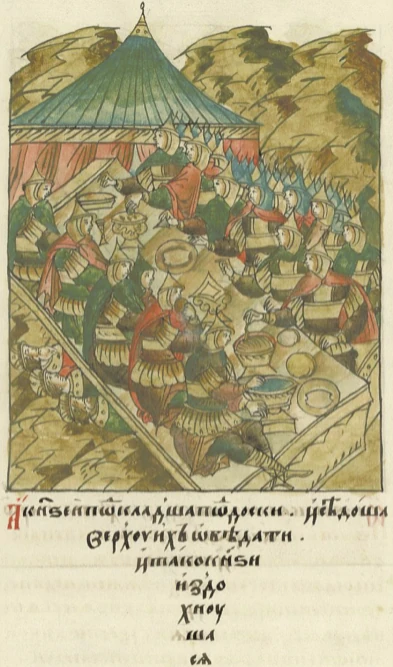
Then the Mongols vanished. "We know not whence they came, nor where they hid themselves again," the Novgorod chronicler wrote; "God knows whence he fetched them against us for our sins." They came back fourteen years later.
Why did the Mongols invade Rus'?
The invasion was part of a larger plan. In 1235 a quriltai, the great assembly of the Mongol princes, decided to conquer the western steppes, the lands of the Cumans, the Volga Bulgars and their neighbours. The conquered lands were to go to the family of Jochi, Genghis Khan's eldest son, whose son Batu led the campaign. The Rus' principalities lay on the edge of those steppes, and their princes had fought with the Cumans against the Mongols at the Kalka.
The army set out in 1236. That autumn it destroyed Volga Bulgaria, the trading state on the middle Volga: the Laurentian Chronicle records that the Tatars took "the glorious Great City of the Bulgars" and killed everyone "from the old man to the infant". The story of that state is told in our article on Volga Bulgaria. In late 1237 the army turned west, towards the Rus'.
The Rus' were in no position to unite. They were a family of more than a dozen principalities, ruled by princes of the same dynasty who often fought each other. The Mongols could take them one by one, and they did.
Ryazan: the first city to fall (December 1237)
Ryazan, on the middle Oka, was the first principality in the Mongols' path. According to the Novgorod chronicle, the invaders first sent envoys, "a sorceress and two men with her, demanding from them one-tenth of everything: of men and Knyazes and horses". The princes of Ryazan, Murom and Pronsk went out to meet them and gave a proud answer: "Only when none of us remain then all will be yours."
No help came from the grand prince of Vladimir in time. The Mongols surrounded the city and stormed it after a short siege. The chronicler gives the dates precisely: the Tatars "took the town on December 21, and they had advanced against it on the 16th of the same month". They killed the prince and his wife, "men, women, and children, monks, nuns and priests, some by fire, some by the sword". The Persian historian Rashid al-Din, who used Mongol records, says the city was taken "in 3 days".
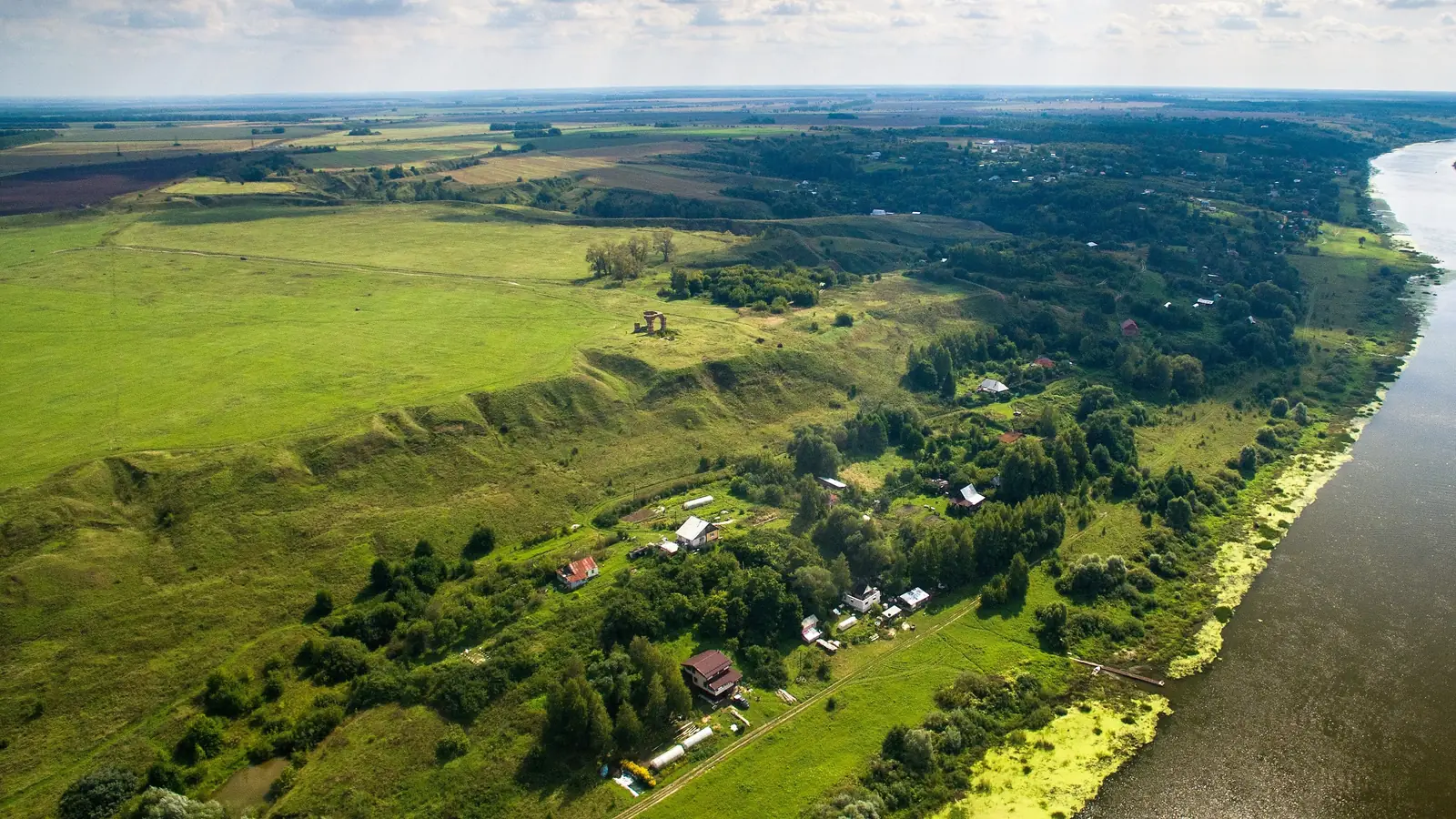
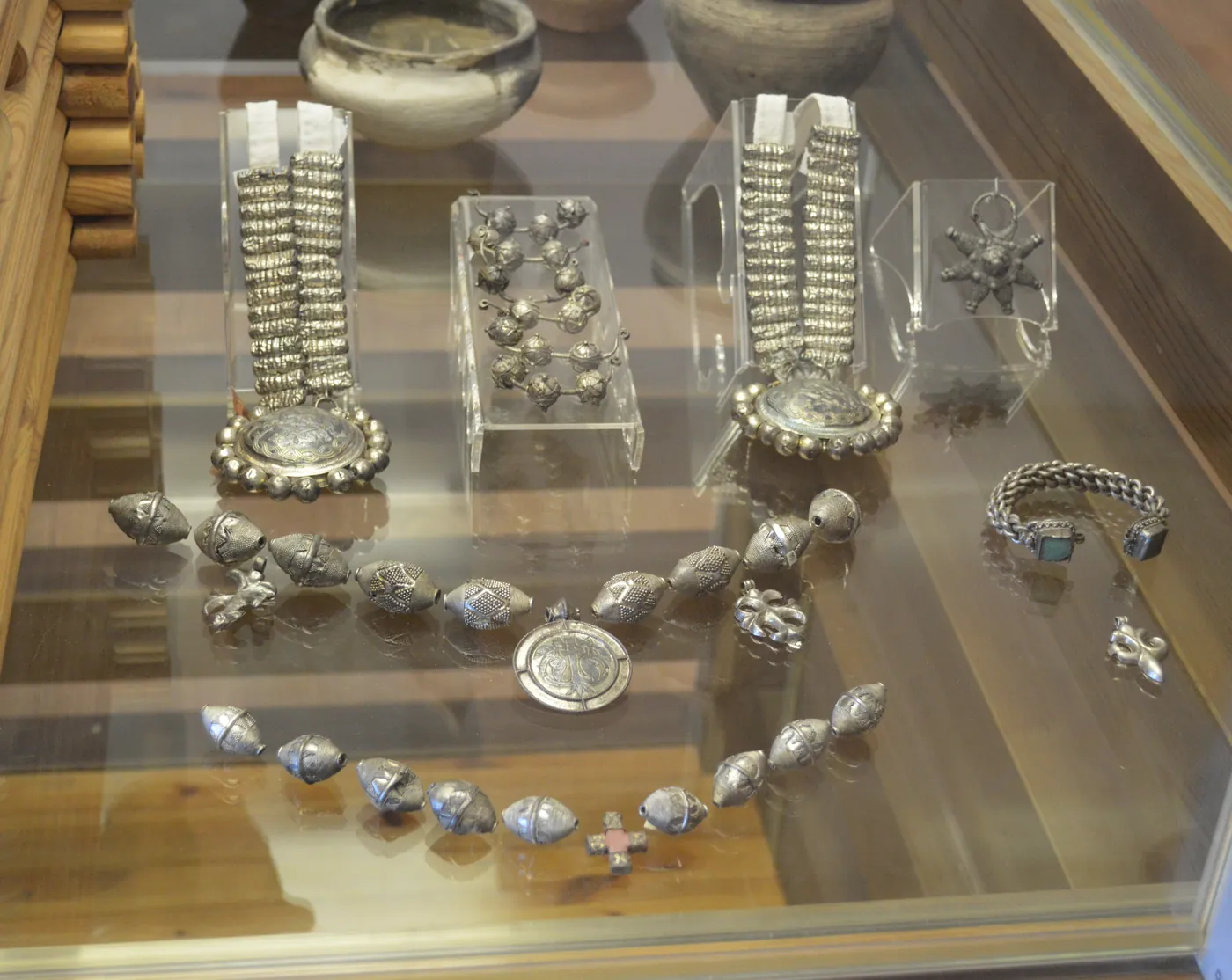
The city on the Oka was never rebuilt. Its ruins, called Staraya Ryazan ("Old Ryazan"), are an archaeological site today, and the name later passed to Pereyaslavl-Ryazansky, today's Ryazan, upstream. Buried hoards of jewellery found there are one of the most direct traces of the catastrophe: their owners hid them and never came back for them.
Kolomna, Moscow and the road to Vladimir
The grand prince of Vladimir, Yuri II, had sent an army under his son Vsevolod towards Ryazan. It was beaten at Kolomna, where the Oka meets the Moskva river. The Vladimir commander Eremei Glebovich was killed there, and the Novgorod chronicle adds that "the men of Moscow ran away having seen nothing". Rashid al-Din reports a loss on the Mongol side too: at "the town on the Ika", which his translator identifies as Kolomna, Kölgen, a son of Genghis Khan, "was wounded and died".
Moscow, then a small fortress, was next. The Laurentian Chronicle says the Tatars killed its commander, Philip Nyanka, captured Prince Vladimir, Yuri's son, and killed the people "from the old man to the infant". Rashid al-Din gives the siege of "Makar", probably Moscow, as five days.
The fall of Vladimir (February 1238)
Yuri II did not wait in his capital. He left Vladimir with a small retinue and went north to the Sit river, beyond the Volga, to gather a new army, leaving his sons Vsevolod and Mstislav to defend the city. The Laurentian Chronicle, written in the region, describes what followed in more detail than any other source.
The Tatars arrived on Tuesday 3 February 1238. They rode up to the Golden Gate, bringing with them the captured Prince Vladimir, and asked if the grand prince was in the city. The defenders answered with arrows. Then the Mongols showed Vladimir to his brothers on the gate. Vsevolod and Mstislav recognised him, the chronicler says, and wept.
While part of the army camped around Vladimir, another detachment took Suzdal, plundered the Mother of God church, burned the prince's palace and the monastery of St Dmitry, and killed or carried off the monks, nuns and priests.
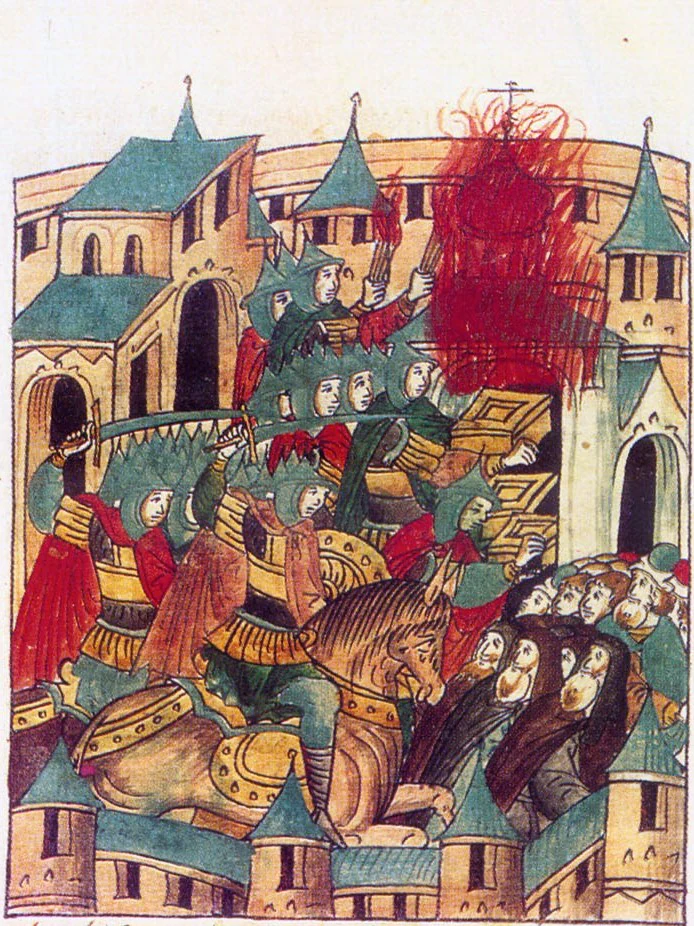
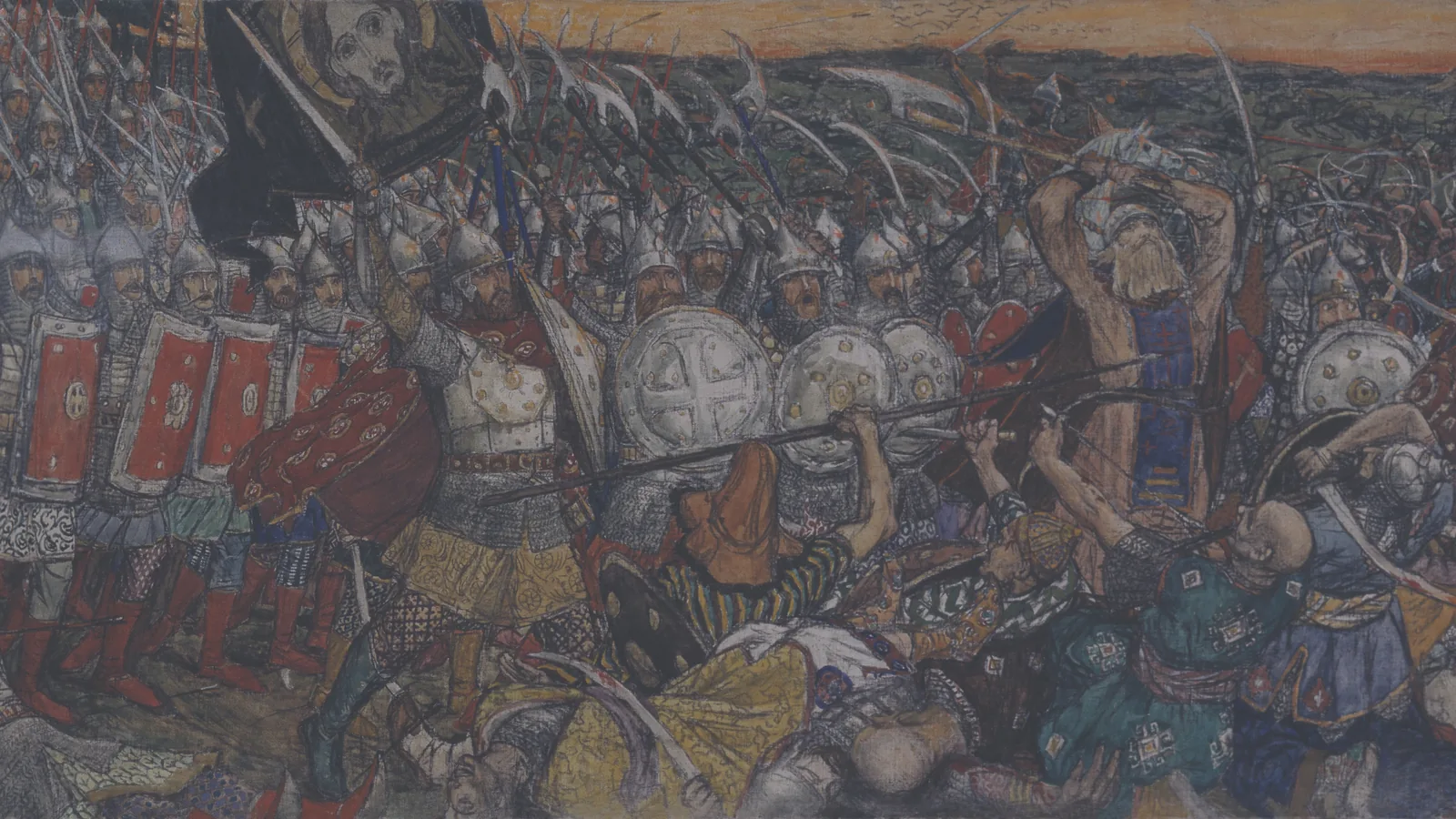
On Saturday the Mongols set up their siege engines, "and by night they fenced the whole city around with a palisade". On Sunday 7 February, after matins, they attacked. They broke in through the Golden Gate, from the Lybed side through the Irinin and Copper gates, and from the Klyazma side through the Volga Gate.
The defenders fell back into the inner city. Bishop Mitrofan, Yuri's wife, his daughter, his daughters-in-law and grandchildren, "and a great many boyars and of all the people" shut themselves into the cathedral of the Mother of God. The Mongols set the church on fire, and they all died inside, the chronicle says, "burned without mercy". Then the soldiers forced the doors, killed anyone still alive and stripped the cathedral of its icons, crosses and books (our translation).
The Novgorod chronicle tells the same story more briefly and dates the burning to the Friday before Sexagesima Sunday; Rashid al-Din says the city fell "in 8 days" and that the future Great Khan Möngke "in person performed deeds of valor". In the next few weeks the Mongol columns took town after town of the north-east; the Novgorod chronicle names Pereyaslavl, Yurev, Dmitrov, Volok and Tver, and Yaroslavl fell too.
The Sit river: the death of Yuri II (4 March 1238)
Yuri was still gathering his army on the Sit when the Mongols found him. The Novgorod chronicle tells it in a few lines. Yuri sent a commander called Dorozh "to scout with 3,000 men; and Dorozh came running, and said: They have already surrounded us, Knyaz." The Tatars attacked before he could do anything, and he "fled. And it happened when he reached the river Sit they overtook him and there he ended his life. And God knows how he died; for some say much about him."
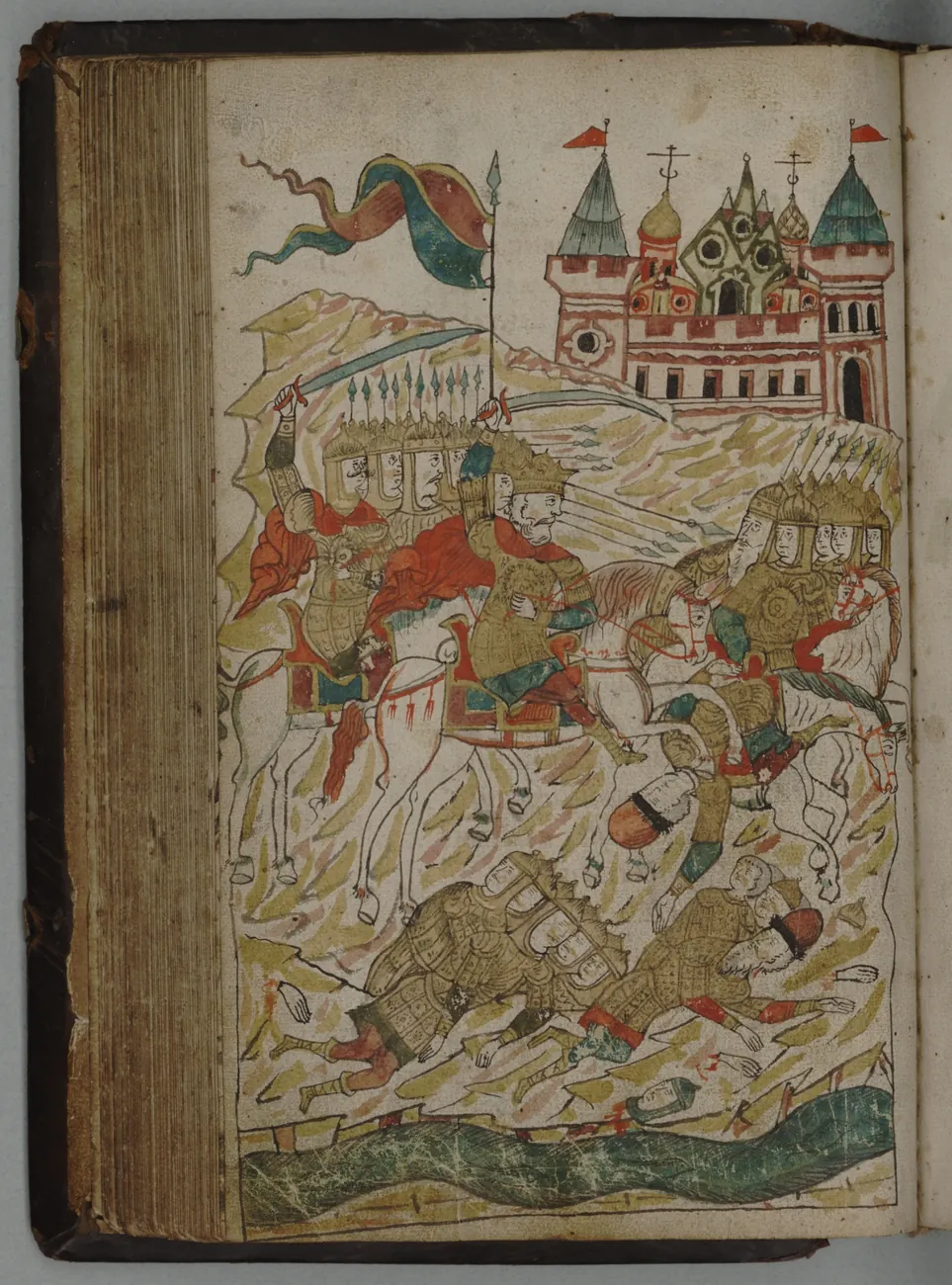
The Laurentian Chronicle gives the more heroic version: the two armies met, "and there was an evil slaughter, and our men fled before the foreigners, and there Prince Yuri was killed", "in the month of March, on the 4th day" (our translation). His nephew Vasilko of Rostov was captured and later killed in the forest, after he refused, the chronicler says, to follow the Tatars' customs. Bishop Kirill brought Yuri's body to Rostov and buried it in the church of the Mother of God.
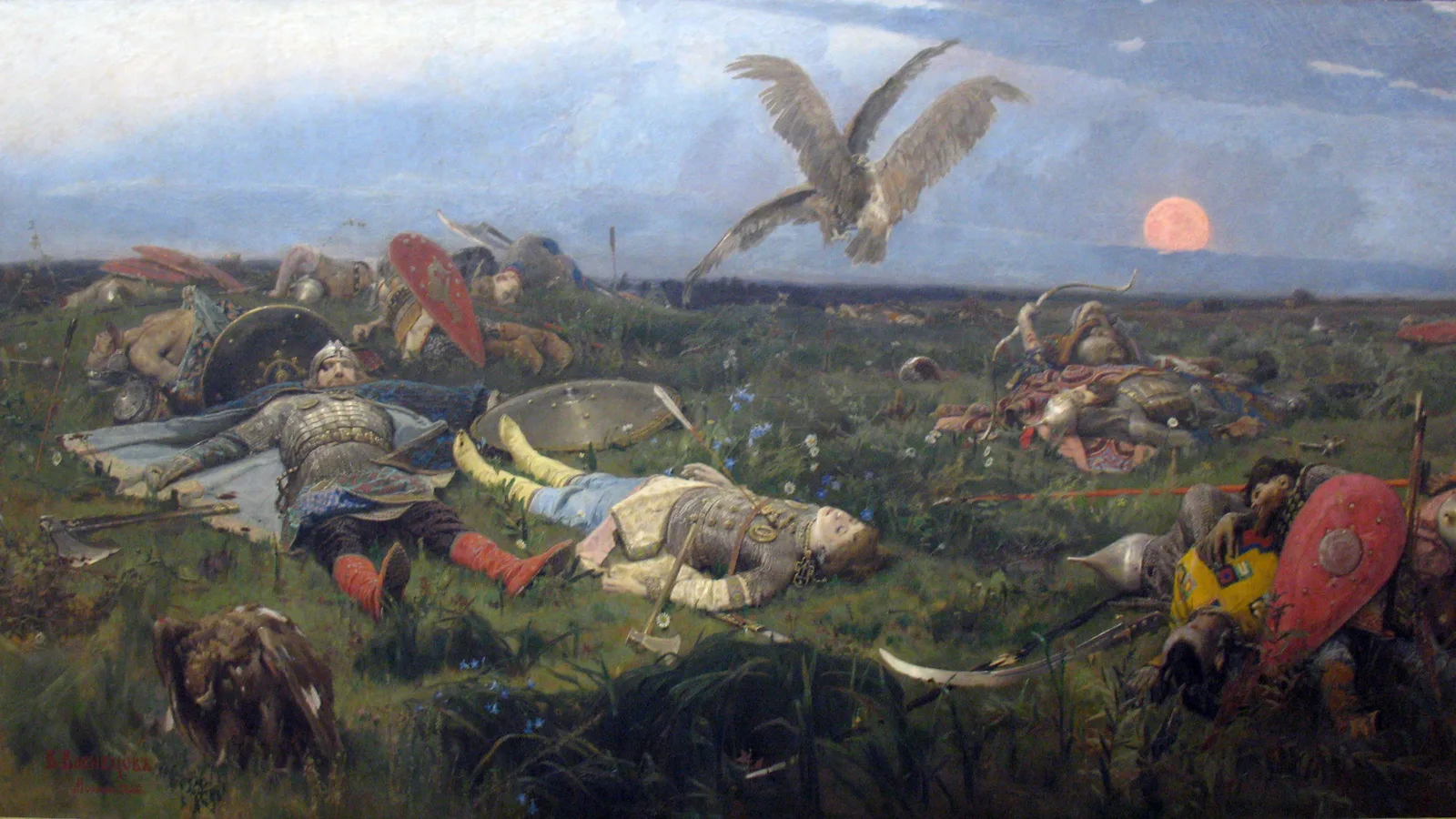
Historians disagree about which version to believe. The historian V. N. Rudakov counted the princes named in the early accounts of the invasion: of 37, almost half, 18, fled from the Tatars or very probably did so. He concludes that the Novgorod version, in which Yuri too was fleeing, deserves to be taken seriously (Rudakov, 2023).
Torzhok and the Ignach Cross: why Novgorod was spared
From the north-east the Mongols turned towards Novgorod, the richest city of the north. In their way stood Torzhok, Novgorod's outpost on the road from the north-east. The Mongols besieged it "on the festival of the first Sunday in Lent. They fenced it all round with a fence as they had taken other towns, and here the accursed ones fought with battering rams for two weeks." No help came from Novgorod. Torzhok fell on 5 March, and the Mongols "slew all from the male sex even to the female, all the priests and the monks".
They then "pushed on from Torzhok by the road of Seregeri right up to Ignati's cross, cutting down everybody like grass, to within 100 versts of Novgorod". And there they turned back. The chronicler thanked God, St Sophia and the prayers of the archbishop and the monks.
Why the Mongols turned round is not recorded. The usual modern explanation is the spring thaw, which would soon turn the forests and marshes round Novgorod into mud; it is plausible, but it is a modern inference, not something the chronicles say. Novgorod was never taken. It submitted later, and paid tribute like the others.
Kozelsk, "the evil city" (spring 1238)
On the way back south to the steppe, part of the Mongol army stopped at Kozelsk, a small town in the land of Chernigov ruled by a boy prince, Vasily. Kozelsk held out for seven weeks. The Galician-Volhynian Chronicle says its men made a sortie, cut down the Mongols' siege engines and killed 4,000 Tatars, before the Mongols took the town and killed everyone in it, "not sparing even the infants at the breast". Of the young prince, "some said that he drowned in blood, for he was young". After that, the chronicler adds, the Tatars did not dare call it Kozelsk, "but the evil city, because they fought for seven weeks" (our translation).
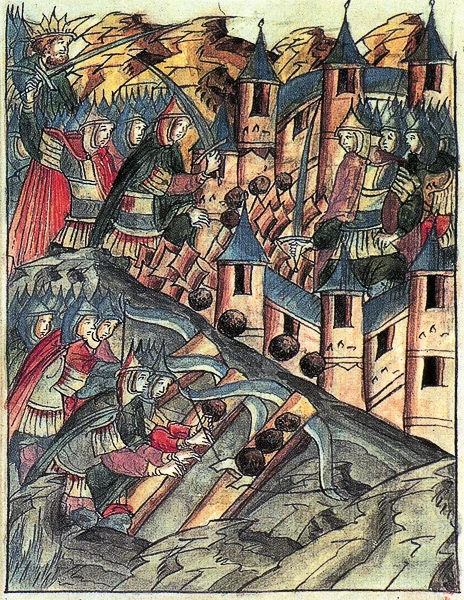
The historian V. V. Politov thinks the 4,000 dead is far too high for the sortie of a small town (Politov, 2025). But Rashid al-Din confirms the long siege from the Mongol side: Batu "laid siege to it for 2 months but was unable to capture it. Then Qadan and Büri arrived and they took it in 3 days" (trans. Boyle, 1971).
The south: Pereyaslavl, Chernigov and the fall of Kyiv (1239–1240)
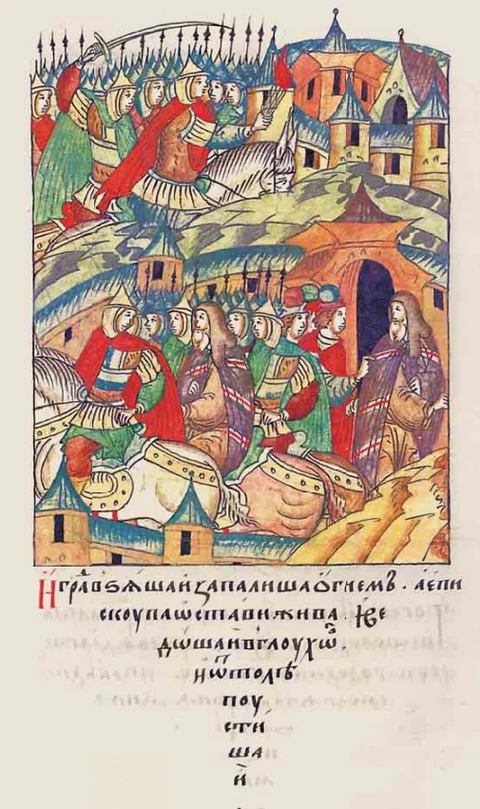
After a year in the steppe, the Mongols turned against the south. Pereyaslavl fell in March 1239, and its bishop was killed. Chernigov fell in October 1239 after its relief army was defeated; the Mongols spared the bishop and took him to Glukhov. A Pskov chronological note preserves the full dates: Pereyaslavl on Thursday 3 March 1239, Chernigov on Tuesday 18 October 1239, Kyiv on Monday 19 November 1240, and the weekdays fit those years (Gimon, 2026).
Kyiv, the old capital and seat of the metropolitan, was defended by Dmitr, a commander of Prince Daniel of Galicia; Daniel himself was in Hungary. The Galician-Volhynian Chronicle describes the siege. One could not hear a voice in the city "for the creaking of his carts, the bellowing of his camels and the neighing of his herds of horses". Batu placed his siege engines by the Polish (Lyadsky) Gate, and the rams battered the walls day and night until they broke through. The townspeople built a new wall around the Church of the Tithes, the oldest stone church of Kyiv, and the next morning the Mongols attacked it. People fled onto the church and its galleries with their goods, "and from the weight the church walls collapsed with them" (our translation). Batu spared the wounded Dmitr "for the sake of his courage".
Even the date is disputed. The Laurentian Chronicle says Kyiv fell "on St Nicholas' day", 6 December 1240. The Pskov tradition gives Monday 19 November. Rashid al-Din says the Mongols took "the great town of the Orus called Men-Kermen" in nine days. The historian Oleksii Tolochko has argued that the chronicle's Kyiv story is built from older literary models, among them Josephus' account of the fall of Jerusalem, so the collapse of the Tithe Church may be more literary than literal (as summarised by Kiselev, 2016).
When the papal envoy John of Plano Carpini passed through in 1246, he found "an innumerable multitude of dead mens skulles and bones lying vpon the earth". Of the great city, "there doe scarce remaine 200. houses" (Hakluyt's translation, ed. Beazley, 1903).
Galicia-Volhynia and beyond (1240–1241)
From Kyiv the Mongols moved west into Volhynia and Galicia. The Galician-Volhynian Chronicle lists the towns: Kolodyazhen, talked into opening its gates and then massacred; Kamenets; Vladimir-in-Volhynia, taken and its people killed; Galich. Kremenets held out. Then, on the advice of the captured Dmitr, who wanted the Mongols out of the country, Batu turned towards Hungary.
What happened next, the invasion of Poland and Hungary in 1241 and the sudden retreat in 1242, is told in our article on Batu Khan.
How many died? Numbers and archaeology
No medieval source counts the Mongol army or the dead of the Rus' cities. The figures that circulate are modern estimates. Russian historians have proposed figures of about 50,000 to 70,000 for the main Mongol force. These are informed guesses, not measurements.
| What | Source |
|---|---|
| Ryazan taken after 6 days (16–21 Dec 1237) | Novgorod First Chronicle |
| Ryazan in 3 days, Moscow 5, Vladimir 8, Kyiv 9; Kozelsk 2 months | Rashid al-Din (Mongol-based records) |
| Torzhok besieged for two weeks | Novgorod First Chronicle |
| Kozelsk held 7 weeks; 4,000 Mongols killed in a sortie (doubted by modern historians) | Galician-Volhynian Chronicle |
| Kyiv: "scarce 200 houses" left in 1246 | John of Plano Carpini |
| Yaroslavl: 9 mass graves, mean radiocarbon date 1239 | Engovatova and colleagues, 2020 |
Archaeology has started to fill in what the chronicles leave out. In Yaroslavl, excavations of the Russian Academy of Sciences found nine mass graves of townspeople buried together with domestic animals, outside any cemetery and against Christian custom. A Bayesian model of 65 radiocarbon dates gives a mean date of 1239, consistent with the capture of the city by Batu's army in the winter of 1238 (Engovatova and colleagues, 2020). In Vladimir, a mass burial of at least 43 adults and 14 children, found during building work in the historic centre, has been studied too (Goncharova and Kabaev, 2022).
Not every grim find belongs to 1238. Skulls pierced with nails, found in some southern towns and often shown as evidence of Mongol executions, are more likely the result of an old custom of nailing down "unclean" dead, according to a study by Sergei Chebanenko (2017).
What was the "Tatar yoke"?
After the conquest the Rus' princes had to travel to Batu's camp to receive their patents to rule, pay tribute and, at times, send troops. Batu's state on the Volga, later known as the Golden Horde, dominated the Rus' lands for more than two centuries. Russian historians traditionally call this period the "Tatar yoke".
The term itself is not medieval. Rus' writers knew a "yoke of labour" and even a "yoke of Christ", but not a Tatar yoke. As far as is known, the first to use the word for the Rus' relationship to the Horde was the Polish chronicler Jan Długosz, in 1479, when the dependence was almost over. For nearly two centuries it was used mostly by foreign writers, and it came into Russian usage only in the 17th century (Rudakov, 2012).
How deep the Mongol influence went is still debated. The American historians Charles Halperin (Russia and the Golden Horde, 1985) and Donald Ostrowski (Muscovy and the Mongols, 1998) have argued for lasting influence of the Horde on Muscovy. At the other extreme, the Eurasianist idea of a voluntary "symbiosis" between Rus' and the Horde, made popular by Lev Gumilyov, is rejected by specialists such as Sergei Petrov (2013).
Common myths about the Mongol invasion of Rus'
| Myth | What the evidence says |
|---|---|
| Half a million Mongols invaded | No medieval source gives a number; modern estimates are in the tens of thousands |
| Evpaty Kolovrat was a real Ryazan hero | He appears only in the Tale of the Destruction of Ryazan, a literary work of the 16th century; no other source mentions him (Gorsky, 2023) |
| "Tatar yoke" is what the Rus' called it | The term was first used by the Pole Jan Długosz in 1479 and entered Russian only in the 17th century |
| Mud stopped the Mongols before Novgorod | The chronicle says only that God protected Novgorod; the thaw is a modern explanation |
| Nail-pierced skulls prove Mongol massacres | More likely a burial custom for the "unclean" dead (Chebanenko, 2017) |
| Kyiv fell on 6 December 1240 | That is one date; a Pskov tradition gives 19 November 1240 |
| The Kalka was fought on 16 June | The earliest chronicles give 30 or 31 May 1223 |
The legend of Evpaty Kolovrat
The most famous hero of the invasion did not appear in any chronicle. In the Tale of the Destruction of Ryazan by Batu, a Ryazan nobleman called Evpaty Kolovrat returns from Chernigov, finds his city in ruins, gathers 1,700 men and attacks the Mongol rear in the land of Suzdal. His men fight so fiercely that the Tatars think "the dead have risen". The Mongols can kill him only by hurling stones at him from siege engines, and Batu, amazed by his courage, releases the survivors.
The historian Anton Gorsky dates the Tale to the first half or middle of the 16th century and notes: "There are no reports of Evpaty Kolovrat in any sources other than the Tale." Parts of the story borrow from other texts. Gorsky puts the Tale beside the Tale of the Rout of Mamai about Kulikovo, which he calls "a work of fiction written on the motifs of a real event", and counts Evpaty among the characters who were probably invented (our translation). Evpaty has statues and novels; he does not have a historical record.
What the map shows next
On the map of 1236 the Rus' lands are still a patchwork of principalities: Ryazan, Rostov-Suzdal, Chernigov, Pereyaslavl, Kiev and Novgorod, with the Mongol Empire already in the steppe to the east. By 1241 the whole area has gone into the Mongol Empire. Two generations later, at 1294, the map shows the Golden Horde ruling the steppe from the Volga, with the Rus' principalities to its north-west.
Sources
Primary sources
- The Chronicle of Novgorod, 1016–1471 (Novgorod First Chronicle), trans. R. Michell and N. Forbes (London, 1914), entries for 1224 and 1238: https://archive.org/details/chronicleofnovgo00michrich
- Laurentian Chronicle and its Suzdal continuation, Polnoe sobranie russkikh letopisei, vol. 1 (Leningrad, 1926–1928), entries 6744–6748: https://archive.org/details/psrl_tom1_lavrentyevskaya_letopis_1926
- Galician-Volhynian (Hypatian) Chronicle, Polnoe sobranie russkikh letopisei, vol. 2 (St Petersburg, 1908), entries 6745–6748.
- Rashid al-Din, The Successors of Genghis Khan, trans. J. A. Boyle (New York, 1971), pp. 58–71: https://archive.org/details/Boyle1971RashidAlDin
- John of Plano Carpini, Ystoria Mongalorum, Hakluyt's translation, in C. R. Beazley (ed.), The Texts and Versions of John de Plano Carpini and William de Rubruquis (London, 1903): https://archive.org/details/textsversionsofj00hakluoft
- Povest' o razorenii Riazani Batyem, ed. and trans. in Biblioteka literatury Drevnei Rusi, vol. 5 (Pushkin House): http://lib.pushkinskijdom.ru/Default.aspx?tabid=4956
Studies
- T. V. Gimon, "Khronologicheskii raschet Pskovskoi I i III letopisei i daty vziatiia Batyem Pereiaslavlia, Chernigova i Kieva", 2026: https://cyberleninka.ru/article/n/hronologicheskiy-raschet-pskovskoy-i-i-iii-letopisey-i-daty-vzyatiya-batyem-pereyaslavlya-chernigova-i-kieva
- V. N. Rudakov, "Sobytiia na reke Siti (1238) v kontekste povedeniia pravitelei russkikh zemel' v gody nashestviia Batyia", 2023: https://cyberleninka.ru/article/n/sobytiya-na-reke-siti-1238-v-kontekste-povedeniya-praviteley-russkih-zemel-v-gody-nashestviya-batyya
- V. N. Rudakov, "Kontseptsiia ordynskogo 'iga' i otnosheniia s Ordoi v russkom obshchestvennom soznanii vtoroi poloviny XIII–XVI vv.", 2012: https://cyberleninka.ru/article/n/kontseptsiya-ordynskogo-iga-i-otnosheniya-s-ordoy-v-russkom-obschestvennom-soznanii-vtoroy-poloviny-xiii-xvi-vv
- A. A. Gorsky, "'Skazanie o Mamaevom poboishche', 'Povest' o razorenii Riazani Batyem', Nikonovskaia letopis'…", Istoricheskii vestnik 2023: https://cyberleninka.ru/article/n/skazanie-o-mamaevom-poboische-povest-o-razorenii-ryazani-batyem-nikonovskaya-letopis-o-nachale-russkoy-istoricheskoy-belletristiki
- A. V. Engovatova, A. Cherkinsky, G. I. Zaitseva, "The extermination of the ancient Russian city of Yaroslavl at the beginning of the 13th century: the long journey to exact dating", Radiocarbon 62 (2020), DOI 10.1017/RDC.2020.137: https://doi.org/10.1017/RDC.2020.137
- Kh. Kh. Mustafin, A. V. Engovatova et al., "Paleogeneticheskaia ekspertiza ostankov iz dvukh naibolee krupnykh massovykh zakhoronenii 1238 g. v iaroslavskom detintse", Povolzhskaia arkheologiia 2022: https://cyberleninka.ru/article/n/paleogeneticheskaya-ekspertiza-ostankov-iz-dvuh-naibolee-krupnyh-massovyh-zahoroneniy-1238-g-v-yaroslavskom-detintse
- N. N. Goncharova and D. A. Kabaev, "Analiz antropologicheskogo materiala iz sanitarnogo zakhoroneniia goroda Vladimira XIII veka", 2022: https://cyberleninka.ru/article/n/analiz-antropologicheskogo-materiala-iz-sanitarnogo-zahoroneniya-goroda-vladimira-xiii-veka
- S. B. Chebanenko, "Raspravy mongol'skikh zavoevatelei ili obychai vostochnykh slavian? Nakhodki probitykh gvozdiami cherepov", 2017: https://cyberleninka.ru/article/n/raspravy-mongolskih-zavoevateley-ili-obychai-vostochnyh-slavyan-nahodki-probityh-gvozdyami-cherepov
- M. V. Kiselev, "Spornye voprosy Batyeva nashestviia na Iuzhnuiu Rus' i Prikarpat'e", 2016: https://cyberleninka.ru/article/n/spornye-voprosy-batyeva-nashestviya-na-yuzhnuyu-rus-i-prikarpatie
- A. V. Maiorov, "Mongolo-tatary i kniaz'ia Severo-Vostochnoi Rusi", 2013: https://cyberleninka.ru/article/n/mongolo-tatary-i-knyazya-severo-vostochnoy-rusi
- V. V. Politov, "K voprosu ob oborone Kozel'ska v 1238 g.", 2025: https://cyberleninka.ru/article/n/k-voprosu-ob-oborone-kozelska-v-1238-g
- S. A. Petrov, "Eshchyo raz o russko-ordynskom 'simbioze'", 2013: https://cyberleninka.ru/article/n/eschyo-raz-o-russko-ordynskom-simbioze
Image credits
- Title image: Staraya Ryazan from the air. Photo: Mikhey77777, CC BY-SA 4.0, via Wikimedia Commons, cropped to 16:9.
- Kalka "feast on the bones", Illustrated Chronicle. Public domain, via Wikimedia Commons.
- Jeweller's hoard of 1237, Ryazan Museum-Reserve. Photo: Лапоть, CC0, via Wikimedia Commons.
- Sack of Suzdal, Illustrated Chronicle. Public domain, via Wikimedia Commons.
- Battle on the Sit, Life of Euphrosyne of Suzdal, National Library of Russia. CC BY-SA 4.0, via Wikimedia Commons.
- Defence of Kozelsk, Illustrated Chronicle. Public domain, via Wikimedia Commons.
- Sack of Chernigov, Illustrated Chronicle. Public domain, via Wikimedia Commons.