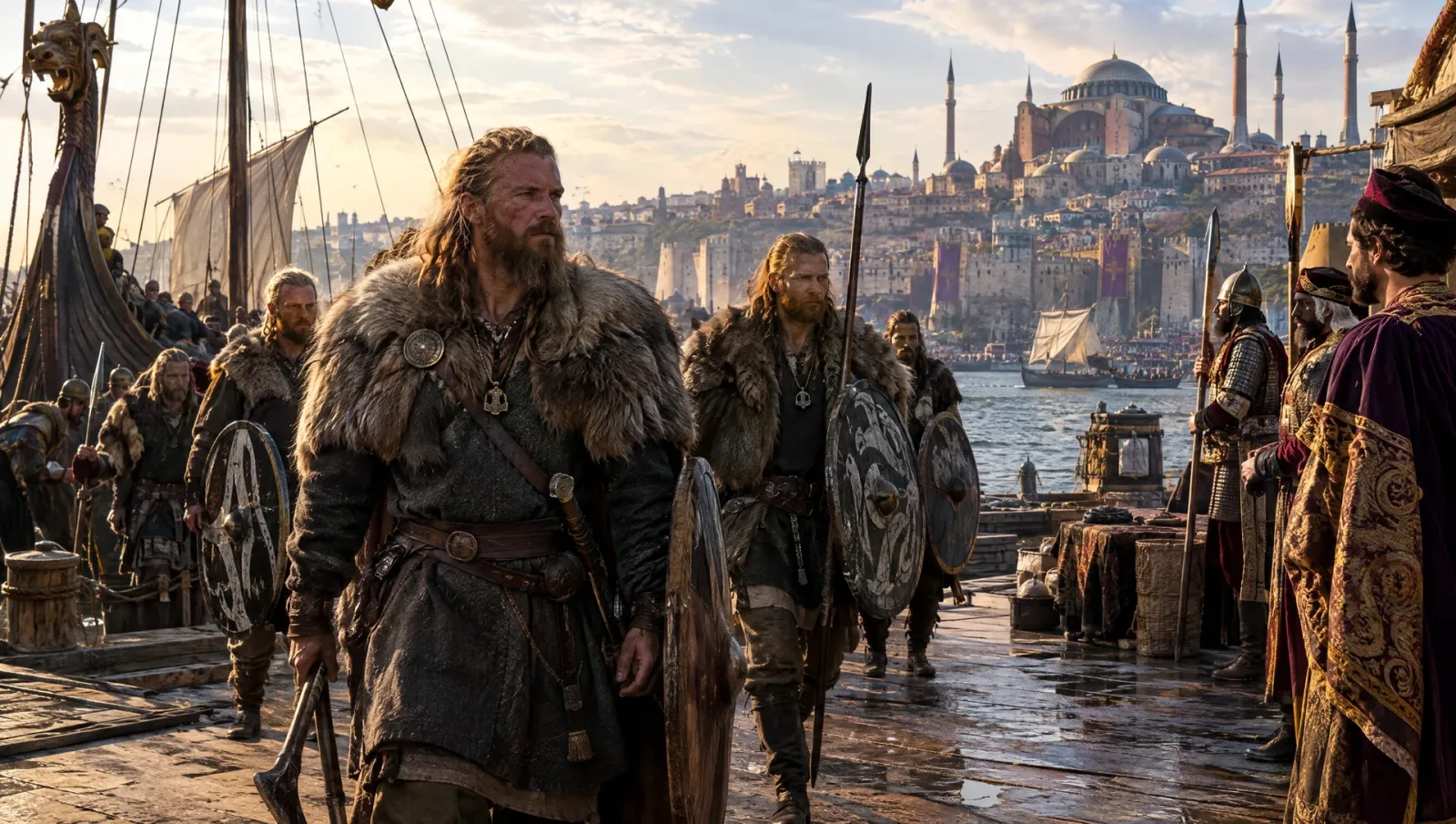
The Varangian Guard was the foreign bodyguard of the Byzantine emperors: axe-carrying warriors, first Scandinavians and Rus', later mostly Englishmen, who guarded the ruler in the Great Palace of Constantinople and fought beside him on campaign. It was created by Emperor Basil II out of a Rus' army sent by Prince Vladimir of Kiev in c. AD 988–989, and it is still attested around 1400. For four centuries it tied the Viking north and Anglo-Saxon England to the richest city in Christendom, leaving traces from Swedish runestones to graffiti in Hagia Sophia.
What follows separates what the sources actually say from what the sagas, novels and video games have added.
What was the Varangian Guard?
In Greek the unit was called hoi Varangoi, "the Varangians", or the tagma ton Varangon. A tagma was one of the professional regiments of the capital, as opposed to the provincial armies. The word "Varangian" itself comes from Old Norse væringi, usually linked to vár, a pledge or oath, hence the popular gloss "men of the pledge" used by World History Encyclopedia. The etymology is plausible but debated, and the same root surfaces as Old East Slavic variagi and Arabic warank.
The Norsemen called Constantinople Miklagarðr (Miklagard, "the Great City") and the empire Grikkland, "Greece". Byzantine writers rarely used "Varangian" at first. They preferred classicising labels such as "Tauroscythians", "Rhos" or simply "the axe-bearers", and according to the Encyclopaedia of the Hellenic World, John Skylitzes is the first source to use the term "Varangians" for a unit, describing troops wintering in Asia Minor in 1034.
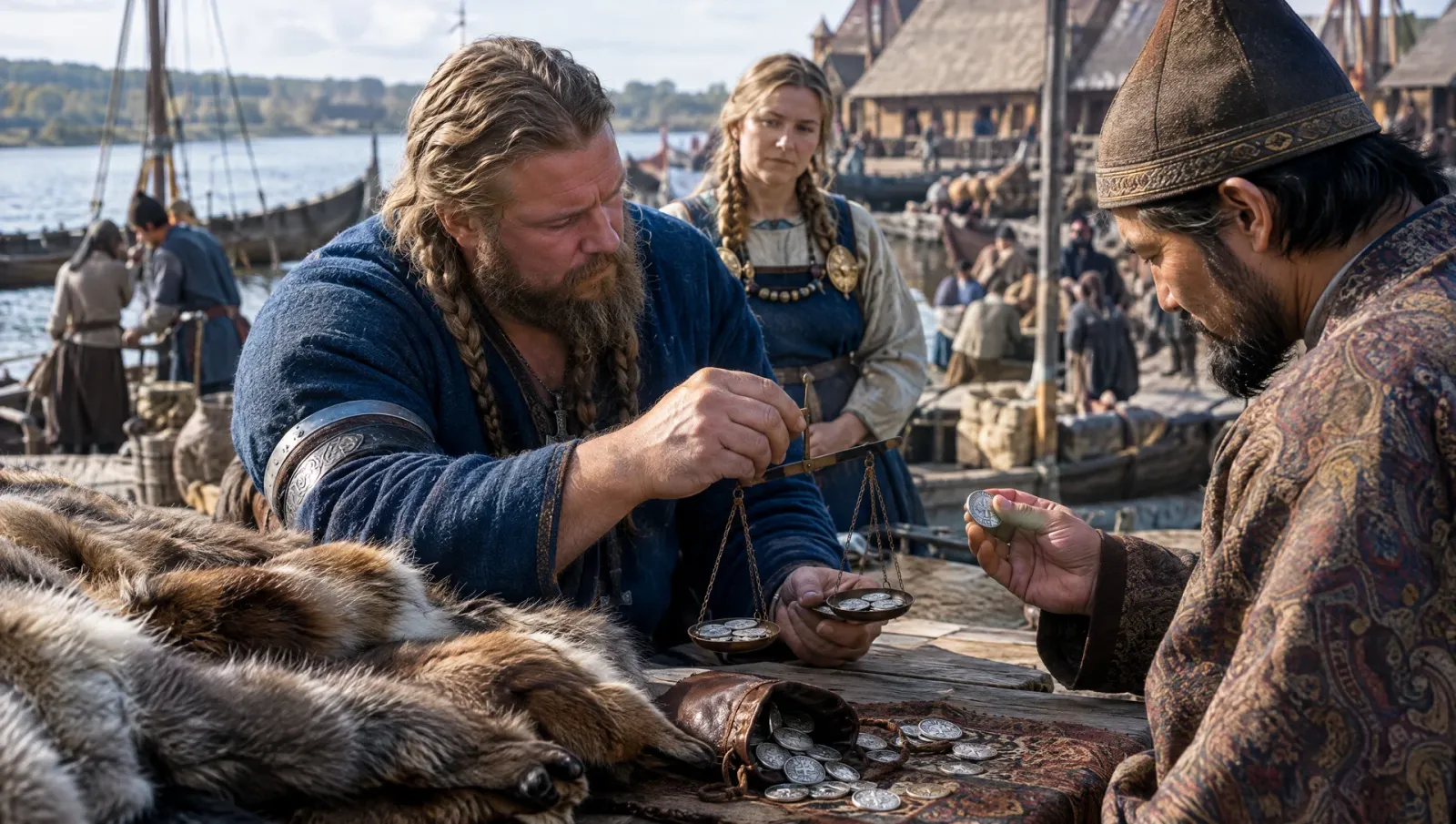
Northerners in imperial pay were nothing new by then. The Book of Ceremonies compiled under Constantine VII records 700 Rus' on the failed naval expedition against Arab Crete in 911–912 and 629 Rus' in the 949 expedition, and the Rus'–Byzantine treaty of 911 already allowed Rus' to enlist. What changed in 988 was scale and permanence.
How was the Varangian Guard founded in 988?
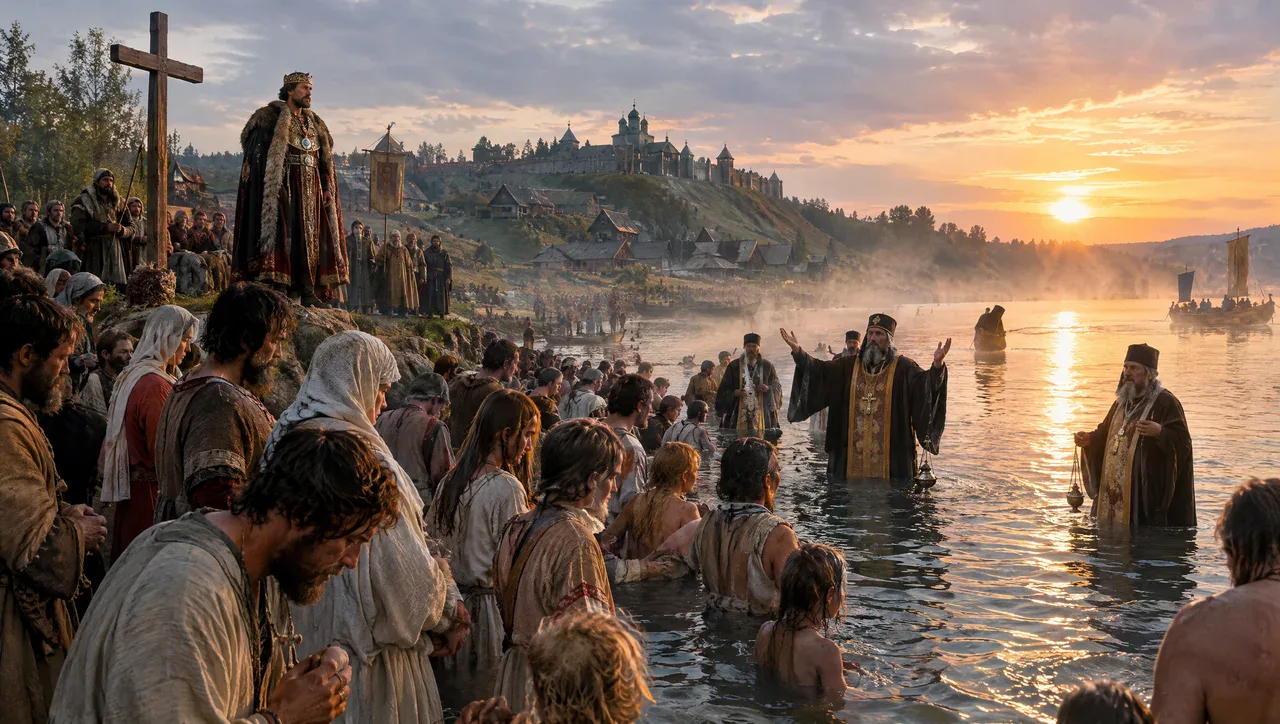
The Guard was born in a crisis. In 986 Basil II's army was ambushed by the Bulgarian ruler Samuel at the Gates of Trajan, and in 987 the general Bardas Phokas proclaimed himself emperor and overran most of Asia Minor. Basil turned north to Kievan Rus'. According to the Arab Christian chronicler Yahya of Antioch, Vladimir agreed to send 6,000 troops in exchange for marriage to Basil's sister Anna and his own baptism, a bargain told in our article on Vladimir the Great and the baptism of Rus'.
The courtier-historian Michael Psellos, writing decades later in his Chronographia, describes the new arrivals in E.R.A. Sewter's translation as "a picked band of Scythians" who "had come to help him from the Taurus, and a fine body of men they were". Basil trained them as a separate corps, caught the rebels feasting at Chrysopolis across the Bosporus and scattered them. Phokas died on the field at Abydos on 13 April 989, and the rebellion collapsed.
The founding date depends on what you count. Sewter's notes date Chrysopolis to the summer of 988, while other historians put both battles in 989, and the Encyclopaedia of the Hellenic World speaks of a Varangian battalion formed in 989. Scholars such as Mark Whittow and Jean-Claude Cheynet explain the decision politically: Basil no longer trusted the great Anatolian families, and a foreign corps loyal only to the throne was his answer. "988" is therefore a convenient shorthand for a process that ran from 988 to about 989.
| Date | Event | Main source |
|---|---|---|
| 911–912 | 700 Rus' serve on the Cretan expedition | Book of Ceremonies |
| 987 | Bardas Phokas proclaims himself emperor | Psellos, Yahya of Antioch |
| 988 or 989 | Rus' troops rout rebels at Chrysopolis (date disputed) | Psellos, Skylitzes |
| 13 April 989 | Battle of Abydos; Phokas dies | Psellos (Sewter notes) |
| 1034 | First use of "Varangians" for a unit; Harald Sigurdsson arrives | Skylitzes, Kekaumenos |
| 1038–1041 | Varangians in Sicily under George Maniakes | Kekaumenos, Snorri |
| 18 October 1081 | Varangians cut down at Dyrrhachium | Anna Komnene |
| c. 1075 | Large English emigration to Constantinople (date disputed) | Chronicon Laudunensis |
| 1122 | Varangians break the Pecheneg wagon fort at Beroia | Kinnamos, Choniates |
| 1203–1204 | Varangians defend Constantinople against the Fourth Crusade | Villehardouin, Choniates |
| mid-14th century | Varangians acclaim the emperor in English | Pseudo-Kodinos |
| 1400 / c. 1404 | Last attestations | Byzantine documents; Adam of Usk |
What did the Varangian Guard actually do?
The Varangians had three jobs. In the palace they were the emperor's closest guard, and they also carried out the sensitive police work a Greek unit could not be trusted with, such as arresting conspirators. On campaign they formed the ruler's personal escort. On the battlefield they were heavy shock infantry, used, as one reconstruction of the Komnenian army puts it, almost always in the attack.
Under Basil II, Rus' troops are securely attested in Syria in 999, Italy in 1009–1010, Bulgaria in 1016 and Georgia in 1021, where they are accused of atrocities against civilians. Popular accounts often place them at Basil's famous victory at Kleidion in 1014, but no source names them there, so treat that as possible rather than proven.
Their commander by the Komnenian period was the akolouthos, literally "the follower", because he walked close behind the emperor. The fourteenth-century court handbook of Pseudo-Kodinos ranks him 51st in the palace hierarchy and gives him junior officers called the primikerioi of the Varangians. The last named holder of the office is a certain John Nomikopoulos in 1199.
How big was the Varangian Guard? Nobody knows for certain. The figure of about 6,000 comes from Vladimir's original contingent, and some modern works round it to 5,000, but no Byzantine source gives the permanent strength of the palace unit. Field detachments were far smaller: Harald Sigurdsson arrived with 500 men, and emperors seem to have taken a few hundred Varangians on campaign unless they needed a large infantry force.
Why did Byzantine emperors hire Vikings?
The short answer is that foreigners had no one else to be loyal to. Byzantine emperors were overthrown with depressing regularity by generals, courtiers and palace guards drawn from the same aristocratic networks. A regiment of northerners, far from home, dependent on imperial pay and without ties to Constantinople's factions, was the closest thing to a politically neutral guard available.
Anna Komnene, daughter of Alexios I, says the Varangians regarded loyalty to the emperors and the protection of their persons as a family tradition, handed down from one generation to the next. That loyalty was to the throne, not to any one man. They defended whoever held power, and in January 1204, according to Niketas Choniates, the usurper Alexios Doukas "Mourtzouphlos" bribed the axe-bearers to help him arrest the reigning emperors.
The Norsemen had their own reasons. Service in Miklagard paid in gold, silks and prestige, and a veteran could come home a great man. According to the Icelandic Laxdæla saga, Bolli Bollason returned from Constantinople so richly dressed in gold-embroidered scarlet that he was remembered as "Bolli the Elegant".
How much was a Varangian paid?
Varangian pay was generous, but most precise figures you will see online are guesswork. The Encyclopaedia of the Hellenic World states only that a substantial sum of gold had to be paid before entering the Guard and that pay was equally generous. The widely repeated "7 to 16 pounds of gold" entrance fee actually belongs to the older hetaireia guard: according to Sigfús Blöndal and Benedikt Benedikz in The Varangians of Byzantium (1978), places in its Great, Middle and Little companies were sold for 16, 10 and 7 pounds of gold respectively. Those companies were the Guard's predecessors, so applying the fee directly to Varangians is an inference.
The most famous perk is polutasvarf, "palace plundering". According to Snorri Sturluson's Heimskringla, written around 1230, Harald Sigurdsson took part in it three times, because when an emperor died the Varangians had the right to go through his treasuries and take what they could carry. No Byzantine source mentions such a custom, and modern historians doubt it. It may be a saga memory of the gifts, or donatives, that new emperors paid to secure the Guard's loyalty.
Drink was part of the reputation too. According to Blöndal and Benedikz, King Eric the Good of Denmark, visiting Constantinople around 1103, urged the Danish guardsmen to live more soberly.
What weapons and armour did the Varangian Guard use?
The Varangians' signature weapon was a long-hafted axe carried on the shoulder, which is why Byzantine writers so often called them the "axe-bearers" (pelekyphoroi, from pelekys, "axe"). Psellos, in Sewter's translation, says they were all armed with shields and a heavy single-edged iron weapon carried on the right shoulder, which Sewter rendered as the rhomphaia; most historians think he meant the broad-bladed Danish axe.
Swords, spears and bows were also used, and the Guard mixed northern gear with Byzantine arsenal equipment. That meant mail shirts and, increasingly, lamellar armour made of small laced plates, plus round or kite-shaped shields depending on period. Illustrations of their ceremonial dress suggest gilded armour and rich uniforms.
The best-known images come from the Madrid Skylitzes, a copy of Skylitzes' chronicle made in Norman Sicily, which the Biblioteca Nacional de España catalogue (shelfmark VITR/26/2) dates to between 1126 and 1150 and which contains 574 miniatures by seven artists, according to the art historian Vasiliki Tsamakda. One miniature tells a story Skylitzes dates to 1034. In John Wortley's translation, "There were some Varangians dispersed in the Thrakesion theme for the winter"; one attempted to rape a local woman, who seized his sword and killed him. His comrades then crowned her, gave her all his possessions and left his body unburied "according to the law concerning assassins". The Feminae image record at the University of Iowa notes that the painter shows a spear rather than a sword, and the episode also hints that the Varangians judged their own members.
Harald Hardrada: the most famous Varangian
Harald Sigurdsson (c. 1015–1066), later nicknamed Hardrada, fled Norway after the Battle of Stiklestad in 1030, served in Rus' and reached Constantinople around 1034. Unusually, we have a Byzantine witness as well as the sagas. Kekaumenos, an eleventh-century officer who wrote a book of advice and anecdotes, calls him Araltes, son of the king of "Varangia", who arrived with 500 men.
Kekaumenos says Harald fought in Sicily, where George Maniakes was campaigning against the Emirate of Sicily from 1038, and was then made a manglabites, a court guardsman whose name comes from the manglabion club or whip. After helping crush Peter Delyan's Bulgarian revolt in 1041 he became spatharokandidatos, a middling court dignity, at Mosynopolis. Maciej Lubik's 2023 study of the passage in Remembering a Mercenary suggests Kekaumenos may have served alongside him, and notes the ranks were modest by the standards of the sagas; a Medievalists.net summary gives the full passage.
Snorri tells a grander story: Harald as commander of the whole Guard, conqueror of eighty Arab towns and the man who blinded an emperor in 1042. These claims come from sagas written some two centuries later and are not confirmed by Byzantine writers. Harald slipped away around 1042–1043, became king of Norway in 1046, and died invading England at Stamford Bridge on 25 September 1066.
| Name | Service | Source |
|---|---|---|
| Harald Sigurdsson (Hardrada) | c. 1034–1043; Sicily, Bulgaria | Kekaumenos; Snorri, Heimskringla |
| Ragnvald | "Commander of the retinue" in Greece, 11th century | Runestone U 112, Ed, Uppland |
| Bolli Bollason | Early 11th century; returned rich to Iceland | Laxdæla saga |
| Halfdan | Carved his name in Hagia Sophia | Runic graffiti, south gallery |
| Siward (Stanardus) | Led English exiles, c. 1075 (legendary) | Chronicon Laudunensis; Játvarðar saga |
What do runestones and graffiti tell us?
The Varangians' own voices survive in stone. Around 30 so-called Greece runestones in Sweden, 18 in Uppland and 7 in Södermanland, commemorate men who went to "Greece", usually men who never came back. On a huge boulder at Ed in Uppland, inscription U 112 records that Ragnvald had the runes carved and "was in Greece, was commander of the retinue", in the Rundata translation.
Inside Hagia Sophia, a worn inscription on a marble parapet of the upper south gallery, found in 1964 and published by Elisabeth Svärdström in 1970, preserves the name Halfdan, probably from the formula "Halfdan carved these runes". A second, discovered by Folke Högberg in 1975, reads Árni or Ári. Neither is dated precisely, and the carvers could have been traders rather than guardsmen, but Varangians are the most likely candidates.
The most spectacular graffiti are on the Piraeus Lion, a classical marble lion that stood in the harbour of Athens until the Venetian commander Francesco Morosini carried it off in 1687 to the Arsenal of the Republic of Venice. Runes in serpent bands, first noticed in 1798 by the Swedish diplomat and linguist Johan David Åkerblad according to The Viking Herald, were carved in the eleventh century. The Swedish History Museum, which displays a plaster cast, reads fragments naming carvers such as Åsmund, though the weathered text allows only partial readings.
Why did Anglo-Saxons join the Varangian Guard after 1066?
After the Norman Conquest, dispossessed Englishmen went looking for a lord who hated Normans as much as they did, and the Byzantine emperor fitted perfectly. The Anglo-Norman monk Orderic Vitalis reports English exiles entering the service of Alexios I, and a later Latin chronicle, the Chronicon universale anonymi Laudunensis written at Laon in the early thirteenth century, tells of 235 ships under an earl called Stanardus reaching Constantinople in 1075. The Icelandic Játvarðar saga gives 350 ships and calls the leader Sigurd, probably Siward.
Krijnie Ciggaar published the Laon text in 1974, and Jonathan Shepard's study "The English and Byzantium" (Traditio, 1973) established the wider pattern. Both sources also claim that many exiles settled a "New England" on the Black Sea. That colony rests on late, related texts and is best treated as a possible memory, not established history.
The English quickly became the backbone of the Guard. Anna Komnene says the Varangians came from "Thule", probably meaning Britain, and John Kinnamos calls the guardsmen at Beroia "Britons". They paid a high price at the Byzantine Empire in 1081: at Dyrrhachium on 18 October, fighting Robert Guiscard's Normans of Norman Italy, the Varangians charged, outran the rest of the army, were cut off and, Anna Komnene says, those who sheltered in a church of the Archangel Michael were burned alive in it.
The revenge came in 1122 at Beroia, modern Stara Zagora. Niketas Choniates calls the fight against the Pechenegs one of the most terrible ever fought, and the Varangians, led in person by John II Komnenos, hacked their way through the nomads' ring of wagons and turned the battle into a rout.
What happened to the Varangian Guard?
The Guard's reputation took its worst blow in 1203–1204, when the Fourth Crusade attacked Constantinople. In July 1203 Varangians held the land walls, and Geoffrey of Villehardouin describes English and Danes with axes among the defenders. But Choniates, writing as an eyewitness in the translation O City of Byzantium, says that in April 1204 the axe-bearers demanded payment before fighting and then fled when the fully armoured Latin knights appeared. Historians disagree over whether that verdict reflects cowardice, unpaid wages or Choniates' own bitterness.
The unit survived the fall. Varangians guarded the treasury of the Nicaean Empire at Magnesia, held the captured William of Villehardouin after the Battle of Pelagonia in 1259, and, according to John Kantakouzenos, kept the keys of any city where the emperor stayed. By then they were more palace and prison guards than battlefield troops.
When did the Varangian Guard end? Pseudo-Kodinos, writing in the mid-fourteenth century, lists the Varangians as one of six guard units and says that at Christmas they wished the emperor many years in their native language, English, clashing their axes. Two documents of 1400, discussed by Mark Bartusis in The Late Byzantine Army (1992), still call them "most loyal". The Welsh chronicler Adam of Usk, in Rome around 1404, mentions English axe-bearing guards at the Byzantine court. After that the record goes silent, and there is no evidence that Varangians fought in the final siege of 1453.
Myths about the Varangian Guard
"They were Vikings until the end." Only for roughly the first century. From the 1070s the English dominated, and later Byzantine writers treat the Varangians as English.
"They wore horned helmets." No Viking warrior did, and Byzantine images show conical helmets and gilded parade armour.
"Every emperor's death made them rich." Polutasvarf is a saga claim, unconfirmed by any Byzantine source.
"They were always loyal." Loyal to the throne, yes, but they could be bribed, as in 1204, and they defended usurpers once in power.
"There were tens of thousands of them." The only hard number is Vladimir's 6,000, and campaign detachments were often a few hundred men.
Games have their own versions. In Medieval II: Total War the Varangian Guard is Byzantium's elite heavy infantry with two-handed axes, described in-game as Scandinavians and Englishmen, and in Crusader Kings II it is a bodyguard only the Byzantine emperor can call up. Assassin's Creed: Revelations, by contrast, puts halberd-carrying "Varangians" in Ottoman Constantinople in 1511, more than a century after the last record of the real Guard.
What the map shows next
On the map, the Guard's world breaks apart after 1204, when the crusaders set up the Latin Empire in Constantinople and Byzantine rule survives in Nicaea, Epirus and Trebizond. Follow the story at 1204 on the map, and watch the restored empire of 1261 shrink as the last English axemen fade from the record.