Sviatoslav I of Kiev (Sviatoslav Igorevich, c. AD 942–972) was the pagan prince of Kyivan Rus' who, in less than a decade of campaigning, helped bring down the Khazar Khaganate, conquered much of Bulgaria and fought the Byzantine Empire to a standstill on the Danube. He matters because his wars redrew the map of Eastern Europe, and because his death at the Dnieper rapids in 972 opened the succession struggle that produced Vladimir the Great.
He is also one of the very few early medieval rulers whose face we can picture, thanks to a Byzantine historian who described him from eyewitness reports. What follows separates what the sources actually say from what later centuries added.
Who was Sviatoslav I of Kiev?
Sviatoslav was the son of Igor of Kiev and Olga of Kiev, and so a member of the dynasty traditionally traced to Rurik. His parents bore Norse names (Ingvarr and Helga), but he carried a Slavic one, which makes him the first ruler of the line known to us by a Slavic name. That small fact neatly captures a ruling class of Scandinavian origin, the Varangians, turning Slavic within two or three generations.
His birth year is unknown. The Internet Encyclopedia of Ukraine gives "942?", and the Russian Primary Chronicle simply calls him a child when his father was killed by the Drevlians in AD 945. The Byzantine emperor Constantine Porphyrogenitus, in De Administrando Imperio (c. 950), already mentions "Sphendosthlavos, son of Igor" sitting in Novgorod, so he held a nominal command while still young.
What was Olga's regency?
After Igor's death Olga governed as regent, and the Chronicle's famous revenge stories against the Drevlians belong to these years. In AD 946 the child prince opened the battle by throwing a spear, and in the Cross and Sherbowitz-Wetzor translation "the spear barely cleared the horse's ears, and struck against his leg, for the prince was but a child." His tutor Asmund and the commander Sveinald then urged the retinue on: "The prince has already begun battle; press on, vassals, after the prince."
The episode is plainly ceremonial storytelling, but it shows how the Chronicle wanted him remembered: a warrior before he could ride properly. The Internet Encyclopedia of Ukraine dates his personal rule de facto from AD 964, with Olga continuing to manage Kyiv while he campaigned until her death in 969.
Why did Sviatoslav refuse to become a Christian?
Olga was baptised in Constantinople in the 950s and pressed her son to follow. In Cross's translation he answers, "How shall I alone accept another faith? My followers will laugh at that." The Chronicle adds that he "followed heathen usages" and was angry with his mother for pressing him.
The answer is political rather than theological. His power rested on his druzhina, the prince's armed retinue who ate, fought and shared booty with him, and a ruler who lost their respect lost everything. Britannica calls him "the last non-Christian ruler of the Kyivan state", and the treaty of 971 still has the Rus' swearing by the gods Perun and Volos.
How did Sviatoslav live and fight?
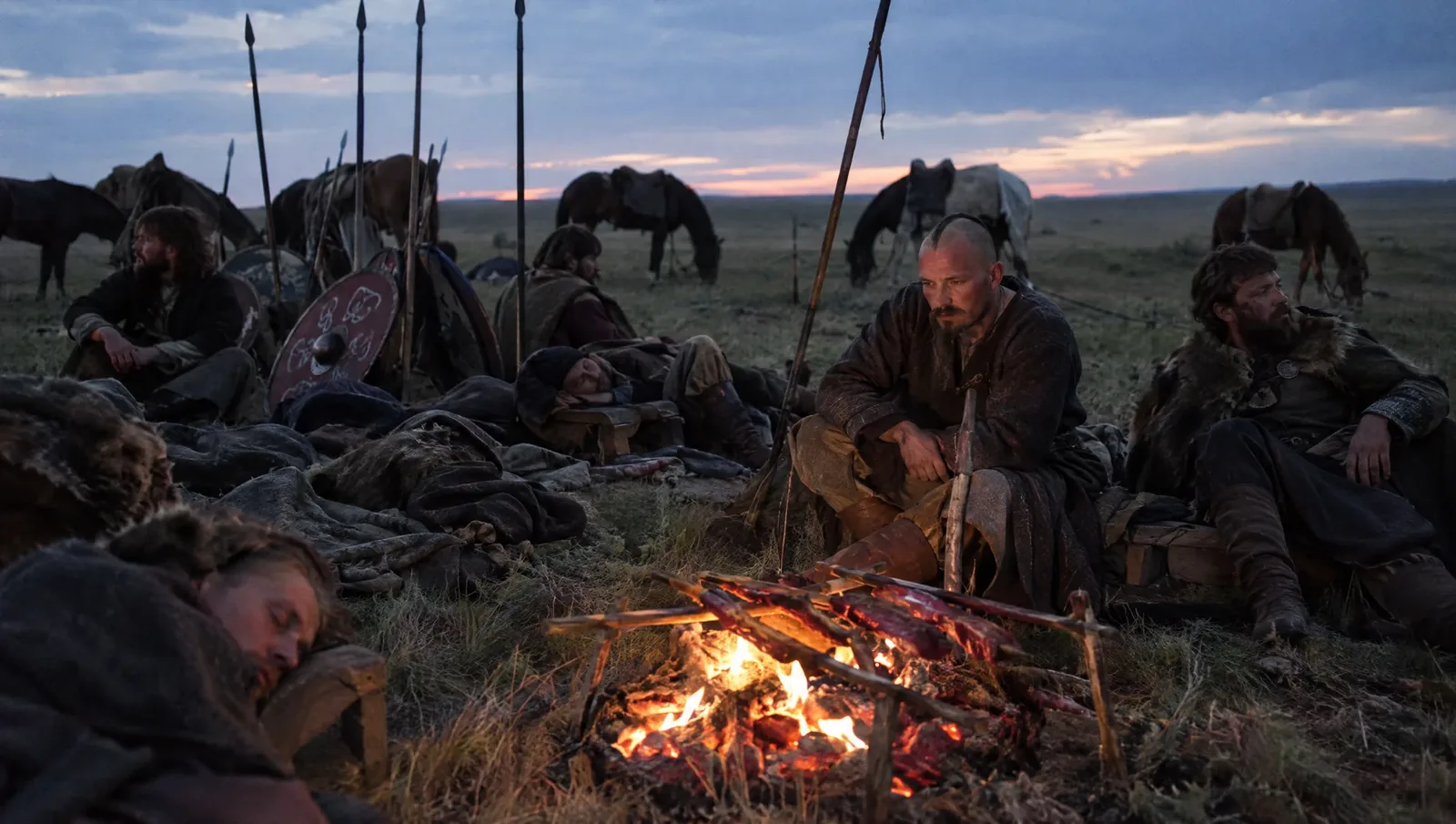
The Primary Chronicle (entry for 956–964) gives the portrait that every later writer borrows. "Stepping light as a leopard, he undertook many campaigns," runs Cross's translation. "Upon his expeditions he carried with him neither wagons nor kettles, and boiled no meat, but cut off small strips of horseflesh, game, or beef, and ate it after roasting it on the coals." He had no tent: "he spread out a horse-blanket under him, and set his saddle under his head; and all his retinue did likewise."
The same entry says he "sent messengers to the other lands announcing his intention to attack them." The famous short form, "I am coming at you" (Old East Slavic Хочю на вы ити, often modernised as Idu na vas), is how the Internet Encyclopedia of Ukraine and modern retellings render it; Cross gives it as reported speech rather than a quoted slogan. Either way, it is a chronicler's ideal of the chivalrous pagan, written down some 140 years later, not a transcript.
What did Sviatoslav look like?
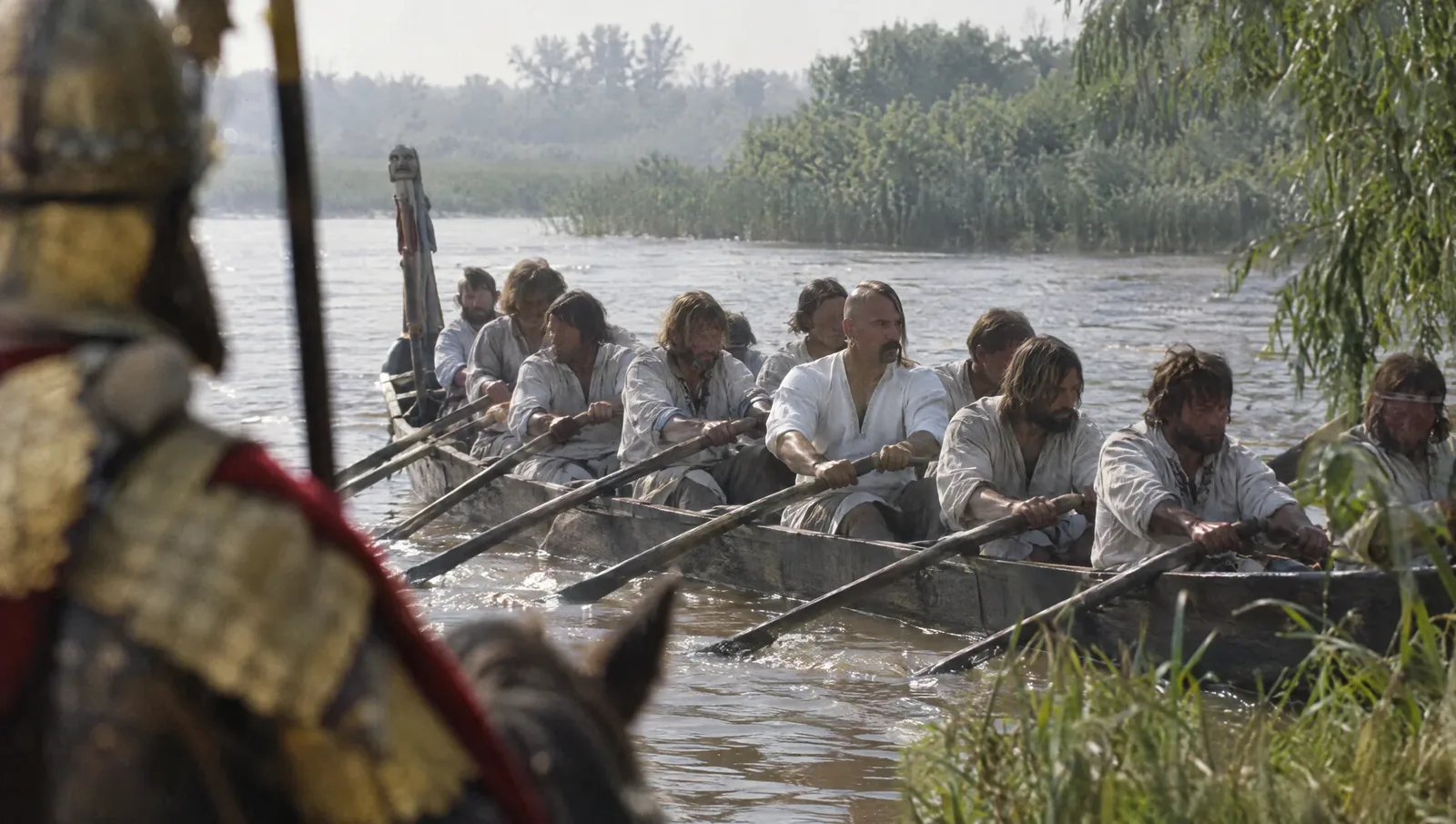
The description comes from Leo the Deacon, a Byzantine historian who served at the court of Emperor John I Tzimiskes and describes the two rulers meeting on the Danube in July 971. In Book IX, chapter 11 of his History (translated by Alice-Mary Talbot and Denis F. Sullivan, Dumbarton Oaks, 2005), Sviatoslav "arrived sailing along the river in a Scythian light boat, grasping an oar and rowing with his companions as if he were one of them." Leo uses "Scythians" and "Tauroscythians" as his classicising names for the Rus'.
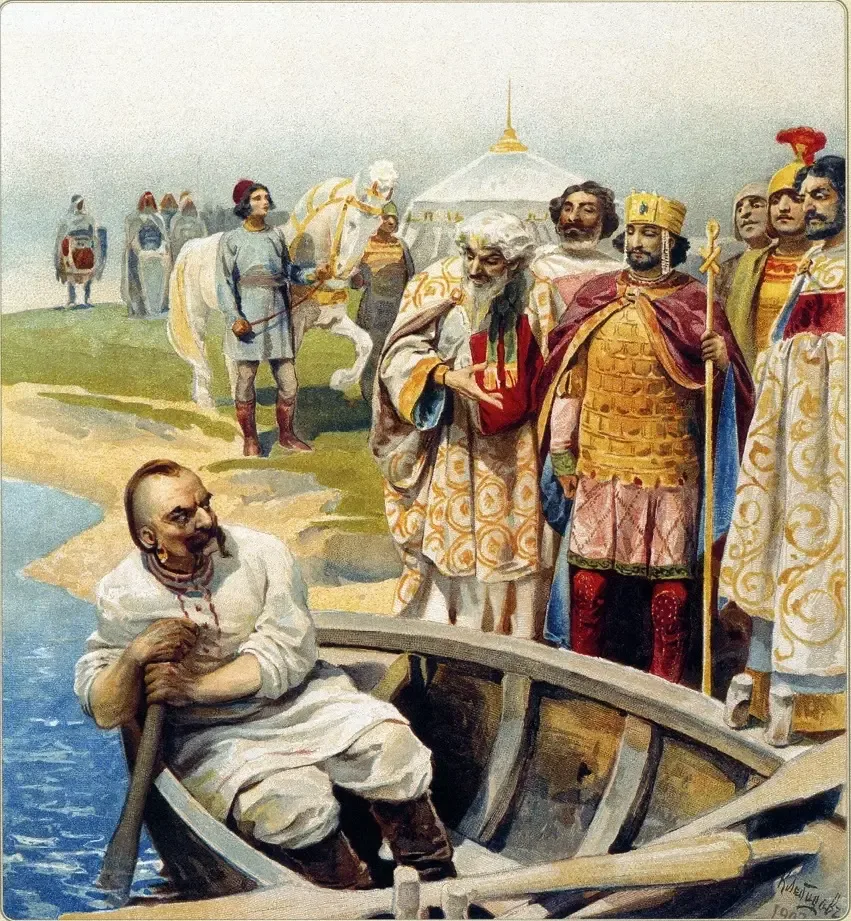
The description itself, in Talbot and Sullivan's translation, reads: "he was of moderate height, neither taller than average, nor particularly short; his eyebrows were thick; he had grey eyes and a snub nose; his beard was clean-shaven, but he let the hair grow abundantly on his upper lip where it was bushy and long; and he shaved his head completely, except for a lock of hair that hung down on one side, as a mark of the nobility of his ancestry." Leo adds that "on one ear was fastened a gold earring, adorned with two pearls with a red gemstone between them; his clothing was white, no different from that of his companions except in cleanliness."
Is the "Cossack" look accurate?
Partly. The Greek can be read as one lock or as locks on both sides, and some translators render "wispy" rather than "clean-shaven" for the beard, so the iconic single forelock is the most popular reading rather than the only one. Leo was also writing in a literary tradition that described barbarians in stock terms, so treat the portrait as an eyewitness-based sketch filtered through classical style.
Verdict: the white tunic, the earring, the long moustache and the shaven head with a lock are as close to a verified medieval portrait as we get for any Rus' prince. The later image of Sviatoslav as a proto-Cossack is a nineteenth-century romantic reading of Leo, not a separate source.
How did Sviatoslav destroy the Khazar Khaganate?
The Khazar Khaganate, a Turkic steppe empire whose ruling elite had adopted Judaism, had long taken tribute from Slavic tribes on the Oka and Volga. According to the Chronicle, Sviatoslav first met the Vyatichians, who told him "they paid a silver-piece per ploughshare to the Khazars." In the entry for AD 965 he "defeated the Khazars and took their city of Bela Vezha" (the "White Tower", the Rus' name for the Khazar fortress of Sarkel on the Don), and "also conquered the Yasians and the Kasogians", that is, the Alans and the Circassians of the North Caucasus.
The Chronicle never mentions the capital Itil. For that we depend on the Arab geographer Ibn Hawqal, who places the Rus' destruction of Bulgar, Khazaran, Samandar and Itil in the year 358 of the Hijra, which is AD 968–969. He wrote that nothing remained of the Bulgars, Burtas and Khazars because the Rus' had attacked them and taken all their lands, with refugees scattered and waiting to return.
Did Khazaria end at once?
Historians disagree. Dan Shapira, writing in Encyclopaedia Iranica, argues that Ibn Hawqal "probably paints a more accurate picture than does the Old Rus'ian chronicle" and prefers 968/969, while others keep 965 for Sarkel and see Itil as a second blow. Khazar remnants and a rump state appear in later sources, so the khaganate was broken as a great power in the 960s but did not vanish overnight.
Verdict: Sarkel fell to Sviatoslav (965 by the Chronicle's dating); Itil and Samandar were sacked by the Rus' in 968–969 according to Ibn Hawqal; whether Sviatoslav personally led that second strike is likely but not stated by any source. The site's glossary dates of 650–969 for Khazaria reflect this later date.
Did Sviatoslav attack Volga Bulgaria?
This is contested. Ibn Hawqal names Bulgar on the Volga among the sacked cities, Britannica says Sviatoslav "attacked the Volga Bulgars", and the Internet Encyclopedia of Ukraine says he conquered them. Some historians suspect confusion with Danube Bulgaria, and the Primary Chronicle is silent.
Verdict: a Rus' raid on Volga Bulgaria in the late 960s is plausible and supported by one strong Arabic witness, but it remains single-sourced. For the wider story of that state, see our article on Volga Bulgaria.
Why did Byzantium pay Sviatoslav to invade Bulgaria?
Around 966–967 Emperor Nikephoros II Phokas of the Byzantine Empire sent the patrikios Kalokyros, son of the governor of Cherson in Crimea, to hire the Rus' against the First Bulgarian Empire. Leo the Deacon (Book IV) gives the sum as "15 kentenaria"; a kentenarion was a unit of 100 Roman pounds, so this means about 1,500 pounds of gold. Some popular accounts, including Wikipedia's article on Kalokyros, inflate it to 15,000 pounds.
The Chronicle dates the invasion to 967 (most modern accounts prefer 968): Sviatoslav "captured eighty towns along the Danube" and settled at Pereyaslavets, a trading town near the Danube delta, "receiving tribute from the Greeks." It was a bargain that backfired spectacularly for Constantinople: instead of a weakened Bulgaria, the empire gained an aggressive new neighbour.
Why did Sviatoslav want to move his capital to the Danube?
While he was away in AD 968, the Pechenegs, a Turkic nomadic people of the Pontic steppe, besieged Kyiv with Olga and his three sons inside. A relief force under the commander Pretich bluffed them into withdrawing, and the Kyivans sent Sviatoslav a bitter message. In Cross's translation: "Oh Prince, you visit and frequent foreign lands. But while you neglect your own country, the Pechenegs have all but taken us captive, along with your mother and your children as well." He hurried back and drove the nomads into the steppe.
Then, in 969, he told his mother and his boyars (senior nobles) why he wished to leave again: "I do not care to remain in Kiev, but should prefer to live in Pereyaslavets on the Danube, since that is the centre of my realm, where all riches are concentrated; gold, silks, wine, and various fruits from Greece, silver and horses from Hungary and Bohemia, and from Rus' furs, wax, honey, and slaves." Olga begged him to bury her first, and "three days later Olga died."
The speech is a remarkably clear piece of economic geography. Pereyaslavets sat where Byzantine luxuries met the silver and horses of the Hungarians and the Czechs, and the forest goods of Rus'; Kyiv, by contrast, was a collection point on someone else's trade route.
Who ruled Rus' while he was away?
In 970 he divided the realm among his sons: Yaropolk in Kyiv, Oleg among the Drevlians, and Vladimir in Novgorod. Vladimir was the son of Malusha, whom the Chronicle calls Olga's stewardess, and he got Novgorod only because his half-brothers refused it. The arrangement solved a short-term problem and created a long-term one, as his story in Vladimir the Great and the baptism of Rus' shows.
What happened in the second Bulgarian campaign?
Returning to the Balkans, Sviatoslav took the Bulgarian capital Preslav and captured Tsar Boris II. He then crossed the Balkan mountains into Thrace and took Philippopolis (modern Plovdiv), where, Leo the Deacon writes, "they say" he "affixed to a stake twenty thousand of the men captured in the town." Leo marks it as hearsay, and the figure should be read as a Byzantine horror story built on a real massacre.
In December 969 Nikephoros was murdered and John I Tzimiskes took the throne. His general Bardas Skleros met a Rus', Bulgarian, Pecheneg and Hungarian army at Arcadiopolis in 970 and defeated it.
Arcadiopolis: whose numbers?
The sources disagree so wildly that the battle is a classic test case. Leo puts the enemy at "over thirty thousand" against no more than 10,000 Byzantines, and says 55 Byzantines "are said to have died" against "more than twenty thousand" Scythians; Skylitzes, as modern studies summarise him, gives 25 Byzantine dead and an incredible 308,000 enemies. The Primary Chronicle tells the same campaign as a Rus' victory in which 10,000 Rus' face 100,000 Greeks and Sviatoslav cries, "Let us not disgrace Rus', but rather sacrifice our lives, lest we be dishonored." Neither set of figures is credible, but the Byzantine victory is confirmed by what happened next.
What happened at the siege of Dorostolon in 971?
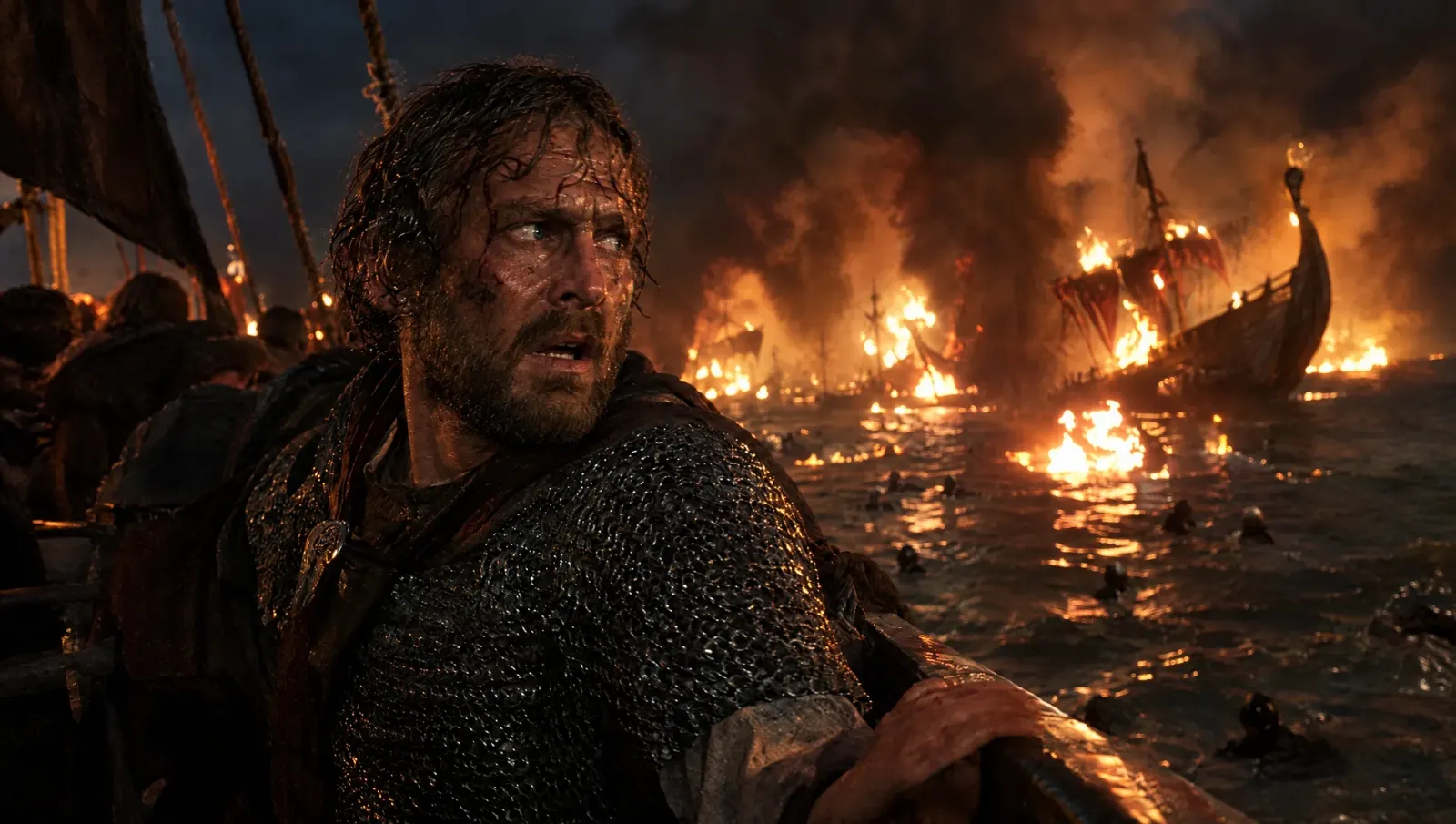
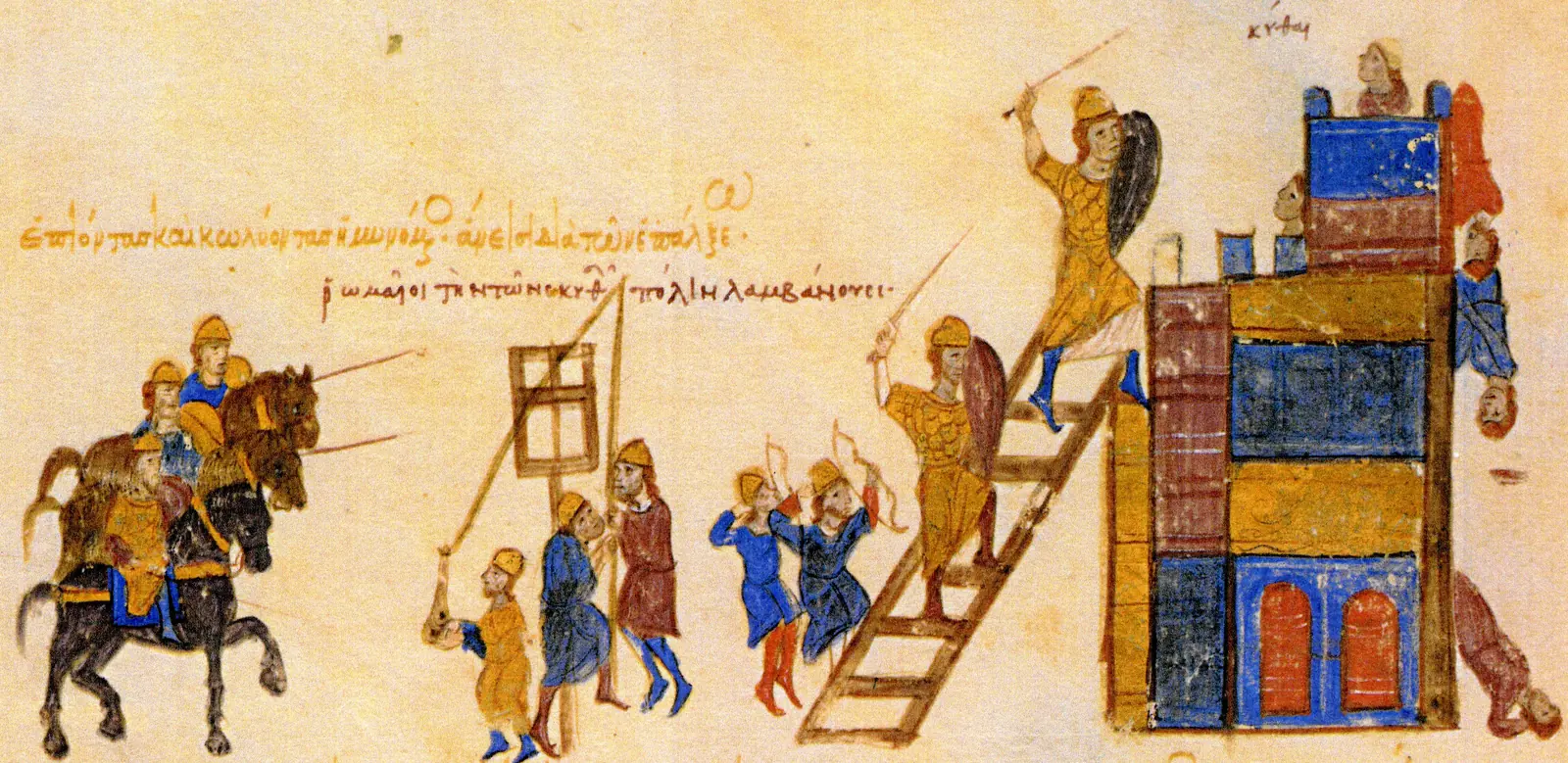
In spring 971 Tzimiskes marched through the Balkan passes with an army Talbot and Sullivan estimate at perhaps forty thousand men, stormed Preslav in April and freed Boris II. Sviatoslav fell back to Dorostolon (Roman Durostorum, modern Silistra on the Danube), where he was blockaded by land and by a fleet of "fire-bearing triremes" on the river. Leo says the Rus' feared the "liquid fire" (Greek fire, the Byzantines' incendiary weapon) because their elders remembered how Igor's fleet had been burnt with it.
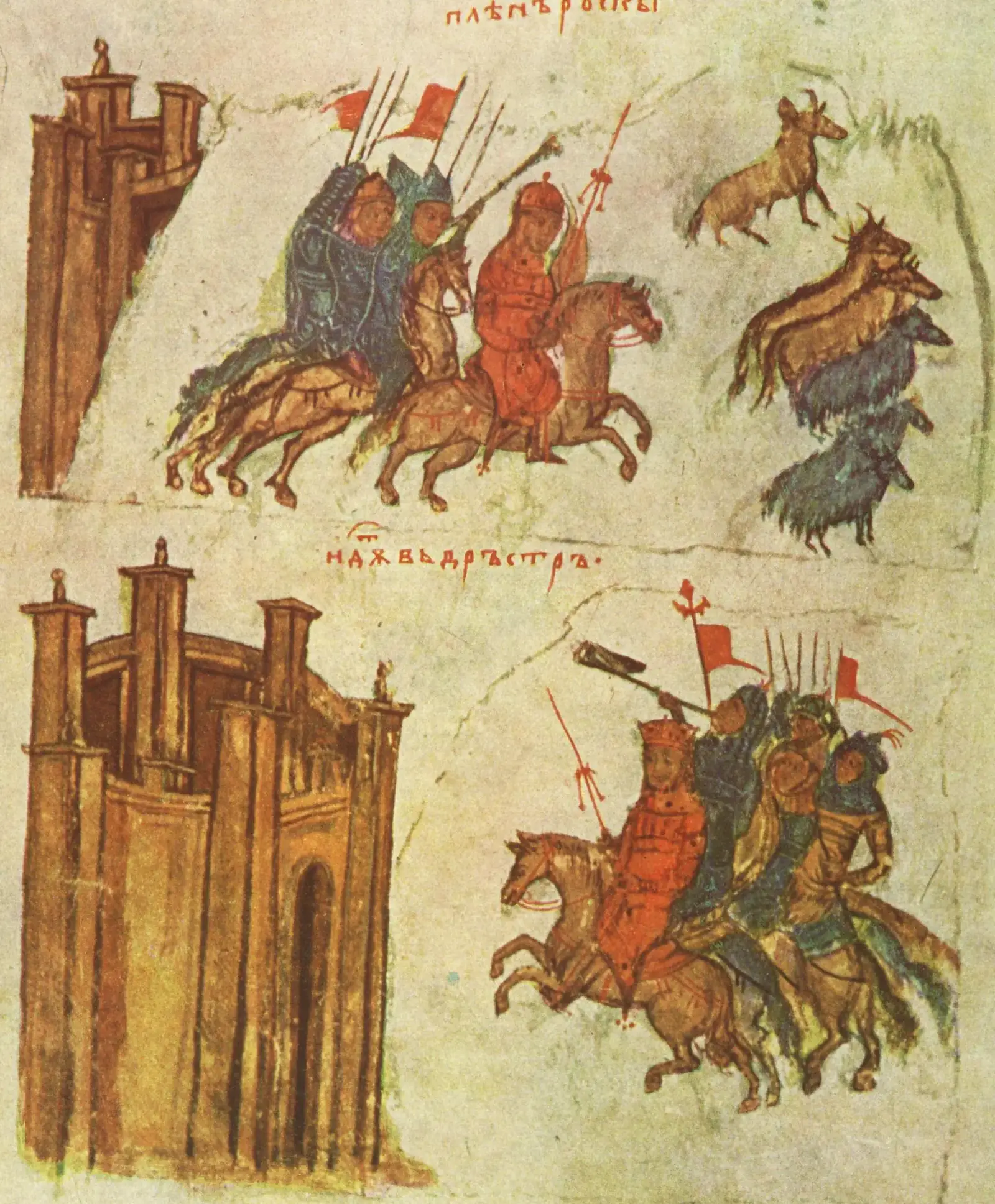
The Internet Encyclopedia of Ukraine dates the siege from 23 April to 22 July 971, roughly three months; other accounts speak of 65 days. The Rus' made repeated sorties, and two of Sviatoslav's commanders fell: Sphengelos, whom Leo ranks third after Sviatoslav, and Ikmor, the second in command, cut down by the imperial bodyguard Anemas. According to John Skylitzes, the victors later found armed women among the Rus' dead, a detail much quoted in debates about Viking-age women warriors.
What were the terms of the 971 treaty?
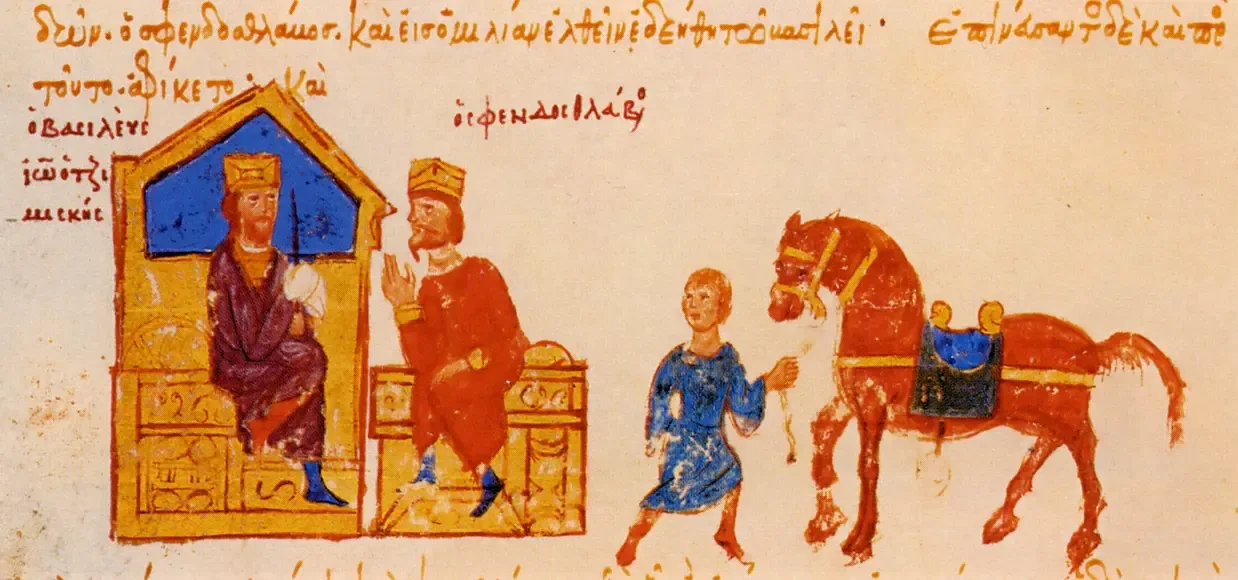
Starving and outnumbered, Sviatoslav sought peace. The treaty text preserved in the Primary Chronicle, "written down by Theophilus the secretary in Silistria during the month of July", has him swear never to attack the empire, Kherson in Crimea or Bulgaria, on pain of being "accursed of the god in whom we believe, namely, of Perun and Volos." Leo adds that the Rus' asked to be received as friends when they came to trade, and that the emperor gave two medimnoi (measures) of grain to each of the 22,000 surviving Rus'.
Eastern Bulgaria was annexed by Byzantium, moving the imperial frontier to the Danube. The meeting on the riverbank followed, and it is there that Leo places the prince in his white tunic, oar in hand.
| Year (AD) | Event | Main source | Certainty |
|---|---|---|---|
| 945–946 | Igor killed; Olga's regency; child Sviatoslav throws the first spear | Primary Chronicle | Event probable; spear story legendary |
| 964–966 | Vyatichians campaign; tribute transferred from Khazars to Kyiv | Primary Chronicle | Probable |
| 965 | Sarkel (Bela Vezha) taken; Yasians and Kasogians defeated | Primary Chronicle | Probable; date debated |
| 968–969 | Itil, Samandar, Khazaran and Bulgar sacked by the Rus' | Ibn Hawqal | Strong for Itil; Bulgar contested |
| 966/967 | Kalokyros embassy; 15 kentenaria of gold | Leo the Deacon | Secure |
| 967/968 | First Bulgarian campaign; Pereyaslavets | Primary Chronicle (967), Leo | Secure; year debated |
| 968 | Pecheneg siege of Kyiv | Primary Chronicle | Secure |
| 969 | Olga dies; Preslav and Boris II captured | Primary Chronicle, Leo | Secure |
| 970 | Sons appointed; defeat at Arcadiopolis | Primary Chronicle, Leo, Skylitzes | Secure; numbers not |
| April–July 971 | Fall of Preslav; siege of Dorostolon; treaty; Danube meeting | Leo, Skylitzes, Primary Chronicle | Secure |
| Spring 972 | Killed by Pechenegs at the Dnieper rapids | Primary Chronicle, Skylitzes | Secure |
How did Sviatoslav die?
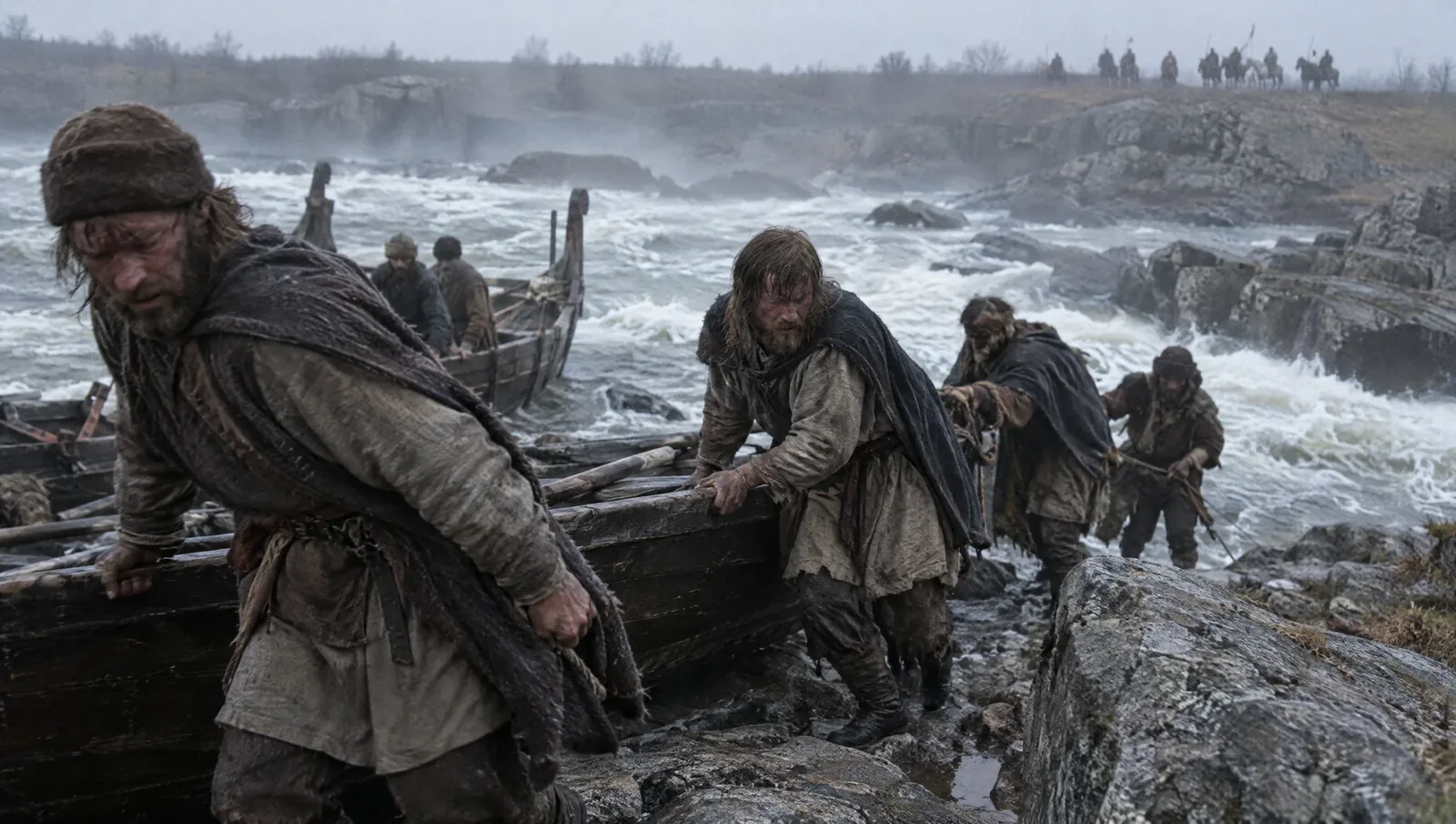
The Rus' sailed for home up the Dnieper towards the rapids, the string of cataracts where boats had to be hauled overland. According to the Primary Chronicle, the commander Sveinald advised him "to ride the falls on horseback, for the Pechenegs were encamped in the vicinity"; Sviatoslav refused, and the people of Pereyaslavets told the Pechenegs that he was coming home rich but with few men. Blocked at the rapids, he wintered at Belobereg near the Dnieper mouth in such famine that "they paid as much as half a grivna for a horse's head."
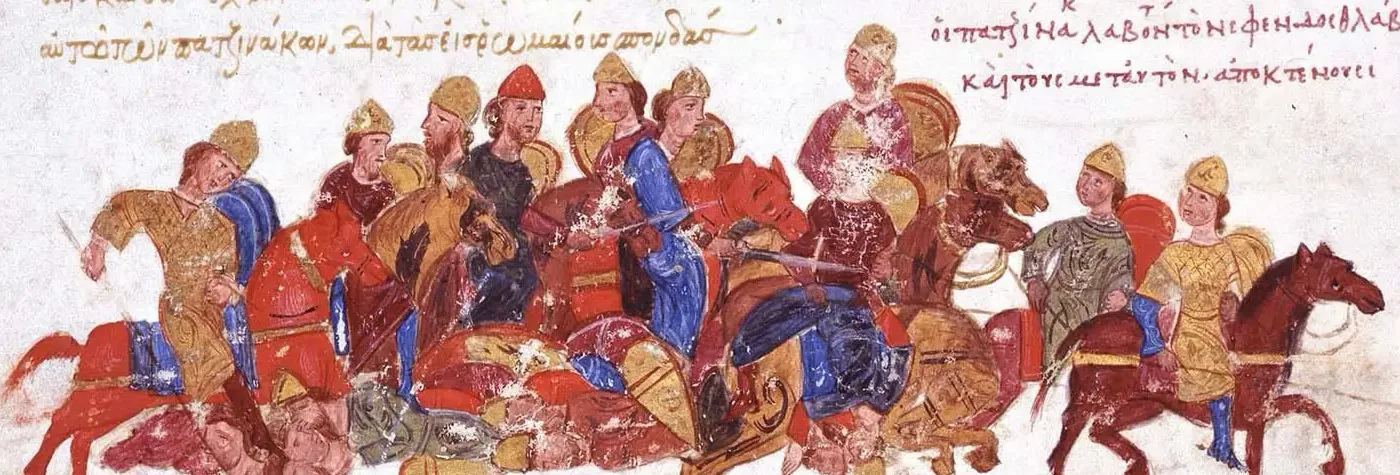
In spring 972 the Pecheneg khan Kurya attacked him at the cataracts and Sviatoslav was killed. The Chronicle adds the detail everyone remembers: "The nomads took his head, and made a cup out of his skull, overlaying it with gold, and they drank from it. But Sveinald returned to Yaropolk in Kiev." Skull cups from defeated enemies are attested among steppe peoples since antiquity, and some scholars read it as a grim compliment to a brave foe.
Did Byzantium betray him?
This is a hypothesis, but not a baseless one. John Skylitzes reports that after the treaty Tzimiskes sent Theophilos, bishop of Euchaita, to the Pechenegs to ask for free passage for the Rus'; the Pechenegs agreed to become Byzantine allies but refused the passage. Skylitzes says they were angry with Sviatoslav for having made peace with the Romans. The Primary Chronicle blames the people of Pereyaslavets, and the Internet Encyclopedia of Ukraine flatly says the ambush was "at the behest of Byzantium".
Verdict: Byzantium certainly negotiated with the Pechenegs at exactly the right moment, and Constantine Porphyrogenitus's handbook recommends setting them against the Rus'. A deliberate tip-off is plausible, but no source proves an order to kill.
Was Sviatoslav's sword found at Khortytsia?
On 7 November 2011 a Zaporizhzhia fisherman, Serhii Piankov, raised a tenth-century Carolingian-type sword, about 94–96 cm long, from the Dnieper near Khortytsia Island. It carries the "ULFBERHT" maker's mark and a hilt decorated with silver and copper alloy, and is now in the Museum of the History of the Zaporozhian Cossacks on the island. It is a genuine elite weapon from the right century and place, but nothing on it names an owner, so "Sviatoslav's sword" is a local legend, not a finding.
Brilliant commander or reckless adventurer?
Both labels fit. As a field commander he was fast, bold and personally brave, and he broke two states in seven years. As a ruler he was absent from Kyiv for most of his reign, abandoned it to a Pecheneg siege, and nearly moved his capital to territory he could not hold against Byzantium.
The strategic results cut both ways. Khazaria's collapse removed the old gatekeeper of the steppe and opened it to the Pechenegs, who killed him and plagued Rus' for decades; in the Balkans, his conquest of eastern Bulgaria handed it to Byzantium. Medieval Bulgaria never fully recovered, and its western remnant fell to Basil II, who, in Talbot and Sullivan's words, fought Tsar Samuel "for almost twenty-five years until achieving total victory in 1018."
At home, the division among his sons led to a fratricidal war. Oleg died fighting Yaropolk, Vladimir fled overseas, returned with Varangians, killed Yaropolk and took Kyiv around 978–980. The Christian Rus' of Vladimir and his descendants was thus born from the pagan warrior's unsettled inheritance.
Why is he called Sviatoslav the Brave?
The Internet Encyclopedia of Ukraine lists two appellations, Khorobryi ("the Brave") and Zavoiovnyk ("the Conqueror"). Neither appears as an epithet in the Primary Chronicle, and both look like later, largely modern labels that grew from the Chronicle's heroic portrait.
His memory is now contested between national narratives. In Ukraine he is a Kyivan prince and a forerunner of Cossack warrior culture, celebrated in novels such as Yuliian Opilsky's Idu na vas (1918) and Semen Skliarenko's Sviatoslav (1959). In Russia he is a founding hero of statehood; in November 2005 a monument by Vyacheslav Klykov in the Belgorod region, showing the prince on horseback crushing the shield of a Khazar warrior marked with a Star of David, drew protests from the Federation of Jewish Communities of Russia, which, as RFE/RL reported, called it "a provocation that deforms history".
How has art pictured him?
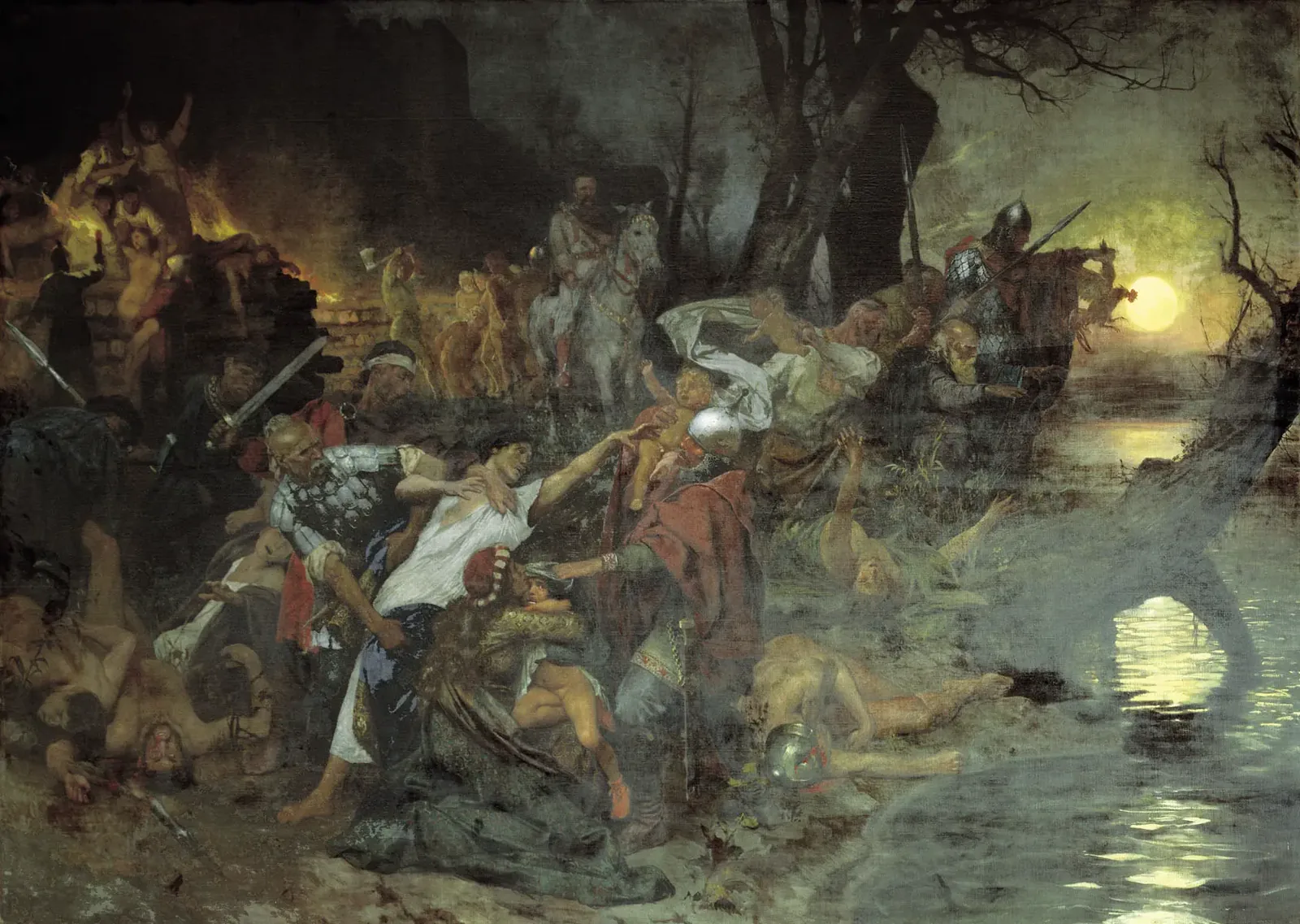
Klavdiy Lebedev's Meeting of Sviatoslav with Emperor John Tzimiskes on the Danube (c. 1880) is a direct attempt to paint Leo's description, and Henryk Siemiradzki's Funeral Feast of Sviatoslav's Warriors after the Battle of Dorostolon (1884) imagines the pagan rites of the besieged army. Eugene Lanceray's sculpture of Sviatoslav on horseback (1886) helped fix the romantic image.
The oldest pictures are medieval: the Madrid Skylitzes, a twelfth-century illustrated manuscript of Skylitzes' chronicle, shows the Byzantine war and the Pecheneg ambush, and the fifteenth-century Radziwiłł Chronicle illustrates the Rus' version of his life. For the world he came from, see our pieces on the Varangian Guard, Oleg of Novgorod and Ibn Fadlan's account of the Rus'.
Was Sviatoslav a Viking?
By ancestry and culture he was a product of the Viking-age Scandinavian diaspora: his parents' names, his commanders' names (Sveinald, Asmund, Ikmor) and the Norse names of the Dnieper rapids recorded by Constantine Porphyrogenitus all point that way. By language and identity, however, his generation was already Slavic, as his own name shows.
The fairest answer is that he was a Rus' prince: the heir of Scandinavian warrior-traders, ruling Slavic lands from Kyiv in what is now Ukraine, with an empire whose eastern conquests reached into today's Russian Federation.
What the map shows next
Step forward to AD 972 on the map to see Rus' after his death, with eastern Bulgaria back under Byzantium and the Khazar heartland broken. Then jump to Vladimir's Kievan Rus' in 980, and compare it with the steppe of the Khazar Khaganate in 969.
Sources
Primary sources (named translations)
- The Russian Primary Chronicle: Laurentian Text, trans. Samuel H. Cross and Olgerd P. Sherbowitz-Wetzor (Cambridge, MA: Mediaeval Academy of America, 1953), entries 6454–6480 (946–972), pp. 80–90. Checked directly: https://www.mgh-bibliothek.de/dokumente/a/a011458.pdf
- The History of Leo the Deacon, trans. Alice-Mary Talbot and Denis F. Sullivan (Dumbarton Oaks Studies 41, 2005): Book IV (Kalokyres, 15 kentenaria), Book VI.10 (Philippopolis), VI.12–13 (Arcadiopolis), Book VIII–IX (Dorostolon, Greek fire, Ikmor, Sphengelos, treaty, grain, IX.11 description). Checked directly: https://archive.org/details/talbot-sullivan-2008-history-leo-the-deacon
- John Skylitzes, A Synopsis of Byzantine History, 811–1057, trans. John Wortley (Cambridge University Press, 2010), reign of John I Tzimiskes (p. 293: Pecheneg ambush).
- Constantine VII Porphyrogenitus, De Administrando Imperio, ch. 9 (Sphendosthlavos son of Igor in Novgorod; the Dnieper rapids).
- Ibn Hawqal, Kitab surat al-ard, as quoted by Dan Shapira, "Khazars", Encyclopaedia Iranica.
Reference works and scholarship
- Encyclopaedia Britannica, "Svyatoslav I": https://www.britannica.com/biography/Svyatoslav-I
- M. Zhdan and A. Zhukovsky, "Sviatoslav I Ihorovych", Internet Encyclopedia of Ukraine: https://www.encyclopediaofukraine.com/display.asp?linkpath=pages\S\V\SviatoslavIIhorovych.htm
- Dan D. Y. Shapira, "Khazars", Encyclopaedia Iranica: https://www.iranicaonline.org/articles/khazars/
- "The Russian-Byzantine treaty of 971: Theophilos and Sveneld", Revue des études byzantines 64 (2006): https://www.persee.fr/doc/rebyz_0766-5598_2006_num_64_1_2395
- RFE/RL, "Russian Jews Protest Statue With Trampled Star Of David" (21 Nov 2005): https://www.rferl.org/a/1063124.html
- Simon Franklin and Jonathan Shepard, The Emergence of Rus 750–1200 (Longman, 1996).
- Ihor Ševčenko, "Sviatoslav in Byzantine and Slavic Miniatures", Slavic Review 24/4 (1965).
- Khortytsia sword: https://zaporizhzhia.city/en/legends/mech-knyazya-svyatoslava ; https://emuseum.ua/en/blog/top-10-arheologichnyh-znahidok-ukrayiny
- Wikipedia, "Battle of Arcadiopolis (970)" (Skylitzes' 25 dead and 308,000), "Siege of Dorostolon", "Kalokyros".
Image credits
- Meeting of Sviatoslav with Emperor John Tzimiskes on the Danube, Klavdiy Lebedev (c. 1880). Public domain, via Wikimedia Commons.
- The Byzantines take Preslav, Madrid Skylitzes, fol. 166r (12th century), Biblioteca Nacional de España. Public domain, via Wikimedia Commons.
- The Rus' invasion and the siege of Dorostolon, Manasses Chronicle, miniature 64 (14th century), Vatican Library. Public domain, via Wikimedia Commons.
- Funeral Feast of Sviatoslav's Warriors after the Battle of Dorostolon, Henryk Siemiradzki (1884). Public domain, via Wikimedia Commons.
- The meeting of John I Tzimiskes and Sviatoslav, Madrid Skylitzes (12th century). Public domain, via Wikimedia Commons.
- The Pechenegs ambush Sviatoslav's men, Madrid Skylitzes, fol. 173r (12th century), Biblioteca Nacional de España. Public domain, via Wikimedia Commons.
- Title image (Sviatoslav rowing on the Danube), the steppe camp and the Dnieper rapids: AI-generated illustration.