Human verified. Last updated by our editorial team on .
North America · Breakaway states and civil war
Republic of Baja California
1853–1854
The Republic of Baja California was the private project of one American, lasted five months, never controlled more than a town and a road, and ended in a courtroom in San Francisco with an acquittal. It is the purest example of the filibuster: an armed expedition launched from the United States, against a country with which the United States was at peace, to conquer territory and set up a government that would then ask to join the Union.
- Existed
- 1853–1854
- Shown on the map
- 1853–1856
- Peak area
- 162k km²
- Region
- North America
Its founder, William Walker, went on to become president of Nicaragua and died in front of a Honduran firing squad. The Baja episode is the rehearsal, and it is worth studying because it shows exactly how the machine worked — and how little it needed in order to work at all.
At a glance
| Name | Republic of Baja California; from 18 January 1854, the Republic of Sonora |
| Dates | 3 November 1853 – 8 May 1854 (the map draws 1853–1856) |
| Where | Baja California, with a claimed extension over Sonora |
| Capital | La Paz, briefly; then a camp at Fort McKibbin |
| Government | None worth the name: Walker as "president", a few officers, no administration |
| Flag | A barred flag with two stars, for Baja California and Sonora |
| Force | Some 45 men at the start, never more than a few hundred |
| End | Retreat to San Diego and surrender to US authorities, 8 May 1854 |
What was the Republic of Baja California?
An armed expedition that seized La Paz, declared a republic and then tried to march across the Gulf of California to take Sonora. It was launched from San Francisco in October 1853 with about forty-five men, and it was illegal under American neutrality law from the moment it sailed.
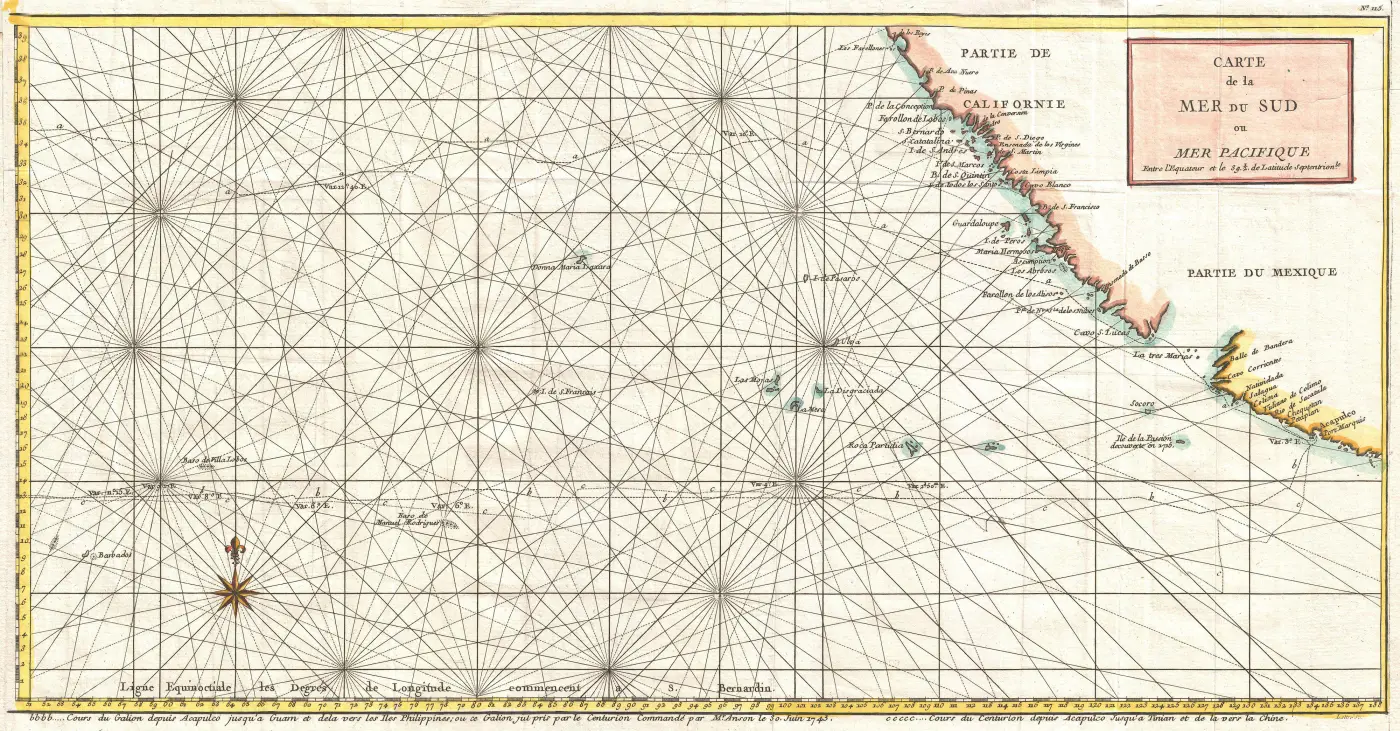
Walker's purpose was not to govern Baja California. It was to hold it long enough to be recognised, to attract more men and money, and to force the United States to annex the territory — the pattern the Texans had followed in 1836 and the Americans in California in 1846. The republic was a means to annexation, not an end in itself.
Who was William Walker?
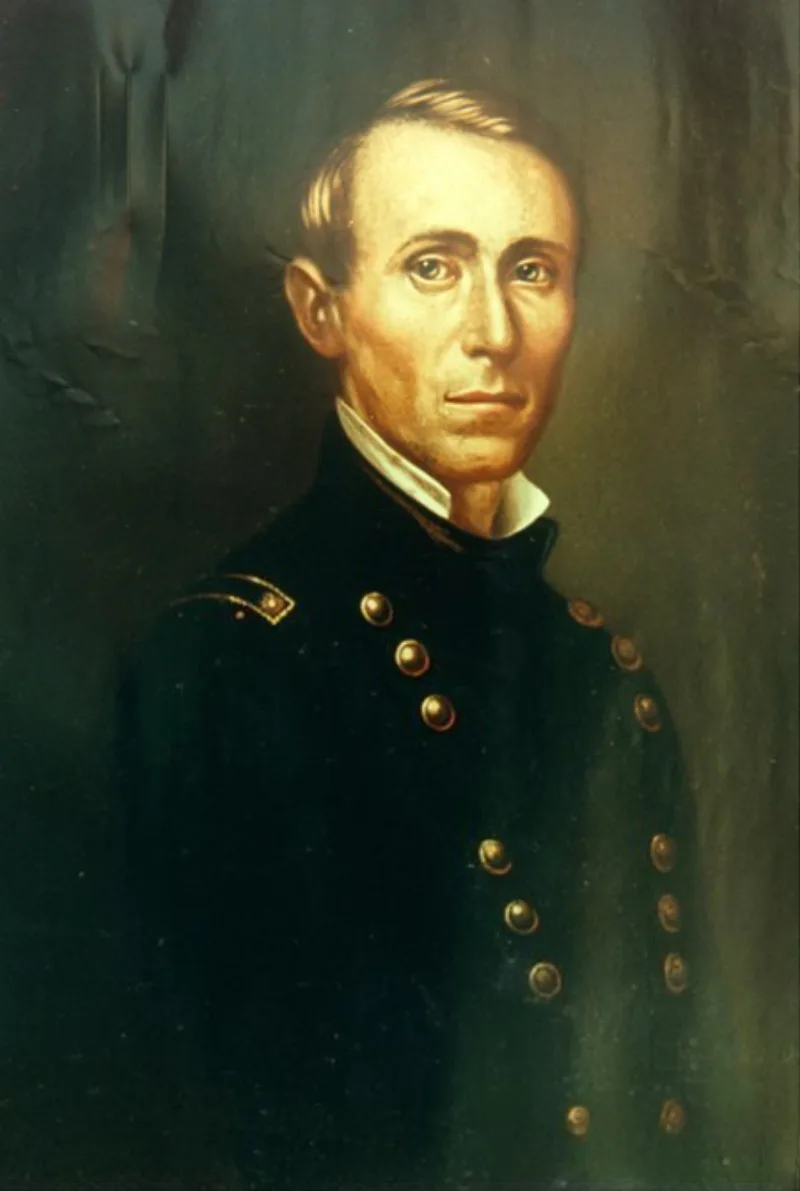
A Tennessee-born polymath of the worst kind: a physician at nineteen, a lawyer, a newspaper editor, and a man convinced that his destiny lay in founding English-speaking republics in Latin America. He was small, abstemious, physically brave and entirely without scruple, and he had a talent for persuading other men to follow him into disasters.
He had edited the Crescent in New Orleans and the Commercial Advertiser in San Francisco, and he had watched the filibusters of the early 1850s — the Cuban expeditions especially — with contempt for their incompetence rather than their illegality. Baja California was his first attempt, and it was a commercial and military failure that taught him what he needed to know for Nicaragua.
What was the filibuster movement?
A loose, noisy, well-financed campaign by American adventurers to seize territory in Latin America, Cuba and the Pacific, and turn it into slave or free states of the Union. It drew on the same ideology as Manifest Destiny — that American institutions should spread by any means — and on a specific legal fact: the neutrality laws of 1818 made it illegal to launch a military expedition from the United States against a country at peace, and those laws were almost impossible to enforce against a popular hero.
The filibusters had newspapers, bankers, recruiters, veterans of the Mexican War and a sympathetic public. Their expeditions failed almost every time, and each failure produced memoirs, trials and more recruits. Walker was the most successful of them, in the sense that he actually governed a country for a year — Nicaragua — before he lost it.
What happened in 1853?
He sailed from San Francisco in mid-October 1853 — cleared on 15 October, and at sea on the night of 16–17 October according to the closest accounts, though two contemporary chroniclers give 15 October — with about forty-five men and a small schooner. He touched at Cabo San Lucas on 28 October, took La Paz on 3 November, and issued a proclamation the same day declaring Baja California independent.
The proclamation promised a "republic" with liberty, property and religion guaranteed, and invited immigration. It was followed by decrees on 7 November and an address on 30 November, and by a march north when the expected reinforcements and supplies failed to arrive. The Mexicans resisted, the Americans in California did not rally, and by January Walker was at the border of Sonora with a dwindling force.
What did he actually claim?
More than he held. On 18 January 1854, at a camp he named Fort McKibbin, he issued four decrees: renaming the territory the Republic of Sonora, annexing Sonora to it, dividing the whole into two states — Sonora and Baja California — with defined boundaries, and appointing himself president. Neither state existed under his control; Sonora was never entered by his force.
The flag was a barred design with two stars, one for each claimed state — Horace Bell called it "triple-barred and twin-starred", and contemporaries called the venture the "Twin-Star Republic". It is a good emblem of the whole affair: a flag for two states, one of which he never set foot in.
Why Baja California and Sonora?
Because they were close, weak and empty — in the American imagination. San Francisco was full of men who had come west for gold and found nothing, and Baja California was a week's sail away with a small population and no garrison worth the name. Sonora added silver mines, fertile river valleys and a route to the Gulf of California.
The filibusters also believed that the locals would welcome them, or at least not resist. That belief was wrong in every case. The Mexican population of Baja California was small but not passive, and the expedition's arrival united the local authorities against it. Filibustering was a project built on contempt for the people it proposed to govern, and contempt is a poor guide to intelligence.
How was the expedition organised?
In the open, in San Francisco. Walker recruited publicly, sold shares in the venture's expected land, bought a schooner and provisions, and sailed with the connivance of local officials who did not enforce the neutrality laws. The San Francisco Herald and other papers covered the departure as an adventure; the Mexican consulate protested, and the federal authorities in California moved slowly.
The force was small because the money was short. Some forty-five men sailed, most of them veterans of the Mexican War or of earlier filibusters, with a handful of officers — including Burton, a captain, not the general that some accounts make him. When they landed, they found no supplies waiting, no friendly population, and a Mexican garrison that knew they were coming.
Why did it fail?
Because filibustering required money, men and a blind eye, and Walker had none of them in sufficient quantity. The expedition was small, its supplies ran out, the Mexican authorities resisted, and the expected American volunteers did not appear — partly because the news from Baja was bad, and partly because the United States was enforcing its neutrality laws more seriously than the filibusters had hoped.
The force split, and Walker retreated to San Diego, where he surrendered to American authorities on 8 May 1854. His men were paroled — the parole document carries thirty-three signatures — and the republic ended not in battle but in a border town, with a legal argument about whether he had broken the law.
What was the Mexican response?
Prompt and local. The authorities in Baja California had few troops, but they had the population, the terrain and the warning that an expedition was coming, and they harassed Walker's column as it moved north. The Mexican government protested to Washington, which was embarrassed: the United States was at peace with Mexico, and the expedition was a private war launched from an American port.
The contrast with Texas is instructive. In 1836 the Mexican state was collapsing and the settlers had numbers; in 1853 Mexico was a functioning republic with an army, and Walker had forty-five men. Filibustering worked against weak or distant states, not against a government that could send a column.
What happened to Walker?
He was tried in federal court in San Francisco for violating the neutrality laws, and the jury acquitted him in eight minutes. The trial was the movement's real triumph: it established that a filibuster could launch an illegal war and face no consequence, which is why the expeditions continued.
Walker went to Nicaragua in 1855, made himself president in 1856, was driven out in 1857, and returned twice more before he was captured by the Royal Navy and handed to the Hondurans, who shot him at Trujillo in September 1860. The phrase "the grey-eyed man of destiny" was coined in Nicaragua in 1856, in the newspaper El Nicaraguense — not in Baja California, where nobody called him anything so flattering.
What did contemporaries think?
Two things at once. The American press treated the filibusters as reckless but romantic — the trial's eight-minute acquittal is a verdict on public opinion as much as on the evidence — while the Mexican and Latin American press treated them as pirates, which is the word Bancroft used. Britain and France, whose shipping and commerce were at risk, regarded filibustering as a violation of international law that the United States refused to suppress.
The Baja episode was reported in San Francisco as a failure, not a scandal. Walker lost men, money and the territory, and the public read about it as an adventure that had gone wrong. The legal question — whether an American could launch a war from American soil — was answered by the acquittal, and the answer was yes.
Was it a slavery conspiracy?
Historians have argued about this, and the answer is: partly, and not only. The older literature — Scroggs (1916) and Wyllys (1933) — rejected the idea that the Baja expedition was a slaveholders' plot, noting that Walker's own proclamations said nothing about slavery and that his backers were expansionists of various kinds. The later work — May's 2006 lecture especially — restores slavery to the picture: the filibusters' vision of new slave states, and the support they received from Southern interests, were real.
The honest position is that Walker's motives were personal and political rather than sectional, and that the movement he belonged to was deeply entangled with slavery. He was not sent by the South; he was useful to it.
What did it leave behind?
A precedent, a phrase and a warning. The acquittal showed that the neutrality laws were unenforceable against a popular adventurer, and the expeditions that followed — Walker's own in Nicaragua, and the others in Cuba, Honduras and Mexico — drew on the same network of financiers, newspapers and veterans.
Bancroft's verdict is the one that has lasted: Walker "dwells in memory as a pirate". The republic he declared has no institutional legacy at all — no constitution, no laws, no administration, no recognition — which is exactly what its founder intended: it was a claim to be traded, not a state to be governed.
The episode also marks a turning point in American expansion. The Mexican War had ended in 1848 with the annexation of half of Mexico; the filibusters tried to continue that expansion by private means, and they failed. The Civil War, four years later, ended the movement by consuming the men, money and political energy that had sustained it.
Baja California therefore belongs with the Texas republic and the Bear Flag as a frontier experiment, and with the later filibusters as a symptom of a republic that could not stop its citizens from making war. It is the smallest of them and the most nakedly mercenary: a country invented on a piece of paper at Fort McKibbin, with a flag for two states and an army of forty-five men.
Common myths about the Republic of Baja California
| Myth | What the evidence says |
|---|---|
| Walker was court-martialled | He was tried in a federal criminal court for violating neutrality laws and acquitted in eight minutes. |
| He conquered Baja California | He took La Paz and held a road; the peninsula's population and the Mexican authorities never submitted. |
| He was called "the grey-eyed man of destiny" in Baja | The phrase was coined in Nicaragua in 1856. |
| The republic included Sonora | He annexed Sonora by decree on 18 January 1854; he never entered it. |
| Walker led an earlier 1850 expedition to Mexico | There was no such expedition; the 1850–51 filibuster was Flores's venture in Ecuador. |
| The flag had one star | It had two, for Baja California and Sonora. |
| The expedition was a Southern slaveholders' plot | It was personally and politically expansionist, and deeply entangled with slavery; the strong conspiracy reading is contested. |
| He was punished for it | He was acquitted, and went on to seize power in Nicaragua. |
Timeline of the Republic of Baja California
| Year | Event |
|---|---|
| 1824 | Walker born in Nashville |
| 1850–51 | Cuba and Ecuador filibusters; Walker observes and writes |
| 15–17 October 1853 | Sails from San Francisco |
| 28 October 1853 | Touches Cabo San Lucas |
| 3 November 1853 | La Paz taken; republic proclaimed |
| 7 November 1853 | Decrees issued |
| 30 November 1853 | Address to the "citizens" |
| 18 January 1854 | Four decrees at Fort McKibbin: Republic of Sonora, two states |
| 8 May 1854 | Surrender at San Diego |
| 1854 | Federal trial; acquitted |
| 1855–57 | Nicaragua; president; driven out |
| 1860 | Shot at Trujillo, Honduras |
What the map shows next
At 1853 on the map the republic is a fortnight old, and the Bear Flag is seven years in the past.
At 1856 on the map Walker is president of Nicaragua, and the Confederacy is five years away.
Common questions
- What was the Republic of Baja California?
- A filibuster expedition led by William Walker that seized La Paz in November 1853 and declared Baja California independent, lasting until May 1854.
- Who was William Walker?
- An American physician, lawyer and journalist from Tennessee who became the most famous filibuster of the 1850s and later president of Nicaragua.
- Did he control Baja California?
- No: he held La Paz and a road, never the peninsula, and never entered Sonora, which he annexed by decree.
- How many men did he have?
- About forty-five at the start, and never more than a few hundred.
- What was the flag?
- A barred flag with two stars, for Baja California and Sonora.
- Why did it fail?
- No supplies, no reinforcements, Mexican resistance and American neutrality enforcement.
- What happened to Walker?
- He surrendered at San Diego, was tried for violating neutrality laws, acquitted in eight minutes, and later seized power in Nicaragua.
- Was it about slavery?
- Partly: the movement was deeply entangled with slavery, though Walker's own proclamations were silent on it and historians dispute the strong conspiracy reading.
- Was Sonora ever part of it?
- Only by decree, from 18 January 1854, when Walker renamed the venture the Republic of Sonora.
- What is its legacy?
- The precedent that filibusters could act with impunity, and Bancroft's verdict that Walker "dwells in memory as a pirate".
Sources
Every source below was consulted while writing this entry.
Every source below was consulted while writing this entry.
Primary and official sources
- Walker's proclamation of 3 November 1853 and the decrees of 7 November 1853.
- The four decrees of 18 January 1854 at Fort McKibbin.
- Walker's address of 30 November 1853 and his report of the action at La Paz.
- The parole of honour, 8 May 1854, with thirty-three signatures.
- Wells (1856), participant account, printing the texts verbatim.
Scholarship and reference works
- Wyllys, Pacific Historical Review 2:2 (1933), full text.
- Clarke, California Historical Society Quarterly 12:4 (1933).
- Scroggs, Filibusters and Financiers (1916).
- Bancroft, on Walker's memory.
- May (2006), on slavery and the filibusters.
- Brown, Greene and Carr, listed but not opened.
Data sources for the map
- Cliopatria v0.12 (Seshat Global History Databank, CC BY 4.0).
- Historical Basemaps (GPL-3.0).
This entry was written from the sources above and last updated .
Text available under CC BY-SA 4.0: reuse it with a credit to The World Through Time and a link to this page.
Border geometry for the map itself comes from Cliopatria v0.12 (Seshat Global History Databank, CC-BY-4.0).
See the Republic of Baja California in its world
Open the atlas at 1853 and every neighbour, rival and successor is on screen with it — then drag the slider and watch what happens next.
Open the map at 1853 →