Human verified. Last updated by our editorial team on .
North America · Independence and the new republics
Republic of Texas
1836–1845
The Republic of Texas existed for nine years, eight months and eleven days: from the declaration of independence on 2 March 1836 to the transfer of sovereignty on 19 February 1846. It had a constitution, a president, a congress, a supreme court, a currency, a navy, an army and a debt. It was recognised by the United States, France, Britain and the Netherlands. And it was never recognised by Mexico, which regarded the whole thing as a province in revolt and invaded twice.
- Existed
- 1836–1845
- Shown on the map
- 1836–1845
- Peak area
- 375k km²
- Region
- North America
It is the only one of the western republics to be born out of a settler colony that had been invited in by the government it then overthrew — and the only one whose central institution was slavery.
At a glance
| Name | Republic of Texas |
| Dates | 1836–1845 (the map draws 1836–1845) |
| Where | Between the Sabine and the Rio Grande, and claimed west to the 42nd parallel |
| Capital | Washington-on-the-Brazos, Harrisburg, Galveston, Velasco, Columbia, Austin (from 1839) |
| Government | Presidential republic under the constitution of March 1836; annexation never ratified by Mexico |
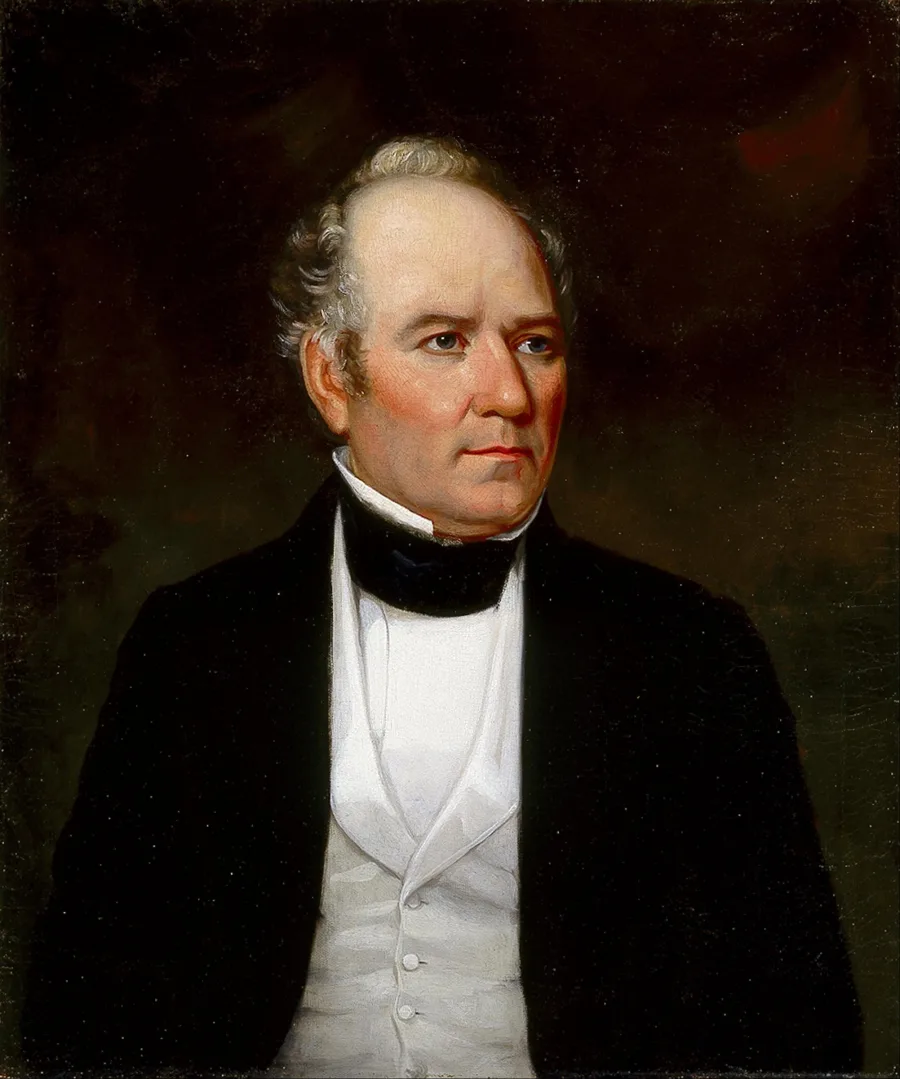
| Presidents | David G. Burnet (ad interim), Sam Houston, Mirabeau B. Lamar, Houston, Anson Jones |
| Population | About 30,000 Anglo settlers and 8,000 tejanos in 1836; enslaved people 3,097 (1837) → 11,827 (1840) → 24,401 (1845) |
| Land | A claimed public domain of 251,579,800 acres (about 393,000 square miles) |
| Economy | Cotton, cattle, land speculation and customs duties; paper money and default |
| End | Annexed by the United States, 29 December 1845 |
What was the Republic of Texas?
An independent state created by Anglo-American colonists and tejanos who revolted against the centralist government of Mexico in 1835–36. Its constitution was written in three weeks at Washington-on-the-Brazos, its independence was won in eighteen minutes at San Jacinto, and its existence was never accepted by the government it had left.
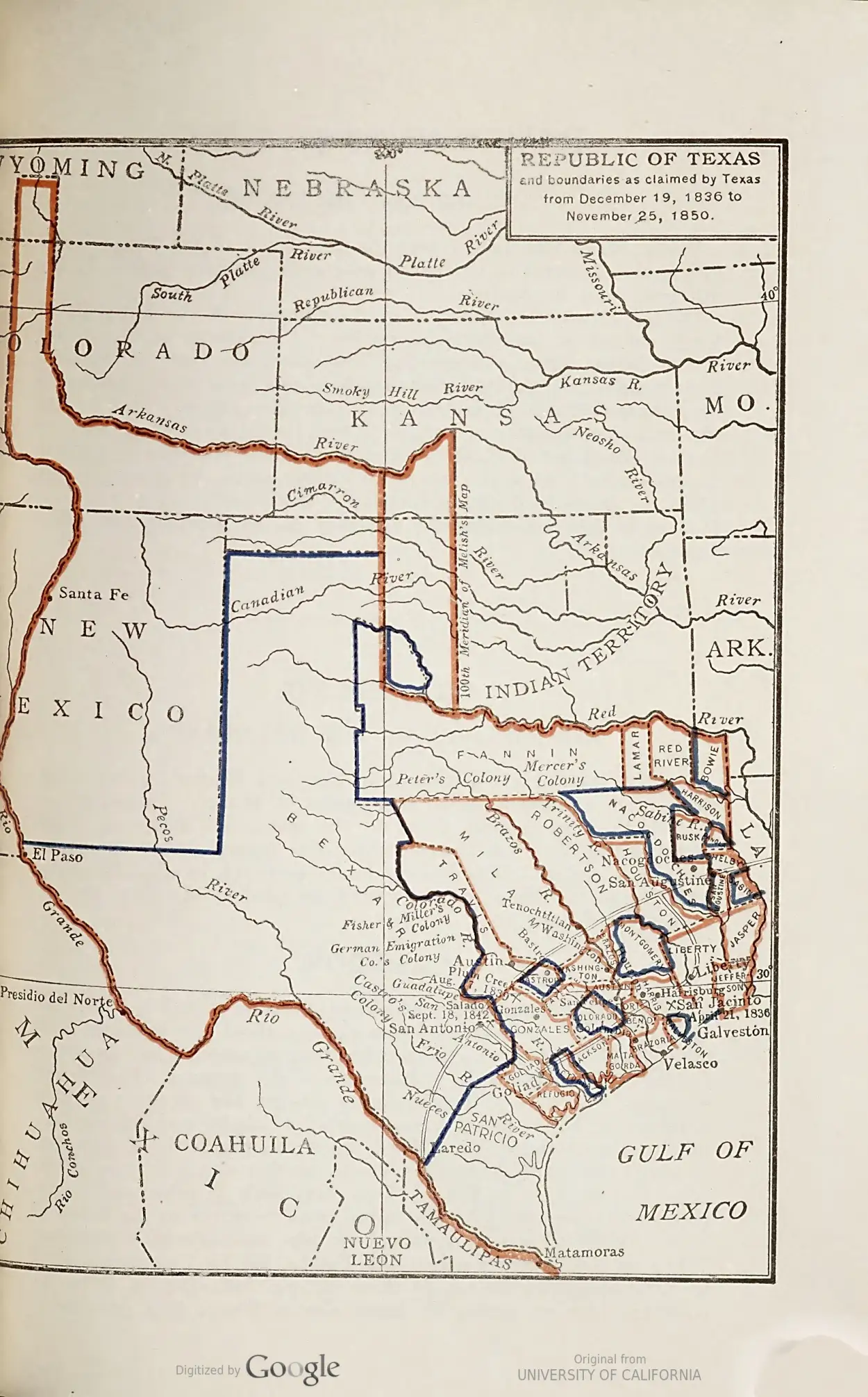
Its extent was a claim, not a territory. The republic claimed the Rio Grande as its western boundary and the 42nd parallel as its northern limit — an area of some 393,000 square miles, including much of what is now New Mexico, Colorado and Wyoming. On this map it is drawn at 374,730 square kilometres, which is about 55 per cent of the modern state of Texas: the border data follows the settled area rather than the claim, and the difference is the point.
Why did Texas revolt?
Because Mexico invited the settlers in and then changed the terms. After independence in 1821 the Mexican government encouraged Anglo-American colonisation of Texas as a buffer against the Comanche: Stephen F. Austin's first colony arrived in 1825, settlers were exempted from tariffs for years, and by 1835 there were some 30,000 of them against about 8,000 Mexican tejanos.
Then Mexico changed course. The Law of 6 April 1830 banned further immigration from the United States and instructed the government to strengthen the frontier with Mexican soldiers and settlers; General Mier y Terán's 1828 report had warned that the province was being annexed demographically. The settlers' conventions of 1832 and 1833 asked for separate statehood and the repeal of the law; Austin was imprisoned in Mexico City for carrying the petition. When Santa Anna abolished the federal constitution in 1835 and sent troops to disarm the state militias, the colonists took up arms.
The revolt was therefore both a federalist rebellion — Texans fought under the 1824 constitution and the slogan "federalism" — and a settler rebellion against a government that had decided to control its own frontier. Both readings are true, and the second explains why the republic's constitution protected slavery.
What happened in 1836?
A fast, brutal campaign. The Texans took Gonzales in October 1835 and expelled the Mexican garrison from San Antonio in December; Santa Anna marched north with a large army, and the Alamo fell on 6 March 1836 after a siege of thirteen days, with the killing of its defenders. At Goliad, on 27 March, some 340 prisoners were executed on Santa Anna's orders — an atrocity that turned the war into a fight to the death.
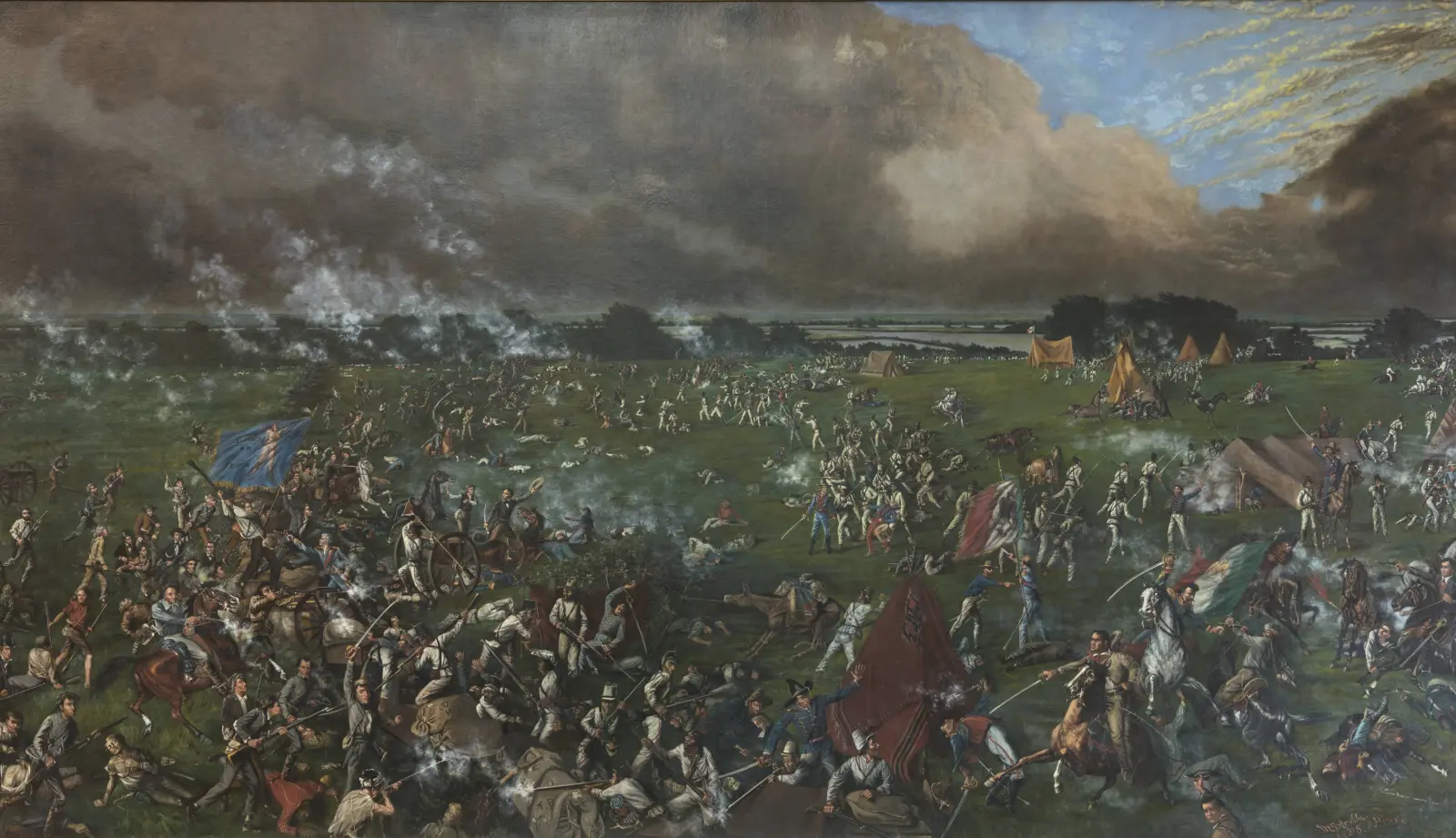
While the Alamo was under siege, a convention at Washington-on-the-Brazos declared independence on 2 March and adopted a constitution on 16 or 17 March (the sources differ). An ad interim government under David G. Burnet fled east in the Runaway Scrape, and Sam Houston retreated across Texas until he turned at San Jacinto on 21 April 1836. The battle lasted eighteen minutes; the Mexican army was destroyed, Santa Anna was captured, and Texas had its independence. The Mexican army lost some 630 killed and 730 captured against nine Texan dead, a lopsidedness that owes as much to Houston's timing — he attacked while the Mexican columns were dispersed for siesta — as to any national virtue.
The victory did not end the war. Santa Anna's signature was repudiated as soon as he was released, Mexican forces remained in the field, and the republic spent the next decade expecting an invasion that came twice, in 1842. San Jacinto gave Texas a state; it did not give it security.
What did the Treaties of Velasco settle?
Not the border. Signed on 14 May 1836, the treaties had ten public articles and six secret ones: Santa Anna agreed to withdraw his army, to cease hostilities and to recognise Texan independence, in exchange for his release. The secret articles promised him safe conduct and a port, and committed the Texans to compensate Mexican property losses.
Mexico repudiated the treaties on 20 May 1836 on the grounds that Santa Anna had signed under duress, and Santa Anna himself repudiated them once he was free. The republic then declared its boundary to be the Rio Grande, from its mouth to its source and thence north to the 42nd parallel — a claim Mexico never accepted and the United States never recognised until 1848. The United States, for its part, treated the boundary as the Nueces, some 150 miles east of the Rio Grande, which is why the war of 1846 began where it did.
How was the republic governed?
As a presidential republic with a short term and a weak centre. The constitution of 1836 created a president elected for three years (reduced to two after 1838), a bicameral Congress, a supreme court and a bill of rights, and it explicitly protected slavery. The first elections were held in September 1836; Houston became president, Burnet vice-president, and the capital moved repeatedly — Washington-on-the-Brazos, Harrisburg, Galveston, Velasco, Columbia, and finally Austin from 1839.
The government's problem was that it had the forms of a state without the revenues of one. Congress met briefly, passed ambitious laws and adjourned; the president governed by appointment and improvisation; the counties did most of the administration; and the army, the navy and the Indian frontier competed for money that never arrived. The Archives War of 1842 — a crowd in Austin firing on the officials who were removing the archives to Houston — is the republic's politics in miniature: a government fighting its own citizens over where the paperwork should live.
Who lived there?
Texans, Mexicans, enslaved Africans and Americans, and indigenous nations, in proportions that no reliable census records. The republic never took a census. The document usually called "the 1840 census of the Republic of Texas" is Gifford White's 1966 reproduction of the tax rolls of twenty-six of the thirty-two counties, and tax rolls are not population counts — they list taxable property, not people.
The best available figures are therefore estimates. There were about 30,000 Anglo settlers and some 8,000 tejanos at independence; immigration continued through the 1840s, and the enslaved population can be reconstructed from the tax records of the Texas Slavery Project: 3,097 in 1837, 11,827 in 1840 and 24,401 in 1845, against a contemporary estimate of "at least 30,000" by 1845. The republic also held free Black people, a category it treated with exceptional cruelty, and it shared the territory with the Comanche, the Cherokee, the Karankawa and others whose numbers are even less well recorded.
What was slavery's place?
Central. The constitution of 1836 protected slave property explicitly — sections 9 and 10 barred the legislature from emancipating slaves without the owners' consent and from prohibiting the importation of slaves from the United States — and the republic's economy in east Texas was built on cotton grown by enslaved labour. Without slavery there was no cotton, and without cotton there was no revenue.
The republic also banned free Black people. An Act Concerning Free Persons of Color of 5 February 1840 required any free Black person in Texas to leave, or to post a bond of $1,000 and find two sureties; those who could not were to be sold at public auction, "owned" for a year, and then enslaved for life if they did not leave. It is one of the most explicit pieces of racial legislation in American history, and it is the clearest evidence that the republic was not a liberal experiment but a slaveholding one.
What did the constitution say?
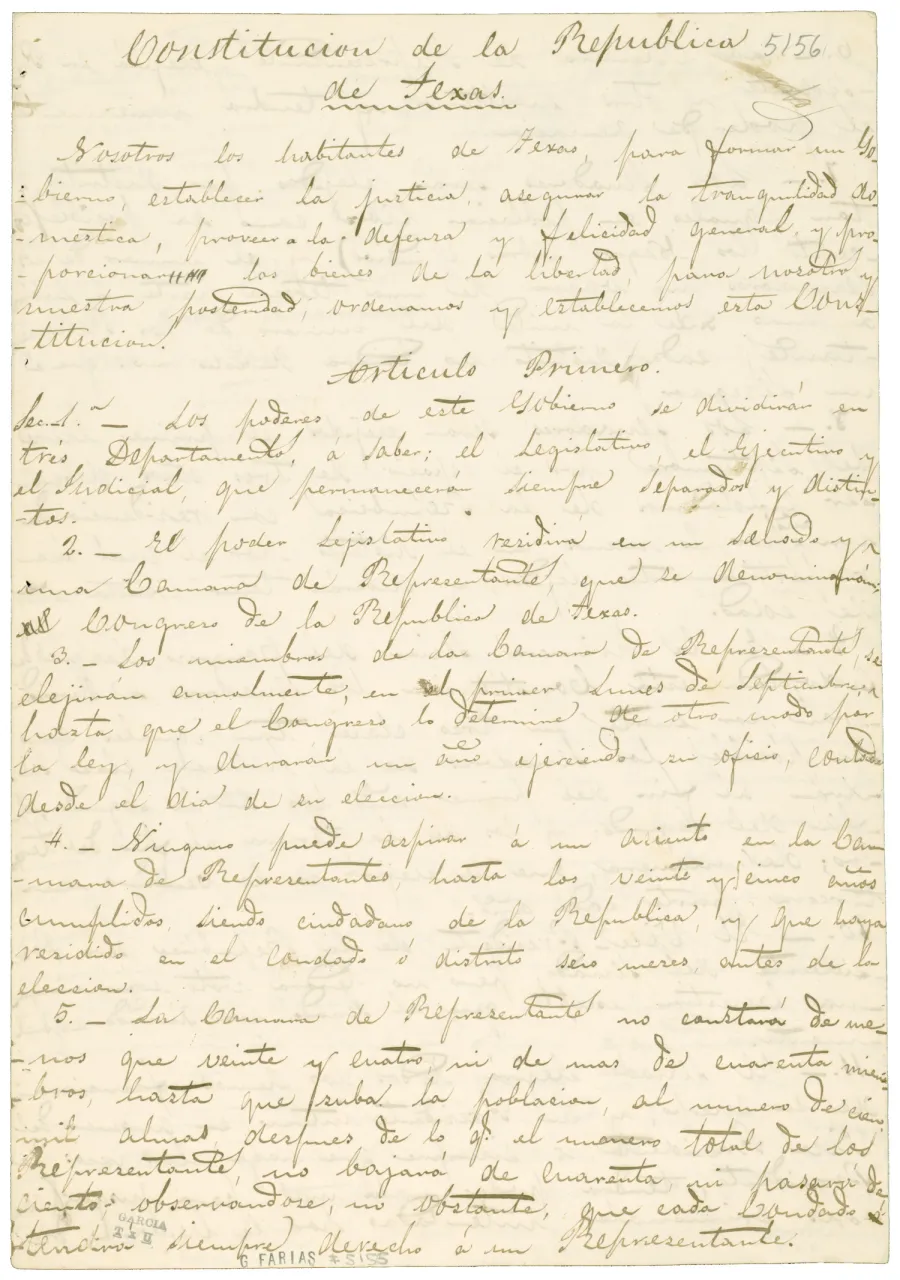
That Texas was a slaveholding republic with a liberal facade. It borrowed from the United States constitution — a president, a bicameral Congress, a supreme court, a bill of rights — and departed from it in three ways that mattered. It protected slavery explicitly, in sections 9 and 10. It excluded free Black people, by barring the legislature from permitting their residence. And it made the headright system constitutional, granting land to every head of family who had arrived before 2 March 1836.
It also made citizenship racial. The constitution defined the republic's citizens as "all persons (Africans, the descendants of Africans, and Indians excepted)", which is a sentence worth reading twice: the republic's freedom was for white men and their dependants, and everyone else was excluded from the political community by the founding document itself.
What was the land system?
The republic's main asset was land, and it gave it away. The constitution promised a headright of land to every head of family who arrived before 2 March 1836, and Congress extended headrights to soldiers, to immigrants and to officials. It annulled the huge land grants that the Mexican state of Coahuila y Tejas had made to speculators in 1834–35, and created the General Land Office to survey and register the rest.
The result was a speculative frenzy and a permanent fiscal problem. Land was the currency the government had, and it spent it: grants to soldiers, grants to settlers, grants to contractors and grants to anybody who could lobby Congress. By annexation, the public domain was the republic's only substantial asset, and the debt it had accumulated against it was between $9.95 and $12.4 million depending on which account you follow.
What was the economy like?
Cotton, cattle, customs and paper. Cotton was the export crop, grown by enslaved labour in the east and shipped through Galveston and Houston; cattle ranching expanded on the coastal prairie; and customs duties at the ports supplied 58 per cent of all government receipts. Direct taxes were assessed at $639,219 between 1837 and 1840, and more than half of that was never paid.
The government therefore borrowed and printed. It issued paper money to the value of $4,095,990, which depreciated immediately; it tried to raise $5 million in loans in the United States and Europe and failed; and it spent beyond its means, with expenditure peaking at $2,174,752 in 1840. The republic was insolvent for most of its life, and annexation was as much a financial rescue as a political choice.
What was the navy for?
Protecting the coast and paying for itself. The republic had a small navy — the flagship Austin, a handful of brigs and schooners, and later a steam packet — which fought the Mexican navy, protected the cotton trade and, in one celebrated episode, seized the Mexican port of Tabasco. It also had a "second navy" of privateers, licensed to prey on Mexican shipping, which was indistinguishable from piracy in Mexican eyes.
The navy consumed money the republic did not have and was sold off in 1843, mostly to the United States. It is a small illustration of the republic's condition: it maintained the forms of a great power — an army, a navy, a diplomatic service, a paper currency — on the revenues of a frontier province.
What was daily life like?
Frontier farming and plantation agriculture, in two different countries. In east Texas, along the rivers, the republic was a cotton frontier: plantations of a few hundred acres worked by enslaved people, shipping through Galveston and Houston, owned by families from Alabama, Mississippi and Tennessee who had moved west with their property. In central and west Texas it was small farming and ranching — maize, cattle, hogs — on land taken from the Comanche, with the threat of raids a permanent condition.
Towns were small and wooden: Austin in 1839 was a surveyor's grid with a few hundred people; Houston was a bayou landing with merchants and speculators. There was almost no coin in circulation; business ran on credit, paper and barter. Churches, schools and newspapers existed and were precarious. It was a society of young men on the make, and it had the violence to match: duels, lynchings and land frauds were ordinary features of public life.
What about the indigenous nations?
War, mostly. Sam Houston favoured treaties and trade with the Cherokee and the Comanche; Mirabeau Lamar, who succeeded him in 1838, favoured extermination and said so. Lamar's war on the Cherokee in 1839 drove them from east Texas; the Council House Fight in San Antonio in March 1840 ended a peace parley with the Comanche in a massacre — the accounts differ, with thirty warriors and about five women and children killed on one telling and thirty-five Indians and seven Texans on another — and the resulting Comanche war lasted years.
The Texas Rangers became a paramilitary force in these campaigns, and the republic's Indian policy set the pattern for the state's: removal where possible, war where necessary, and a refusal to recognise indigenous title to land the republic claimed. It was the same policy the United States was pursuing, conducted by a government that claimed to be a republic of laws.
What was the relationship with Mexico after 1836?
War by other means. Mexico never recognised the republic and never accepted the Rio Grande boundary, and it mounted two invasions in 1842 — Rafael Vásquez briefly occupied San Antonio in March, and Adrián Woll took the town again in September, prompting the flight of the tejano elite, including Juan Seguín. The republic's response, the Somervell and Mier expeditions, ended in the Black Bean Episode of March 1843, when seventeen of the surviving prisoners were shot after a lottery of black and white beans.
The republic also tried to extend itself westwards. The Santa Fe expedition of 1841, sent to assert control over New Mexico, was a disaster: its 300-odd men were captured by the Mexican army and marched to Mexico City, and the episode convinced many Texans that the republic could not defend what it claimed. Mexico, for its part, could not reconquer Texas and would not recognise it — a stalemate that made annexation by the United States the only exit.
How did the republic treat the tejanos?
As foreigners in their own country. The tejanos — Mexican Texans, some 8,000 at independence, including the Seguíns, the Navarro brothers and other families who had fought for independence — were quickly excluded from power. The constitution's citizenship clause excluded "Indians", which was used against Mexican Texans of indigenous descent; land laws and the tax system favoured English-speaking settlers; and the 1842 invasions produced a wave of suspicion and dispossession.
Juan Seguín, who had fought at San Jacinto and raised companies for the republic, was forced out of San Antonio in 1842 and fled to Mexico, where he was arrested and later fought for the other side. His career is the clearest illustration of the republic's logic: it needed tejano support to win independence and had no place for tejanos afterwards.
Why did annexation take nine years?
Because slavery made Texas a national question. The United States recognised the republic in 1837, but annexation would have added a slave state of enormous size, and the antislavery bloc in Congress blocked it. The 1844 treaty of annexation was rejected by the Senate 35 to 16. The issue was then decided by the election of 1844, which James K. Polk won on a platform of annexation, and Congress passed a joint resolution on 1 March 1845 admitting Texas as a state.
The republic's own process followed: its Congress accepted on 16 June 1845, a convention met on 4 July, and the annexation ordinance was approved by a plebiscite of 4,245 to 257. On 29 December 1845 the United States admitted Texas as the twenty-eighth state, and on 19 February 1846 the transfer of sovereignty was completed at Austin. Mexico broke off relations, and the war began in April.
How did Texas become American?
By immigration and by politics. The republic's population grew through the 1840s as families from the southern states moved west with their enslaved labour, and the slave population grew faster than the white population: from about 3,100 in 1837 to about 24,400 in 1845. That growth made Texas more valuable to the slave South and more alarming to the free North, which is why annexation became a national question rather than a local one.
The terms of annexation were unusual. Texas came in as a state, not a territory, keeping its public lands and its debt; it retained the right to divide itself into up to five states; and its boundary disputes with Mexico were left to the United States to settle, which meant war. The joint resolution of 1 March 1845 was a domestic legislative act, not a treaty, because a treaty could not have passed the Senate.
Who recognised it, and what did that mean?
The United States in 1837, France in 1839, the Netherlands and Britain in 1840, and a handful of German states. Recognition gave the republic access to credit, treaty rights and a degree of legitimacy, but not to the security it needed: Britain and France both urged Mexico to recognise Texas in exchange for its independence from the United States, and both failed, because Mexico would not accept a boundary at the Rio Grande.
Recognition also came with conditions that hurt. Britain and France pressed the republic to abolish the slave trade (not slavery), and the British consul in Texas spent years arguing for a treaty that would have ended the republic's slave-trade ties in exchange for mediation. Nothing came of it, but the episode shows how quickly slavery became the republic's diplomatic problem.
What did the republic leave behind?
A state, a debt, a set of borders and a myth. Texas entered the Union with its public land intact — alone among the states, it kept control of its own public domain — and with a boundary claim to the Rio Grande that the United States adopted in 1848. Its constitution of 1836, with its slavery clauses and its free-Black exclusion, shaped the state's law until the Civil War — when Texas joined the Confederacy — and its land system shaped the state's geography.
The myth is the Alamo and San Jacinto as a story of liberty, which is a partial truth: the Texans did fight for self-government, and many of them also fought to keep and expand slavery. The republic's own free-Black law and its constitutional protection of slave property are the part of the story the myth leaves out, and they are the part that explains why annexation took nine years.
Common myths about the Republic of Texas
| Myth | What the evidence says |
|---|---|
| The 1840 census of Texas counted the population | No census was taken: the "1840 census" is Gifford White's 1966 reproduction of tax rolls for 26 of 32 counties. |
| Texas claimed and governed to the Rio Grande | It claimed the Rio Grande to the 42nd parallel; it governed a fraction of that, and the United States treated the boundary as the Nueces. |
| The republic was a liberal democracy | It was a slaveholding republic that banned free Black immigration and enslaved free Black people who stayed. |
| Mexico recognised Texan independence at Velasco | Santa Anna signed under duress, repudiated the treaties, and Mexico voided them on 20 May 1836. |
| Annexation was quick and popular | The 1844 treaty was rejected 35–16; annexation came by joint resolution in 1845 after a national election, and by a plebiscite of 4,245 to 257. |
| The republic was bankrupt because it was small | It was bankrupt because it refused to tax, spent on war, and issued $4,095,990 in paper money. |
| The Texas Rangers were a police force | They were a paramilitary force created for the Indian wars and the border. |
| Texas was annexed as a territory | It was annexed as a state, keeping its public lands, on 29 December 1845. |
Timeline of the Republic of Texas
| Year | Event |
|---|---|
| 1825 | Austin's first colony |
| 1828 | Mier y Terán's report |
| 6 April 1830 | Law banning US immigration |
| 1832–33 | Conventions; Austin imprisoned |
| October 1835 | Gonzales; war begins |
| 2 March 1836 | Declaration of independence |
| 6 March 1836 | The Alamo falls |
| 27 March 1836 | Goliad executions |
| 16–17 March 1836 | Constitution adopted |
| 21 April 1836 | San Jacinto |
| 14 May 1836 | Treaties of Velasco |
| 20 May 1836 | Mexico voids the treaties |
| 1837 | US recognition |
| 1839 | France recognises; Lamar's Cherokee war; capital at Austin |
| 5 February 1840 | Act Concerning Free Persons of Color |
| March 1840 | Council House Fight |
| 1840 | Britain and the Netherlands recognise |
| 1841 | Santa Fe expedition |
| 1842 | Mexican invasions; Archives War |
| 1844 | Treaty of annexation rejected, 35–16 |
| 1 March 1845 | Joint resolution |
| 4 July 1845 | Convention; plebiscite 4,245–257 |
| 29 December 1845 | Statehood |
| 19 February 1846 | Transfer of sovereignty |
What the map shows next
At 1836 on the map Texas has just declared independence, and the Mexican republic is about to lose it.
At 1845 on the map Texas is about to join the United States, and the Republic of the Rio Grande is five years dead.
Common questions
- What was the Republic of Texas?
- An independent state from 1836 to 1845, created by a revolt of Anglo-American colonists and tejanos against Mexico, and annexed by the United States in 1845.
- How long did it exist?
- Nine years, eight months and eleven days, from 2 March 1836 to 19 February 1846.
- Did Mexico recognise it?
- Never. Santa Anna signed the Treaties of Velasco under duress, repudiated them, and Mexico voided them in May 1836.
- Who was the first president?
- David G. Burnet was ad interim president; Sam Houston was the first elected president, in September 1836.
- Did the republic have slavery?
- Yes. The 1836 constitution protected slave property, and the enslaved population rose from about 3,100 in 1837 to about 24,400 in 1845.
- Did it have a census?
- No. The "1840 census" is a 1966 reproduction of tax rolls from 26 counties.
- How large was it?
- It claimed about 393,000 square miles, from the Rio Grande to the 42nd parallel; the map draws 374,730 km², roughly 55 per cent of modern Texas.
- Why did annexation take nine years?
- Because annexing Texas meant adding a large slave state, and the antislavery bloc blocked it until the election of 1844.
- What happened to free Black people in Texas?
- An 1840 law required them to leave or post a $1,000 bond; those who could not were sold, "owned" for a year, and then enslaved for life.
- What did Texas keep when it joined the Union?
- Its public lands — alone among the states — and its claim to the Rio Grande.
Sources
Every source below was consulted while writing this entry.
Every source below was consulted while writing this entry.
Primary and official sources
- The Texas Declaration of Independence, 2 March 1836.
- The Constitution of the Republic of Texas, 1836, sections 9 and 10.
- The Treaties of Velasco, 14 May 1836, public and secret articles.
- The Act Concerning Free Persons of Color, 5 February 1840 (Gammel).
- The joint resolution of annexation, 1 March 1845.
- Texas State Library and Archives Commission, on the republic's records and the annexation.
- Handbook of Texas (Texas State Historical Association), on the constitution, land grants, census records and the campaigns.
- NARA and the US State Department historian, on the boundary and annexation.
Scholarship and reference works
- E. T. Miller, A Financial History of Texas (1916), read in full.
- Randolph B. Campbell, on slavery and the census records.
- Andrew J. Torget, Texas Slavery Project database (UVA), county totals 1837–45.
- Gifford White, The 1840 Census of the Republic of Texas (1966), used as what it is: tax rolls.
- Mier y Terán's 1828 report.
Data sources for the map
- Cliopatria v0.12 (Seshat Global History Databank, CC BY 4.0).
- Historical Basemaps (GPL-3.0).
This entry was written from the sources above and last updated .
Text available under CC BY-SA 4.0: reuse it with a credit to The World Through Time and a link to this page.
Border geometry for the map itself comes from Cliopatria v0.12 (Seshat Global History Databank, CC-BY-4.0).
See the Republic of Texas in its world
Open the atlas at 1840 and every neighbour, rival and successor is on screen with it — then drag the slider and watch what happens next.
Open the map at 1840 →