The Livonian War was the longest war of sixteenth-century Russia. It began in January 1558, when Ivan IV, known as Ivan the Terrible, sent an army into Livonia, the land of the Teutonic Knights' Livonian branch in what is now Estonia and Latvia. It ended a quarter of a century later with two truces: with Poland–Lithuania in January 1582 and with Sweden in August 1583. At first Ivan's armies swept the old order away. The Livonian Order collapsed, and its lands were divided between Poland–Lithuania, Sweden, Denmark and Russia. But the war widened into a struggle against all three northern powers at once, and under the Polish king Stefan Batory it turned against Russia. In the end Ivan gave up every Livonian conquest, Sweden took Narva and the Russian forts on the Gulf of Finland, and the north-west of Russia was left half empty.
The Livonian War at a glance
| Dates | 22 January 1558 – August 1583 |
| Russia's opponents | The Livonian Confederation; Poland–Lithuania (from 1569 the Polish–Lithuanian Commonwealth); Sweden; for a time Denmark |
| Russian allies | Duke Magnus of Holstein, "King of Livonia" (1570–1577); Denmark for part of the war |
| Turning points | Fall of Narva and Dorpat (1558); Ermes (1560); Polotsk (1563); Stefan Batory's campaigns (1579–1581); siege of Pskov (1581–1582) |
| End | Truce of Yam-Zapolsky (Kiverova Gorka), 15 January 1582; Truce of Plussa, August 1583 |
| Result | Russia lost all its Livonian conquests and, until 1590–1595, its forts on the Gulf of Finland |
Why did the Livonian War begin?
The formal cause was money. Under a treaty of 1554, Livonia agreed to a fifteen-year truce with Moscow. The Bishop of Dorpat (Russian Yuryev, today Tartu) was to collect a tribute for the tsar from the whole Dorpat region, "of one German mark for every person", and deliver it with arrears in the third year. The roots of this "Yuryev tribute" went back to a treaty between Pskov and Dorpat in 1463. In December 1557 the Livonian envoys came to Moscow without the money. The Nikon chronicle states the official reason for war: Ivan sent his army "against the Master of Livonia and the whole land of Livonia because they had sworn to bring the tribute … and did not do it".
Behind the tribute lay larger interests. Livonia's towns, Riga, Reval (Tallinn) and Narva, were the middlemen of the trade between Russia and the West, and they guarded that position: from 1539 Riga and Reval banned foreign merchants from trading directly with Russians. The Livonian Confederation itself was weak. It was a loose league of the Livonian Order, the Archbishop of Riga and several bishops, divided among themselves. In 1556–1557 a quarrel over the archbishop's coadjutor brought in the Polish king, Sigismund II Augustus. On 5 September 1557, at Pozwol, the Order made a treaty with Poland–Lithuania that included a secret alliance against Moscow. For Moscow, a Livonia under Polish protection was a threat, and a Livonia that could not defend itself was an opportunity.
Historians disagree: was it a war for the Baltic?
The traditional answer, from the nineteenth-century historian Sergei Solovyov to Soviet textbooks, is that Ivan fought "for an outlet to the Baltic Sea". The Orthodox Encyclopaedia still sees control of the Baltic trade routes as the main cause. The historian Alexander Filyushkin, in the Great Russian Encyclopedia (2023), argues against it: "Since the end of the 15th century the Russian state had this outlet." It held the coast of the Gulf of Finland from the Narva to the mouth of the Neva, but with only three small landing places, at Ivangorod, the Neva mouth and Oreshek, far behind the Livonian ports. In his view Moscow wanted Livonia's developed ports and its land, not a coastline. Other historians, among them Alexei Penskoy, stress that the Livonian front was never Ivan's only priority: the threat from the Crimean Khanate in the south mattered as much.
How did the war begin in 1558?
The war opened on 22 January 1558 with a winter raid. A Russian army, largely made up of Tatar cavalry, ravaged eastern Livonia for several weeks and withdrew. According to the Great Russian Encyclopedia, its aim was to force the Order to pay the tribute; at first the Russians did not try to take towns.
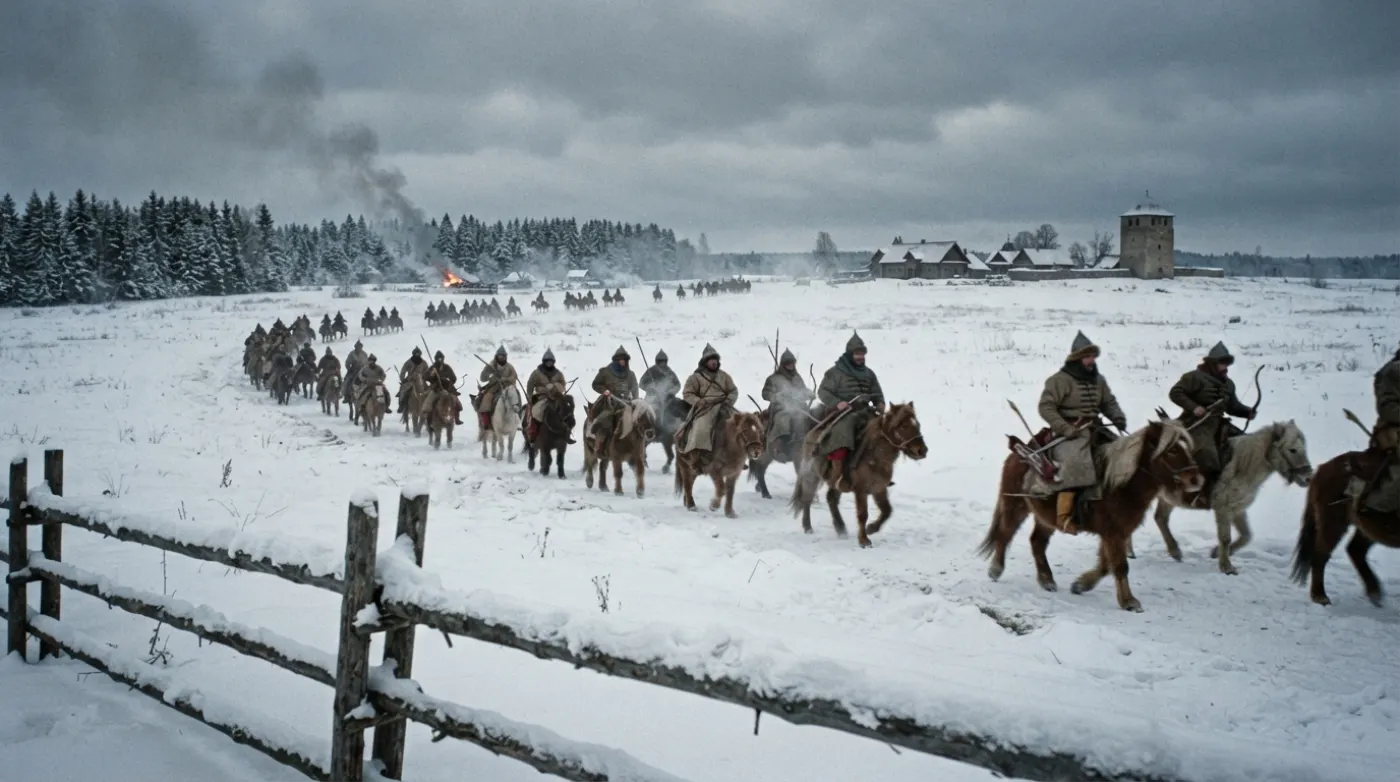
The first great prize fell almost by accident. Narva faced the Russian fortress of Ivangorod across the river Narva, and the two garrisons had been exchanging fire. The Nikon chronicle reports that "on the 11th day of May, a Wednesday, a fire broke out in Rugodiv [Narva] and began to burn in many places". The Russians crossed the river in the confusion and took the town. The Reval chronicler Balthasar Russow gives 12 May. Moscow now changed its strategy and set out to take and hold Livonian towns. Narva became its own port, and until 1581 western ships could sail there directly.
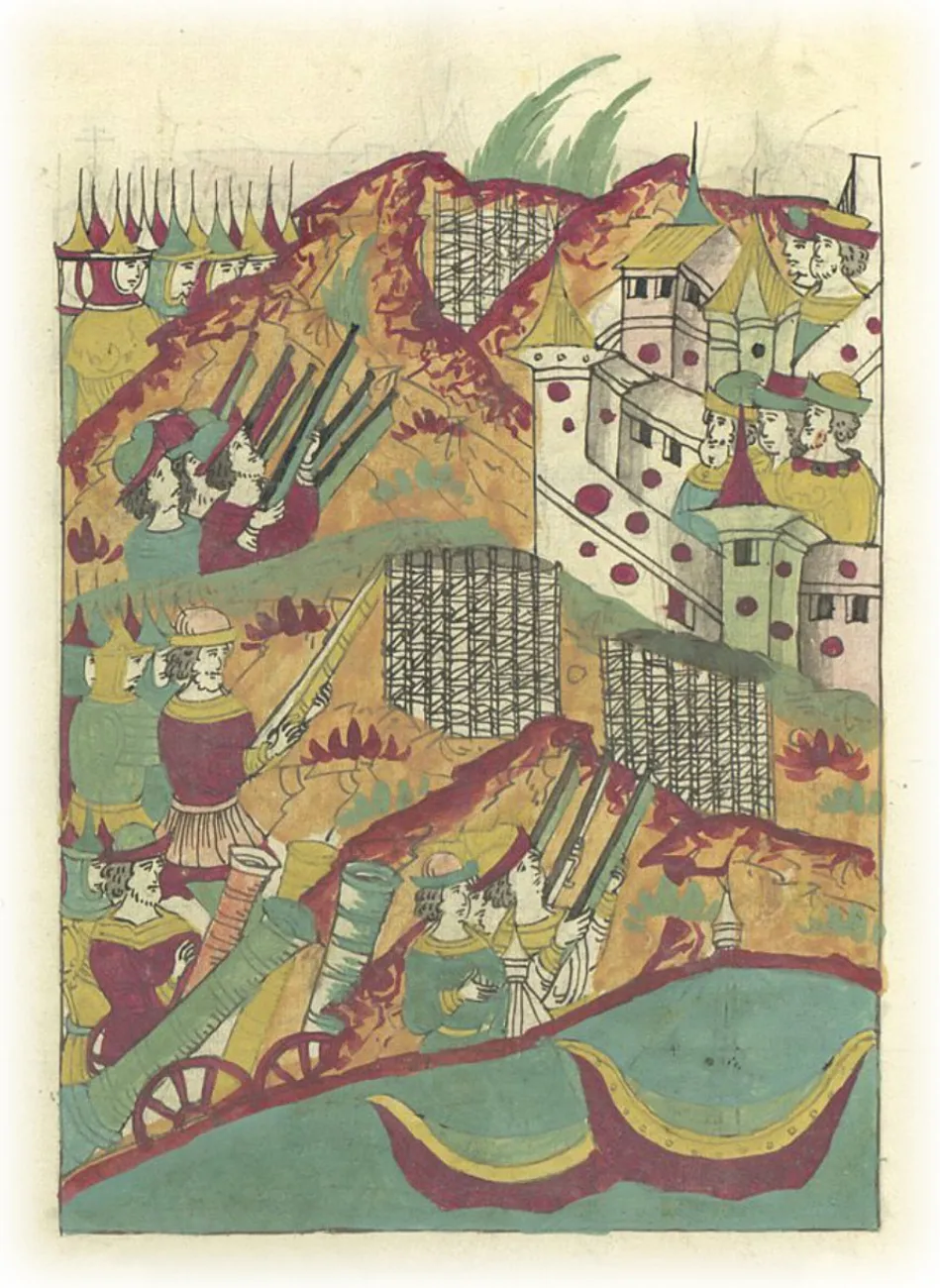
In the summer a larger army under Prince Pyotr Shuisky besieged Dorpat. The town capitulated on 18 July 1558 and was handed over the next day, which is why chronicles waver between the two dates. According to the historian Robert Frost, the Russians found 552 guns in its armoury. By the official chronicle's count, twenty towns were taken in 1558.
How did the Livonian Order collapse?
The Order looked for protectors everywhere: Denmark, Sweden, the Empire and Poland. A Danish mediation brought a six-month truce in the spring of 1559. On 31 August 1559 the Order placed itself under the protection of Sigismund II Augustus.
The decisive blow came on 2 August 1560 at Ermes (today Ērģeme in Latvia). A Russian army, commanded by Prince V. I. Barbashin or, by other accounts, Prince Pyotr Shuisky, destroyed the Order's last field army. The Landmarschall, Philipp Schall von Bell, was captured and later executed in Moscow. Frost's verdict is that "Ermes sealed the fate of the Order, which had long since lost its raison d'être". On 21 August the great castle of Fellin (Viljandi) fell, and with it the former Master, Wilhelm von Fürstenberg.
Livonia now broke apart. In June 1561 Reval and the nobles of northern Estonia swore allegiance to Erik XIV of Sweden. The island of Ösel had already passed to Duke Magnus of Holstein, brother of the Danish king. On 28 November 1561, by the Second Treaty of Vilnius, the last Master, Gotthard Kettler, dissolved the Order. Its remaining lands went to Poland–Lithuania, and Kettler became Duke of Courland and Semigallia, the Polish king's vassal. "The Northern Crusade was over," Frost writes; "the Northern Wars had begun."
Why did Russia fight Lithuania for Polotsk?
With the Order gone, Ivan faced Lithuania directly. His greatest success came in the winter of 1562–1563, when he led an army against Polotsk, a large Lithuanian city on the Western Dvina. The chronicle reports its fall precisely: "on the 15th day of February, a Monday, two hours before evening", the tsar's commanders rode into the city.
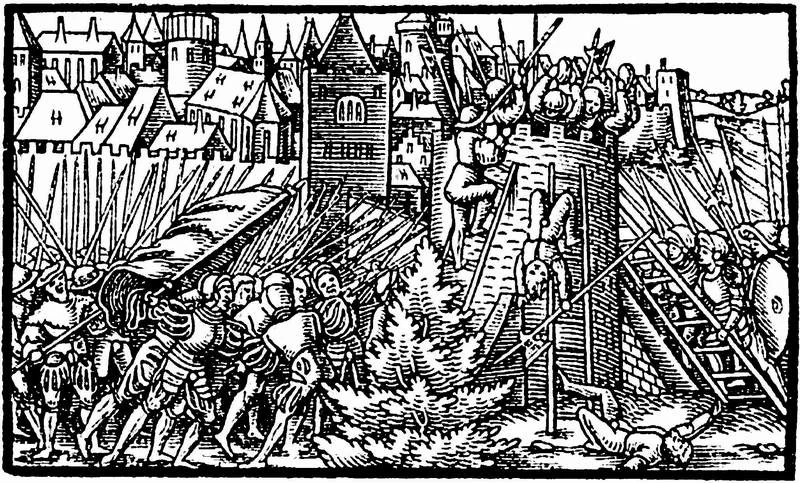
What followed shows the war's religious edge. According to the Orthodox Encyclopaedia, the Book of Degrees, an official history compiled in Ivan's reign, says the tsar consigned "the God-killing Jews to final destruction", and the chronicle of Abbot Kornily of the Pskov Caves Monastery says that members of the Jewish community who refused baptism were thrown with their families into the river.
The news travelled fast. Filyushkin counts about ten German leaflets on the fall of Polotsk. One, dated 9 March, shows that "within three weeks the news reached Nuremberg". These leaflets, with their stories of Muscovite cruelty, shaped how Western Europe saw Russia for generations.
The tide soon turned. On 26 January 1564 the Lithuanian commander Mikołaj Radziwiłł "the Red" destroyed a Russian army on the river Ula, and later that year the Russians were defeated near Orsha. On the night of 30 April 1564, Prince Andrei Kurbsky, one of Ivan's leading commanders and governor of Dorpat, fled to Lithuania. Within a year Ivan had set up the oprichnina, his regime of terror. At the end of June 1566 an assembly of the realm met in Moscow to discuss whether to go on with the war against Lithuania.
What was the Kingdom of Livonia?
In 1569 the Union of Lublin turned Poland and Lithuania into a single Commonwealth, and in 1570 Moscow agreed a three-year truce with it. Ivan now tried to win Livonia through a puppet. In June 1570 Duke Magnus came to Moscow, swore an oath to the tsar and was proclaimed "King of Livonia". He owed Ivan a force of 3,000 men.
The kingdom achieved little. Magnus and Russian troops besieged Swedish Reval from August 1570 for some eight months and failed. A second siege in early 1577 failed too. In the summer of 1577 Ivan led his last great campaign into Livonia, taking more than twenty towns. At Wenden (Cēsis), the Order's old capital, 300 men, women and children, Frost writes, "locked themselves in a tower and blew themselves up with four tons of gunpowder" rather than surrender. Magnus himself soon went over to the other side.
The reversal came at Wenden in October 1578. A Polish-Lithuanian and Swedish force surprised the Russian army besieging the town on 21 October. The pre-revolutionary Russian Military Encyclopaedia records that the Russians lost all their artillery, seventeen guns, and that the gunners, "not wishing to be taken prisoner, hanged themselves on their guns". Frost puts the guns at over twenty.
How did Stefan Batory turn the war?
In 1576 the Commonwealth elected a new king, Stefan Batory, prince of Transylvania. He was an able soldier, and he changed the strategy. Instead of fighting town by town in Livonia, he struck at Russia itself, with an army that included mercenaries from across Europe.
His first campaign set out on 3 June 1579 and retook Polotsk at the end of August: on 30 August according to the Orthodox Encyclopaedia and Frost, on 1 September according to the Great Russian Encyclopedia. In 1580 he took Velizh on 6 August and Velikiye Luki on the night of 5–6 September, where the town was sacked after terms had been agreed. In November 1580 the Swedes took Korela on Lake Ladoga.
How did Pskov survive the siege of 1581–1582?
Batory's third campaign aimed at Pskov, the great fortress of Russia's north-west. If it fell, Moscow could neither hold Livonia nor recover it. The Pskov chronicle records the siege day by day: "On the 18th day of August, on the feast of the holy martyrs Florus and Laurus, Lithuania came to Pskov." On 26 August the city was closely invested. On 7 September the bombardment began, and on 8 September, the feast of the Nativity of the Virgin, came the great assault, which was beaten off "in the third hour of the night".
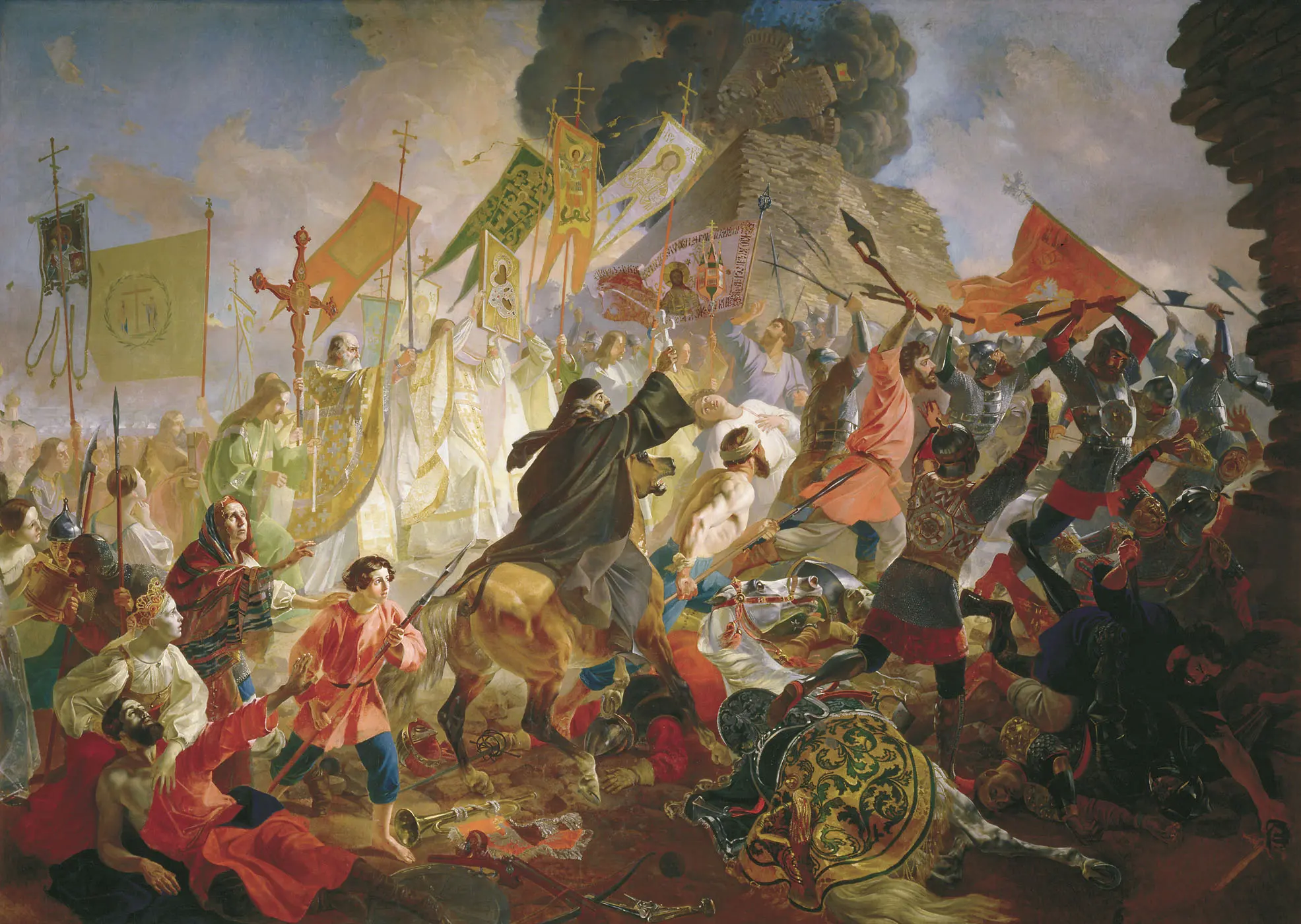
The city held. On 2 November the besiegers tried to attack across the frozen river Velikaya; on 6 November the defenders made a sortie. On 1 December Batory left for Lithuania, handing command to his chancellor, Jan Zamoyski. On 17 January 1582 a courier reached Pskov with news that peace had been made, and on 4 February Zamoyski withdrew.
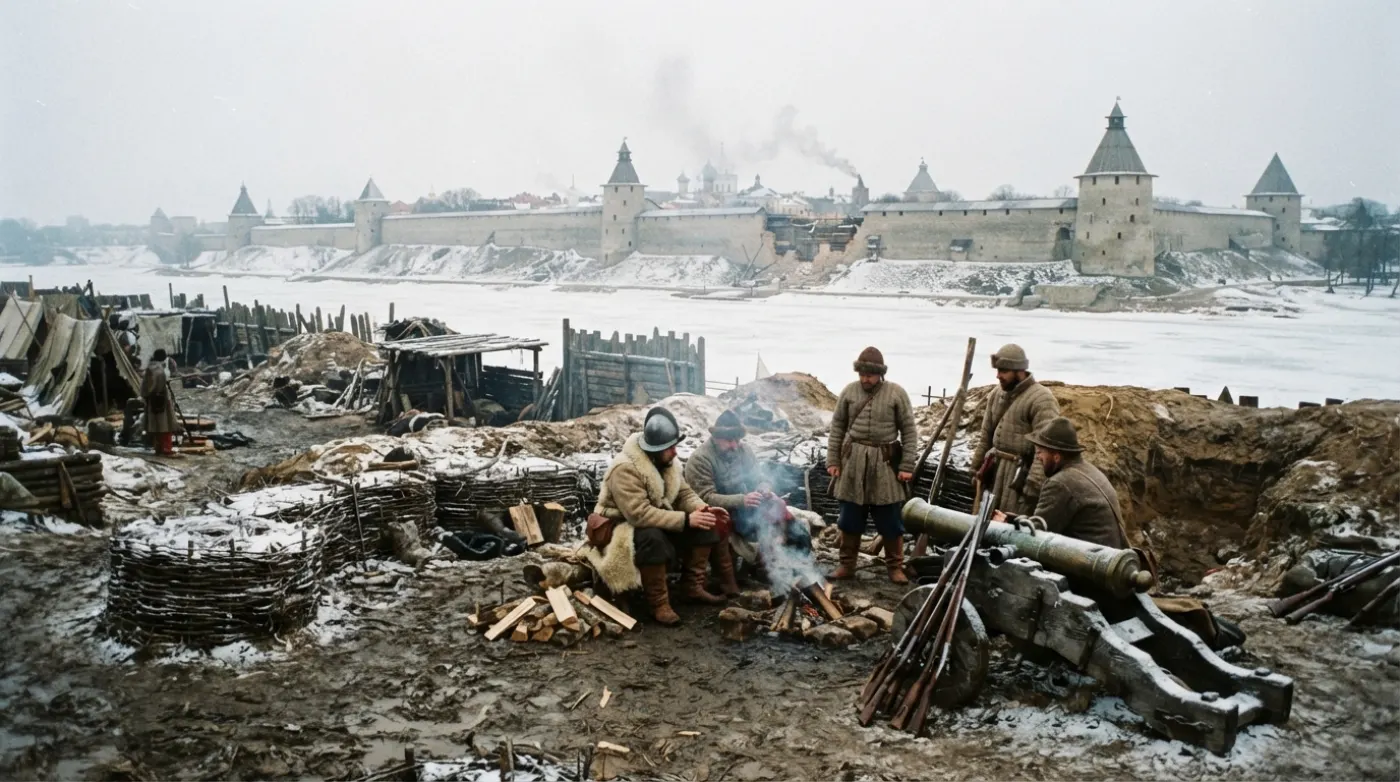
How large the armies were is uncertain. The Russian Tale of the Coming of Stefan Batory to Pskov gives Batory 100,000 men, and the nineteenth-century historian Nikolai Kostomarov even 170,000. The historian Valery Nikulin, reviewing the evidence in 2012, concluded only that Batory's army outnumbered the defenders "at least 2 to 2.5 times".
How did the war end?
Pskov did not fall, but, as Frost puts it, Batory's strategy succeeded, "perhaps too successful, since the intense pressure on this vital nerve-centre of Muscovite power opened the way to a spectacular Swedish campaign led by Pontus de la Gardie". On 6 September 1581 the Swedes stormed Narva. Russow wrote that about 7,000 people were killed, soldiers, nobles and townspeople with their wives and children, "as the Russians themselves admitted".
Ivan had already turned to Rome. The papal legate Antonio Possevino, a Jesuit, reached the tsar at Staritsa on 18 August 1581 and then went to Batory's camp at Pskov. Under his mediation, talks opened on 13 December 1581 at the village of Kiverova Gorka, near Yam Zapolsky. On 15 January 1582 a ten-year truce was concluded. Russia gave up all its Livonian conquests, and Batory returned the Russian towns he had taken. The agreement is known as the Truce of Yam-Zapolsky, although, as a 2011 study points out, the talks actually took place at Kiverova Gorka.
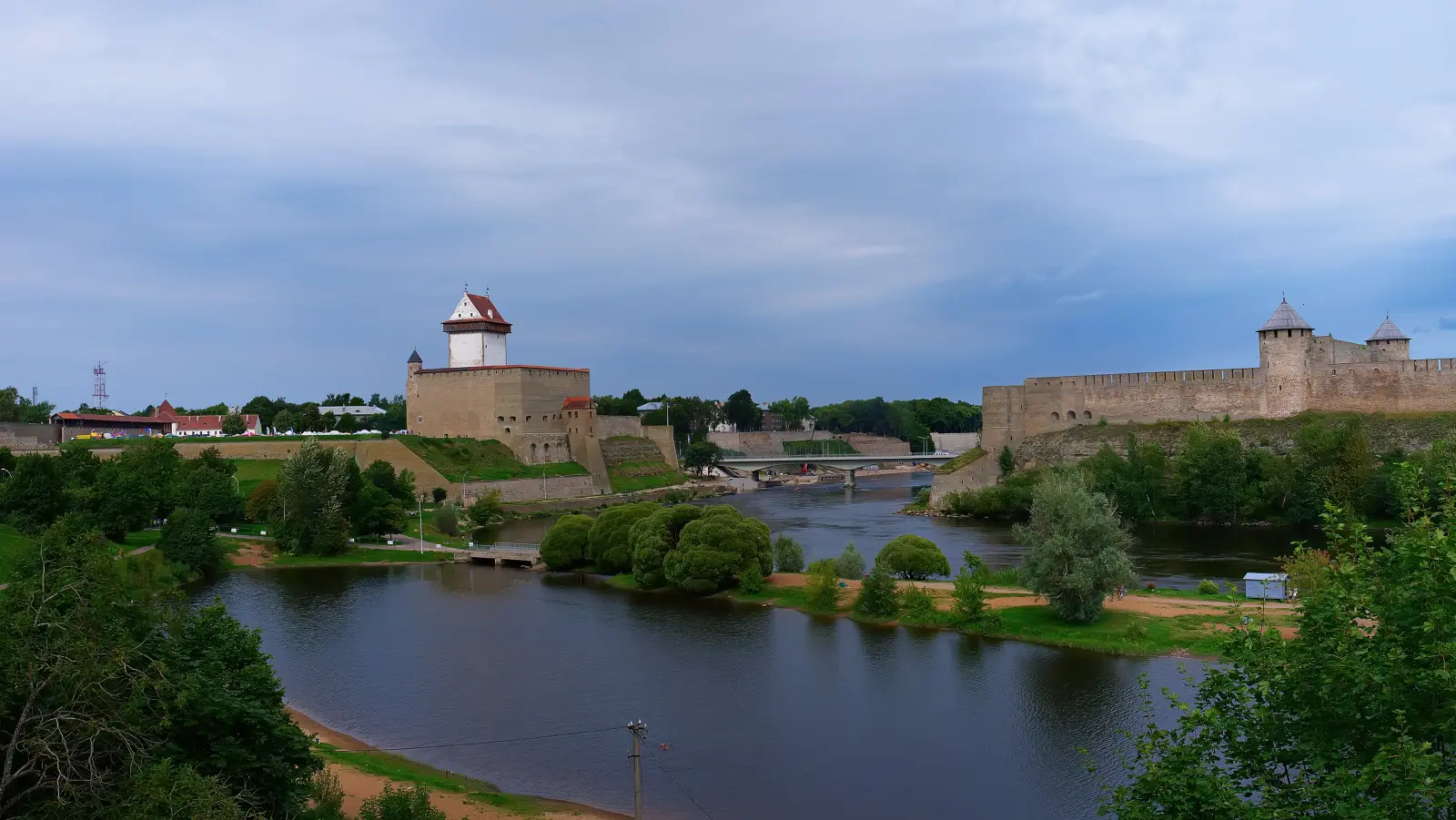
The war with Sweden ended in August 1583 with a three-year truce on the river Plyussa. Sweden kept not only its Livonian gains but also Narva, Ivangorod, Yam, Koporye and Korela. Russia recovered the Ingrian forts only in a new war of 1590–1595.
Historians judge the peace differently. The Soviet editor of Possevino's writings concluded that his mediation "did not improve its terms in the least", and that the Vatican's real aim was to draw the tsar into an anti-Ottoman league and church union. Filyushkin, in the Great Russian Encyclopedia, calls the truce of 1582 "a major diplomatic success" for Russia, because it ended the war without the loss of Russian lands.
What did the war cost Russia?
The heaviest losses were not on the map. By the early 1580s, according to the Orthodox Encyclopaedia, only "20.9 per cent" of the mid-century population was left in the Novgorod land "by various estimates". Frost, drawing on the land surveys of 1585–1588, writes that the rural population of the Novgorod district had been "reduced fivefold", and that the Pskov area had fallen from about 110,000 people in 1500 to 18,000 in the 1580s. War was only one cause. The oprichnina, the sack of Novgorod in 1570, famine and plague all played their part.
The burden fell on the gentry who made up Ivan's army. In the last years of the war, the Orthodox Encyclopaedia notes, evasion of service "began to take on a mass character". The crisis that followed Ivan's death, culminating in the Time of Troubles, had some of its roots here.
Common myths about the Livonian War
| Myth | What the evidence says |
|---|---|
| Ivan went to war to "cut a window to the Baltic" | Russia already held part of the Gulf of Finland; the formal cause was the unpaid Dorpat tribute, and historians still debate the real aims |
| The war began with the capture of Narva | It began with a winter raid on 22 January 1558; Narva fell on 11 May after a fire |
| Batory brought 100,000 or 170,000 men to Pskov | These are figures from a Russian tale and a 19th-century historian; modern estimates only say he outnumbered the defenders two or more times |
| The "Peace of Yam-Zapolsky" | It was a ten-year truce, and it was negotiated at Kiverova Gorka |
| Russia lost large territories | It lost its conquests in Livonia; the Russian forts taken by Sweden were recovered in 1590–1595. The real cost was depopulation |
| The atrocity leaflets were pure propaganda | Frost calls much of them "lurid exaggeration or crude propaganda", but adds that the accounts "cannot be written off as mere literary constructs" |
Timeline of the Livonian War
| Date | Event |
|---|---|
| 1554 | Treaty sets the Dorpat tribute and a 15-year truce |
| 5 September 1557 | Treaty of Pozwol between the Order and Poland–Lithuania |
| 22 January 1558 | Russian winter raid into Livonia |
| 11 May 1558 | Narva taken |
| 18–19 July 1558 | Dorpat surrenders |
| 2 August 1560 | Battle of Ermes |
| June 1561 | Reval submits to Sweden |
| 28 November 1561 | Livonian Order dissolved; Duchy of Courland created |
| 15 February 1563 | Polotsk taken by Ivan IV |
| 26 January 1564 | Lithuanian victory on the Ula |
| 30 April 1564 | Prince Kurbsky flees to Lithuania |
| 1569 | Union of Lublin |
| June 1570 | Magnus proclaimed King of Livonia |
| 1577 | Ivan's last Livonian campaign; Wenden blown up |
| 21 October 1578 | Russian defeat at Wenden |
| 30 August 1579 | Batory retakes Polotsk |
| 5–6 September 1580 | Velikiye Luki falls |
| 18 August 1581 | Siege of Pskov begins |
| 6 September 1581 | Swedes storm Narva |
| 15 January 1582 | Truce with Poland–Lithuania (Yam-Zapolsky) |
| 4 February 1582 | Siege of Pskov lifted |
| August 1583 | Truce of Plussa with Sweden |
What the map shows
At 1558 the Livonian Confederation still lies between the Tsardom of Russia and the Baltic, with the Kingdom of Sweden across the Gulf of Finland and Denmark–Norway holding interests in the region. By 1580 the Polish–Lithuanian Commonwealth under Stefan Batory is pushing into Russia itself. For the tsar who started the war, see our article on Ivan the Terrible.
Sources
Primary sources
- Nikon Chronicle and its continuation, Polnoe sobranie russkikh letopisei, vol. 13, parts 1–2 (St Petersburg, 1904–1906)
- Pskovskie letopisi, ed. A. N. Nasonov, vol. 1 (Moscow and Leningrad, 1941): https://archive.org/details/pskovskieletopisivyp165
- Balthasar Russow, Chronica der Provintz Lyfflandt, in Scriptores rerum Livonicarum, vol. 2 (Riga and Leipzig, 1848): https://archive.org/details/ScriptoresRerumLivonicarum21848
- Antonio Possevino, Istoricheskie sochineniia o Rossii XVI v., trans. L. N. Godovikova (Moscow, 1983)
Studies and reference works
- A. I. Filyushkin, "Livonskaia voina 1558–1583", Bol'shaia rossiiskaia entsiklopediia (online, 2023)
- B. N. Florya, "Livonskaia voina" and "Ioann IV Vasil'evich", Pravoslavnaia entsiklopediia
- R. I. Frost, The Northern Wars: War, State and Society in Northeastern Europe, 1558–1721 (Harlow: Longman, 2000)
- W. Urban, "The Origin of the Livonian War, 1558", Lituanus 29:3 (1983)
- A. I. Filyushkin, "Evropeiskaia propaganda o vziatii Polotska v 1563 g." (2012), via CyberLeninka
- V. N. Nikulin, on the numbers at the siege of Pskov (2012), via CyberLeninka
- Z. A. Lurie, S. S. Smirnova, A. I. Filyushkin et al., on the location of Kiverova Gorka (2011), via CyberLeninka
- "Venden", Voennaia entsiklopediia (St Petersburg: Sytin, 1911–1915), via ru.wikisource
Image credits
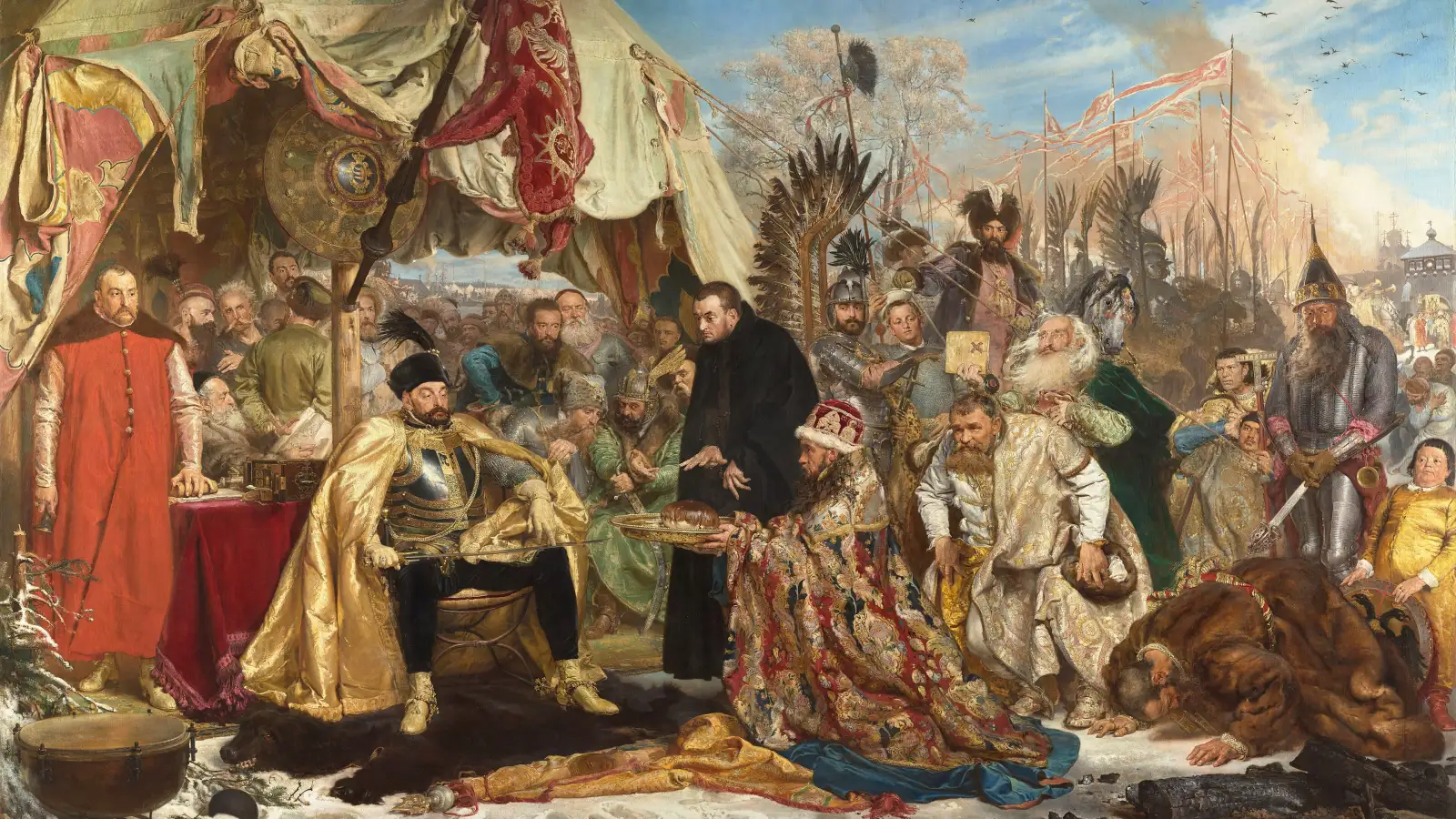
- Title image: Jan Matejko, Stephen Báthory at Pskov, 1872, Royal Castle, Warsaw. Public domain, via Wikimedia Commons, cropped to 16:9.
- Siege of Dorpat, Illustrated Chronicle of Ivan IV. Public domain, via Wikimedia Commons.
- Title woodcut of the Augsburg leaflet on Polotsk, 1563. Public domain, via Wikimedia Commons.
- Karl Bryullov, Siege of Pskov, 1839–1843, State Tretyakov Gallery. Public domain, via Wikimedia Commons.
- Narva and Ivangorod, photo by Canes, 2013, CC BY-SA 3.0, via Wikimedia Commons.