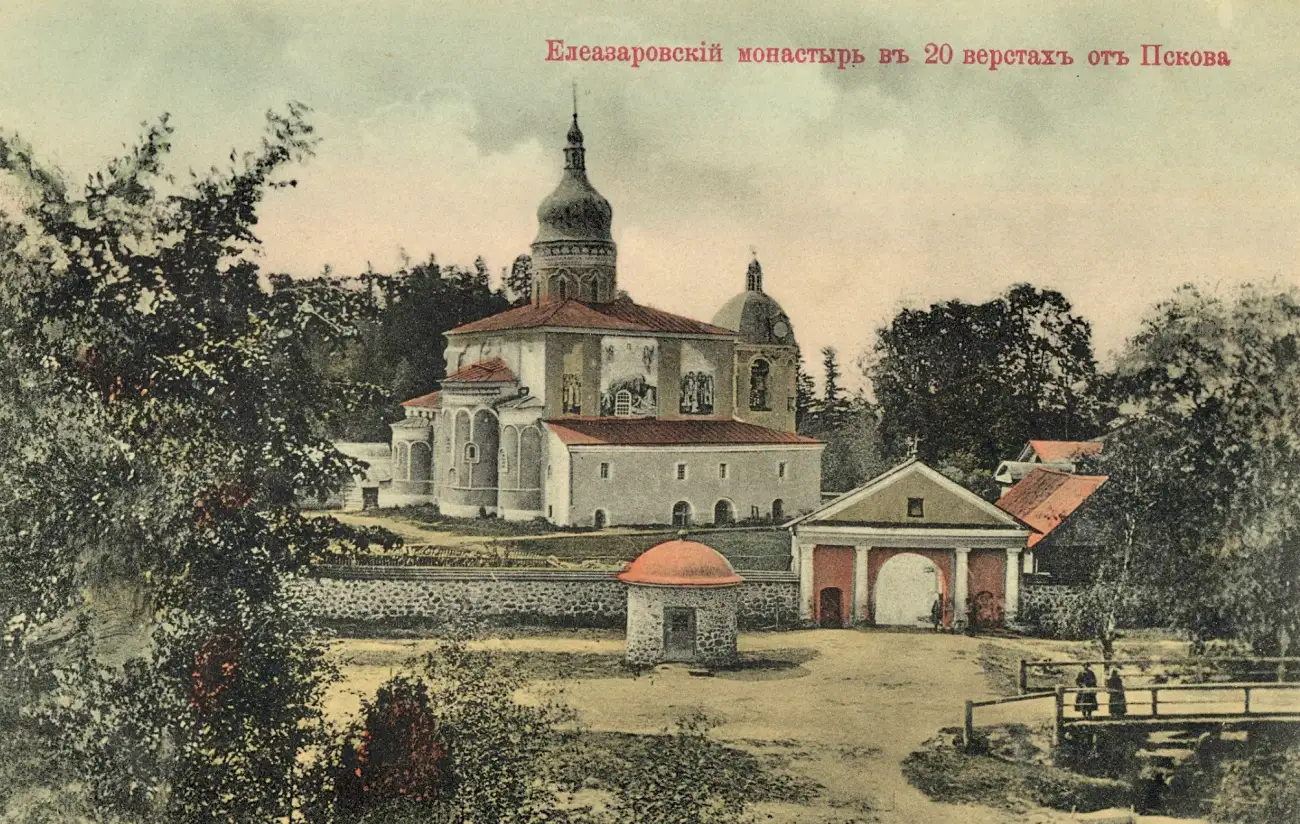
"Moscow, the Third Rome" is the idea that after the fall of Rome and of Constantinople, the "second Rome", the true Christian empire passed to Muscovite Russia. Its classic wording comes from a letter written around 1523–1524 by Filofei, a monk of the Eleazarov monastery near Pskov: "two Romes have fallen, the third stands, and a fourth there shall not be." The phrase has often been treated as the key to Russian history, the ideology behind Moscow's tsars and even behind Soviet and modern Russian expansion. Historians now read it much more narrowly. Filofei was warning his ruler, not boasting; the idea was officially used only once in Muscovite times, in 1589; and its fame as a state doctrine was largely created in the nineteenth and twentieth centuries.
Moscow, the Third Rome at a glance
| Classic formula | "Two Romes have fallen, the third stands, and a fourth there shall not be" |
| First known text | Filofei's letter to the state secretary Misiur' Munekhin, end of 1523 – early 1524 |
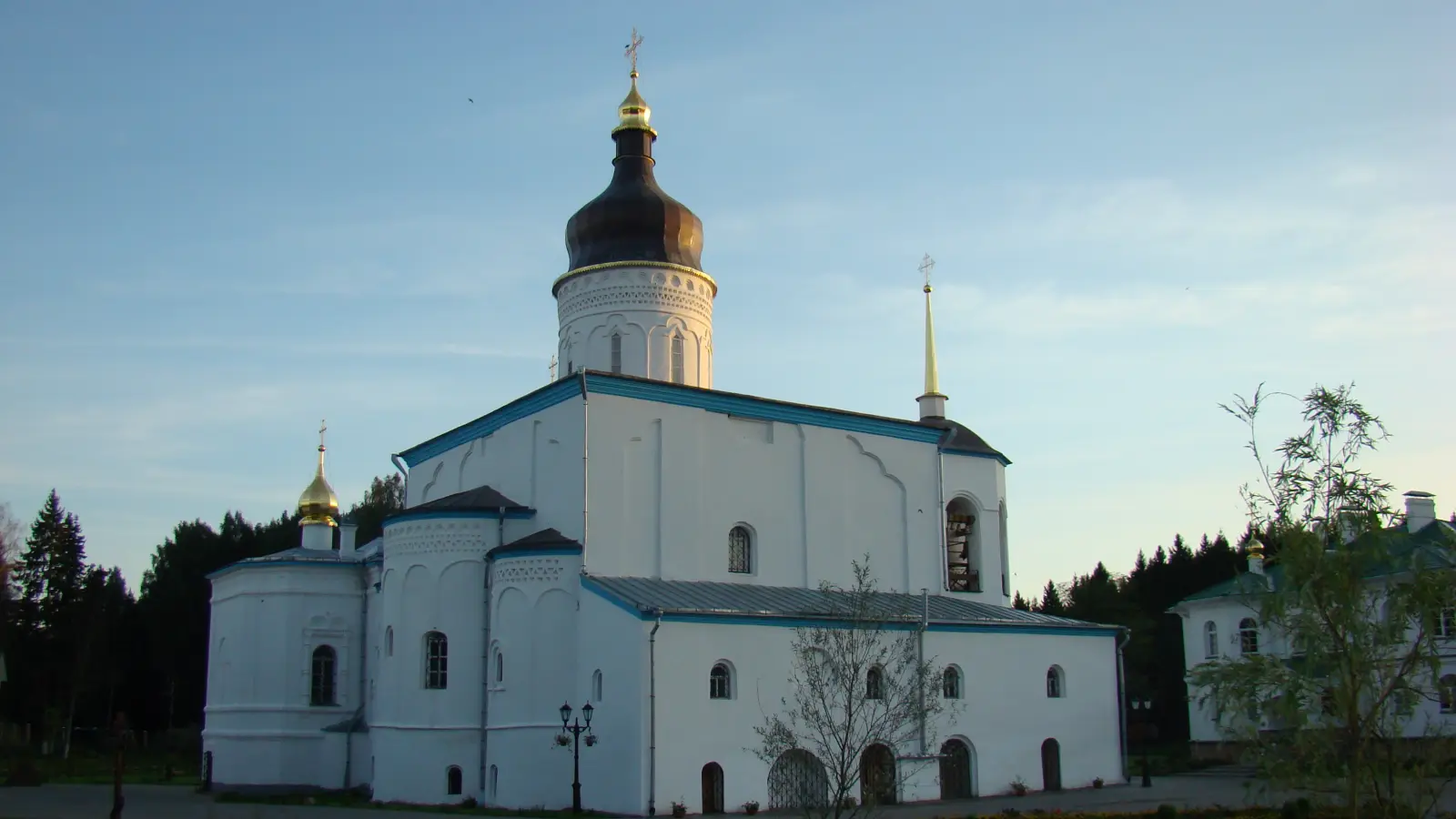
| Author | Filofei, monk (later possibly hegumen) of the Eleazarov monastery near Pskov |
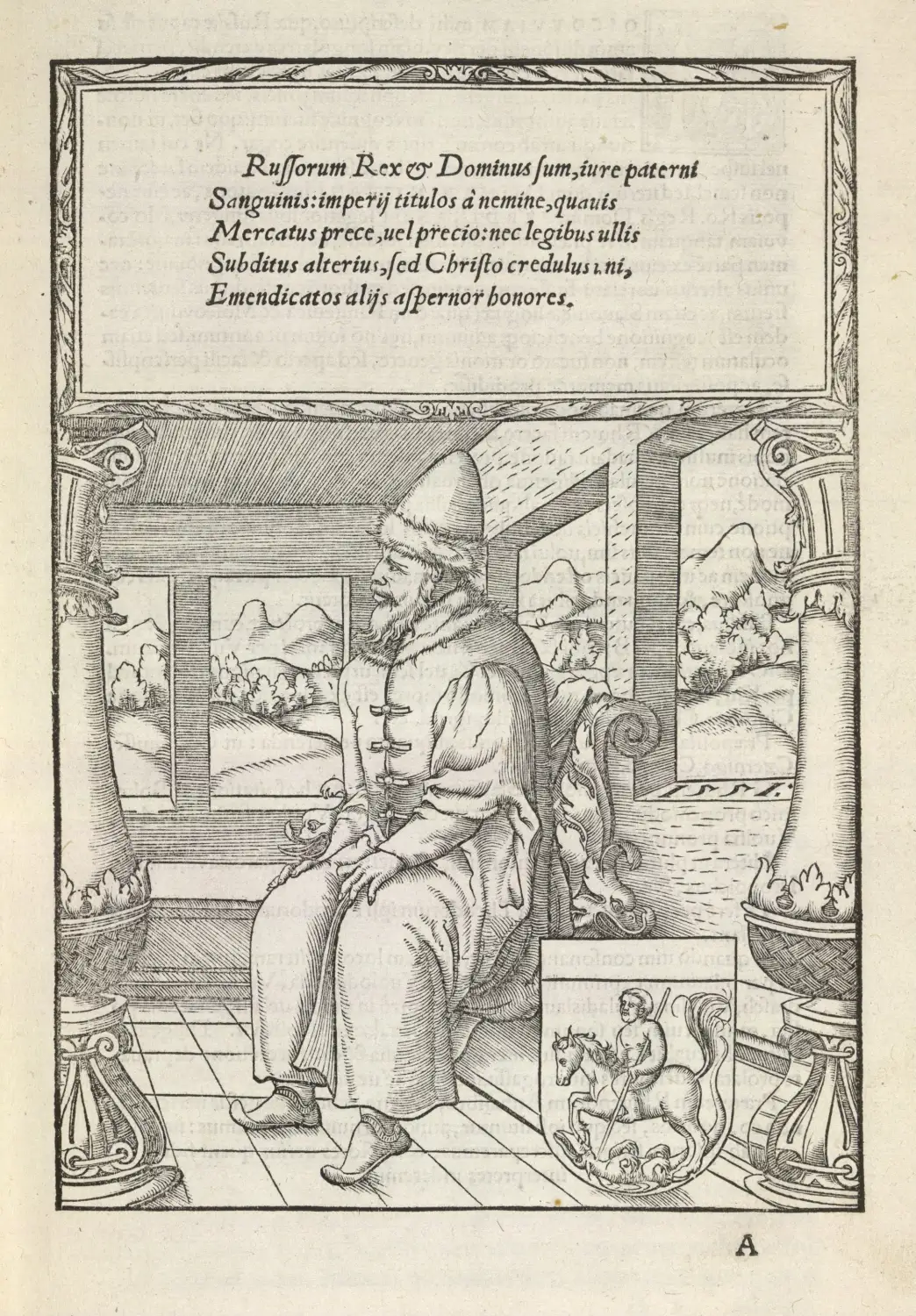
| Ruler at the time | Grand Prince Vasily III of Moscow (1505–1533) |
| Only official use in Muscovy | The charter founding the Moscow patriarchate, 1589 |
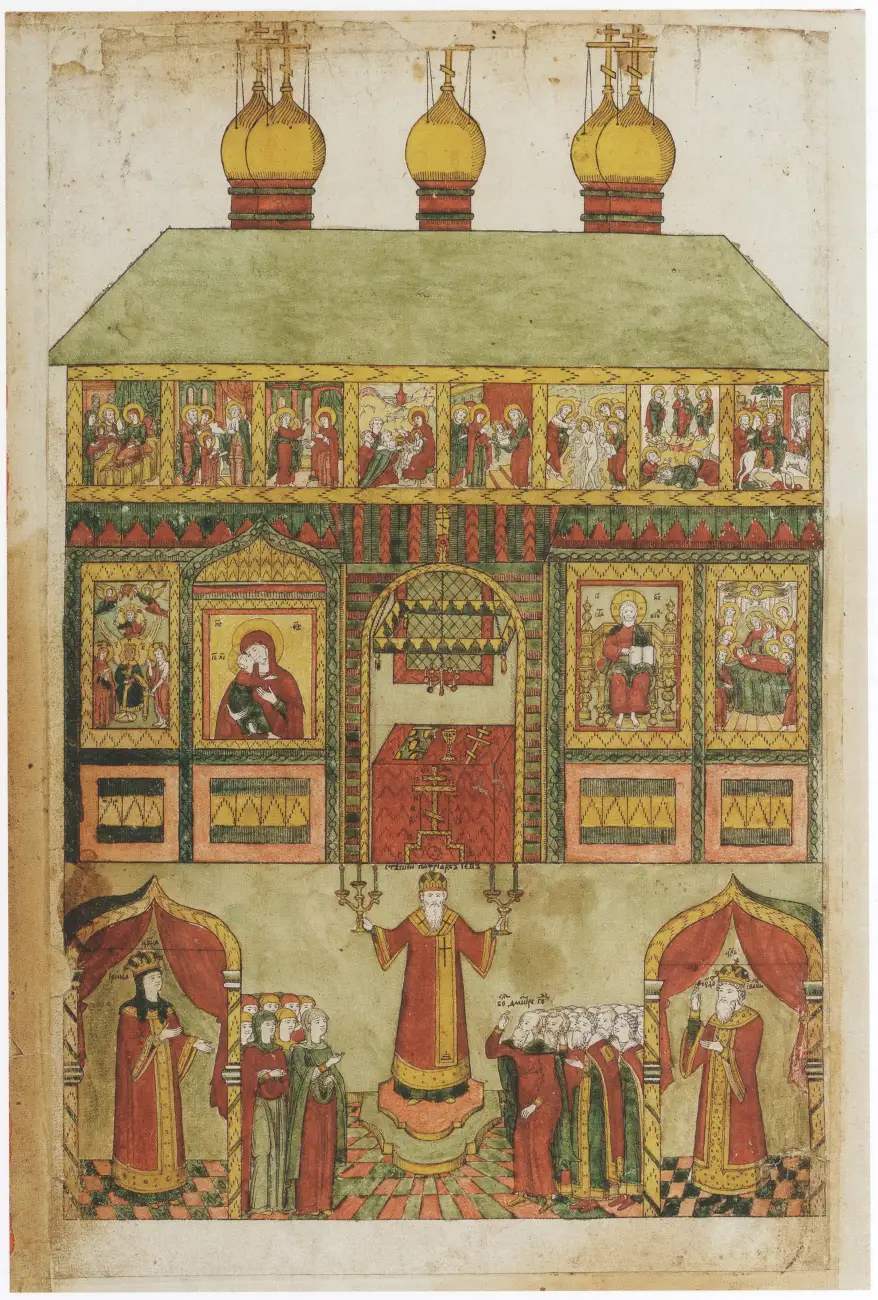
| First known text naming Moscow itself the Third Rome | Colophons of the Godunov psalters, 1590s |
| Banned | The Moscow church council of 1666–1667 banned a tale containing a version of it |
| First printed | 1846 (one letter); the key texts in 1861–1863 |
Who was Filofei?
Almost nothing is known about him. The modern editor of his letters, Vladimir Kolesov, writes that "biographical information about Filofei is extremely scanty": he lived in the first half of the sixteenth century and was a monk of the Eleazarov monastery near Pskov. A Life of the monastery's founder, written in 1547, mentions a "hegumen Filofei", so he may later have headed the monastery. Dates of birth and death sometimes given for him are not supported by any known source.
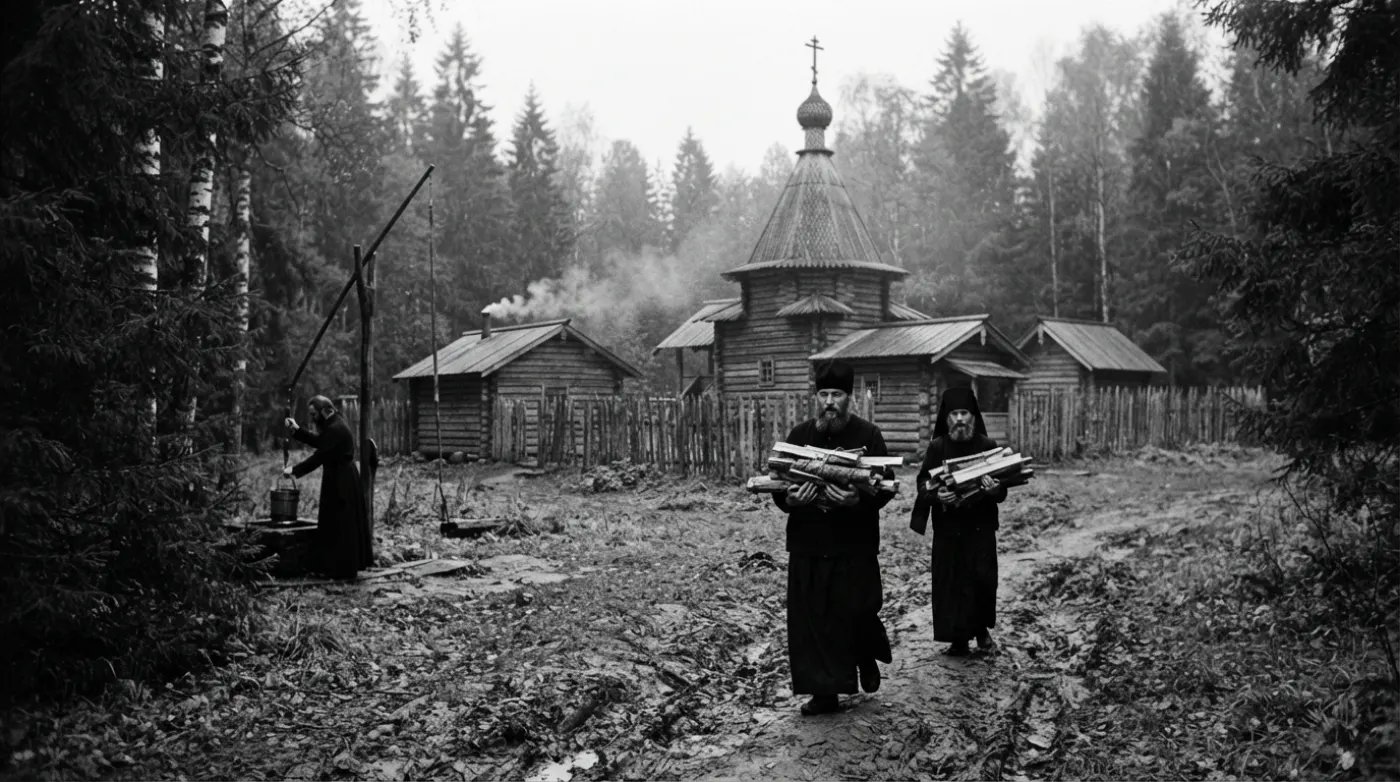
Pskov had been annexed by Moscow in 1510, and the grand prince ruled it through governors sent from Moscow, assisted by a state secretary. One of them was the state secretary (d'iak) Mikhail Misiur' Munekhin, who served in Pskov from 1510 until his sudden death in March 1528. He was an educated man who had travelled to Constantinople, Mount Athos and Jerusalem, and he was Filofei's correspondent.
What did Filofei actually write?
Around 1522 a German physician at the Moscow court, Nicolaus Bülow, translated a western almanac predicting a new world flood in February 1524. Munekhin asked Filofei what he thought. The monk's reply, written at the end of 1523 or early in 1524, rejects astrology: events depend on God, not on the stars.
In the middle of the letter Filofei turns to history. The Greeks, he writes, lost their empire because "they betrayed the Orthodox Greek faith to Latinism", meaning the union with the Roman church agreed at the Council of Florence in 1439. The true church now stood "in the God-saved city of Moscow", in the cathedral of the Dormition. Then comes the famous passage:
"Know, lover of Christ and lover of God, that all Christian tsardoms have come to an end and have come together into the one tsardom of our sovereign, according to the books of the prophets, that is, the Roman tsardom: for two Romes have fallen, the third stands, and a fourth there shall not be."
(The translations from the Old Russian in this article are our own.)
The idea of four world kingdoms goes back, as Kolesov notes, to the Book of Daniel (2:37–40). A second letter, addressed to Grand Prince Vasily, repeats the formula as a warning: "watch and listen, pious tsar… two Romes have fallen, the third stands, and a fourth there shall not be. Your Christian tsardom will not pass to others." It urges the ruler to make the sign of the cross correctly, to fill vacant bishoprics and to stamp out sodomy.
"Roman", not "Russian"
One word changes the meaning of the passage. Most of the later manuscripts say that the one tsardom is the "Russian" tsardom. In 1974 the Soviet scholar A. L. Goldberg showed that the best and earliest copies read Romeiskoe tsarstvo, the "Roman" tsardom, and that later copyists changed it. Kolesov's modern edition restores "Roman" and comments: "Only in our time has it been established that the most authoritative copy speaks not of a 'Russian' but of a 'Roman' tsardom, which, of course, changes the understanding of the passage."
For Filofei, then, Moscow's ruler was the last guardian of the one Christian empire, the Roman empire in its religious sense, which had passed from Rome to Constantinople and now to him. The historian Nina Sinitsyna, in a major study of 1998, and more recently Mikhail Dmitriev (2023) argue that this was a church-centred, end-of-the-world idea. Dmitriev calls it the opposite of a national formula. A 2023 round table of Russian scholars agreed that the idea of Russia as "Rome" was "by no means an expression of claims to world domination".
Was the Third Rome Moscow's state ideology?
For most of the twentieth century historians assumed that it was. Since the 1990s, several historians have challenged this.
- The silence of the sources. The Third Rome formula does not appear in the great official texts of the sixteenth century. As the historian A. S. Usachev notes, historians have looked for it in the major chronicles, the Book of Degrees and the writings of Ivan the Terrible.
- "Two occasions". The American historian Marshall Poe (1997) wrote that the idea "began its career as an admonitory rhetorical flourish" and that, "though it was widely known among Muscovite bookmen, it enjoyed no official favor in Old Russia". He counts "only two occasions" on which Muscovite authorities cited it. Donald Ostrowski, according to Maureen Perrie's summary, argued that the only official document to mention it is the 1589 decree founding the Moscow patriarchate.
- No aggressive policy. The historian David Goldfrank calls it "the most generally misunderstood and abused" of the expressions of Russia's new place in the world. It never figured in aggressive policy, he writes, and "modern attempts to enshrine it as an essential element of Russian consciousness since the early 1500s have no basis".
Other scholars disagree with the revisionists. A. V. Korenevskii (2021) calls the claim that the idea was "invented" later unfounded. He argues that it was ignored at first because its view of church and state clashed with the rulers' autocratic ideas, and that it became "official state doctrine" more than half a century later, in 1589.
What happened in 1589?
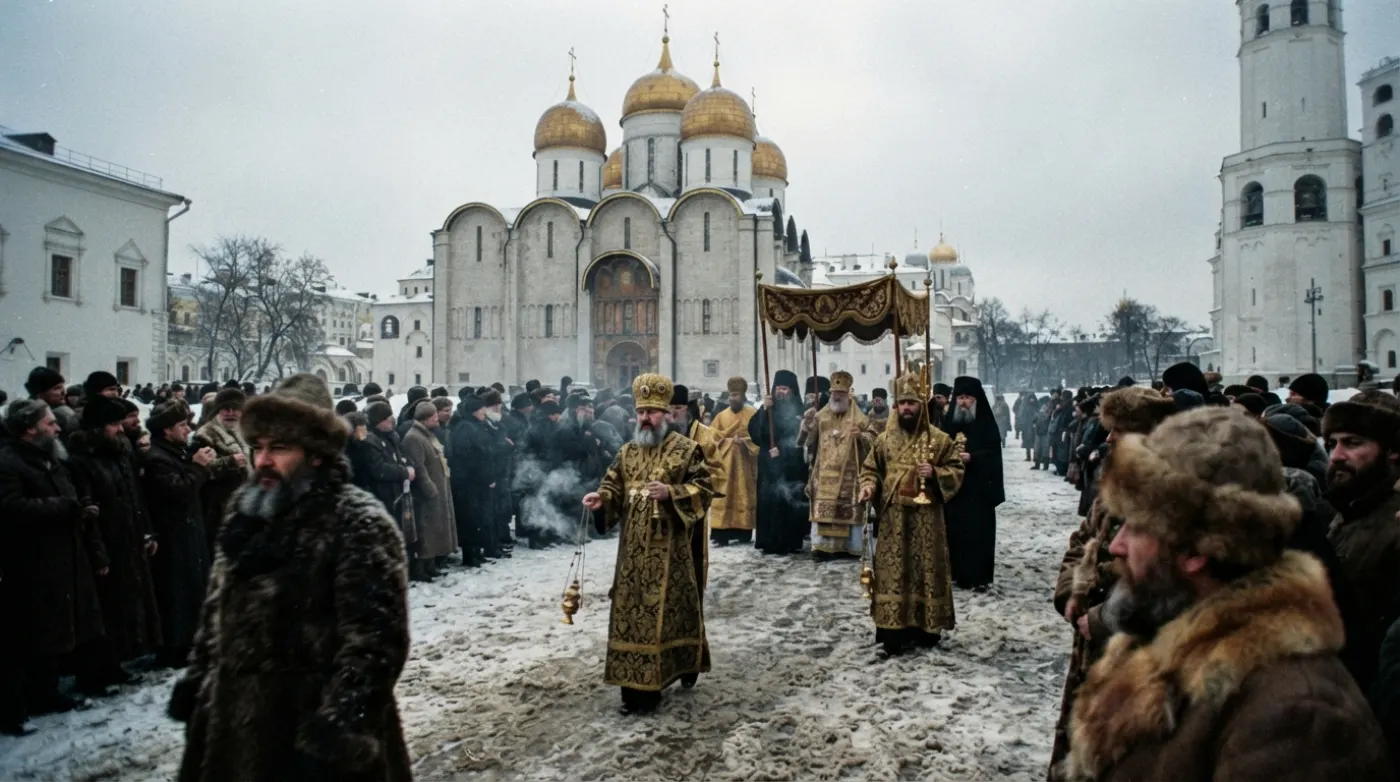
In 1589 Patriarch Jeremias II of Constantinople, then visiting Moscow, installed Job as the first patriarch of Moscow on 26 January. The founding charter of the new patriarchate, dated May 1589, puts the Third Rome formula into Jeremias's mouth:
"For the old Rome fell through the heresy of Apollinarius; the second Rome, which is Constantinople, is held by the grandsons of Hagar, the godless Turks; but your great Russian tsardom, pious tsar, the third Rome, has surpassed all in piety."
The charter was drafted in the tsar's chancery, not by the Greek patriarch. According to the Great Russian Encyclopaedia, it toned the idea down: it left out the claim that the church of Constantinople had "fallen" and that the Russian church existed "instead of" the Roman and Constantinopolitan ones. Even after 1589, Usachev notes, mentions of the Third Rome "remained isolated". The earliest known texts that call the city of Moscow itself "the Third Rome" are the colophons of a set of psalters copied in the 1590s for the boyar Dmitry Godunov: they were written "in the God-protected… reigning city of Moscow, in the Third Rome". In 1653 the charter's text reached a wider audience when it was printed in the preface of a book of church law, in 1,200 copies.
How did the Old Believers use it?
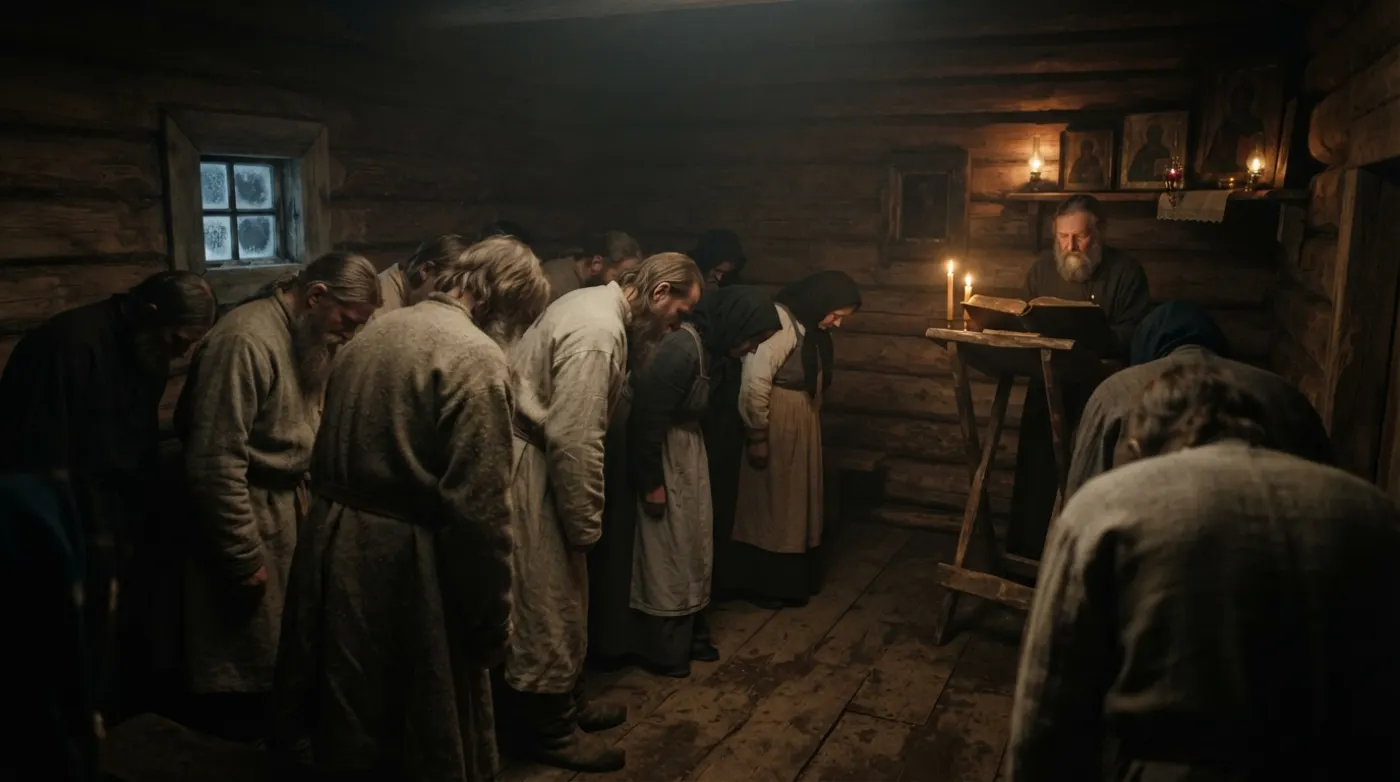
In the seventeenth century the idea passed to the opponents of the church reforms of Patriarch Nikon. The church council of 1666–1667, which confirmed those reforms, banned the Tale of the Novgorod White Cowl, a story that included a version of the Third Rome theory. The Old Believers, who broke with the official church, took the idea over in a darker form: if Moscow, the third Rome, had now fallen away from the true faith, the end of the world was near. In Poe's words, they "claimed their community alone represented the 'Third Rome'". From the end of the seventeenth century to about 1860, he writes, the idea "disappeared entirely from mainstream Russian thought".
How did it become famous?
The modern career of the Third Rome began with printing. A letter of Filofei was first published in 1846, and the letter to Munekhin and the letter to Vasily were printed in full in 1861 and 1863. In 1869 the historian Vladimir Ikonnikov gave the idea a new meaning, as an expression of Muscovite imperial ideology and Russian messianism. The émigré historian Nikolai Ul'ianov argued in 1956 that the legend that grew around "a few lines from Filofei's letter" had its roots "not in the era of Vasily III but in the ideological and political climate of the reign of Alexander II".
In the twentieth century the phrase became a ready-made explanation. The philosopher Nikolai Berdyaev wrote, in Poe's quotation, that "instead of the monk Philothey's Third Rome we get Lenin's Third International". In Sergei Eisenstein's film Ivan the Terrible (1945) the tsar declares: "Two Romes have fallen, Moscow is the third, there will be no fourth." As Poe points out, "there is no evidence that Ivan ever said this, or that he had any knowledge of Filofei's doctrine". After the end of the Soviet Union, nationalist groups took up the phrase as a symbol of Russian renewal, and Western commentators cited it as the "background" to Russian expansionism. Several recent studies examine its use in present-day Russian politics.
Common myths about the Third Rome
| Myth | What the evidence says |
|---|---|
| Ivan III proclaimed Moscow the Third Rome after marrying Sophia Palaiologina | No Slavic text before the sixteenth century calls Moscow or Russia the Third Rome; the formula first appears in Filofei, about 1523–1524, under Vasily III |
| Filofei wrote "Moscow is the Third Rome" | He wrote of the "Roman tsardom" of his sovereign; the church stood in Moscow. Moscow itself is first called the Third Rome in the 1590s |
| It was a triumphant boast | It was a warning: the ruler had to protect the true faith, because there would be no fourth Rome |
| It was Muscovy's official ideology | It was used officially once, in 1589, and the church banned a text containing it in 1666–1667 |
| Ivan the Terrible spoke Filofei's words | The speech comes from Eisenstein's film of 1945 |
| It has shaped Russian thinking without a break for 500 years | It survived mainly among the Old Believers and was revived after its publication in the 1860s |
Timeline
| Date | Event |
|---|---|
| 1439 | Council of Florence: union of the Greek and Latin churches |
| 1453 | The Ottomans take Constantinople |
| 1510 | Moscow annexes Pskov |
| End of 1523 – early 1524 | Filofei's letter to Munekhin: "two Romes have fallen…" |
| 1520s (disputed) | The letter to Grand Prince Vasily |
| March 1528 | Munekhin dies |
| 26 January 1589 | Job installed as first patriarch of Moscow |
| May 1589 | The patriarchate charter calls Russia "the third Rome" |
| 1590s | Godunov psalters call Moscow "the Third Rome" |
| 1653 | The charter's text printed in a book of church law |
| 1666–1667 | Church council bans the Tale of the White Cowl |
| 1846; 1861–1863 | Filofei's letters first printed |
| 1869 | Ikonnikov's imperial reading of the idea |
| 1945 | Eisenstein's Ivan the Terrible |
| 1974 | Goldberg shows the original reading "Roman tsardom" |
What the map shows
At 1524 the Grand Principality of Moscow of Vasily III had just absorbed Pskov. Constantinople, the "second Rome", had belonged to the Ottoman Empire since 1453; compare the last years of the Byzantine Empire at 1450. By 1589, when the patriarchate charter repeated the formula, Moscow ruled the Tsardom of Russia. For the earlier history, see our articles on Ivan III and Sophia Palaiologina.
Sources
Primary sources
- Filofei, letters to Misiur' Munekhin and to Grand Prince Vasily, ed. and trans. V. V. Kolesov, in Biblioteka literatury Drevnei Rusi, vol. 9 (St Petersburg, 2006), Pushkin House online edition
- V. N. Malinin, Starets Eleazarova monastyria Filofei i ego poslaniia (Kiev, 1901): archive.org
- Charter establishing the Moscow patriarchate, May 1589, in Sobranie gosudarstvennykh gramot i dogovorov, part 2 (Moscow, 1819), no. 59
Studies and reference works
- A. L. Gol'dberg, "Tri 'poslaniia Filofeia' (Opyt tekstologicheskogo analiza)", Trudy Otdela drevnerusskoi literatury 29 (1974), 68–97
- "Moskva – Tretii Rim", Bol'shaia rossiiskaia entsiklopediia, vol. 21 (2012)
- M. Poe, "'Moscow, the Third Rome': The Origins and Transformations of a 'Pivotal Moment'", NCEEER report (1997); revised in Jahrbücher für Geschichte Osteuropas 49 (2001)
- D. Goldfrank, "Third Rome", Encyclopedia of Russian History (2004)
- A. S. Usachev, "Ob istorii bytovaniia idei 'Tret'ego Rima' v Rossii XVI v.", Vestnik PSTGU, ser. II (2015)
- M. Perrie, "Moscow in 1666: New Jerusalem, Third Rome, Third Apostasy", Quaestio Rossica (2014), doi:10.15826/qr.2014.3.062
- M. V. Dmitriev et al., "Teoriia 'Moskva — Tretii Rim': teksty i konteksty", Studia Slavica et Balcanica Petropolitana (2023), doi:10.21638/spbu19.2023.205
- M. V. Dmitriev, "Perechityvaia startsa Filofeia…", Novoe proshloe (2023), doi:10.18522/2500-3224-2023-3-30-53
- A. V. Korenevskii, on the history of the Third Rome theory, Istoricheskii kur'er (2021), doi:10.31518/2618-9100-2021-6-1
- N. I. Ul'ianov, "Kompleks Filofeia", Novyi zhurnal 45 (1956); reprinted in Voprosy istorii 1994, no. 4
- "Ieremiia II", Pravoslavnaia entsiklopediia
Image credits
- Title image: Cathedral of the Three Hierarchs, Eleazarov monastery. Photo: Ostrogolovy, 2010, CC0, via Wikimedia Commons, cropped to 16:9.
- Vasily III, woodcut from Herberstein, 1556. Public domain, via Wikimedia Commons.
- Godunov Psalter, 1594, Russian State Library. Public domain, via Wikimedia Commons.
- Eleazarov monastery, postcard, c. 1870–1900. Public domain, via Wikimedia Commons.