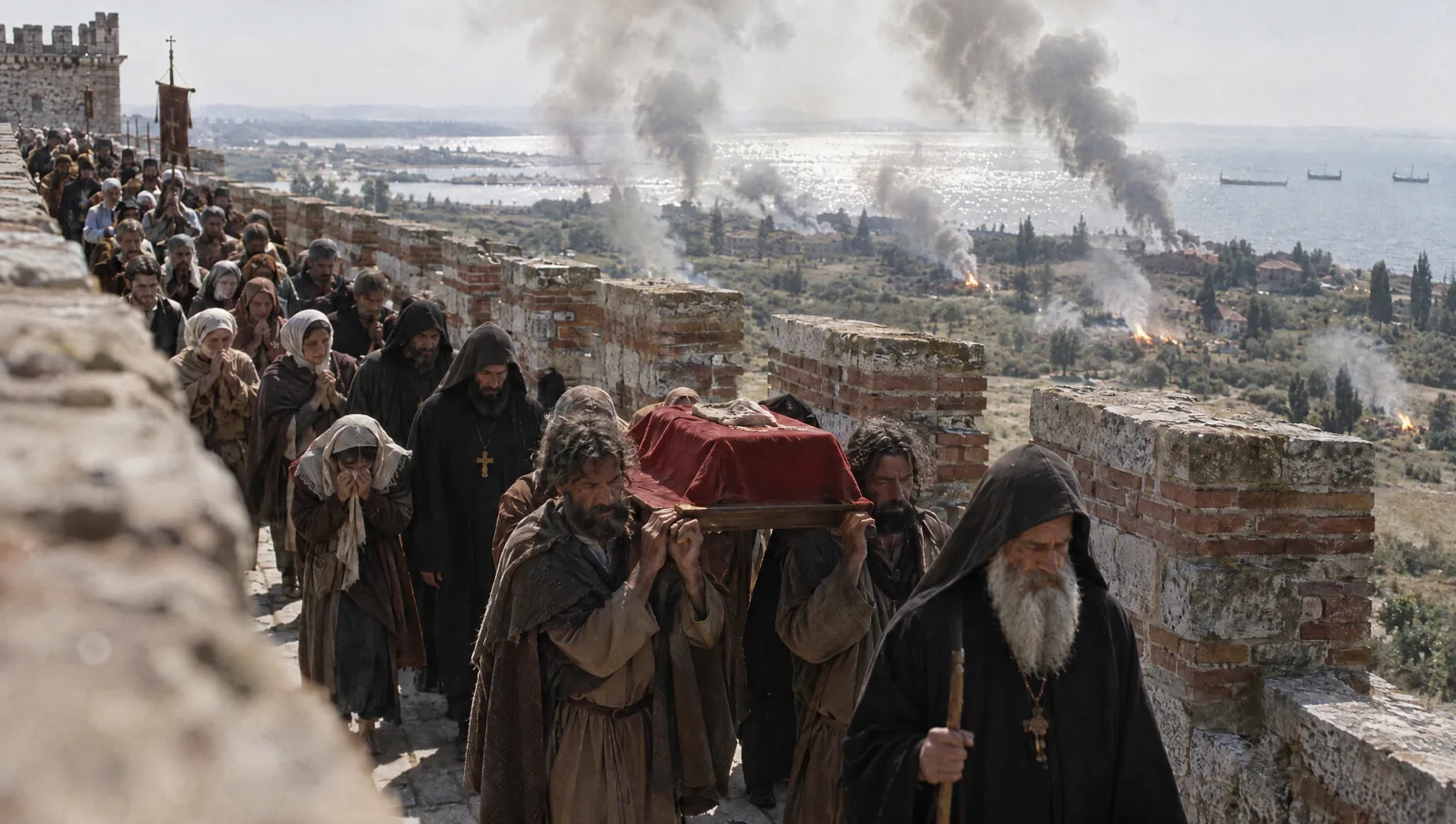
In the summer of AD 860, traditionally on 18 June, a fleet of the Rus' sailed down the Bosporus and fell on the outskirts of Constantinople. The Rus' were a Scandinavian-led people from the river lands of eastern Europe, and this was the first time the Vikings of the East struck the capital of the Byzantine Empire. Emperor Michael III was away fighting the Arabs. The raiders plundered the suburbs, the monasteries on the Bosporus and the Princes' Islands, and then sailed away. Patriarch Photios, who preached during the attack and just after it, credited their departure to the robe of the Virgin. The famous storm that wrecked their ships, the leaders Askold and Dir and the date AD 866 all come from writers of later centuries.
The attack lasted a few weeks at most, but it put the Rus' on the map of Byzantium. Within seven years Photios was claiming that the same people had accepted a bishop.
What happened in 860?
In early June AD 860 Michael III marched east against the Abbasid Caliphate, taking the army with him. According to the later chronicle tradition, he left the prefect of the city, Oryphas, in charge of the capital and had reached a place called Mauropotamos, the "Black River", when a messenger caught up with him: the Rus' had sailed into the Bosporus with 200 ships.
What they did there is described by eyewitnesses. Photios, in his first sermon, saw "a fierce and savage tribe fearlessly poured round the city, ravaging the suburbs, destroying everything, ruining everything, fields, houses, herds, beasts of burden, women, children, old men, youths". He asked his congregation: "Where is now the Christ-loving emperor? Where are the armies?" and answered himself: "The emperor endures long labours beyond the frontier, and the army has marched away to toil with him" (Mango, The Homilies of Photius, pp. 88–89).
The raiders also crossed into the Sea of Marmara. On the island of Terebinthos, one of the Princes' Islands, lived the deposed patriarch Ignatios, whom Photios had replaced in AD 858. His biographer Niketas the Paphlagonian, writing decades later, tells how "the bloody race of the Scythians, the so-called Ros", came "through the Euxine to the Stenon" (the Bosporus), plundered "all the places and all the monasteries" and overran the islands. On Terebinthos they "seized twenty-two of his devoted servants, and cut all of them in pieces with axes on the stern of a ship" (trans. Vasiliev, The Russian Attack on Constantinople in 860, pp. 188–189).
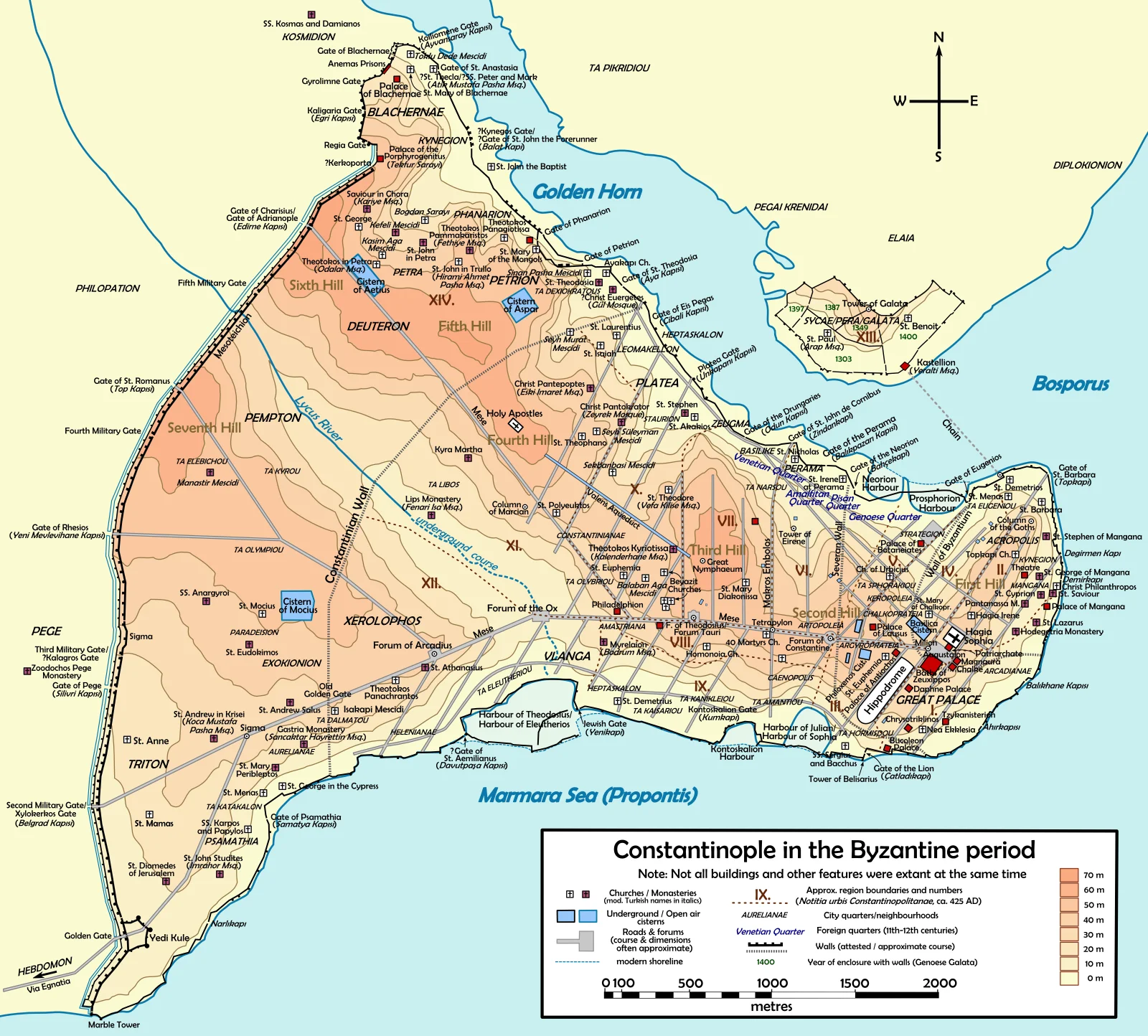
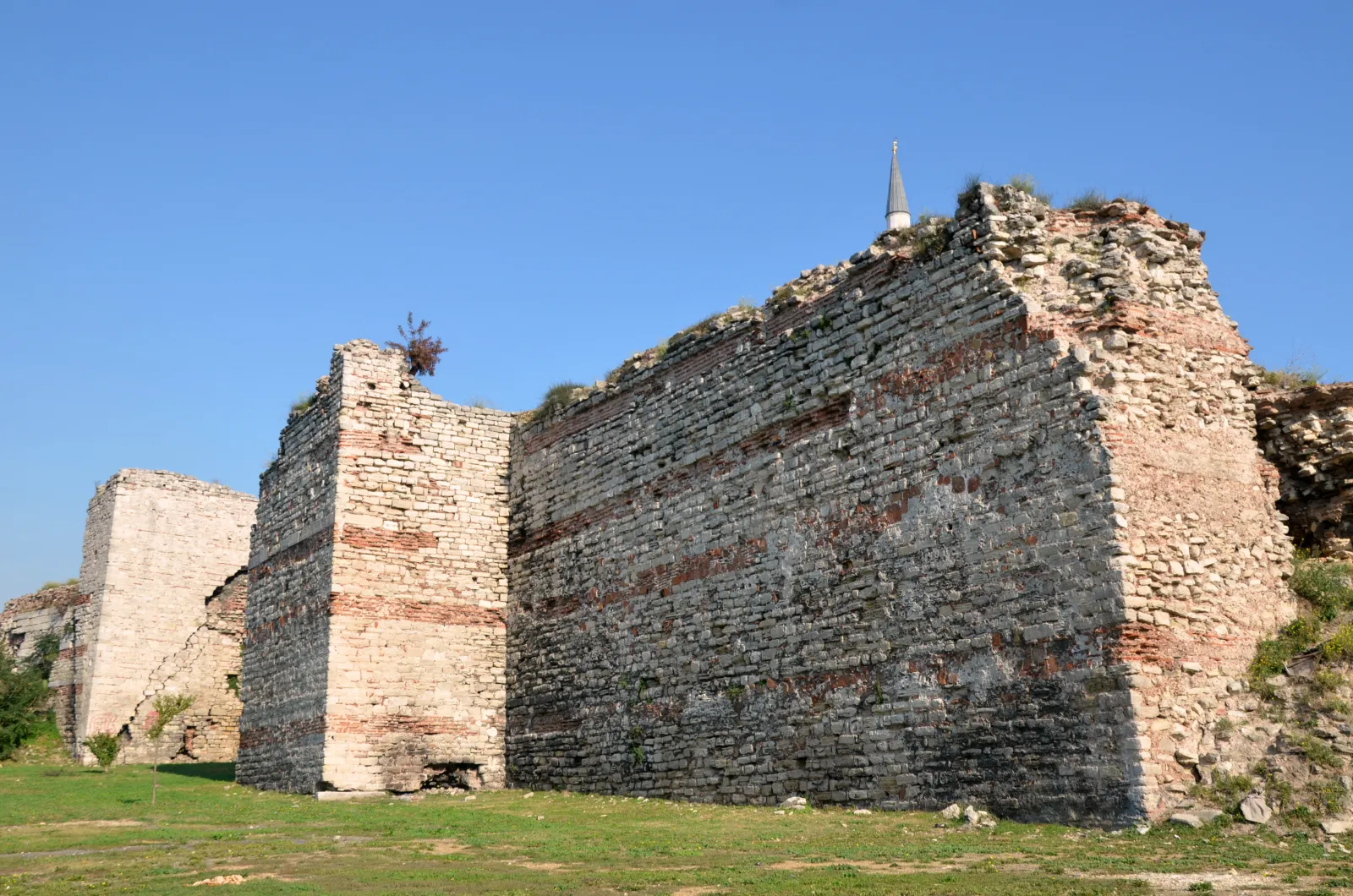
The Rus' did not storm the city itself. Pope Nicholas I, writing to Michael III in AD 865, says the pagans had burnt "the suburbs of Constantinople, which are almost adjoining its walls" ("suburbana Constantinopoleos, quae et muris ejus pene contigua sunt"). Nothing in the sources describes an assault on the great land walls or the sea walls.
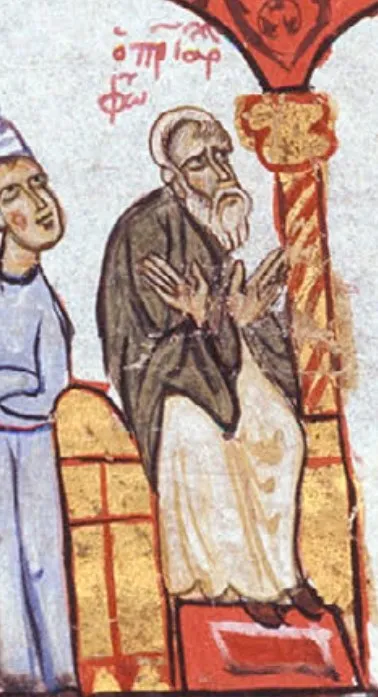
What did Patriarch Photios say about the Rus'?
Photios had been patriarch for barely eighteen months. His two sermons, Homilies 3 and 4, are the only accounts written at the time, and the Byzantinist Cyril Mango, who translated them in 1958, called them "the most authoritative of all Greek sources dealing with the attack of 860" (p. 75). Mango suggested that the first was preached within days of the landing, perhaps on Sunday 23 June, and the second "very soon afterwards, perhaps in the beginning of July" (p. 81). He rejected the older idea of a siege lasting months.
The first sermon opens with shock: "Why has this dreadful bolt fallen on us out of the farthest north?" (p. 82). Photios stresses the distance the raiders had covered, "sundered off from us by so many lands and kingdoms, by navigable rivers and harbourless seas" (p. 88), so fast that the sight of them arrived with the news.
The second sermon, given after the Rus' had gone, contains the most quoted description of them: "An obscure nation, a nation of no account, a nation ranked among slaves, unknown, but which has won a name from the expedition against us, insignificant, but now become famous, humble and destitute, but now risen to a splendid height and immense wealth, a nation dwelling somewhere far from our country, barbarous, nomadic, armed with arrogance, unwatched, unchallenged, leaderless" (p. 98). "Unknown" was rhetoric, not ignorance. Rus' envoys had travelled with a Byzantine embassy to the Frankish court in AD 839, and the historian Sverrir Jakobsson points out that Photios, one of the best-informed men in the empire, almost certainly knew more about them than he admitted (Jakobsson, 2022).
Then comes the deliverance. "As the whole city was carrying with me her raiment for the repulse of the besiegers and the protection of the besieged, we offered freely our prayers and performed the litany", Photios says. The Virgin's robe, kept in the church of Blachernae, "embraced the walls, and the foes inexplicably showed their backs … For immediately as the Virgin's garment went round the walls, the barbarians gave up the siege and broke camp" (p. 102). His summary: "Unexpected was the enemy's invasion, unhoped-for appeared their departure" (p. 103).
How do we know the date: 18 June 860 or 866?
For most of the nineteenth century, historians dated the attack to AD 865 or AD 866, following the Kyivan Primary Chronicle. In 1894 the Belgian scholar Franz Cumont published a short anonymous list of emperors from a manuscript in the Royal Library in Brussels, now called the Chronicon Bruxellense. Under Michael III it says that "on the 18th of June of the 8th Indiction in the year 6368, the fifth year of his reign, the Russians came in 200 ships and were, through the intercession of the all-hymned Mother of God, overpowered by the Christians, utterly defeated and destroyed" (trans. Mango, p. 76). The three dating systems agree on June AD 860. Alexander Vasiliev later remembered "our excitement and surprise" at the discovery, and after an article by Carl de Boor in 1895 the date was adopted almost universally.
The year is secure, because Photios only became patriarch at the end of AD 858 and preached his sermons while Michael III was still emperor. The day is less certain than it looks. The Brussels manuscript dates from the thirteenth century, and the list ends with Romanos III, who died in 1034. In 2022 Oleksandr Fylypchuk argued that it is a single compilation written after the 1030s, that its account of the attack is modelled on a tenth-century chronicle, and that it is therefore "not a relevant text for the reconstruction of the events of 860" (Fylypchuk, Studia Ceranea, 2022). Others, including Jonathan Shepard, still regard its date as reliable (see our glossary entry on the Rus'). Its claim that the Rus' were "utterly defeated and destroyed" contradicts every contemporary witness.
The sources, from the closest to the most distant:
| Source | Written | What it adds |
|---|---|---|
| Photios, Homilies 3 and 4 | Summer AD 860 | Eyewitness account; the robe carried round the walls; the Rus' leave unexpectedly |
| Pope Nicholas I, letter to Michael III | 28 September AD 865 | Suburbs burnt; the pagans went unpunished |
| Photios, encyclical letter | AD 866–867 | The Rus' have accepted a bishop and Christianity |
| Niketas, Life of Ignatios | Early tenth century | Bosporus monasteries and Princes' Islands plundered; 22 servants of Ignatios killed |
| Theophanes Continuatus | Mid-tenth century | The Rus' "had their fill of divine wrath and returned home"; no storm |
| Symeon the Logothete and related chronicles | Mid- to late tenth century | 200 ships; the emperor returns; the robe dipped in the sea; a storm wrecks the fleet |
| John the Deacon, Istoria Veneticorum | About 1000 | "Normans" with 360 ships ravage the suburbs and go home "in triumph" |
| Chronicon Bruxellense | After the 1030s (Fylypchuk) | 18 June AD 860; 200 ships; the Rus' destroyed |
| Primary Chronicle, Kyiv | About 1113 | Dated AD 866; led by Askold and Dir; the storm story |
Who were the attackers?
The Byzantines called them Rhōs, the Rus'. In AD 839 men who called themselves Rhos had reached the emperor Louis the Pious with a Byzantine embassy, and the Franks identified them as Swedes. By AD 860 the Rus' were a Scandinavian-led elite trading and raiding along the rivers of eastern Europe, ruled, as several sources say, by a "khagan" (see our glossary section on the Rus' Khaganate). The Venetian John the Deacon simply called the raiders of AD 860 "Normans", Northmen.
Where they sailed from is debated. Photios' "farthest north" and his "navigable rivers and harbourless seas" point to a long river journey followed by a crossing of the Black Sea. Mango thought the passage "seems to favour the view that the invaders came from Kiev rather than from the Crimea or the Black Sea coast" (p. 88, n. 41), and the Dnieper, the main river road to the Black Sea, is the likeliest route (see our article on the Viking trade routes to the East). Others, among them Constantine Zuckerman, argue that the Rus' who received the first Byzantine mission lived not around Kyiv but in the lands further north, towards the Baltic, while the middle Dnieper still lay in the orbit of the Khazars. Some think the raid was timed to coincide with the Arab war, or even encouraged by the Khazars, but no source says so.
No source written within two centuries of the attack names a leader. Photios even calls the Rus' "leaderless". The names Askold and Dir appear first in the Primary Chronicle, about 250 years later (see below).
Why did the Rus' leave? A siege or a raid?
Photios gives one answer: the Virgin. As Mango pointed out, he does not mention the emperor in the procession, although he never missed a chance to praise Michael III, so the Rus' probably left before the emperor got back. Nor does Photios say that they were defeated. His second sermon scolds the citizens for their cowardice and says the raiders had "risen to a splendid height and immense wealth" (p. 98).
Whether they left from "superstitious fear", from "the realization of their inability to capture the city" or because of "a report that Byzantine forces were hastening against them" remains, in Mango's words, "an unsolved question" (p. 77). The simplest explanation is that a raiding fleet had taken what it came for, could not breach the walls, and knew that the army would soon return.
Two Western witnesses support a Rus' success. Pope Nicholas I complained in AD 865 that "no punishment whatsoever is inflicted on those who are pagans" ("de istis nulla fit ultio, qui pagani sunt"). Mango warned that the pope was speaking generally about the empire's enemies, not specifically about the Rus' (p. 78). John the Deacon of Venice, writing around 1000, says the "Normannorum gentes" came with 360 ships and, unable to harm the impregnable city, devastated its suburbs, killed a great many people, "et sic predicta gens cum triumpho ad propriam regressa est": "and so that people returned home in triumph" (Monticolo's edition, pp. 116–117, quoted by Vasiliev, p. 24). Vasiliev thought this was a separate Viking raid of AD 861 from the Mediterranean, but most historians take it as an inflated memory of AD 860.
The Byzantine official history written in the mid-tenth century under Constantine VII, known as Theophanes Continuatus, still says only that "after Photios, who held direction of the Church, had entreated the Divinity, the Rhos had their fill of divine wrath and returned home" (Book IV, 33). So "siege" is Photios' own dramatic word. What happened was a large and brutal raid on the undefended outskirts, not an attempt to break through the walls.
Where does the storm legend come from?
The version most people know appears in chronicles written in Constantinople between the AD 940s and the AD 980s, all derived from the chronicle of Symeon the Logothete. Michael III hurries back from Mauropotamos and crosses the strait "with great difficulty". With Photios he spends the night in prayer at the church of the Virgin at Blachernae. Then they take up her maphorion (veil or robe), dip it in the sea, and "immediately a storm arose and the ships of the barbarians were smashed up. Few of the Russians were able to escape home" (Mango's summary, pp. 76–77).
Mango thought that on this point "the argumentum ex silentio is decisive" (p. 77): Photios could not have failed to mention a miraculous storm, "what better material could there be for a sermon?" Fylypchuk goes further: "Photios knew nothing about the 'destruction' of the Rus' bands." The storm is a later miracle story, not suppressed eyewitness memory. In it, credit passes to the emperor and the relic, and the raid that could not be stopped becomes a Byzantine victory.
The Kyivan Primary Chronicle, compiled around 1113, took this version almost word for word from the Slavonic translation of the same Greek chronicle. Its compilers added two names and a date. Under the years 6371–6374 (AD 863–866) it says: "Askold and Dir attacked the Greeks during the fourteenth year of the reign of the Emperor Michael", and the Rus' "attacked Tsar'grad in two hundred boats". Then the robe is dipped, a storm "threw them upon the shore and broke them up, so that few escaped such destruction and returned to their native land" (trans. Cross and Sherbowitz-Wetzor, p. 60). The "fourteenth year" comes from the chronicle's own mistaken start of Michael's reign in AD 852, the year in which, it says, "the land of Rus' was first named", because in Michael's reign "Russes attacked Tsar'grad, as is written in the Greek Chronicle" (p. 58). The chronicle's first date for Rus' history was worked out backwards from this raid (see our article on the Primary Chronicle).
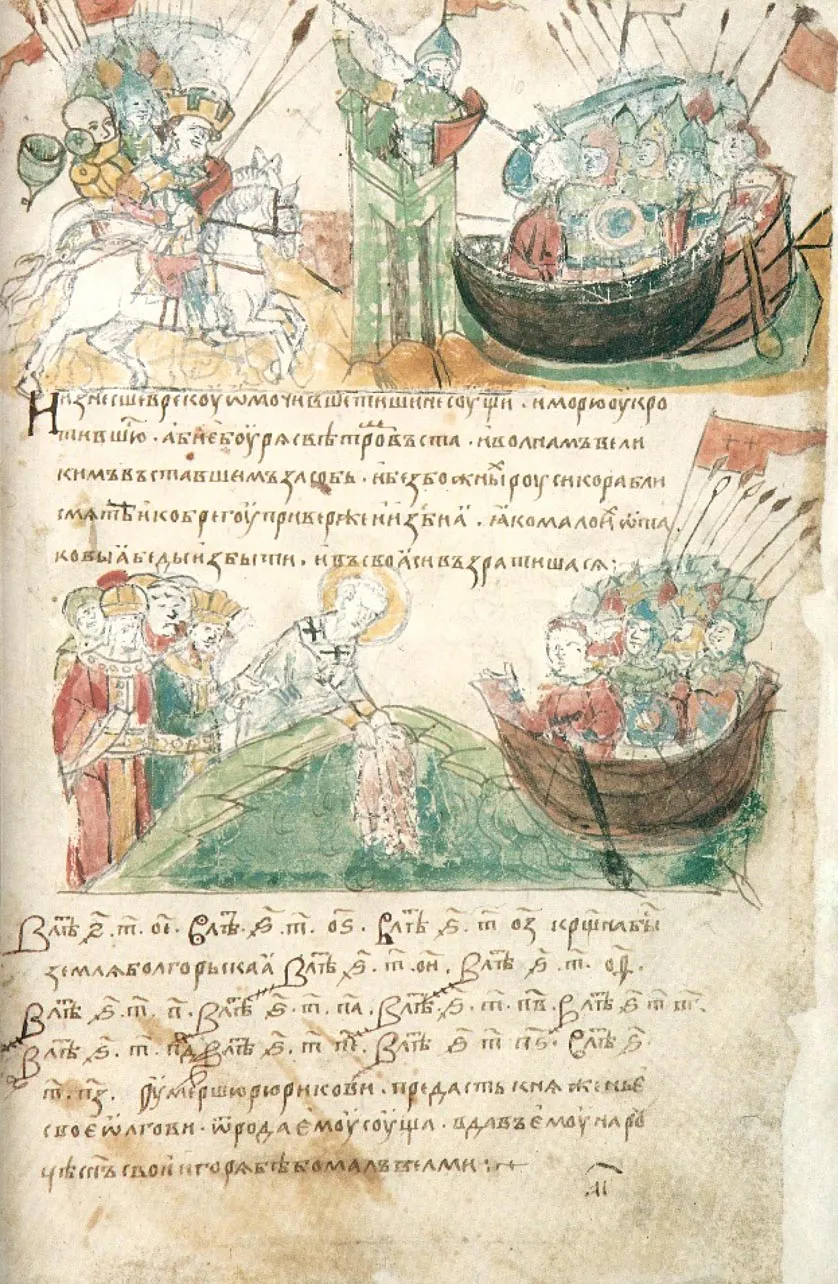
Askold and Dir were, according to the same chronicle, two of Rurik's men who settled in Kyiv and were killed there by Oleg in AD 882. They may well have ruled Kyiv. That they led the raid of AD 860 is the chronicler's inference, not something any Greek source says.
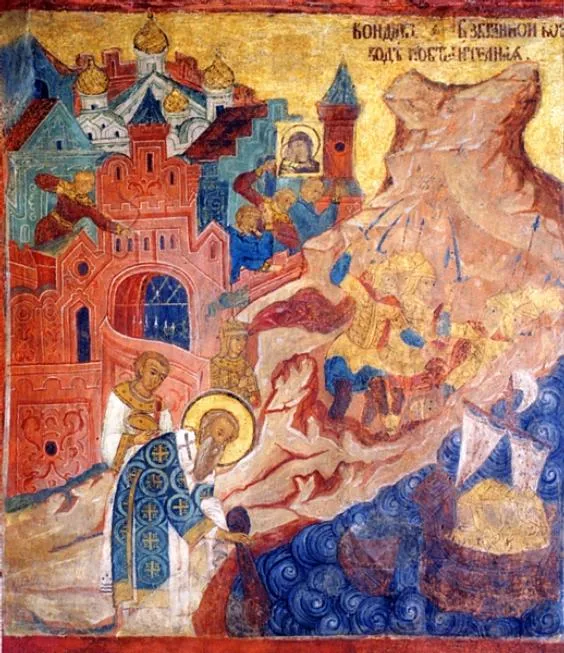
The robe kept its fame. A feast of the Deposition of the Robe at Blachernae was celebrated on 2 July, and the miracle of AD 860 later became a subject for Russian church painting. There is an irony in this: Russian icons and frescoes celebrate the Virgin saving Constantinople from attackers who, in the chronicle's version, were the princes of Kyiv.
What came after the attack: the first baptism of Rus'
The raid was followed, surprisingly fast, by diplomacy. Skylitzes, following the tenth-century official history, says the Rus' "sent a delegation of their people to the capital begging to partake of sacred baptism — which they did" (trans. Wortley, p. 108). In his encyclical letter to the Eastern patriarchs of AD 866–867, Photios boasted that the Rus', who had dared to attack the empire, had now adopted Christianity and placed themselves among its "subjects and friends", and had received a bishop (Vasiliev, p. 232). The "Hellenic and godless teaching" they had followed was being abandoned.
A rival version, written for the dynasty of Basil I, who murdered Michael III in AD 867, gives the credit to Basil and Ignatios. Basil "concluded a pact with the Russians; he was responsible for them partaking of salvific baptism and he sent them a bishop". When the Rus' demanded a sign, the bishop threw a Gospel book into a fire and it came out undamaged, "when the barbarians saw this, dumbfounded by the magnitude of the wonder they spontaneously and without hesitation presented themselves for baptism" (Skylitzes, trans. Wortley, pp. 159–160). The two accounts may describe two stages, a first bishop sent by Photios and an archbishop sent later by Ignatios.
This "first baptism of Rus'" did not last. As Jakobsson puts it, "the Rus seemed to fade back into obscurity", and the Greek sources fall silent about the mission for decades (see our article on the Christianization of Kievan Rus'). Vasiliev saw a direct line from AD 860 to the later treaties, in which the Rus' won trading rights and the right to serve the emperor as soldiers. The next attacks on Constantinople came under Oleg, whose campaign of AD 907 is known only from the Rus' chronicle, and Igor, whose fleet was burnt with Greek fire in AD 941.
Myths about the Vikings at Constantinople
- "The Vikings besieged Constantinople in 860." They ravaged the suburbs and islands. No source describes an assault on the walls.
- "A storm sent by the Virgin destroyed their fleet." The storm first appears in chronicles written about a century later. Photios, who was there, knows nothing of it.
- "Askold and Dir led the attack." Their names were attached to it in Kyiv around 1113, under the wrong year.
- "It happened in 866." That is the Primary Chronicle's date. The Greek and Latin evidence puts it in AD 860.
- "Ragnar Lodbrok attacked Constantinople." No medieval source links Ragnar to the raid. The only named leaders, Askold and Dir, come from the twelfth-century Kyivan chronicle.
- "Thousands of ships." The Byzantine tradition gives 200 and John the Deacon 360. The "two thousand" ships belong to the chronicle's legendary story of Oleg in AD 907.
- "The raiders became the Varangian Guard." The emperor's Scandinavian guard was formed only after AD 988 (see our article on the Varangian Guard). The Norse name for the city, Miklagarðr, "the Great City", comes from that later age of service, and the runes carved in Hagia Sophia are usually attributed to it, not to the raiders of AD 860.
- "The Vikings conquered Constantinople." They never did, in AD 860, AD 907, AD 941 or 1043.
What the map shows next
At AD 860 on the map, the Rus' sit on the rivers of eastern Europe between Khazaria and the Baltic, with the Byzantine Empire across the Black Sea and the First Bulgarian Empire on its northern frontier. By AD 900 on the map Oleg has made Kyiv the centre of Kievan Rus', and the raiders of AD 860 have become trading partners bound by treaty. At 1000 on the map, Vladimir's Rus' has adopted the faith that Photios first tried to give it.
Sources
Primary sources (in translation)
- Photios, Homilies 3 and 4 ("On the Attack of the Russians"), in Cyril Mango (trans.), The Homilies of Photius, Patriarch of Constantinople, Dumbarton Oaks Studies 3 (Cambridge, MA: Harvard University Press, 1958), pp. 74–110 (introduction pp. 74–82). Greek text: B. Laourdas, Photiou Homiliai (Thessaloniki, 1959). Publisher page: https://www.doaks.org/resources/publications/books/the-homilies-of-photius-patriach-of-constantinople
- Photios, Encyclical Letter to the Eastern Patriarchs (866/867). English translation (University of Oregon course text): https://pages.uoregon.edu/sshoemak/324/texts/photius_encyclical.htm
- Pope Nicholas I, letter to Emperor Michael III, 28 September 865, ed. E. Perels, MGH Epistolae 6 (Berlin, 1925), pp. 479–480.
- Niketas David the Paphlagonian, Life of Patriarch Ignatios, PG 105, cols 516–517; ed. and trans. A. Smithies and J. M. Duffy, Dumbarton Oaks Texts 13 (Washington, DC, 2013), §28, pp. 44–45.
- John Skylitzes, A Synopsis of Byzantine History 811–1057, trans. J. Wortley (Cambridge University Press, 2010), pp. 107–108 (Michael III, ch. 18) and 159–160 (Basil I, chs 42–43).
- John the Deacon, Istoria Veneticorum, ed. G. Monticolo, Cronache veneziane antichissime (Rome, 1890), pp. 116–117.
- The Russian Primary Chronicle: Laurentian Text, trans. S. H. Cross and O. P. Sherbowitz-Wetzor (Cambridge, MA: Mediaeval Academy of America, 1953), pp. 58 and 60.
Studies
- Alexander A. Vasiliev, The Russian Attack on Constantinople in 860 (Cambridge, MA: Mediaeval Academy of America, 1946). Internet Archive: https://archive.org/details/193332018Vasiliev1946TheRussianAttackOnConstantinopleIn860
- Oleksandr Fylypchuk, "The Attack of the Rus' on Constantinople in the Light of the Chronicon Bruxellense", Studia Ceranea 12 (2022), 417–435, DOI 10.18778/2084-140X.12.26: https://czasopisma.uni.lodz.pl/sceranea/article/download/10261/15084/37685
- Sverrir Jakobsson, "Byzantium, the Rus, and Medieval Typologies of the Other", VTU Review 6/2 (2022), DOI 10.54664/MKNH6280: https://iris.hi.is/ws/files/132167731/9664.pdf
- Constantine Zuckerman, "Deux étapes de la formation de l'ancien État russe", in M. Kazanski, A. Nercessian and C. Zuckerman (eds), Les centres proto-urbains russes entre Scandinavie, Byzance et Orient, Réalités byzantines 7 (Paris, 2000), pp. 95–121 (cited via the note in Wortley's Skylitzes, p. 159).
Image credits
- Title image (the procession with the Virgin's robe on the walls of Constantinople, AD 860): AI-generated illustration.
- Map of Constantinople in the Byzantine period. Map: Cplakidas, CC BY-SA 3.0, via Wikimedia Commons.
- Patriarch Photios in the Madrid Skylitzes (twelfth century), Biblioteca Nacional de España. Public domain, via Wikimedia Commons.
- The Theodosian land walls, Istanbul. Photo: Carole Raddato, CC BY-SA 2.0, via Wikimedia Commons.
- The attack of AD 866 in the Radziwiłł Chronicle (late fifteenth century). Radziwiłł Chronicle, public domain, via Wikimedia Commons.
- The miracle of the robe, fresco of 1644, Church of the Deposition of the Robe, Moscow Kremlin. Public domain, via Wikimedia Commons.