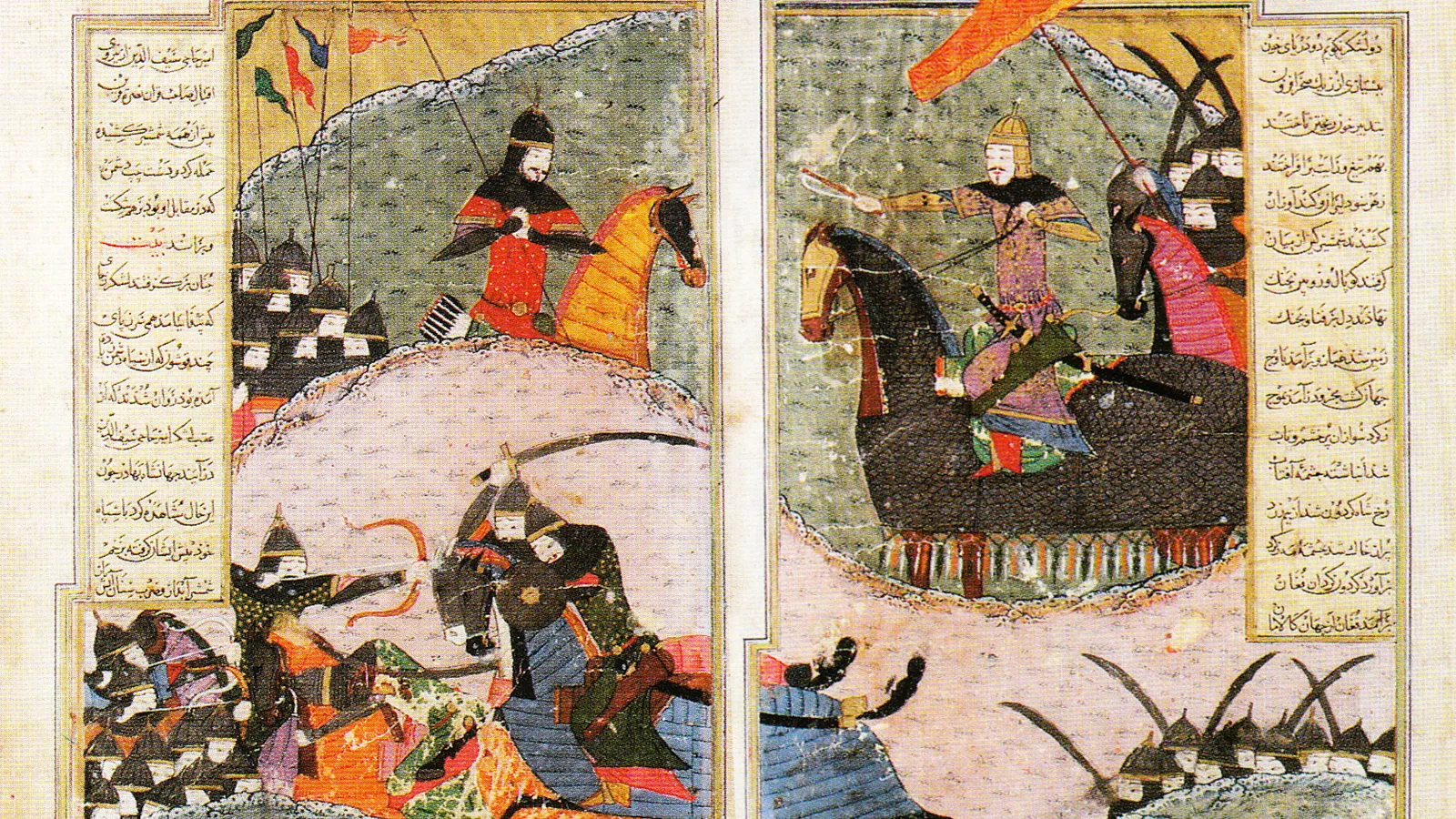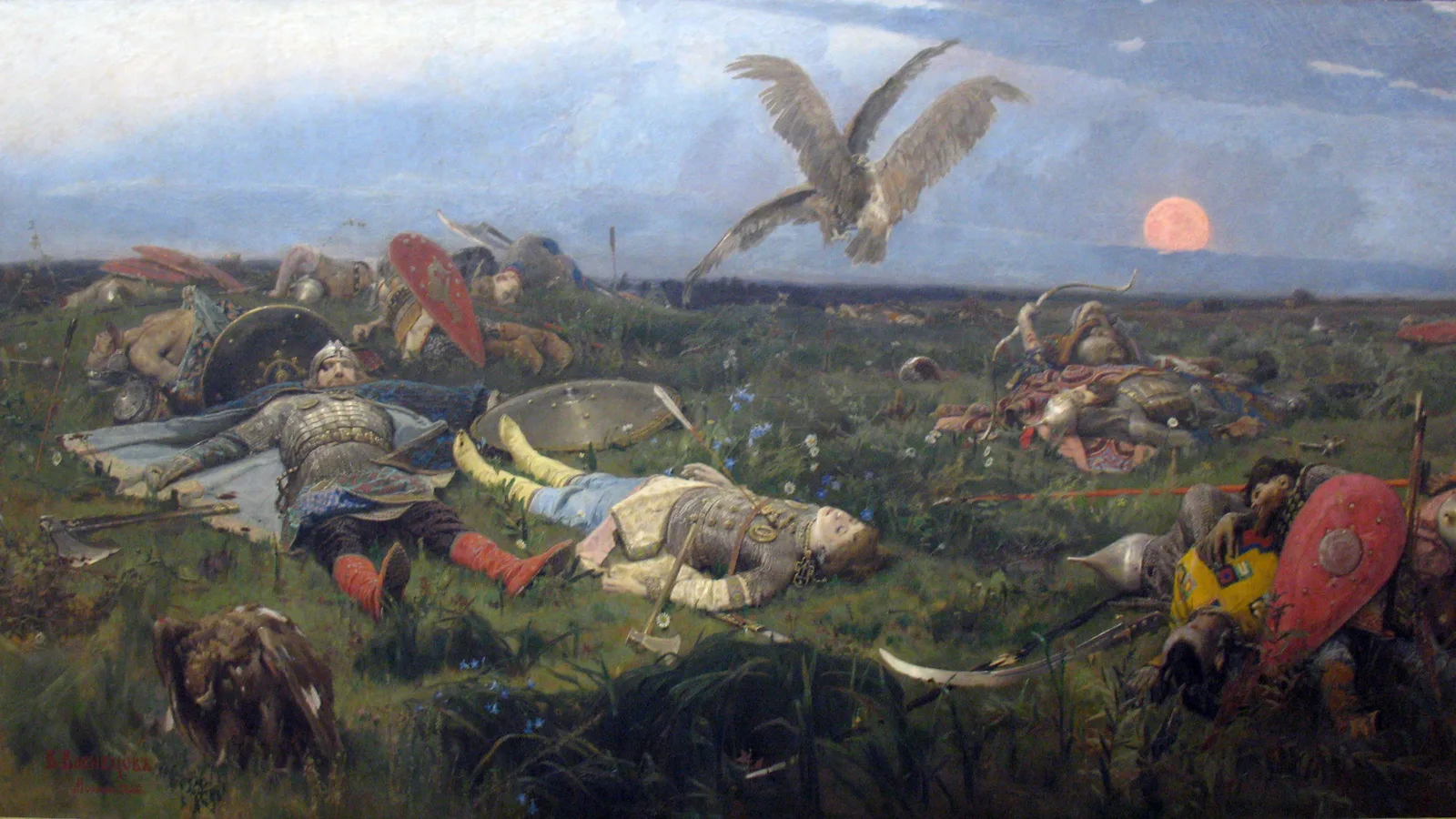
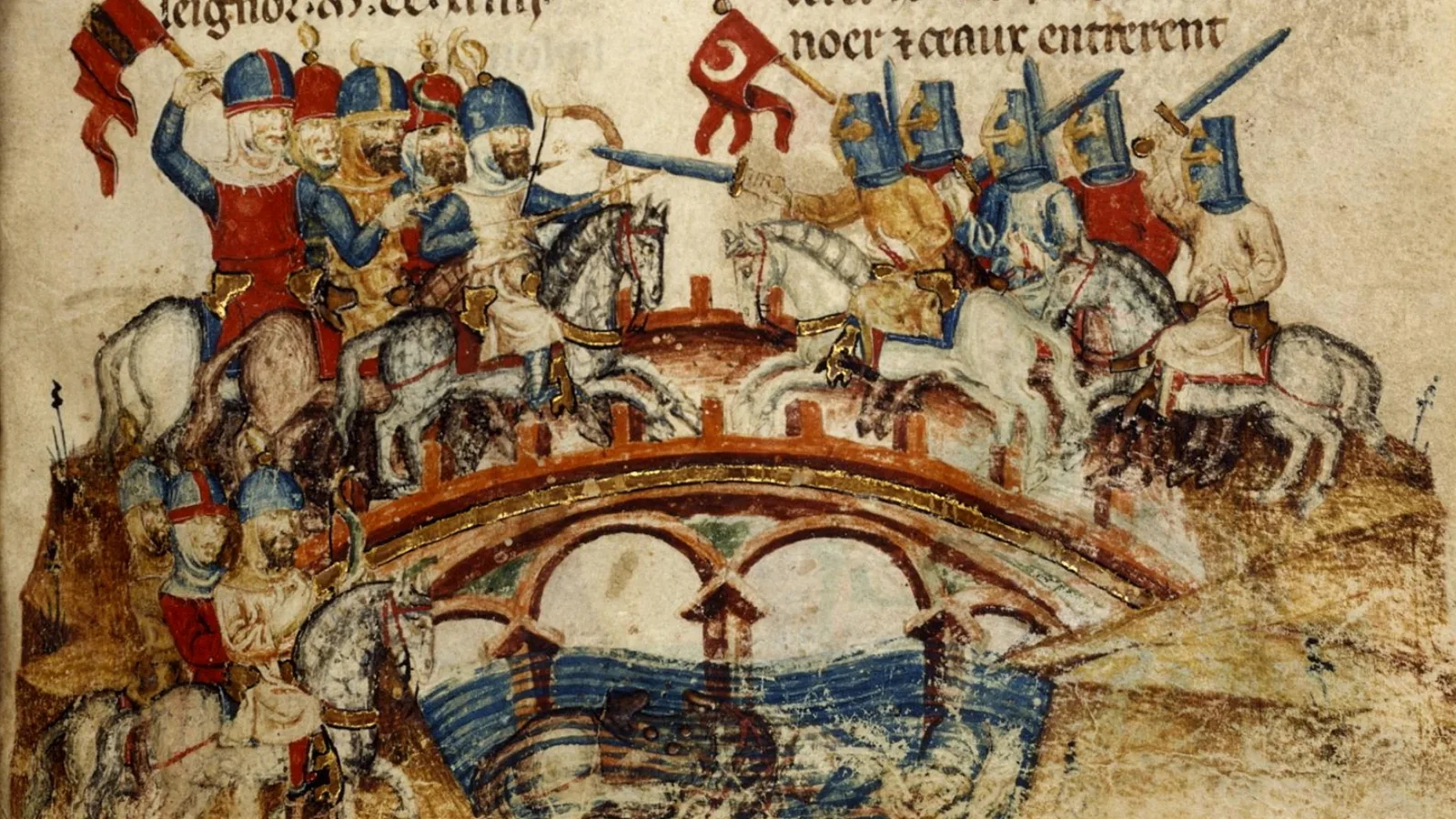
Subutai (Mongolian Sübe'etei, 1176–1248) was a Mongol general who served Genghis Khan and his son Ögödei for more than forty years. He fought the Merkit in Mongolia, pursued the Khwarazm-shah across Iran, raided through the Caucasus to defeat the Rus' princes on the Kalka in 1223, helped destroy the Jin dynasty in northern China, and directed the invasion of Rus' and Hungary under the nominal command of Batu. He died at home on the Tula river, aged 73 by East Asian reckoning.
Modern books often call him the greatest general of the Mongol Empire and credit him with sixty-five victories and thirty-two conquered nations. Those numbers come from a 1927 book by the British military writer Basil Liddell Hart, who gave no source for them. The medieval sources tell a more interesting story: a commander who won great battles, lost some, argued with princes, and is described by two different, partly contradictory official biographies.
Subutai at a glance
| Name | Sübe'etei (Mongolian); Subutai or Xuebutai (Chinese Yuan shi); Sübetei Bahadur (Persian sources); Sybedey (Carpini) |
| Born | 1176 (calculated from his age at death) |
| People | The Uriangqai (Uriankhai) |
| Title | Ba'atur, "hero"; posthumously Prince of Henan |
| Main campaigns | Merkit (1205–1219), Khwarazm and the great raid (1220–1223), Tangut (1226), Jin (1230–1234), Rus' and Hungary (1236–1242) |
| Died | 1248, on the Tula river in Mongolia, aged 73 |
| Son | Uriyangqadai, conqueror of Dali (Yunnan) |
| Main sources | Yuan shi chapters 121 and 122; Secret History of the Mongols; Juvaini; Rashid al-Din |
Where does our information come from?
Almost everything about Subutai's life comes from four kinds of source.
- The Yuan shi (History of the Yuan), compiled in China in 1369–1370 after the Mongol dynasty fell, contains two biographies of him, in chapters 121 and 122, under two spellings of his name. The editors of the 18th-century imperial edition noticed the problem and wrote that the two "differ in detail, but are in fact one biography". They differ in details: the first says that in 1226 he presented 5,000 mares from the Tangut campaign to the court, the second says 3,000.
- The Secret History of the Mongols, a Mongol account of Genghis Khan's rise from the 13th century, mentions him in several episodes up to the 1220s.
- The Persian historians Juvaini (1260) and Rashid al-Din (around 1300) describe his role in the western campaigns.
- European and Rus' sources mention him rarely. The Franciscan envoy John of Plano Carpini, who visited the Mongols in 1246, names "Sybedey, an old soldier among them" in his list of commanders. The Rus' chronicles do not name him at the Kalka at all.
The two Yuan shi biographies even give different genealogies from the Secret History. The Russian historians R. Kh. Khrapachevsky and Sh. Sabitov (2015) have argued that two different men named Subutai have been merged; A. V. Zlygostev (2017) rejected this. Most scholars, including the translator of the Secret History, Igor de Rachewiltz, treat him as one person.
Early life: one of the "four hounds"
According to the Secret History, Subutai and his brother Cha'urqan "left the Uriangqan and came to join Jelme", their elder brother and one of Temüjin's oldest companions. The Yuan shi tells a different family story: his father Haban was driving sheep to Genghis Khan when robbers seized him, and his sons Huluhun and Subutai rescued him.
In 1204, before the decisive battle against the Naiman, the Secret History has Genghis's rival Jamuqa describe Temüjin's best commanders to the frightened Naiman ruler:
"Those 'four hounds', their foreheads are of hardened copper, they have chisels for snouts, and awls for tongues; with hearts of iron, and swords for whips, they advance feeding on dew and riding on the wind. … They are Jebe and Qubilai, Jelme and Sübe'etei." (Secret History, §195, trans. de Rachewiltz)
In 1205 Genghis sent him after the sons of the Merkit leader Toqto'a with orders to hunt them down wherever they went: "If they grow wings and fly up into the sky, you, Sübe'etei, will you not fly up like a gerfalcon and catch them?" In the list of commanders of a thousand made at the great assembly of 1206, Subutai appears as one of nearly a hundred names. The Yuan shi says that he defeated the Merkit at the Chan river and pursued their leader Qudu into the lands of the Kipchaks.
The great raid of 1220–1223
In 1220, during the war against the Khwarazmian Empire in Central Asia, Genghis Khan sent Subutai and Jebe after the fleeing Khwarazm-shah, Muhammad. Juvaini writes that the two were "two of the great noyans [commanders] and enjoyed his special trust", and that they set out "together with thirty thousand men". The shah fled to an island in the Caspian Sea and died there.
The Yuan shi adds a revealing detail. At one river, "Jebe fought without success". Subutai camped on the other bank and ordered each of his men to light three torches so that the army would look larger, and the enemy ruler fled in the night. The same biography also contains a dating error: it places this pursuit in 1222, two years too late.
Instead of returning, the two generals rode on through northern Iran, Azerbaijan and Georgia, crossed the Caucasus and attacked the Alans and the Kipchaks (Cumans) on the steppe north of the Black Sea. It was a raid, not a conquest: the Mongols held none of these lands afterwards.
The Battle of the Kalka, 1223
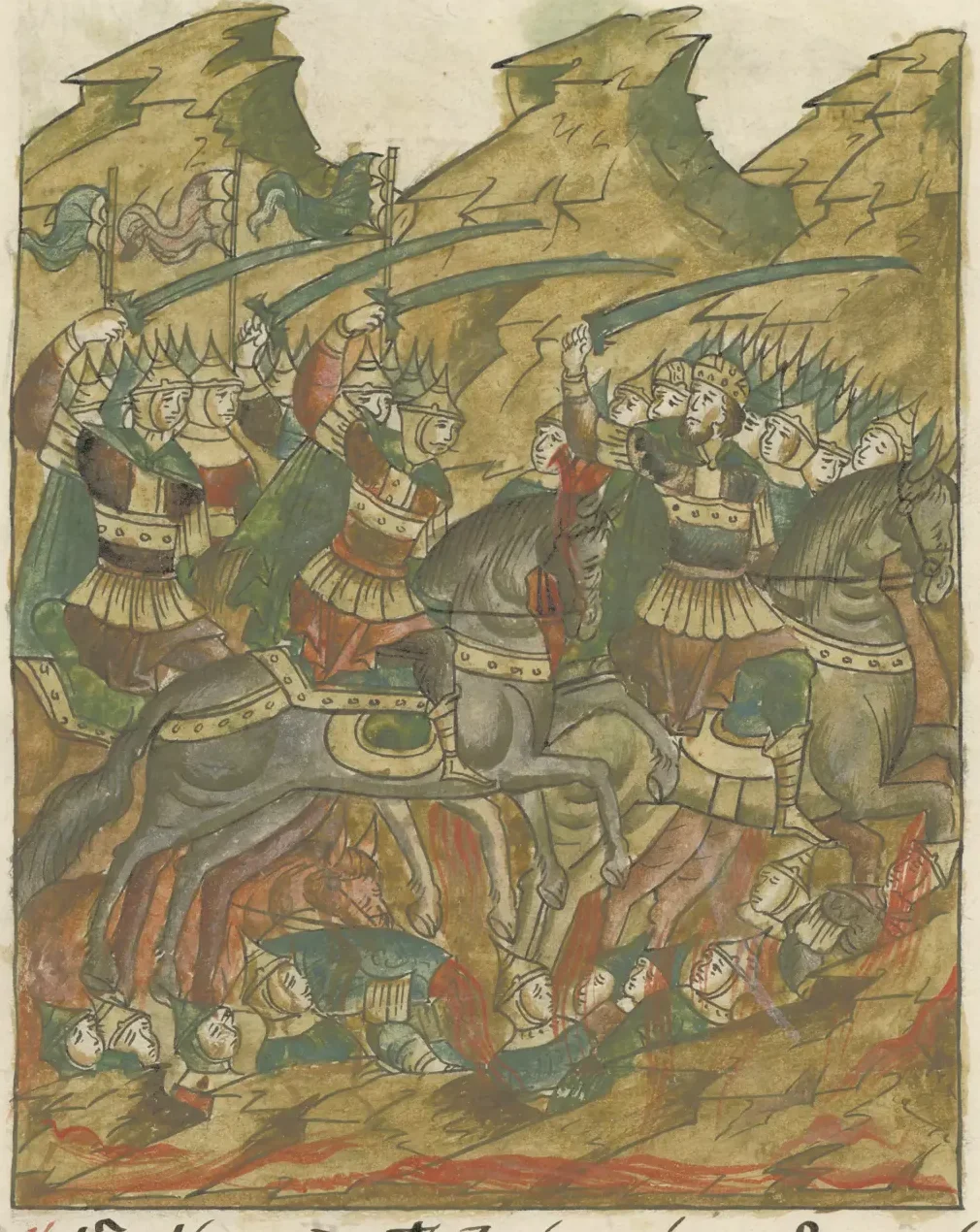
The Cumans called on the princes of Rus' for help. In the spring of 1223 a large Rus' and Cuman army marched into the steppe and met the Mongols on the river Kalka, near the Sea of Azov. The allies were badly defeated. The Novgorod First Chronicle laments: "This evil happened on May 31, on Saint Eremei's Day". Only "every tenth" man returned.
The Yuan shi biography says that Subutai crossed the Caucasus and "at the Aliji river met the Rus' Great and Little Mstislav and defeated them in one battle". The two Mstislavs are the princes Mstislav of Kiev and Mstislav of Galich, who both fought at the Kalka. The Rus' chronicles name no Mongol commander at the battle itself. The Novgorod chronicle mentions only a "Voyevoda Gemya-Beg", killed by the Cumans after a skirmish a few days earlier. The historian Stephen Pow (2017) has argued that this was Jebe himself; others reject the identification, and a study of 2026 (A. Oğuz) suggests that Jebe died in an ambush by the Volga Bulgars on the way home in autumn 1223. Jebe disappears from the sources after the raid. Subutai went on to another twenty-five years of campaigns.
The war against the Jin, 1230–1234
After Genghis Khan's death in 1227, his successor Ögödei gave Subutai a princess in marriage and sent him against the Jin dynasty in northern China. The campaign began with a defeat. The Yuan shi says plainly that at the Tongguan pass "the army lost; the emperor reprimanded him". Ögödei's brother Tolui spoke for him, arguing that "victory and defeat in war are not constant", and Subutai was allowed to redeem himself.
He did. The great Jin army under the general Heda met the Mongols at Sanfengshan in Henan. A snowstorm froze the Jin soldiers, and the Mongols destroyed them, probably in early 1232. The second biography tells how the captured Heda, before his execution, asked to see Subutai and said: "Your courage surpasses all generals, a hero born of Heaven. Having seen you, I can close my eyes content" (Yuan shi ch. 122, our translation).
Subutai was then left in command of the siege of Bian (Kaifeng), the Jin capital, which surrendered in 1233. The last Jin emperor fled to Caizhou, which fell to the Mongols and their Song allies in 1234; the emperor took his own life. According to the Yuan shi, Subutai allowed the starving people of Bian to cross the Yellow River northwards to find food.
The invasion of Rus' and Hungary, 1236–1242
In 1235 Ögödei sent a great army to conquer the western steppes and the lands beyond them. Its nominal leader was Batu, Genghis Khan's grandson. Jackson describes it as "headed in effect by the veteran noyan Sübe'etei but under the nominal command of Batu". The Yuan shi has Ögödei say before the campaign that the Kipchak leader Bachman "is brave; Subutai too is brave, he can beat him".
The army destroyed the Volga Bulgars, the Kipchaks and the principalities of Rus' (see The Mongol Invasion of Rus' and Batu Khan). The Ipatian Chronicle names a "Sebedai" among Batu's leading commanders "not of his kin" at the siege of Kiev in 1240. In March 1241 the army crossed the Carpathians into Hungary.
Mohi: the bridge and the rafts
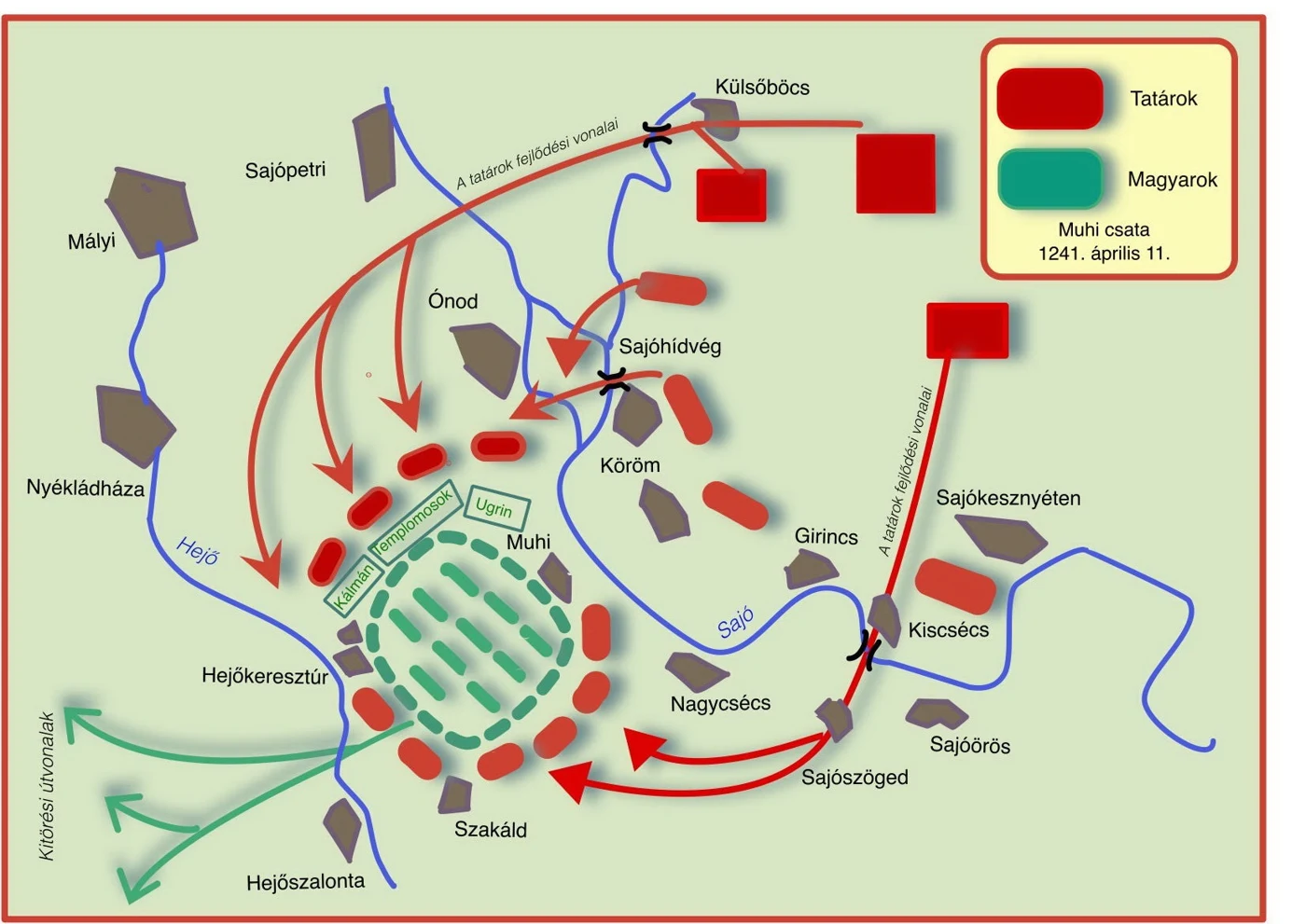
On the night of 10 to 11 April 1241 the Mongols attacked the army of King Béla IV of Hungary at Mohi, on the river Sajó. (Jackson dates the battle to 10 April; Büntgen and Di Cosmo and Hungarian accounts give 11 April.) The Hungarian cleric Rogerius, who lived through the invasion, writes that the Tatars found "a ford far from the army", crossed in a single night, surrounded the royal camp at dawn and shot arrows into it "like hail". Jackson describes a fight for the bridge combined with part of the Mongol army crossing elsewhere.
The Yuan shi gives the Mongol side, and it is not a story of flawless planning. The princes attacked upstream, where the river was shallow and there was a bridge. Subutai meant to cross downstream on rafts and come round behind the enemy, but before he was ready the princes went in. Batu's men fought for the bridge, and he lost thirty armoured men and one of his officers. When the princes then wanted to pull back, Subutai refused:
"If the princes want to go back, let them go back by themselves. I will not return until I reach the city of Macha on the Duna [Danube]." (Yuan shi ch. 121, our translation)
Later Batu accused him of coming too late. Subutai answered that the princes had known only about the shallow ford and the bridge, "they did not know that my rafts downstream were not yet finished. Now they only say I was late; they should consider why." According to the biography, Batu came to see his point, and later admitted at a feast: "Everything we took then was Subutai's merit."
The Mongols crossed the frozen Danube on Christmas Day 1241 and attacked Esztergom and Székesfehérvár, then withdrew from Hungary in 1242. Why they left is still debated: the news of Ögödei's death, climate and pasture, or problems with taking fortresses. A study of 2016 by Ulf Büntgen and Nicola Di Cosmo points to a cold, wet spring that turned the Hungarian plain into marsh.
Last years and death
When the princes gathered to choose a new Great Khan, Batu was reluctant to go. The Yuan shi says that Subutai told him: "Your Highness is the elder of the family, how can you not go?" After Güyük's enthronement in 1246, Subutai returned to his home on the Tula river in Mongolia. He died there in 1248, "aged 73". In 1308 the Yuan court gave him the posthumous title Prince of Henan.
His son Uriyangqadai became a general in his own right and conquered the kingdom of Dali (in today's Yunnan) for Möngke Khan in 1253–1254.
Where does the "65 battles" legend come from?
Subutai's modern fame begins with Basil Liddell Hart's Great Captains Unveiled (1927). In a chapter on Genghis Khan and "Sabutai", the British military writer argued that their "strategical ability … is matched in history only by that of Napoleon", and that the Mongol army held lessons for modern mechanised warfare. He ended with a quotation:
"From China to the Danube 'he had conquered thirty-two nations and won sixty-five pitched battles.'" (Liddell Hart, 1927)
He gave no source, and none of the medieval texts contains the figure: not the two Yuan shi biographies, the Secret History, Juvaini or Rashid al-Din. The historians Stephen Pow and Jingjing Liao published the first full English translations of both Yuan shi biographies in 2018, explicitly to correct "ahistorical statements regarding his origins and his military career" in popular and scholarly works.
Common myths about Subutai
| Myth | What the evidence says |
|---|---|
| He won 65 pitched battles and conquered 32 nations | First found in Liddell Hart (1927), without a source; not in any medieval text |
| He never lost a battle | The Yuan shi records his defeat at Tongguan, for which the emperor reprimanded him, and losses at the bridge at Mohi |
| He was the son of a blacksmith | The Secret History and the Yuan shi give different fathers; the blacksmith story comes from one reading of the Secret History and is not certain |
| He was a khan | He was never a khan; his title was ba'atur ("hero"), and later Prince of Henan |
| He alone planned Mohi perfectly | His own biography shows the princes attacking before his rafts were ready, and Batu blaming him |
| We know what he looked like | No authentic portrait exists |
What the map shows next
The map of 1241 shows the Mongol Empire at the time of the invasion of Europe, stretching from northern China to the steppes north of the Black Sea, and the Kingdom of Hungary, where Subutai fought his best-documented battle at Mohi. Further north, a second Mongol force under Baidar had defeated Duke Henry of Silesia near Legnica on 9 April, in the Duchy of Silesia (Jackson).
Sources
Primary sources
- Song Lian et al., Yuan shi (1369–1370), ch. 121 (Subutai) and ch. 122 (Xuebutai), Chinese text, Zhonghua edition with notes: https://zh.wikisource.org/wiki/元史/卷121 and https://zh.wikisource.org/wiki/元史/卷122
- The Secret History of the Mongols, trans. I. de Rachewiltz, shorter version ed. J. C. Street (2015; CC BY-NC-ND, quoted briefly), §§120, 195, 199, 202: https://archive.org/details/the-secret-history-of-the-mongols-a-mongolian-epic-chronicle-of
- 'Ala al-Din 'Ata-Malik Juvaini, The History of the World-Conqueror, trans. J. A. Boyle (Manchester, 1958): https://archive.org/details/dli.pahar.3131
- Rogerius, Carmen miserabile, in Chronica minora (1885): https://archive.org/details/ChronicaMinora
- The Chronicle of Novgorod, 1016–1471, trans. R. Michell and N. Forbes (London, 1914): https://archive.org/details/chronicleofnovgo00michrich
Studies
- S. Pow and J. Liao, "Subutai: Sorting Fact from Fiction Surrounding the Mongol Empire's Greatest General", Journal of Chinese Military History 7 (2018), 37–76: https://doi.org/10.1163/22127453-12341323
- P. Jackson, The Mongols and the West, 1221–1410, 2nd ed. (London, 2018)
- U. Büntgen and N. Di Cosmo, "Climatic and environmental aspects of the Mongol withdrawal from Hungary in 1242 CE", Scientific Reports 6 (2016): https://doi.org/10.1038/srep25606
- S. Pow, "The last campaign and death of Jebe Noyan", Zolotoordynskoe obozrenie 5/4 (2017): https://doi.org/10.22378/2313-6197.2017-5-4.698-725
- A. V. Zlygostev, "Zagadka Subedei-bagatura: mify i real'nost'" (2017): https://cyberleninka.ru/article/n/zagadka-subedey-bagatura-mify-i-realnost-po-sledam-odnoy-versii
- B. H. Liddell Hart, Great Captains Unveiled (Edinburgh, 1927), ch. 1: https://archive.org/details/in.ernet.dli.2015.526540
Image credits
- Title image: Mongols and Hungarians at a bridge, Hayton of Corycus, La Flor des estoires de la terre d'Orient, Austrian National Library, Cod. 2623, fol. 29r. Public domain, via Wikimedia Commons, cropped to 16:9.
- The Battle of the Kalka, Illustrated Chronicle, 1568–1576. Public domain, via Wikimedia Commons (cropped to the picture).
- Battle plan of Mohi by Ogodej, after B. Nagy, CC BY-SA 4.0, via Wikimedia Commons.