Michael Romanov (Mikhail Fedorovich, 1596–1645) became tsar of Russia in 1613, at the age of sixteen, when an Assembly of the Land (Zemsky Sobor) in Moscow chose him to end the Time of Troubles. He was proclaimed on 21 February 1613. On 14 March an embassy persuaded him and his mother, the nun Marfa, to accept at the Ipatiev monastery in Kostroma, and he was crowned on 11 July. He founded the Romanov dynasty, which ruled Russia until 1917. The official account presented the election as the unanimous choice of the whole land. Historians today stress the decisive part played by the Cossacks, and the doubts of many boyars, who would have preferred a foreign prince.
Michael Romanov at a glance
| Born | 12 July 1596, Moscow |
| Parents | Fyodor Nikitich Romanov (later Patriarch Filaret) and Ksenia Ivanovna Shestova (the nun Marfa) |
| Elected | 7 February 1613 (decision), proclaimed 21 February 1613 |
| Accepted the throne | 14 March 1613, Ipatiev monastery, Kostroma |
| Crowned | 11 July 1613, Dormition Cathedral, Moscow |
| Reigned | 1613–1645 |
| Died | 13 July 1645, Moscow |
| Successor | His son, Alexis (Aleksei Mikhailovich) |
(Dates are in the Julian calendar used in Russia at the time; add ten days for the modern calendar.)
Why did Russia need to elect a tsar?
The old Moscow dynasty, the descendants of Rurik, had died out with Tsar Fyodor I in 1598. The fifteen years that followed are known as the Time of Troubles: the reign and fall of Boris Godunov, the pretenders known as False Dmitry, civil war, famine and foreign invasion. In 1610 the boyars in Moscow accepted Władysław, son of the king of the Polish–Lithuanian Commonwealth, as tsar, and a Polish garrison occupied the Kremlin. Swedish troops held Novgorod.
In 1612 a national militia led by Prince Dmitry Pozharsky and the merchant Kuzma Minin joined the Cossack forces of Prince Dmitry Trubetskoy outside Moscow. On 22 October 1612 the Polish garrison in the Kremlin surrendered. Russia needed a new ruler, and its leaders summoned elected men from the towns to choose one.
Who was Michael Romanov?
Michael was born in Moscow on 12 July 1596. His family, the Romanovs, were among the greatest boyar clans and were related to the old dynasty: his great-aunt Anastasia Romanovna had been the first wife of Ivan the Terrible, and so the last Rurikid tsar, Fyodor I, was his father's first cousin.
Under Boris Godunov the family fell. In 1601, after a false denunciation, Michael's father Fyodor Nikitich was forcibly tonsured as a monk, taking the name Filaret; the New Chronicle says he "was tonsured against his will", though it adds that he accepted the monastic habit gladly. His mother was made a nun as Marfa. Two of his uncles died in exile. Michael himself, aged four, was sent to Beloozero in June 1601 with his aunts and later lived on a family estate.
His father's fortunes revived. The first False Dmitry made Filaret metropolitan of Rostov, and the camp of the second pretender at Tushino named him patriarch. In 1610 Filaret was sent on an embassy to King Sigismund III of Poland and was kept a prisoner in Poland for more than eight years. Michael and his mother were among the boyar families held in the Kremlin during the Polish occupation. After the liberation of Moscow, at the end of 1612 and the beginning of 1613, he was at the village of Domnino near Kostroma or in Kostroma itself.
How was Michael Romanov elected?
Elected men began to arrive in Moscow in December 1612, and by January 1613 the Assembly of the Land was sitting. Its full membership is unknown. As the historian Sergei Belokurov wrote in 1906, "not even the number of all its members" has come down to us. Researchers estimate that the towns alone sent 500–600 representatives.
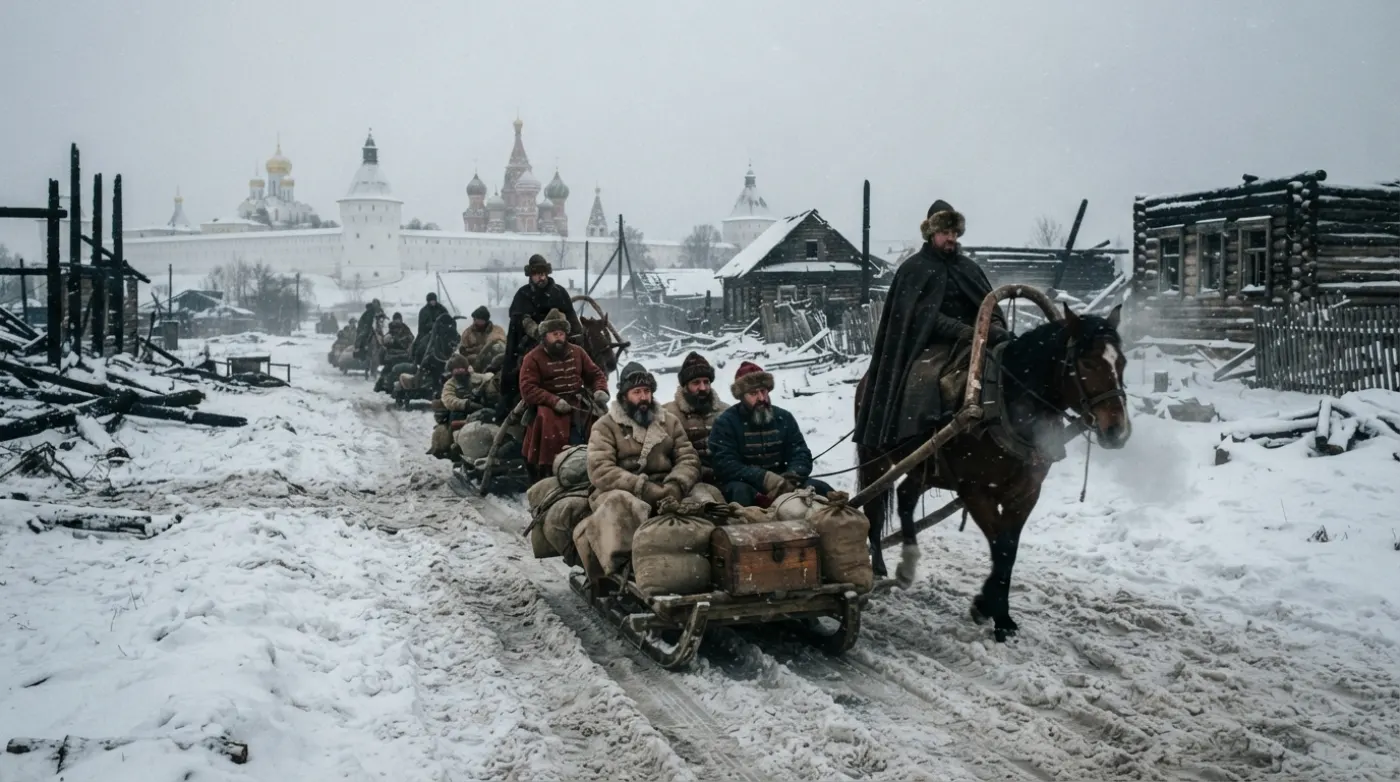
There were many candidates: the Polish prince Władysław; the Swedish prince Karl Filip; and Russian magnates such as Prince Trubetskoy and Prince Vasily Golitsyn, who was then a prisoner in Poland. The New Chronicle complains that some "bribed and sent agents, wanting what was not theirs by rank".
According to Belokurov, the assembly settled on Michael on 7 February 1613, and the final decision was postponed while opinion was sounded in the towns. The formal election took place on 21 February, in the Dormition Cathedral, on "the first week of Great Lent, on which the Orthodoxy of the holy fathers is celebrated", in the words of the election charter.
Who really chose Michael Romanov?
The official version, set out in the election charter, was that God and "the whole land" had chosen Michael. Historians have long doubted this. Modern scholarship holds that the election took place "without broad support from the boyar nobility and the gentry", and that the Cossacks played the decisive role, as the historian Andrei Pavlov summarised in 2019.
The Orthodox Encyclopaedia says Michael's candidacy was "put forward at the Zemsky Sobor by the free Cossacks serving in the camps" near Moscow, and supported by the Romanovs' influential relatives. The evidence includes several outside reports, collected by the historian Dmitry Liseitsev:
- The Swedish commander Jacob De la Gardie reported on 13 April 1613 that the Cossacks proclaimed Michael "against the will of the boyars", and that they "besieged their commanders Prince Dmitry Timofeevich Trubetskoy and Prince Dmitry Mikhailovich Pozharsky in their houses and forced them to agree to their choice of grand prince".
- A Russian interpreter told the Danes that "the black people" elected the tsar in Moscow, while "the best people wanted the Swedish prince".
- The Polish chancellor Lew Sapieha told Filaret himself, according to the historian Sergei Platonov, that "the Don Cossacks alone put your son on the Muscovite throne".
Why Michael? Historians point to his kinship with the old dynasty, which contemporaries saw as the main guarantee of legitimacy; to his father's standing with the Cossacks, who remembered Filaret as the patriarch of Tushino; and to his youth and lack of enemies.
Did a boyar say Michael would be "convenient"?
A famous story has the boyar Fyodor Sheremetev writing to Prince Golitsyn: "Let us choose Misha Romanov, he is young and will be convenient for us." The Russian Biographical Dictionary gives a version of this from the nineteenth-century writer Pavel Melnikov. Platonov noted that the letter was said to have been found in a Moscow monastery but was never published and could not be located: "Personally, we do not believe in its existence." The quotation is best treated as a legend.
What happened at Kostroma?
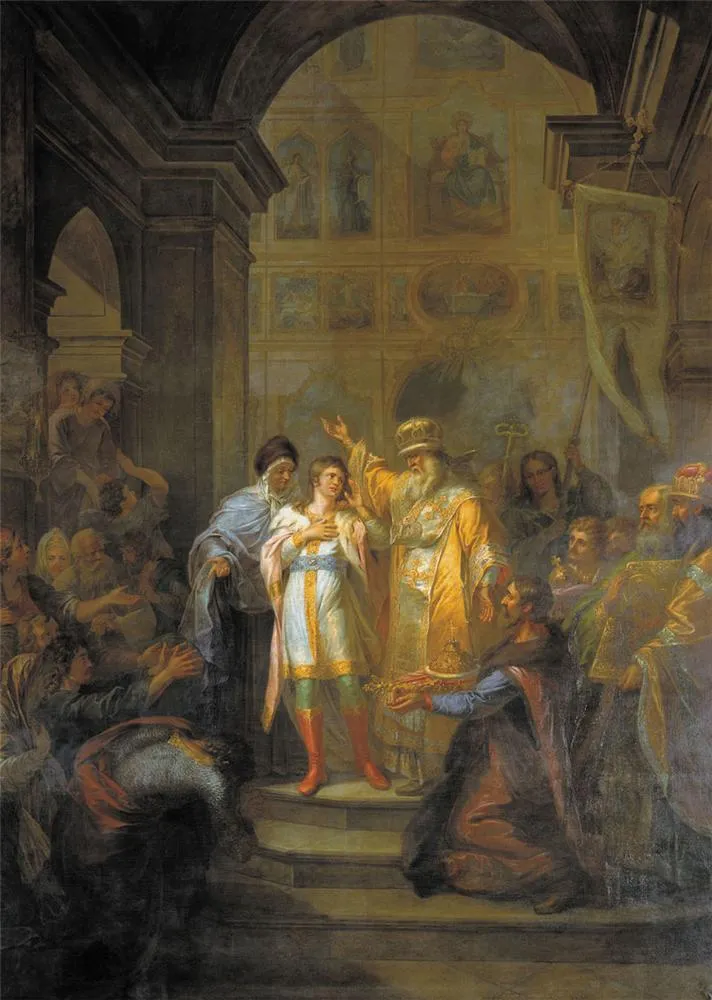
On 2 March 1613 an embassy left Moscow, led by Archbishop Feodorit of Ryazan and the boyar Fyodor Sheremetev, a relative of the Romanovs. It reached Kostroma on 13 March. The next day the envoys went in procession with icons to the Ipatiev monastery, where Michael and his mother were staying, and asked him to accept the throne.
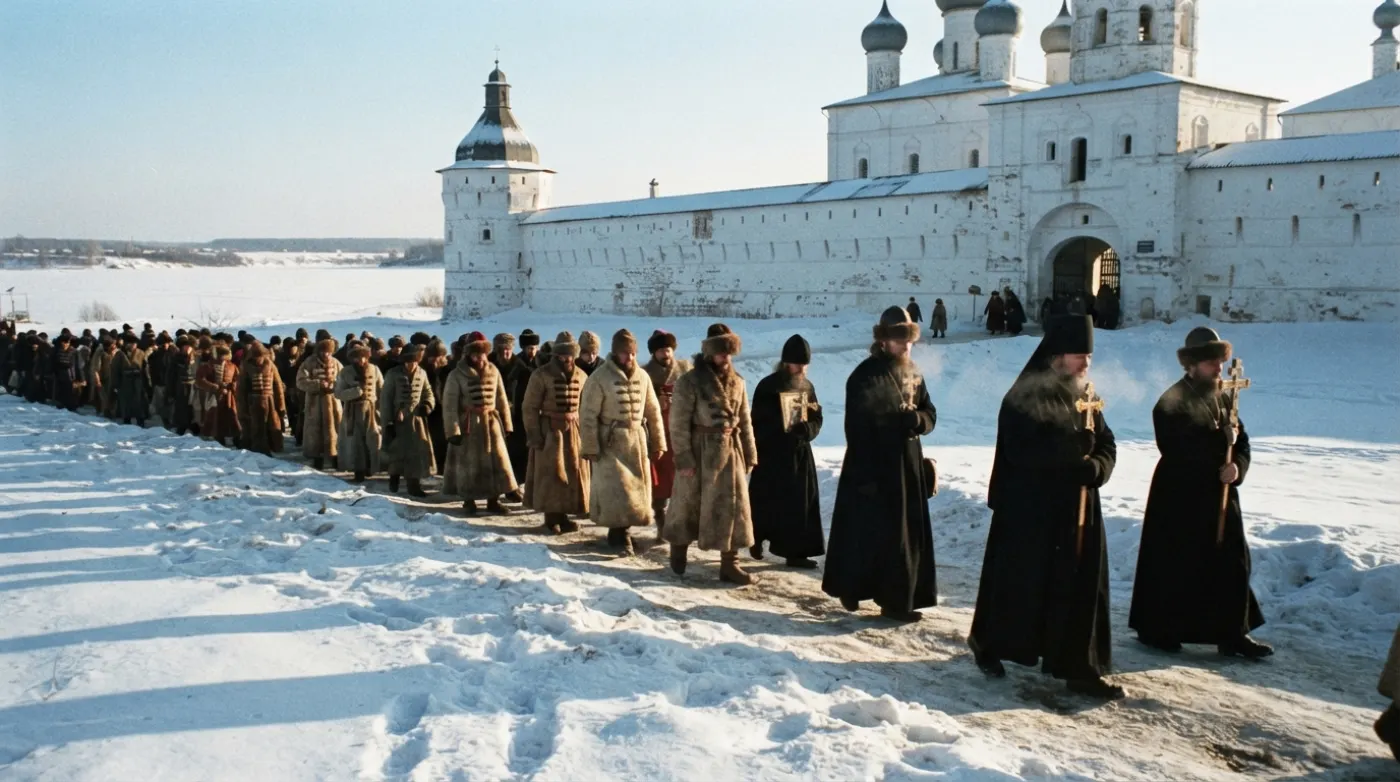
According to the election charter, Michael and his mother refused. Marfa argued that her son was "not yet of full age", that the people of Moscow had broken their oaths to earlier tsars, and that his father was a prisoner of the Polish king: "the king will at once order some evil to be done to our sovereign Filaret the metropolitan. And how can my son think of so great a matter without his father's blessing?" The New Chronicle says Michael refused "with tears, calling himself young".
The envoys pleaded for hours. The Russian Biographical Dictionary says the talks lasted "from the third hour of the day to the ninth", roughly from seven in the morning to three in the afternoon. In the end, warned that God would hold them responsible for the ruin of the state, mother and son agreed. Historians note that the charter's account of the scene closely follows the charter of Boris Godunov's election in 1598, so its details should be read with caution.
Michael travelled slowly to Moscow, staying for several weeks at Yaroslavl. The New Chronicle dates his entry into Moscow to a Sunday after Easter 1613. On 11 July 1613 Metropolitan Efrem of Kazan crowned him in the Dormition Cathedral of the Kremlin.
Who was Ivan Susanin?
According to a charter issued by Michael on 30 November 1619, Polish and Lithuanian troops came into the Kostroma district while he was there, seized a peasant of the village of Domnino named Ivan Susanin, "tortured him about where we, the Great Sovereign, were at that time", and "he, knowing about us, did not tell, and the Polish and Lithuanian people tortured him to death". The tsar rewarded Susanin's son-in-law, Bogdan Sobinin, with land.
That is all the seventeenth-century evidence says. The famous version, in which Susanin led the enemy into a swamp, came much later. According to the Russian Biographical Dictionary, Susanin was first presented as the tsar's saviour in 1767, in a speech by the bishop of Kostroma to Catherine II. The historian Nikolai Kostomarov was sceptical of the legend. Mikhail Glinka's opera A Life for the Tsar (1836) made it famous. For more, see our article on the Time of Troubles.
How did Michael secure his throne?
The new tsar inherited a country at war with both Sweden and Poland–Lithuania.
- Sweden. By the treaty of Stolbovo on 27 February 1617, Sweden returned Novgorod but kept Ivangorod, Yam, Koporye, Oreshek and Korela, cutting Russia off from the Baltic, and received 20,000 roubles.
- Poland–Lithuania. Prince Władysław still claimed the Russian throne. In 1618 he marched on Moscow, and his assault on 1 October 1618 was beaten off. The truce of Deulino, concluded on 1 December 1618 for fourteen and a half years, left Smolensk and the Seversk lands to the Commonwealth. Władysław did not give up his claim until the peace of Polyanovka in 1634.
What was Filaret's role?
The truce of Deulino brought Michael's father home. On 1 June 1619 prisoners were exchanged on the Polyanovka river near Vyazma, and on 14 June Michael met his father outside Moscow. On 24 June 1619 Filaret was installed as patriarch of Moscow by Patriarch Theophanes of Jerusalem, who was visiting Russia.
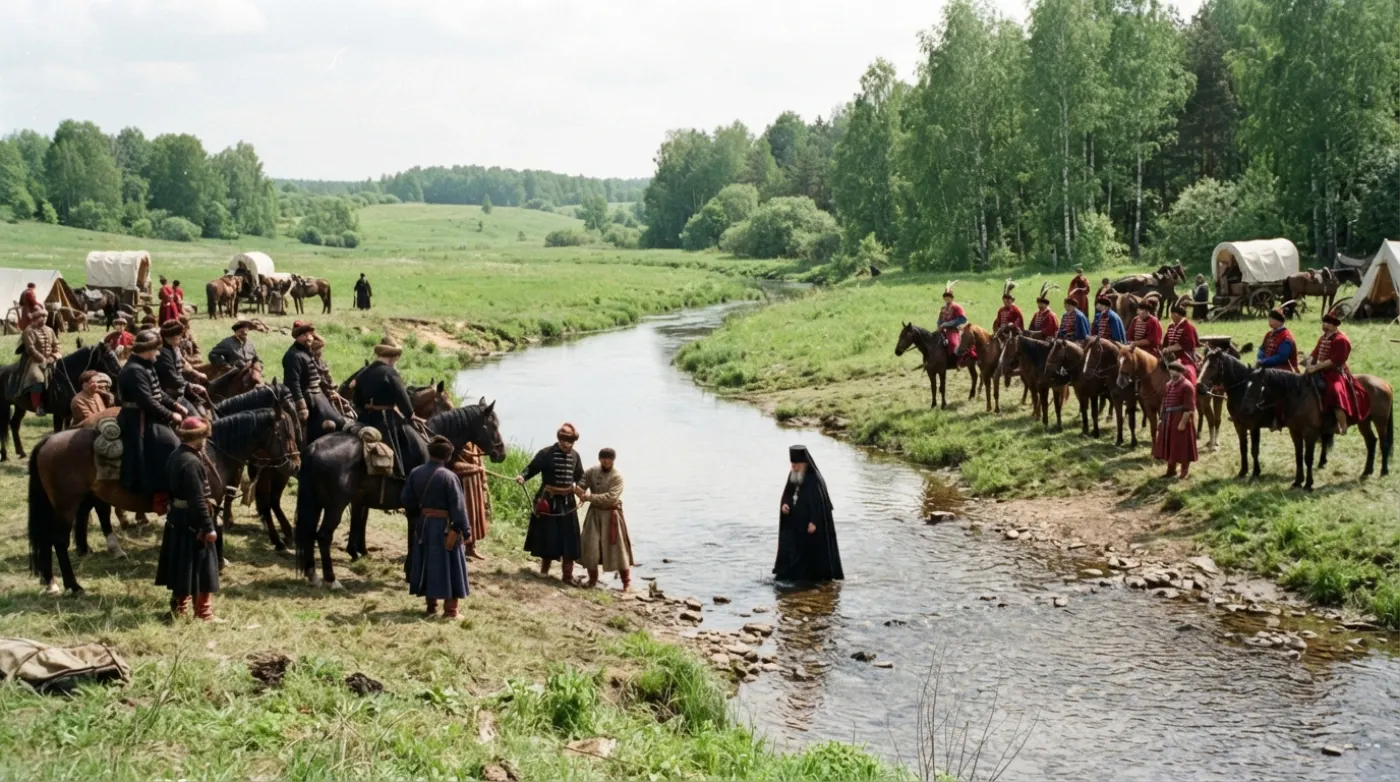
From then until Filaret's death on 1 October 1633, father and son ruled together. Charters were issued in the names of both, and Filaret was styled "great sovereign", a title normally reserved for the tsar. The Orthodox Encyclopaedia calls this a "dual power" (dvoevlastie) that Michael accepted voluntarily, relying on his father's advice.
Historians also debate whether Michael's power was limited at the start of his reign, for example by a written promise to the boyars. Pavlov concludes that any promises were probably oral and that there are no grounds for speaking of a formal limitation of his power. In 1625 the title "autocrat" (samoderzhets) was formally added to the tsar's style, and between 1622 and 1632 no Assembly of the Land was called.
Michael's private life was shaped by others. In 1616 his planned marriage to Maria Khlopova was prevented by his mother and her relatives, the Saltykovs. He married Princess Maria Dolgorukova in 1624, who died within months, and in 1626 Evdokia Streshneva, the mother of his heir, Alexis. Michael died in Moscow on 13 July 1645, aged forty-nine.
How was the election remembered?
For the Romanovs, 1613 became the founding myth of the dynasty. On 21 February 1913, for the tercentenary, Nicholas II issued a manifesto declaring that the "Great Zemsky Sobor on the 21st day of February 1613 unanimously elected to the throne the boyar Mikhail Fedorovich Romanov, nearest by blood to the extinct royal line of Rurik". The celebrations took the imperial family to Kostroma and the Ipatiev monastery.
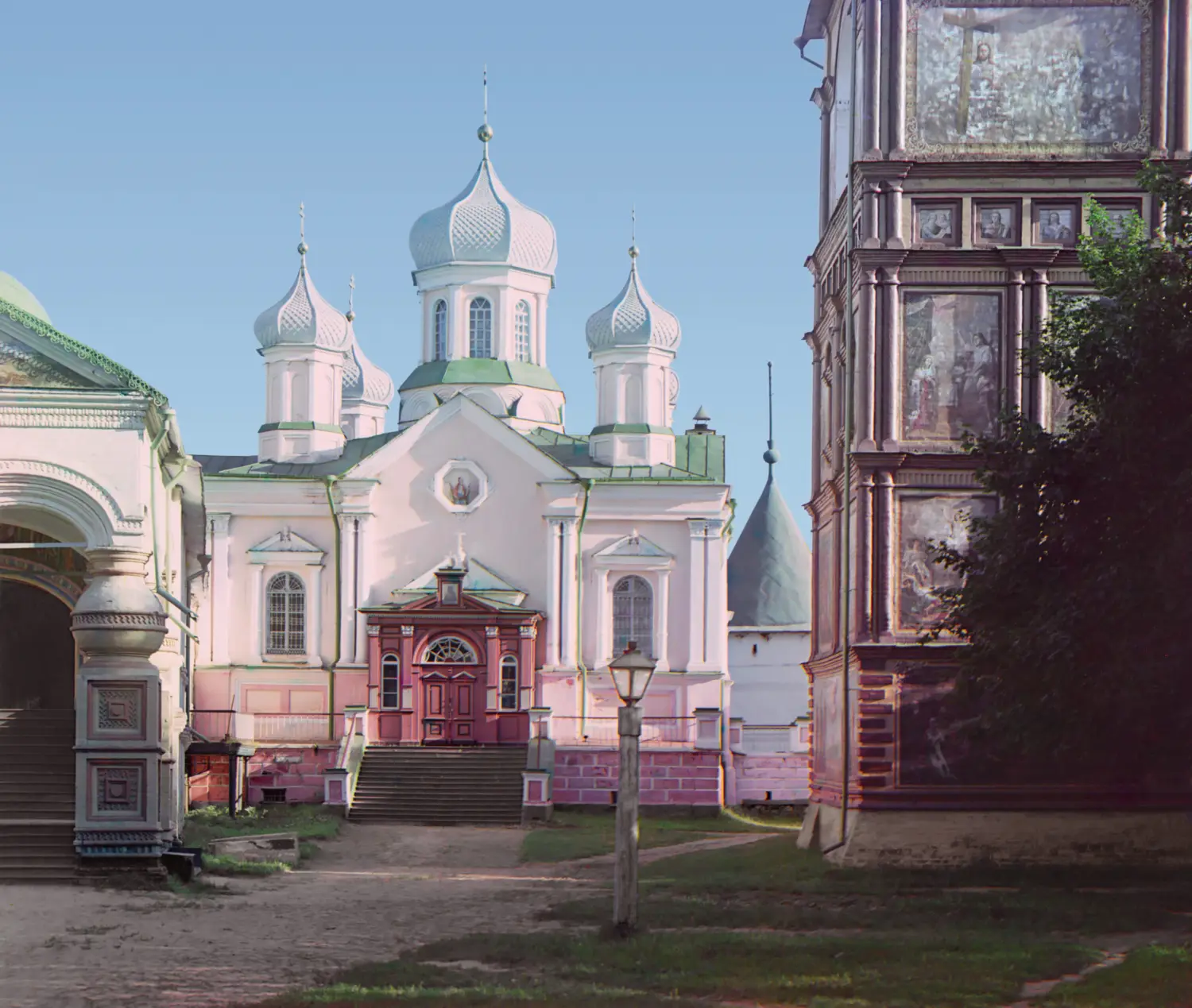
There, visitors are still shown the "Romanov chambers" where Michael and his mother are said to have lived. A study by the historian L. V. Nikiforova (2009) found that "there are no historical sources" pointing to these particular rooms. The building was named the "Romanov chambers" only in the nineteenth century; it may have served as guest quarters, and Michael may have lived in it, but nothing proves it.
Five years after the tercentenary, in July 1918, Nicholas II and his family were killed in the Ipatiev house in Ekaterinburg. The scholar O. V. Rozina called it a "strange coincidence: the Ipatiev monastery in Kostroma was the beginning of the reign of the Romanov dynasty, and the Ipatiev house in Ekaterinburg its tragic end". The shared name is indeed a coincidence: the house in Ekaterinburg took its name from its owner, the engineer Ipatiev.
Common myths about Michael Romanov's election
| Myth | What the evidence says |
|---|---|
| The whole land elected Michael unanimously | The Cossacks pressed his candidacy; many boyars preferred a foreign prince |
| A boyar called Michael "young and convenient" | The letter is known only from late reports; Platonov doubted it ever existed |
| Susanin led the Poles into a swamp | The 1619 charter says only that he was tortured to death without betraying the tsar; the swamp comes from later tradition |
| Michael lived in the "Romanov chambers" at the Ipatiev monastery | No source identifies these rooms |
| Michael was a grandson of Ivan the Terrible | He was related through Ivan's first wife Anastasia, his great-aunt |
| Michael was crowned on 11 June | He was crowned on 11 July 1613 |
Timeline
| Date | Event |
|---|---|
| 12 July 1596 | Michael Romanov born in Moscow |
| 1601 | The Romanovs disgraced; Michael's parents forced to become monk and nun |
| 1610 | Filaret sent to King Sigismund III; held in Poland until 1619 |
| 22 October 1612 | The Polish garrison in the Kremlin surrenders |
| January 1613 | The Assembly of the Land sits in Moscow |
| 7 February 1613 | The assembly settles on Michael |
| 21 February 1613 | Michael proclaimed tsar |
| 14 March 1613 | Michael accepts the throne at the Ipatiev monastery |
| 11 July 1613 | Coronation in the Dormition Cathedral |
| 27 February 1617 | Treaty of Stolbovo with Sweden |
| 1 December 1618 | Truce of Deulino with Poland–Lithuania |
| 24 June 1619 | Filaret installed as patriarch |
| 30 November 1619 | Charter rewarding Susanin's son-in-law |
| 1 October 1633 | Filaret dies |
| 13 July 1645 | Michael dies |
| 21 February 1913 | Tercentenary of the dynasty |
What the map shows
At 1613 the Tsardom of Russia faces the Polish–Lithuanian Commonwealth to the west and the Swedish Empire to the north-west. Compare the map at 1618, after the truce of Deulino, when Smolensk belonged to the Commonwealth.
Sources
Primary sources
- Utverzhdennaia gramota ob izbranii na Moskovskoe gosudarstvo Mikhaila Fedorovicha Romanova, ed. S. A. Belokurov (Moscow, 1906): archive.org
- Sobranie gosudarstvennykh gramot i dogovorov, part 3 (Moscow, 1822), with the charter of 30 November 1619: archive.org
- Novyi letopisets, in Polnoe sobranie russkikh letopisei, vol. 14 (St Petersburg, 1910)
Studies and reference works
- V. N. Kozlyakov, D. F. Poloznev et al., "Mikhail Feodorovich", Pravoslavnaia entsiklopediia, vol. 46 (2021)
- "Filaret (Romanov-Iur'ev)", "Sheremetev, Feodor Ivanovich", "Susanin, Ivan Osipovich", Russkii biograficheskii slovar', via ru.wikisource
- "Mikhail Fedorovich", Entsiklopedicheskii slovar' Brokgauza i Efrona, via ru.wikisource
- S. F. Platonov, Polnyi kurs lektsii po russkoi istorii, part 2, via ru.wikisource
- A. P. Pavlov, "Mikhail Romanov: vkhozhdenie vo vlast'" (2019), doi:10.15688/jvolsu4.2019.2.13
- A. P. Pavlov, "K istorii utverzhdennoi gramoty 1613 g." (2015)
- D. V. Liseitsev, "Zemskii sobor 1613 g.: vybory bez vybora" (2019), doi:10.15688/jvolsu4.2019.2.12
- D. V. Liseitsev, on the Nizhny Novgorod delegation to the Assembly of 1613, Prepodavatel' XXI vek (2019)
- Archimandrite Makarii (Veretennikov), on Filaret's return and installation as patriarch, Ipat'evskii vestnik (2020)
- L. V. Nikiforova, "Romanovskie kel'i v Kostromskom Ipat'evskom monastyre: muzei v stsenariiakh vlasti rossiiskoi monarkhii", Vestnik SPbGU, ser. 6 (2009)
- M. A. Sosnitskii, on the 1913 jubilee, Vestnik SPbGU. Istoriia (2019)
- O. V. Rozina, Verkhnevolzhskii filologicheskii vestnik (2018)
Image credits
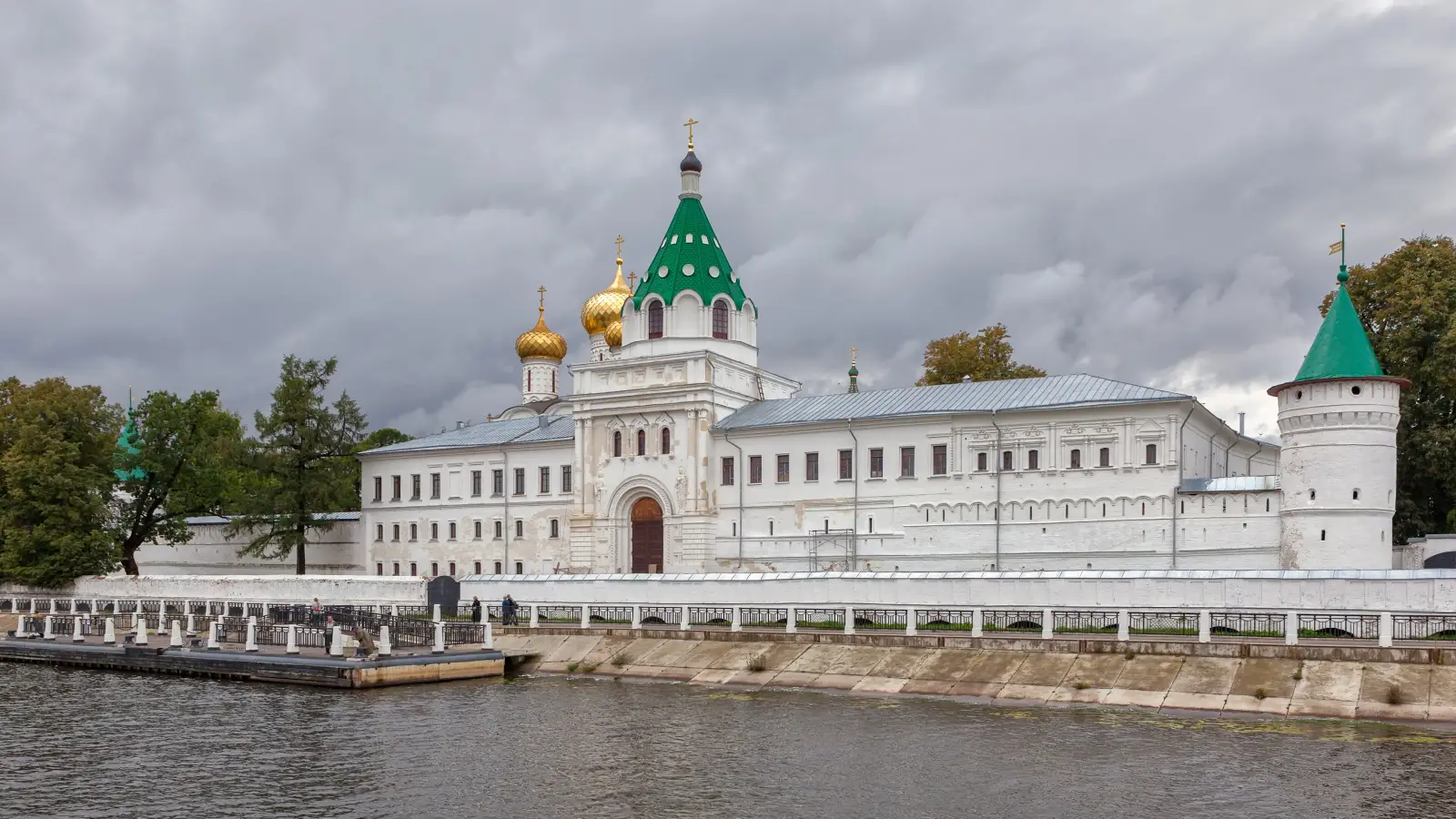
- Title image: Ipatiev monastery, Kostroma. Photo: Nino Verde, 2011, CC BY-SA 3.0, via Wikimedia Commons, cropped to 16:9.
- Grigory Ugryumov, The Calling of Michael Romanov to the Throne, not later than 1800. Public domain, via Wikimedia Commons.
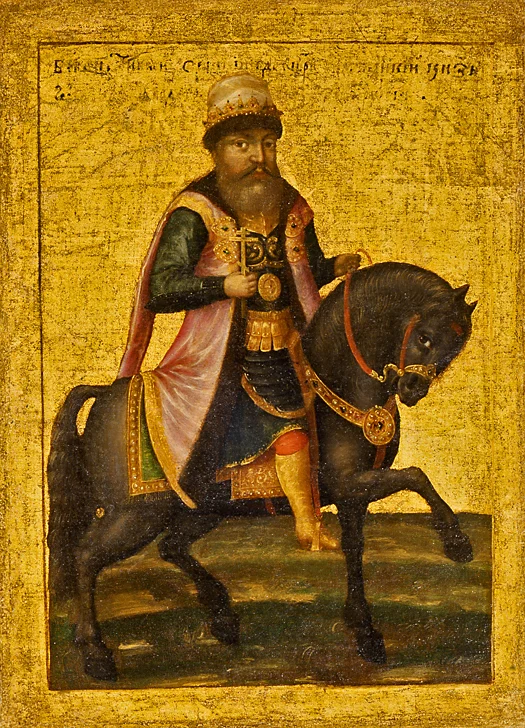
- Equestrian portrait of Michael Romanov, about 1670, State Historical Museum. Public domain, via Wikimedia Commons.
- Sergei Prokudin-Gorsky, Ipatiev monastery, 1910, Library of Congress. Public domain, via Wikimedia Commons.